FDA Accuses BMS of Misleading Data on Krazati
FDA accuses BMS of misleading data on Krazati's KRAS cancer efficacy, questioning trial results.
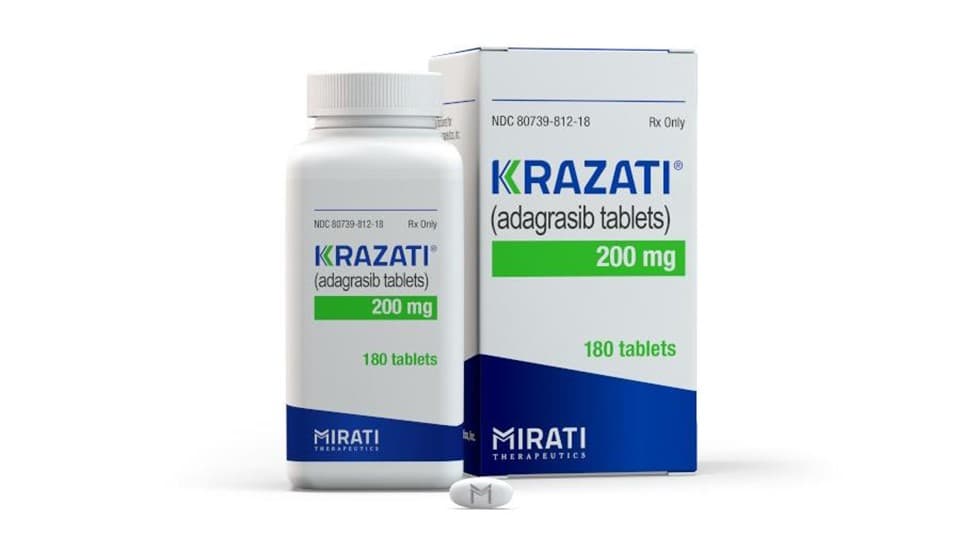
The FDA has charged Bristol Myers Squibb for fabricating or
misrepresenting information on its website regarding Krazati's effectiveness as
a treatment for KRAS cancer. Krazati received expedited approval in KRAS
G12C-mutated locally advanced or metastatic non-small cell lung cancer. It was
purchased in a $5.8 billion buyout of Mirati Therapeutics. BMS provided trial
data supporting authorisation on the Krazati website's efficacy page targeted
at medical professionals. The FDA has objected to the efficacy page, as have
several other complainants.
The Office of Prescription Drug Promotion at the FDA brought
attention to the alleged issues with the various effectiveness metrics provided
on the Krazati website. The website's disease control rate (DCR) feature
displays a waterfall graphic and reports that 80% of patients had tumour
shrinking of any size. The DCR data presentation, which includes the ORR and
stable disease rate, was deemed inadequate by the FDA.
BMS was also charged by the FDA with providing false
information on overall and progression-free survival. Time-to-event
effectiveness endpoints in single-arm studies, according to the FDA, are
typically uninterpretable since it is impossible to distinguish between the
drug's and the disease's natural history as the source of the observed effect
(such as survival time). Notification from BMS that the survival analyses are
"descriptive"failed to save it from the FDA's ire.
The FDA wrapped up its analysis of the website by listing
all of its problems, including a page detailing the intracranial ORR and DCR
seen in the research. The results may be due to the effects of the radiation
therapy that was previously administered to the majority of the patients in the
investigation, rather than Krazati.
My international experience as a researcher in Taiwan for three years has equipped me with a global perspective, enabling me to create content that resonates with an international audience.
Más de Pharma News
Todos los artículos →
Ab Science revisa los cronogramas de los ensayos tras tres inspecciones GCP
Novo Nordisk firma un acuerdo de $2.6B con Hengrui por un GLP-1 oral
Discussion