B. Braun Recalls Sodium Chloride Lots Over Zinc Oxide
B. Braun recalls three lots of 0.9% Sodium Chloride Injection USP over zinc oxide particulate, distributed nationwide Feb–Aug 2026.

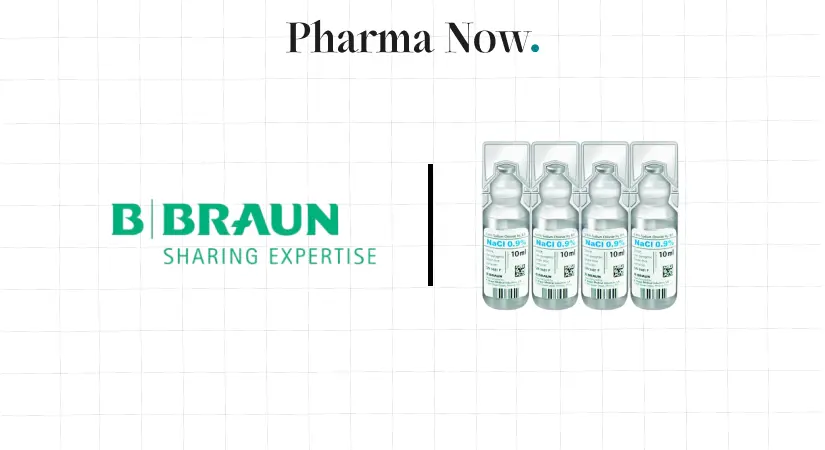
Zinc oxide particulate in a sterile IV fluid distributed across U.S. hospitals for six months has prompted B. Braun Medical Inc. to issue a voluntary nationwide recall of three lots of 0.9% Sodium Chloride Injection USP, 100 mL, in a 150 mL PAB® Container, a product used routinely as a diluent and electrolyte source in both adult and pediatric patients.
The recalled lots (J6B435, J6B444, J6B457; expiration April 2027; catalog no. S8004-5264; NDC 0264-1800-32) were distributed to hospital and healthcare facilities nationwide from February 27, 2026 through August 3, 2026. B. Braun announced the recall on August 19, 2026; FDA published the notice on August 28, 2026. No serious injuries, deaths, or adverse events have been reported to date.
For QA directors and sterile manufacturing leads, the contamination source warrants close attention. Zinc oxide is not a raw material in saline formulation; its presence points upstream, toward container component coatings, equipment wear surfaces, or water system interactions with zinc-containing alloys. Under 21 CFR Part 211.68 and 211.94, equipment and container-closure systems must not be reactive, additive, or absorptive in ways that alter product safety. A zinc oxide finding in a non-PVC, non-DEHP flexible container system narrows the investigation to component interfaces, fill-line hardware, or compounding equipment where zinc-bearing materials may have shed particulate under process conditions.
The risk profile is clinically significant. Intravenous administration of particulate-contaminated product carries a reasonable probability of pulmonary emboli, vascular occlusion, phlebitis, immune activation, organ dysfunction, and hemolysis, consequences that place this recall squarely in the Class II risk tier. For plant heads running comparable sterile fill-finish lines, the event reinforces the inspection sensitivity around visible and sub-visible particulate controls, including 100% visual inspection qualification, container-closure integrity testing, and incoming component qualification under ICH Q10 lifecycle principles.
CAPA frameworks responding to a zinc oxide finding should trace the contamination vector through process FMEA, with particular scrutiny on equipment material-of-construction records, water-for-injection system passivation status, and component supplier change notifications. Any unannounced supplier change to container or stopper formulation that introduced a zinc-containing additive would represent a reportable change under 21 CFR Part 314.70 and a process validation deviation requiring documented impact assessment.
B. Braun is notifying distributors and customers by mail and arranging return and replacement. Facilities holding affected lots should initiate quarantine and return to place of purchase; adverse events may be reported via FDA MedWatch online or by calling 1-800-332-1088.
The contamination window spanning nearly six months of distribution will likely draw scrutiny to B. Braun's incoming and in-process particulate detection protocols during any subsequent FDA inspection of the implicated facility.
Source: U.S. Food and Drug Administration recalls database via FDA.gov RSS Feed, August 28, 2026.
Reporting on the science, business and regulation shaping the pharmaceutical industry.
More from Pharma News
All stories →Hepion Pharmaceuticals Gains FDA Backing for GV104 Modeling
FDA Extends Coral Snake Antivenin Lot CL6814 Expiration to June 2026 on Stability Data

Discussion