FDA Sets RDEA Meeting Requirements for Rare Disease Endpoints
FDA's RDEA Pilot Program now requires complete, structured meeting packages before scheduling, incomplete submissions are returned with a deficiency list.

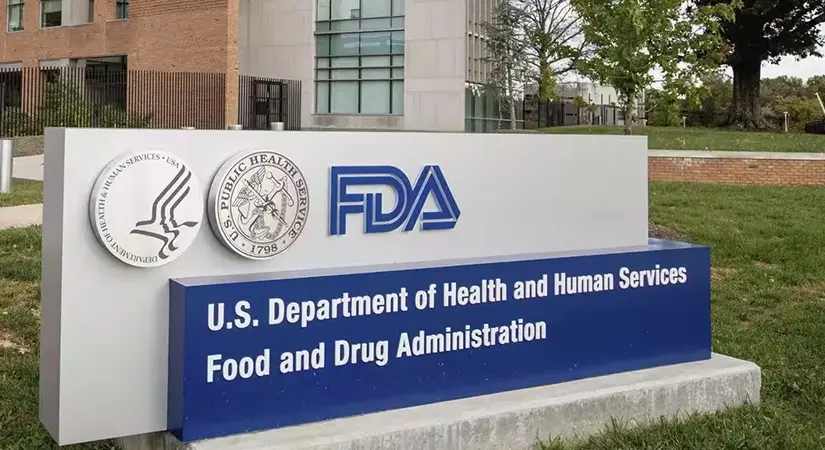
Regulatory affairs teams advancing novel endpoints under FDA's Rare Disease Endpoint Advancement (RDEA) Pilot Program now have a codified checklist of submission requirements, and incomplete packages will be returned without a meeting being scheduled. The guidance, published August 24, 2026, sets a clear gatekeeping standard: no complete package, no meeting.
The required meeting package elements span administrative identifiers through to full estimand specifications. Sponsors must provide the product name, IND or pre-IND application number, a proposed agenda with time allocations per item, and a structured list of questions with contextual summaries. For follow-up meetings, a summary of new supporting information is mandatory. Packages that omit applicable elements without explicit justification will be flagged as deficient.
For all novel endpoints, the content requirements are substantive. Sponsors must document the target population, the concept of interest and its context of use, and a rationale covering natural history, pathophysiology, and precedent use in analogous disease programs. Patient engagement plans, including experience to date, are a required element, not an optional addendum. Composite or multi-component endpoints require component-level descriptions and a construction methodology.
The estimand framework is embedded directly into the package structure. Sponsors must specify the treatment, target population with diagnostic criteria, the novel endpoint variable definition, intercurrent event handling strategies, and the population-level summary measure, aligning with ICH E9(R1) expectations that regulators have increasingly applied to rare disease programs. Where real-world data sources are incorporated, the package must address data category, reliability, accrual processes, relevance to the research question, completeness of key data elements, validation efforts, and any linkage to external data sources.
Missing data management is addressed explicitly: sponsors must describe procedures to prevent missingness and confirm that handling strategies are aligned with the stated estimand. Ethical and human subjects' protection information rounds out the required content. Sponsors may append information beyond the listed elements where relevant to their proposed endpoint, but the core checklist is non-negotiable for scheduling.
The completeness threshold FDA has set here will function as an early filter, making pre-submission internal review against this checklist a practical prerequisite before any RDEA meeting request is filed.
Source: FDA Drugs Development Resources via FDA.gov RSS Feed, August 24, 2026.
Simantini Singh Deo works on the latest and trending news happening daily in the pharma world.
More from Pharma News
All stories →Hepion Pharmaceuticals Gains FDA Backing for GV104 Modeling
FDA Extends Coral Snake Antivenin Lot CL6814 Expiration to June 2026 on Stability Data

Discussion