The Biopharma Talent Gap Is Becoming A Growth Bottleneck
Biopharma talent shortage: 60K unfilled roles, root causes, impact, and solutions for biomanufacturing, regulatory affairs, and R&D gaps.


The biopharma industry is one of the fastest-growing sectors in the world, driven by breakthroughs in personalized medicine, cell and gene therapies, and digital health technologies. Yet beneath this wave of innovation lies a deepening problem, the people needed to sustain and scale this growth are simply not available in sufficient numbers.
The talent gap in biopharma is no longer just a hiring challenge. It has become a structural bottleneck that threatens pipelines, delays drug development, and limits the industry's ability to deliver on its promise to patients.
How Big Is The Problem?
The scale of the talent shortage in biopharma is significant and well-documented. The sector currently employs over 800,000 individuals in the United States alone, yet there are more than 60,000 open job vacancies, representing a labor shortage of roughly 8%. Projections point to a 7% growth in job opportunities across the life, physical, and social sciences by 2028, outpacing growth in most other fields.
At the same time, the US biopharmaceutical sector is projected to grow by 30% between 2024 and 2032, creating an even wider gap between demand for talent and available supply. What makes this particularly difficult is that the shortage is not evenly distributed. It is most acute in highly specialized areas such as biomanufacturing, regulatory affairs, analytical development, quality control, and advanced therapy development.
A BIO industry survey found that 80% of firms struggle to fill critical roles in research, manufacturing, and regulatory affairs. And a 2022 survey found that 96% of biopharma executives believe the talent shortage will persist, with no easy resolution in sight.
Why Is The Talent Gap Getting Worse?
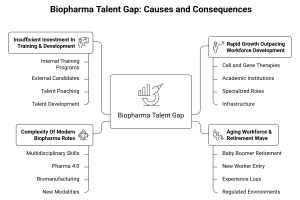
Understanding the root causes of the talent gap is essential before organizations can begin to address it. Several overlapping forces are driving the shortage, and they are likely to intensify rather than ease in the coming years.
1) Rapid Growth Outpacing Workforce Development
The biopharma industry has expanded at a pace that academic and training institutions have simply not been able to match. Cell and gene therapies alone went from under 300 clinical trials in 2018 to over 2,000 in a matter of years.
The infrastructure needed to train the laboratory technicians, biomanufacturers, data scientists, and regulatory experts to support this growth has not kept up. Many specialized roles, particularly in regenerative medicine require skills that are not widely taught in standard degree programs or even associate-level courses.
2) An Aging Workforce & The Retirement Wave
The biopharma industry is facing a generational transition. In the coming decades, around 80 million baby boomers are expected to retire in the US, while only approximately 40 million new workers are expected to enter the job market during the same period.
In an industry where experience and institutional knowledge are critically important, especially in regulated manufacturing and quality environments, losing seasoned professionals at this scale creates gaps that cannot simply be filled by hiring recent graduates.
3) The Complexity Of Modern Biopharma Roles
Roles in biopharma are becoming increasingly multidisciplinary. The rise of Pharma 4.0 and digital transformation in the laboratory means that new hires are now expected to be skilled not just in the science of biopharma but in the technology and data systems that drive it.
Biomanufacturing roles, for example, require an understanding of both biology and industrial operations under Good Manufacturing Practices (GMP), a combination that is genuinely niche and takes years to develop. As therapeutic solutions grow more complex and new modalities emerge, the bar for entry-level competence continues to rise.
4) Insufficient Investment In Training & Development
Across the industry, investment in internal training and development programs has not kept pace with the speed of innovation. This has made it harder for HR teams to develop the talent they already have, leaving organizations dependent on a shrinking pool of experienced external candidates.
Competition for this limited pool is fierce, with companies frequently poaching senior talent from one another, creating instability and turnover at the leadership level without actually growing the overall talent base.
Where The Gap Hurts Most?
While the talent shortage affects the entire biopharma value chain, certain areas are experiencing the greatest strain.
a) Biomanufacturing
Biomanufacturing is arguably the most critical pressure point. Companies frequently struggle to hire enough skilled technicians and engineers to run highly specialized production processes — whether that means operating fermenters for biologic drugs or managing cell therapy manufacturing suites.
Essentially all major biopharma companies report difficulty finding experienced biomanufacturing personnel when they expand facilities. The problem is particularly severe in cell and gene therapy, where training employees for aseptic processing work in cleanrooms has been described as one of the most significant bottlenecks in the field.
b) Regulatory Affairs & Quality
Regulatory affairs and quality are also acutely affected. As the regulatory landscape becomes more complex and global, demand for experienced regulatory professionals has surged.
Roles in quality control and analytical development are among those with the most egregious shortages, according to the Alliance for Regenerative Medicine, with the gap in manufacturing quality roles expected to widen the most in the years ahead.
The FDA itself has recognized this, allocating additional funds to create the Office of Therapeutic Products and fill hundreds of positions to meet the demand from anticipated cell and gene therapy approvals.
c) R&D & Data Science
R&D and data science face their own version of the problem. As AI, machine learning, and digital tools become embedded in drug discovery and clinical development, demand for professionals who sit at the intersection of biology and data science has grown faster than supply. Organizations that cannot access this hybrid talent risk falling behind competitors who can.
Biomanufacturing talent shortages directly impact manufacturing timelines and quality.
Understand the competencies required for GMP-compliant production.
→ Read: Challenges & Strategies in Pharma Manufacturing
The Cost Of Getting This Wrong
The consequences of the biopharma talent gap go well beyond delayed hiring timelines. When critical roles go unfilled or are filled by underqualified candidates, the downstream effects can be severe:
- Drug development timelines lengthen, pushing back potential approvals and delaying patient access to new treatments
- Manufacturing errors and compliance failures become more likely when experienced personnel are absent
- Institutional knowledge is lost when senior employees retire or are poached, increasing the risk of protocol deviations and quality failures
- Companies in survival mode freeze hiring and cut pipelines, weakening long-term innovation capacity
- The overall cost of talent acquisition rises as competition intensifies, placing additional financial pressure on early-stage companies with limited resources
A 2021 study estimated that the manufacturing skills gap across industries could cost the US economy as much as $1 trillion by 2030. In biopharma, where the stakes include patient safety and regulatory compliance, the cost of unfilled roles is even more tangible.
What the Industry Is Doing To Close The Gap?
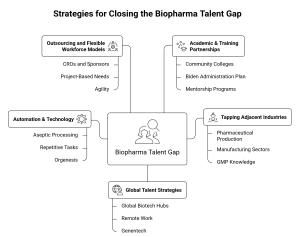
There is no single solution to the biopharma talent gap, but a range of strategies are being pursued by companies, governments, and academic institutions to address the problem from multiple angles.
1) Academic & Training Partnerships: Academic and training partnerships are one of the most promising long-term responses. Some regions have developed workforce training programs in collaboration with community colleges to equip workers with practical biomanufacturing skills.
The Biden Administration's 2023 biotech workforce action plan introduced mentorship programs, strategies to raise public awareness of life sciences careers, and new pathways for workers in adjacent industries to retrain and join the biopharma workforce.
2) Tapping Adjacent Industries: Tapping adjacent industries is another avenue gaining traction. Workers from pharmaceutical production and other manufacturing backgrounds can be trained to develop the specific skills needed for advanced therapy manufacturing, broadening the available talent pool without starting from scratch. This is especially relevant for biomanufacturing roles where foundational GMP knowledge already exists but modality-specific training is needed.
3) Global Talent Strategies: Global talent strategies are becoming standard practice for larger organizations. Companies like Genentech have expanded their recruitment into global biotech hubs such as India and Singapore, capitalizing on strong life sciences talent pipelines in those regions. For roles that can be performed remotely or with flexible arrangements, widening the geographic scope of recruitment can significantly expand the available pool.
4) Automation & Technology: Automation and technology offer a partial solution to the headcount problem in manufacturing. Organizations such as Orgenesis have turned to automation to reduce dependence on hard-to-find aseptic processing specialists. Automating repetitive or technically demanding tasks frees skilled personnel to focus on higher-value work and can help organizations maintain output even when fully staffed teams are not achievable.
5) Outsourcing and Flexible Workforce Models: Outsourcing and flexible workforce models are increasingly common, particularly as in-house teams contract and project-based demand fluctuates. Sponsors and CROs are turning to outsourced staffing solutions to fill critical skill gaps and stabilize operations without increasing fixed headcount, a model that offers agility in a volatile market.
Closing the talent gap requires building capability from within.
Learn how pharma organizations develop regulatory and quality talent through structured training.
→ Read: Pharma Compliance Training & Regulatory Preparedness
Wrapping It Up!
The biopharma talent gap is not a temporary disruption, it is a structural challenge that is deepening as the industry grows faster than the workforce that supports it.
From biomanufacturing to regulatory affairs to data science, the shortage of skilled professionals is already slowing timelines, inflating costs, and threatening the quality and compliance standards the industry depends on.
Addressing this gap requires a coordinated effort across industry, like academia, and government, investing in training pipelines, embracing new talent sources, and building internal development programs that grow the workforce from within.
Organizations that treat talent strategy as a core part of their growth strategy, rather than a secondary concern, will be better positioned to navigate the challenges ahead and turn innovation into impact.
FAQs
1) How Big Is The Biopharma Talent Gap Today?
The biopharma talent gap is substantial, with over 60,000 open roles in the United States alone and a labor shortage of around 8%. Demand is projected to grow even faster as the biopharma sector expands by 30% between 2024 and 2032, further widening the gap. The shortage is especially severe in specialized areas such as biomanufacturing, quality, regulatory affairs, and advanced therapies. Many companies report that these unfilled roles directly slow drug development and manufacturing timelines, creating operational bottlenecks.
2) Why Is The Biopharma Workforce Shortage Getting Worse Each Year?
The talent shortage is intensifying because industry growth is outpacing the capacity of academic and training programs to prepare skilled workers. At the same time, the retirement of experienced professionals is accelerating, leaving fewer qualified candidates to fill high-skill roles. Modern biopharma requires multidisciplinary capabilities—spanning science, technology, digital tools, and GMP operations—which take years to develop. Combined with limited investment in internal training programs, organizations increasingly compete for the same shrinking pool of experts.
3) Which Areas Of Biopharma Are Most Impacted By The Talent Gap?
Biomanufacturing faces the most acute shortages, especially in cell and gene therapy, where cleanroom and aseptic processing skills are highly specialized and difficult to teach quickly. Regulatory affairs, analytical development, and quality control are also heavily affected due to growing regulatory complexity and global oversight requirements. R&D and data science roles are increasingly hard to fill as digital transformation demands hybrid expertise in biology and advanced analytics. These shortages directly contribute to production delays, compliance risks, and slower innovation cycles.
Reporting on the science, business and regulation shaping the pharmaceutical industry.
More in HR in Pharma
All articles →
Crisis Management: HR's Role in Business Continuity in the Pharmaceutical Industry

Top HR Strategies for Successful Pharma Mergers: People, Culture, and Integration 2025

Discussion