Bangalore's Pharma Boom: Inside India's Fastest-Growing Life Sciences Hub
Bangalore is home to Biocon, Syngene, AstraZeneca and 100+ pharma firms, India's fastest-growing life sciences and biotech hub.

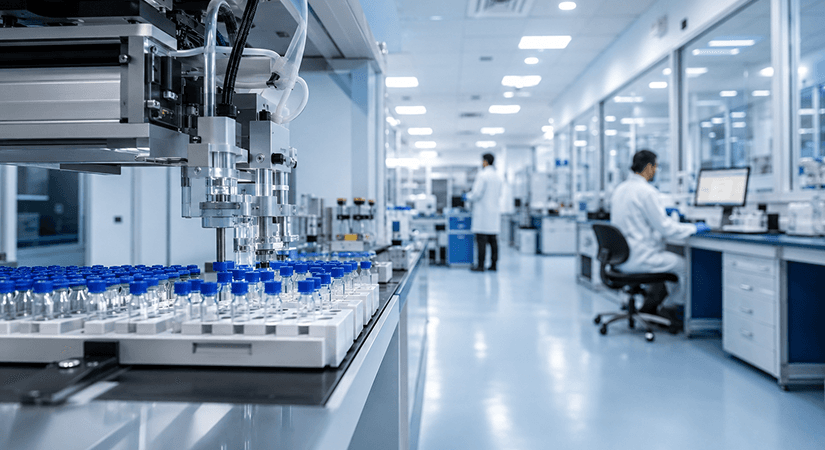
Bangalore is best known as India's tech capital, but over the last two decades, it has quietly built one of the country's strongest pharmaceutical and biotech ecosystems. The city now sits alongside Hyderabad, Mumbai, and Pune as one of India's top life sciences destinations, drawing global drugmakers, homegrown biotech pioneers, and hundreds of research-driven startups.
Unlike Hyderabad, which built its reputation largely around vaccine and bulk drug manufacturing, or Mumbai, which has long served as the corporate headquarters for many Indian pharma majors, Bangalore's growth has followed a different path. Its strength lies in the overlap between biotechnology, digital health, and research services, supported by a large talent pool that moves easily between IT and life sciences work.
This guide explains why Bangalore's pharma industry has grown so rapidly, who the major players are, and what this means for the sector's future.
Why Bangalore Became a Pharma and Biotech Hotspot
Bangalore's rise as a pharma hub did not happen by accident.
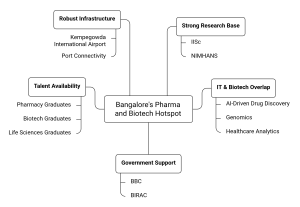
A few factors came together at the right time:
- Strong research base: Institutions such as the Indian Institute of Science (IISc) and NIMHANS provide a steady pipeline of researchers and skilled scientists.
- IT and biotech overlap: Bangalore's existing strengths in software and data have helped biotech firms adopt AI-driven drug discovery, genomics, and healthcare analytics more quickly than in most Indian cities.
- Government support: Karnataka's Department of IT, BT and S&T, along with agencies such as the Bangalore Bioinnovation Centre (BBC) and BIRAC, actively funds and incubates life sciences startups.
- Talent availability: A large pool of B.Pharm, M.Pharm, biotechnology, and life sciences graduates from local colleges keeps hiring costs manageable for companies.
- Infrastructure: Kempegowda International Airport is one of India's busiest cargo hubs, facilitating pharma exports, while road and rail links connect the city to major South Indian ports.
Key Companies Driving the Sector
Bangalore's pharma and biotech map includes a mix of Indian majors, multinational giants, and specialised research firms.
Biocon is the most recognised name here. Founded in 1978 by Kiran Mazumdar-Shaw, it grew from an industrial enzymes company into one of the world's leading biopharmaceutical firms. Biocon manufactures generic active pharmaceutical ingredients (APIs) sold in around 120 countries, as well as biosimilars for diabetes, cancer, and autoimmune conditions. Its portfolio includes insulin biosimilars, Trastuzumab, and Nimotuzumab-based products.
Syngene International, a Biocon subsidiary launched in 1993, is a leading contract research and manufacturing organisation (CRMO). It works as an extension of R&D teams for global clients, offering medicinal chemistry, biologics process development, preclinical toxicology, and clinical manufacturing services.
MedGenome focuses on genomics-based diagnostics and drug discovery. It runs large-scale next-generation sequencing labs and maintains a sizeable South Asian genetic database used for biomarker research and population genomics.
Pandorum Technologies works in 3D bioprinting and regenerative medicine, including bioprinted liver tissue models used to improve the accuracy of preclinical drug testing.
International players with a strong presence in Bangalore include AstraZeneca, Novartis, Abbott, GSK, Johnson & Johnson, and Merck (MSD). Many of these operate Global Capability Centres (GCCs) here, handling regulatory affairs, pharmacovigilance, clinical data management, and biostatistics for their worldwide operations.
This shift is significant because it moves Bangalore beyond simple manufacturing support and turns it into a decision-making centre for global drug safety and compliance work. Companies such as Hikal, Strides Pharma, Hetero, and Apotex also run manufacturing units in and around the city, supplying APIs, intermediates, and speciality chemicals to pharmaceutical, animal health, and crop protection industries worldwide.
Bangalore's companies supply the world. Here's the full picture of India's generic pharma export machine.
→ Read: Top 11 Generic Pharma Exporters In India Fueling Global Healthcare
Career and Business Opportunities
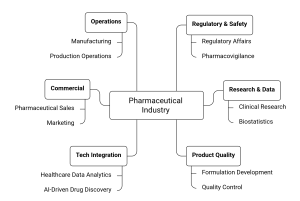
For professionals and job seekers, Bangalore's pharma sector offers roles across several functions:
- Regulatory affairs and pharmacovigilance
- Clinical research and biostatistics
- Formulation development and quality control
- Healthcare data analytics and AI-driven drug discovery
- Pharmaceutical sales and marketing
- Manufacturing and production operations
According to Naukri's JobSpeak data, pharma and biotech hiring grew strongly through 2025, with life sciences roles rising sharply and R&D hiring also picking up pace. Bengaluru was named among the cities with the strongest pharma hiring activity in the country.
For entrepreneurs, Karnataka's investor-friendly policies, subsidised industrial land, and simplified licensing make it easier to set up manufacturing or research units compared to many other states.
Checklist: Is Bangalore the Right Pharma Base for You?
Before setting up operations, hiring, or investing in Bangalore's pharma sector, consider this quick checklist:
- Do you need access to strong R&D talent and research institutions?
- Would proximity to CROs and CRMOs like Syngene benefit your product development?
- Is export logistics through Kempegowda International Airport important for your business?
- Do you want access to government incubation support through BBC or BIRAC?
- Are you looking to build or expand a Global Capability Centre for regulatory, safety, or data functions?
If you checked most of these boxes, Bangalore is likely a strong fit.
What's Next for Bangalore's Pharma Industry
India's overall pharmaceutical sector is expanding fast. The domestic market was valued at around USD 60 billion in 2024–25, and exports touched USD 30.5 billion in the same period, according to government data. The industry is projected to reach USD 130 billion by 2030. Bangalore is expected to capture a meaningful share of this growth, particularly in biologics, biosimilars, genomics, and AI-assisted drug discovery, areas where its tech and research base give it a natural edge over more traditional manufacturing-focused pharma cities.
As global companies continue expanding their Global Capability Centers (GCCs) and Indian biotech startups scale up, Bangalore's position as a life sciences hub looks set to strengthen further over the next few years.
Bangalore's growth is partly fueled by M&A activity reshaping Indian pharma's global ambitions.
→ Read: Top Pharma Mergers In 2026: Key Deals Explored
FAQs
1. Which is the biggest pharma company in Bangalore?
Biocon is the largest and most well-known pharma and biotech company headquartered in Bangalore.
2. What industries make up Bangalore's pharma sector?
The sector includes API manufacturing, biosimilars, formulations, contract research (CROs), genomics, and Global Capability Centres for MNCs.
3. Is Bangalore good for a pharma career?
Yes, it offers strong demand across R&D, regulatory affairs, pharmacovigilance, manufacturing, and healthcare data roles.
4. Where are most pharma companies located in Bangalore?
Most are concentrated in the Bommasandra–Jigani–Electronic City corridor, Hosur Road, and Whitefield areas.
5. Does Bangalore manufacture APIs and biosimilars?
Yes, companies like Biocon and Hikal manufacture APIs, biosimilars, and speciality ingredients for global markets.
Reporting on the science, business and regulation shaping the pharmaceutical industry.
More from the Knowledge Hub
All articles →
Pharmaceutical Regulatory Affairs: Challenges, Innovations, and Global Harmonization

Cold Chain Logistics in Pharma: Building Resilient Supply Chains

Discussion