Hantavirus On A Global Scale: What You Need To Know About This Emerging Threat?
A global breakdown of hantavirus disease forms, transmission routes, regional hotspots, international research and why it is an emerging threat.


Over the last few years, the world has become more sensitive to infectious diseases, and every new virus triggers concern. While COVID-19 dominated global attention, another pathogen has been quietly circulating across continents for decades — Hantavirus.
Although not new, changing environmental and social factors have elevated the importance of understanding this virus. Hantavirus infections are rare but can be severe, sometimes leading to kidney failure or life-threatening respiratory conditions. With no specific cure available, awareness and prevention are the most powerful tools.
This article simplifies the global scenario of Hantavirus — what it is, how it spreads, how countries are responding, and what individuals can do to stay protected!
What Exactly Is Hantavirus?
Hantaviruses are a group of viruses carried primarily by rodents. These viruses do not usually make the animals sick, but they can cause serious illness in humans when transmission occurs. There are two major forms of hantavirus-related diseases.
The first is Hantavirus Pulmonary Syndrome (HPS), which is mostly found in North and South America. It starts with fever, fatigue, and muscle aches but can rapidly progress to respiratory distress as the lungs fill with fluid.
The second form is Hemorrhagic Fever with Renal Syndrome (HFRS), which occurs primarily in Europe and Asia. This illness affects the kidneys and may lead to internal bleeding, abdominal pain, and reduced urine output.
Key Disease Forms Include:
- Hantavirus Pulmonary Syndrome (HPS) – Severe respiratory involvement
- Hemorrhagic Fever With Renal Syndrome (HFRS) – Kidney and bleeding complications
Both conditions, if left untreated, can become life-threatening, making awareness essential.
How Do People Get Infected?
Hantavirus primarily spreads through contact with infected rodents or contaminated environments, but certain strains can spread from person to person, making it important to understand both routes of transmission.
Most hantaviruses (such as those found in North America and Europe) do not spread between humans. However, the Andes virus, found mainly in South America, has been proven to transmit from person to person, particularly through close contact with an infected individual’s respiratory secretions during the early stages of illness.
The Main Ways People Become Infected iInclude:
1. Environmental Exposure (Most Common Globally)
People typically get infected when they come into contact with virus particles shed by rodents. This happens through:
- Inhaling contaminated air containing dried rodent urine, droppings, or saliva
- Cleaning barns, sheds, attics, basements, or abandoned buildings
- Disturbing rodent nests in homes, farms, or outdoor structures
- Camping or sleeping outdoors where rodents are active
- Handling contaminated items such as firewood, grains, boxes, or stored materials
- Being bitten by an infected rodent (rare but possible)
2. Person-to-Person Transmission (Strain-Specific)
Only certain hantaviruses, especially the Andes virus in South America, have shown the ability to spread between humans. This is believed to occur through:
- Close contact with an infected person’s saliva or respiratory droplets
- Prolonged face-to-face exposure, such as caring for a sick family member
- Sharing living spaces during the early infectious stage
This human-to-human transmission is not observed in all hantavirus types, but its existence underscores why awareness and early detection are crucial. Because rodents shed the virus without appearing sick, people often come into contact with contaminated environments unknowingly. Being alert to rodent activity and avoiding direct exposure remains the most effective way to prevent infection.
Where Is Hantavirus Found Globally?
Hantavirus strains are distributed across many regions of the world, and each area has its own rodent species capable of carrying and spreading the virus. Because different rodents host different strains, the severity, symptoms, and risk of human infection vary widely between continents. Some regions experience occasional, isolated cases, while others face recurring outbreaks linked to environmental and occupational factors.
Global Presence Includes:
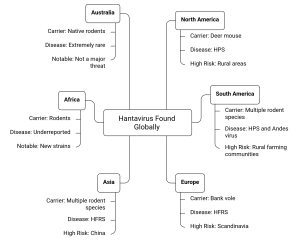
1) North America — Found mainly in the U.S. and Canada, with the deer mouse being the most common carrier. Most cases are associated with rural or forested areas, especially in the Southwest and West. Although infections are relatively rare, they tend to be severe, often leading to Hantavirus Pulmonary Syndrome (HPS). Risk increases among campers, hikers, farmers, and people cleaning rodent-infested structures.
2) South America — Hantavirus is present in Argentina, Chile, Brazil, Paraguay, and Bolivia, where several rodent species carry different strains. This region is notable because the Andes virus, found primarily in Argentina and Chile, has shown the ability to spread from person to person, making it one of the more concerning strains. Outbreaks often occur in rural farming communities and forested regions.
3) Europe — Cases are most commonly reported in Scandinavia, Germany, Russia, and Eastern Europe. The virus here is typically carried by the bank vole and leads to a milder form of infection known as nephropathia epidemica, a type of Hemorrhagic Fever with Renal Syndrome (HFRS). People in forestry work, military training areas, and those spending extended time outdoors face the highest risk.
4) Asia — Asia reports some of the highest hantavirus activity, especially in China and Korea, where rural farming, grain storage, and military training environments often involve close contact with rodent habitats. Several strains in Asia cause various forms of HFRS, ranging from mild to severe. Seasonal outbreaks are common, particularly in agricultural regions during harvest periods.
5) Africa — Rodent populations across parts of West, Central, and East Africa carry hantavirus-like viruses, but human cases are believed to be significantly underreported due to limited diagnostic capacity and surveillance. Research continues to identify new rodent hosts and strains on the continent.
6) Australia — Hantaviruses have been detected in native rodents, but human infections are extremely rare. Few confirmed cases exist, and the virus is not considered a major public health threat in the region.
The Andes virus, the only hantavirus strain capable of human-to-human transmission, was at the centre of a real-time global crisis in 2026.
The full story of the MV Hondius outbreak, from patient zero to Tenerife.
→ Read: Hantavirus Cruise Ship Crisis | MV Hondius Outbreak Explained
International Research And Collaboration
Scientists across continents are working together to better understand hantavirus, particularly because its behavior changes depending on region, rodent species, and environmental conditions. Much of the current knowledge has emerged through long-term field studies, outbreak investigations, and coordinated data-sharing between national health agencies and global research networks.
Key Global Research Contributions Include:
- The 1993 Four Corners outbreak in the United States marked a major breakthrough in hantavirus research, leading to the identification of Hantavirus Pulmonary Syndrome (HPS). Following this, the CDC strengthened rodent surveillance programs across rural North America, particularly targeting deer mouse populations, and established clearer links between environmental exposure and human infection.
- Research in South America, especially in Chile and Argentina, has focused on the Andes virus, where outbreak investigations in rural farming communities revealed rare cases of person-to-person transmission among close contacts. This discovery challenged earlier assumptions and led to updated global surveillance and response guidelines.
- Studies from China and South Korea have been crucial due to the high number of Hemorrhagic Fever with Renal Syndrome (HFRS) cases. These countries have implemented large-scale vaccination programs for high-risk groups and maintain continuous rodent monitoring systems, improving early detection and reducing severe outcomes.
- Research across Europe, particularly in Finland, Sweden, and Germany, has examined how ecological cycles affect rodent populations. Findings show that outbreaks often align with fluctuations in natural food availability for bank voles, such as mast years when tree seed production increases, helping improve outbreak prediction models.
Global research is one side of the picture. India's own seroprevalence data tells another.
Evidence from studies dating back to 1964 reveals hantavirus has been quietly circulating in India for decades.
→ Read: What Do We Know About Hantavirus In India?
Key Areas Of Global Research Include:
- Identification of new rodent hosts in understudied regions such as parts of Africa and Southeast Asia
- Monitoring genetic changes in the virus to understand how different strains evolve over time
- Development of vaccines and antiviral therapies, including targeted vaccination programs already in use for HFRS in China
- Study of environmental drivers like climate change, deforestation, and agricultural expansion that influence rodent population surges
- Strengthening early-warning systems through integrated animal surveillance and real-time human case reporting
Collaboration between countries has become increasingly important due to the behavior of certain strains, particularly the Andes virus, which has shown limited human-to-human transmission. This unique characteristic makes coordinated international research, rapid information sharing, and cross-border outbreak monitoring essential for global preparedness and response.
Why Is Hantavirus Considered An Emerging Global Threat?
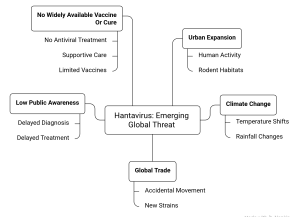
Hantavirus is considered an emerging global threat not because it is new, but because changing environmental and human factors are increasing the chances of exposure.
As cities expand, human activity continues to overlap with natural rodent habitats, bringing people into closer contact with species that carry the virus.
Climate change is also affecting rodent behavior, shifts in temperature and rainfall can boost food availability, leading to sudden increases in rodent populations.
In many regions, public awareness remains low, causing early cases to be overlooked or mistaken for common flu-like illnesses. The absence of widely available vaccines or specific treatments adds to the overall concern.
Factors Contributing To Its Growing Threat Include:
- Urban expansion increasing human–rodent interaction
- Climate change influencing rodent populations
- Global trade facilitating accidental rodent movement
- Low public awareness delaying diagnosis
- Lack of widely available vaccines or treatments
In Conclusion
Hantavirus may dominate global headlines and remains a serious infection that deserves attention, especially as changing environments bring people and rodents into closer contact. What makes the virus manageable is that prevention is largely within our control.
Staying aware of local risks, keeping living spaces clean, and recognizing early symptoms can make a significant difference. With consistent awareness and responsible habits, communities can reduce exposure and stay ahead of this evolving health threat.
FAQs
1) What Is Hantavirus?
Hantavirus is a group of viruses carried primarily by rodents, and humans can become infected when they inhale particles from contaminated urine, droppings, or saliva. The virus can cause two major types of illnesses: Hantavirus Pulmonary Syndrome (HPS), which affects the lungs and can lead to respiratory failure, and Hemorrhagic Fever with Renal Syndrome (HFRS), which affects kidney function. While rare, these infections can be serious, making awareness and prevention essential.
2) What Is Hantavirus Caused By?
Hantavirus infection is caused by exposure to environments contaminated by infected rodents. The virus spreads through airborne particles from rodent urine, droppings, saliva, or nesting materials. Although rare, rodent bites can also transmit the virus. Most strains do not spread between humans, but the Andes virus in South America is a notable exception, as it has demonstrated limited person-to-person transmission.
3) Is Hantavirus Curable?
There is no specific antiviral cure for hantavirus. Treatment focuses on supportive medical care, such as oxygen therapy, fluid management, and intensive monitoring to address respiratory or kidney complications. Early hospitalization significantly improves survival outcomes. Some countries, particularly China and South Korea, offer vaccines for certain HFRS-causing strains, but there is currently no globally available vaccine for hantavirus.
4) What Is The Death Rate Of Hantavirus?
The death rate of hantavirus depends on the specific strain involved. Hantavirus Pulmonary Syndrome (HPS), most common in the Americas, is considered the more severe form and has a fatality rate of roughly 30–40%. Hemorrhagic Fever with Renal Syndrome (HFRS), which occurs mainly in Europe and Asia, has a broader range of severity, with fatality rates typically between 1–15%. The outcome generally improves with early detection and rapid supportive medical care.
5) Where Did The Hantavirus Start?
Hantavirus was first identified during the Korean War in the early 1950s, when soldiers developed severe kidney-related illnesses later known as HFRS. The virus was eventually named after the Hantan River in South Korea, near where many early cases were recorded. Although the virus likely existed long before it was recognized, this region is considered the place where hantavirus was first documented and scientifically traced.
6) How Long Does Hantavirus Take To Show Up?
Symptoms of hantavirus typically appear between one and six weeks after exposure, with most people developing signs of illness within two to four weeks. The incubation period can vary depending on the strain and the level of exposure, but in general, the onset is gradual, beginning with fever and fatigue before progressing into more severe respiratory or kidney-related symptoms.
Reporting on the science, business and regulation shaping the pharmaceutical industry.
More from the Knowledge Hub
All articles →
Pharmaceutical Regulatory Affairs: Challenges, Innovations, and Global Harmonization

Cold Chain Logistics in Pharma: Building Resilient Supply Chains

Discussion