PCOS To PMOS: The Major Shift In Women’s Health Terminology
PCOS renamed PMOS May 2026 | The 14-year story, why old name harmed patients, metabolic implications and what changes for diagnosed women.

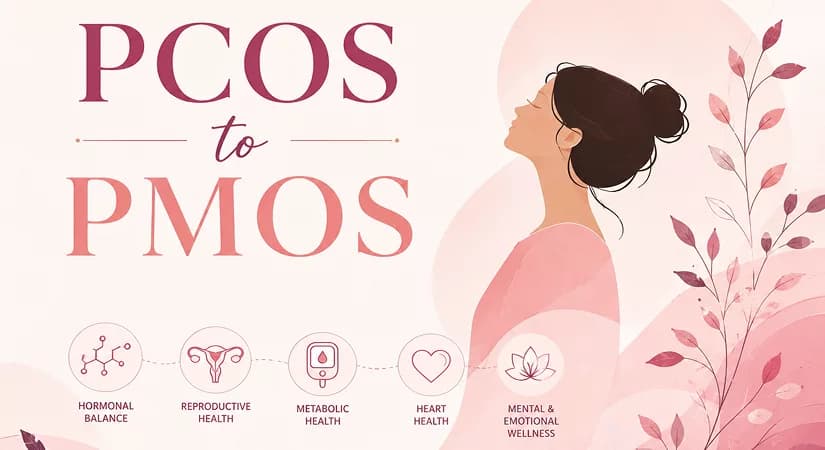
If you've ever been told you have PCOS or if you've spent hours on the internet trying to figure out why your periods are all over the place, why your skin won't cooperate, or why losing weight feels twice as hard as it should, this news is for you.
The condition that has quietly affected hundreds of millions of women for decades just got a new name. And while one letter might not sound like a big deal, the story behind it is anything but small.
On May 12, 2026, a landmark paper published in “The Lancet” officially renamed polycystic ovary syndrome — PCOS — to Polyendocrine Metabolic Ovarian Syndrome, or PMOS. The change didn't happen overnight. It took 14 years, the collaboration of 56 patient and professional organizations across the world, and input from more than 22,000 patients and healthcare professionals on every continent.
This is one of the most thorough medical renaming processes in history, and the reason it happened is both simple and long overdue: the old name was wrong, and that wrongness was quietly harming people.
Why Was The Old Name “PCOS” A Problem?
To understand why this matters, you have to understand what "Polycystic Ovary Syndrome" actually implies and why that implication was misleading from the very beginning. The word "polycystic" means many cysts. So naturally, for decades, both patients and many doctors assumed this condition was defined by cysts forming on the ovaries.
Except it isn't. What appears on an ultrasound scan are not cysts in any real clinical sense — they are small, immature follicles that have stopped developing properly. They are arrested follicles, not pathological growths. The terminology was a misnomer from day one, and it caused a cascade of problems that rippled through millions of lives.
Here Is What That One Wrong Word Cost People:
- Missed Diagnoses — Patients who didn't have visible follicles on their scans were sometimes dismissed entirely, even when they were suffering from every other symptom of the condition.
- Misdirected Worry — Patients who were told they had "cysts" spent years anxious about the wrong thing, while the real drivers of their condition went unaddressed.
- Overlooked Risks — Because the name pointed everyone's attention toward the ovaries, the hormonal chaos, the metabolic dysfunction, and the cardiovascular risks were consistently treated as secondary concerns.
- Staggering Underdiagnosis — The World Health Organization estimates that around 70% of people with this condition are undiagnosed. A name that pointed in the wrong direction played no small role in that number.
Dr. Alla Vash-Margita, associate professor of obstetrics, gynecology and reproductive sciences at Yale University, put it plainly: "By calling this condition polycystic ovary, we're missing the big picture. There was a lot of stigma and myth related to this name. People thought they have large cysts, which they do not have."
What Does The New Name Actually Mean?
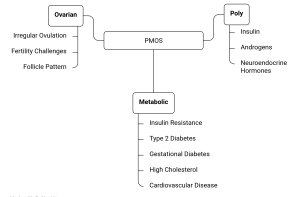
PMOS stands for polyendocrine metabolic ovarian syndrome. Each word was chosen deliberately, and together they tell a much more honest story about what this condition actually is!
- “Polyendocrine” is the most important shift. It recognizes that this is, at its core, a hormonal condition and not just one hormone, but several interacting ones. People with PMOS experience disturbances involving insulin, androgens (like testosterone), and neuroendocrine hormones. Calling it endocrine-related correctly frames it as a disorder of the body's chemical messenger system, which has wide-reaching effects far beyond the reproductive system alone.
- “Metabolic” acknowledges something that doctors and patients have known for years but the old name never reflected: this condition is deeply tied to how the body processes energy. Insulin resistance is present in an estimated 50–70% of people with PMOS — regardless of body weight, which is the part that often surprises people most. This insulin resistance links the condition to a significantly elevated risk of type 2 diabetes, gestational diabetes, high cholesterol, high blood pressure, and cardiovascular disease. These are not minor footnotes. These are lifelong health risks that deserve to be named upfront, not buried under a label that only mentions ovaries.
- “Ovarian” stays in the name, and rightly so. The ovaries are genuinely affected. Irregular ovulation, fertility challenges, and the characteristic follicle pattern on ultrasound remain real and important parts of the condition. Keeping "ovarian" in the name ensures that the reproductive dimension isn't forgotten — it's simply no longer the only dimension being acknowledged.
Put it all together and you get a name that finally says what this condition is: a complex, multi-system hormonal and metabolic disorder that also affects the ovaries and reproductive health.
How Was This Decision Made?
This wasn't a decision made in a single conference room by a handful of researchers. The renaming process was led by Professor Helena Teede, Director of Monash University's Monash Centre for Health Research and Implementation in Australia and an endocrinologist who has spent over 25 years treating and researching this condition. She has described spending her entire career having to undo the misunderstandings created by the old name and she set out to change it for good.
The Global Name Change Consortium brought together 56 academic, clinical, and patient organizations, including the Endocrine Society and the International Androgen Excess and PCOS Society.
Over multiple rounds of global surveys, modified Delphi methods, and expert workshops, the process gathered input from 14,360 patients and multidisciplinary health professionals from all world regions. Three candidate names were eventually put to a vote:
- Polyendocrine metabolic ovarian syndrome (PMOS)
- Endocrine metabolic ovulatory syndrome
- Ovulatory metabolic endocrine syndrome
PMOS won decisively. The final announcement was made at the European Congress of Endocrinology in Prague and published simultaneously in “The Lancet”.
It was the near-unanimous choice of the panel, though some noted that keeping "ovarian" in the name doesn't fully account for early research suggesting a possible male version of the syndrome, something that will need its own conversation in years to come.
What Actually Changes For You?
If you have been diagnosed with PCOS, the most important thing to know is this: your diagnosis is still valid. You do not need to go back to a doctor to be re-evaluated. The condition itself has not changed. Science has not changed. What has changed is the language used to describe it, and that shift will happen gradually over a three-year transition period during which both PCOS and PMOS will appear in medical records, lab reports, and clinical materials.
Here Is What Stays Exactly The Same:
- Your existing diagnosis: it stands, no re-evaluation needed
- Diagnostic criteria: the clinical tests and thresholds are unchanged
- Treatment protocols: no overhaul, no new medications required
- Fertility care: the same clinical approach applies under the new name
What will change, over time, is the framing. International disease classification systems, medical education curricula, and clinical guidelines across 195 countries will all be updated to reflect the new terminology, with a full transition expected by 2028.
This matters because it shapes how future doctors are trained, how future research is funded, and how future patients are spoken to when they walk into a clinic for the first time.
Why Does This Matter More Than It Might Seem?
There's a temptation to look at this and think: it's just a name. But names in medicine are never just names. They shape how doctors think, how patients understand themselves, and where resources and attention flow.
When a condition is named after the wrong feature, everyone chases the wrong thing. The focus on "polycystic" ovaries meant that women without a cystic presentation on ultrasound were frequently dismissed, misdiagnosed, or sent home without answers.
It also meant that the metabolic and cardiovascular dimensions of the condition, the ones that can cause the most serious long-term harm, were consistently undertreated, because they didn't fit the label. Studies show that 86% of patients and 71% of clinicians supported the name change, citing stigma, confusion, and fragmented care as direct consequences of the old terminology.
The Real-World Impact Of That Wrong Label Is Not Abstract:
- Fragmented Care — Because the old name suggested a gynecological problem, the metabolic and cardiovascular risks were routinely left to chance rather than monitored as the core features they are.
- Delayed Diagnosis — Women who didn't fit the "cyst" picture were frequently turned away, sometimes for years, even while their symptoms worsened.
- Research Underfunding — A narrow name leads to a narrow research agenda. The broader hormonal and metabolic dimensions of the condition received far less scientific attention than they deserved.
- Stigma — The focus on ovaries and fertility reduced an enormously complex condition to a reproductive label, which made it easier to dismiss and harder for patients to be taken seriously across different areas of their health.
The new name invites a broader coalition of specialists into the care conversation. Because PMOS is now explicitly named as a metabolic and endocrine condition, it makes a much stronger case for involving cardiologists, endocrinologists, dermatologists, and mental health professionals alongside gynecologists. This is what good care for this condition actually requires and a name that signals its complexity is the first step toward making that care the norm rather than the exception.
Rachel Morman, Chair of Verity, a UK-based patient advocacy group, captured it well: "This shift will reframe the conversation and demand that it is taken as seriously as the long-term, complex health condition it is."
The Symptoms Haven't Changed — But Your Understanding Of Them Might
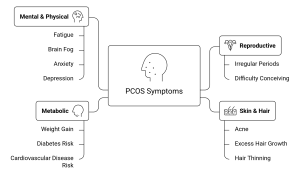
PMOS affects roughly 1 in 8 women of reproductive age globally, more than 170 million people worldwide and is responsible for 50–70% of all anovulatory infertility cases. Its symptoms are wide-ranging and vary significantly from person to person, which is part of what made the old name so limiting.
The Most Common Ones Include:
- Irregular, infrequent, or painful periods
- Difficulty conceiving due to irregular or absent ovulation
- Acne, particularly on the face, chest, or back
- Excess hair growth (hirsutism) on the face, abdomen, or chest
- Hair thinning or loss on the scalp
- Unexplained weight gain or persistent difficulty losing weight
- Fatigue, brain fog, and poor sleep quality
- Anxiety and depression, at rates significantly higher than the general population
Beyond these day-to-day symptoms, the long-term risks are where PMOS demands to be taken more seriously. Women with the condition have a two- to threefold higher prevalence of metabolic syndrome.
They face elevated risks of type 2 diabetes, gestational diabetes, high blood pressure, abnormal cholesterol levels, and cardiovascular disease, not as rare complications, but as well-documented features of the condition that have historically been under-addressed in clinical practice.
The condition's number one treatment recommendation remains lifestyle changes: reducing processed food, exercising regularly, and prioritizing quality sleep. These aren't offered as moral judgments, they genuinely address the insulin resistance and metabolic disruption at the core of the condition.
Medications are used where needed, and fertility treatments remain effective for those trying to conceive. Most people with PMOS who want to become pregnant are able to, though the path may require more support.
Understanding that this is a metabolic condition, not just a reproductive one, can change how a person manages their own health for the better. It explains why blood sugar matters. It explains why cardiovascular risk is real and worth monitoring early. It explains why treatment should be a team effort, not just one specialist addressing one symptom at a time.
Final Words
For the millions of people who have spent years feeling dismissed, confused, or reduced to a single word that never quite described their experience — PMOS is an acknowledgment. It is medicine finally looking at the whole person, not just one part of the scan.
The condition hasn't changed. But the way the world will now be asked to understand it has and that is a meaningful thing. The name on the page is new. The struggle behind it has always been real.
Explore more pharma and healthcare insights that shape the industry and patient outcomes.
→ Visit: Pharma Now
Reporting on the science, business and regulation shaping the pharmaceutical industry.
More from the Knowledge Hub
All articles →
Pharmaceutical Regulatory Affairs: Challenges, Innovations, and Global Harmonization

Cold Chain Logistics in Pharma: Building Resilient Supply Chains

Discussion