6 Cost Pressures Quietly Eroding Pharma Profit Margins & How Leaders Are Responding
Six hidden cost pressures squeezing pharma margins and how leaders are protecting profitability in 2026.


The pharmaceutical industry is often viewed as a high-revenue sector, but behind the scenes, manufacturers are facing mounting cost pressures that are steadily squeezing profit margins. Even large global pharma companies, once known for comfortable margins are now navigating rising operational costs, regulatory burdens, competitive markets, and economic uncertainty. Many of these pressures build up quietly over time, often unnoticed until they begin to impact financial performance and strategic priorities.
As we enter 2026, pharma leaders are recognizing that sustainable profitability requires more than blockbuster pipelines. It demands smarter operations, digital reinvention, and proactive cost management. This blog explores six subtle yet powerful cost pressures eroding pharma profit margins and highlights how forward-thinking companies are responding to protect their bottom line and maintain long-term competitiveness.
1) Rising Raw Material & API Costs
One of the most immediate cost pressures is the climbing price of raw materials and Active Pharmaceutical Ingredients (APIs). Global supply chain disruptions, geopolitical tensions, and heavy reliance on a limited number of international suppliers, especially in China and India have pushed material costs to record highs. In many cases, substitute suppliers are either unavailable or significantly more expensive due to compliance and quality requirements.
These rising costs directly increase the cost per batch of finished products. To manage this pressure, pharma leaders are diversifying suppliers, investing in local manufacturing capabilities, and adopting long-term procurement strategies that secure stable pricing. Some companies are even exploring continuous manufacturing to increase yield efficiency and reduce dependency on volatile API costs.
2) Escalating Compliance & Quality Assurance Expenses
Regulatory expectations are becoming more stringent across all major markets. Requirements around data integrity, serialization, environmental sustainability, and real-time quality monitoring have grown in complexity. This has led to increased spending on documentation teams, audits, validation processes, and quality systems. Every new regulation adds recurring operational expenses, including software upgrades, staff training, and record maintenance.
These costs quietly erode profit margins because they apply across the entire product portfolio, not just new drugs. To offset this burden, companies are turning to automation, digital quality management systems, and integrated data platforms that reduce manual workload while improving accuracy. Leaders are adopting “quality by design” approaches to minimize compliance failures and avoid expensive rework, recalls, or penalties.
3) Higher Labor Costs & Talent Shortages
The demand for specialized talent in pharma data scientists, regulatory experts, process engineers, and manufacturing technicians has surged. At the same time, the industry faces a talent shortage, particularly in advanced manufacturing and biopharma roles. This shortage drives up salaries, recruitment costs, and retention investments. Increased labor expenses are now one of the most significant contributors to rising operational costs.
Companies must also budget for continuous training as technologies and regulations evolve. In response, leaders are embracing automation, investing in upskilling programs, and opening satellite hubs in regions with stronger talent availability. By improving workforce productivity through technology and streamlined processes, they are managing rising payrolls without compromising quality or innovation.
4) Inefficient Legacy Manufacturing Systems
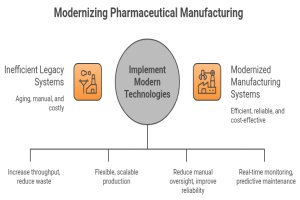
Many pharmaceutical companies continue to rely on aging manufacturing systems, batch processes, and equipment that require extensive maintenance and manual oversight. These legacy systems introduce inefficiencies such as longer production cycles, higher energy consumption, and increased downtime. As global demand for specialized and small-batch therapies grows, traditional systems struggle to keep up.
While upgrading infrastructure requires significant capital investment, the long-term cost of maintaining outdated equipment is even higher due to recurring repairs, deviations, and compliance risks. Forward-looking pharma companies are transitioning to continuous manufacturing, modular plants, and advanced process automation to increase throughput and reduce waste. Digital twins, predictive maintenance, and real-time monitoring also help manufacturers save costs by improving operational reliability and reducing unexpected failures.
5) Pressure From Generic Competitors & Pricing Controls
Patent expirations, biosimilar competition, and aggressive pricing policies from global health systems continue to erode top-line revenue. Governments and insurers are pushing for affordable medicines, leading to tighter price caps and reduced reimbursement rates. Even innovative therapies face pressure from value-based pricing models, where revenue depends on clinical outcomes rather than sales volumes.
These forces directly compress profit margins, especially in mature therapeutic areas. To address this challenge, pharma leaders are diversifying their portfolios, investing in niche therapies with higher value potential, and expanding into markets with favorable pricing environments. They are also strengthening lifecycle management strategies such as reformulations, new indications, and combination therapies to extend the commercial viability of existing products.
6) Costly Supply Chain Disruptions & Increasing Logistics Expenses
Global supply chains have become more unpredictable, and pharma is particularly vulnerable because manufacturing relies on strict cold chain systems, specialized packaging, and time-sensitive deliveries. Shipping delays, rising fuel prices, and increased freight charges have significantly added to logistics expenses. Unexpected disruptions such as shortages of single-use bioprocess materials or delays in customs clearance lead to additional costs in the form of expedited shipping, safety stocks, and production delays.
To mitigate these challenges, companies are re-evaluating their supply chain strategies by investing in regional manufacturing hubs, integrated planning systems, and predictive analytics that offer real-time visibility. Leaders are shifting from reactive to proactive supply chain management to reduce financial losses and improve resilience.
How Pharma Leaders Can Navigate These Cost Pressures?
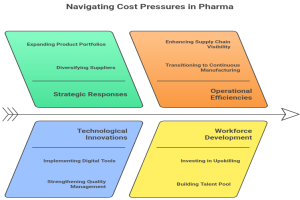
To manage these rising economic challenges, pharmaceutical companies are adopting a mix of strategic, technological, and operational responses. Here are the key actions leaders are taking:
- •Diversifying suppliers and building regional manufacturing hubs to reduce API dependency and stabilize raw material costs.
- Transitioning from batch to continuous manufacturing to improve efficiency, reduce waste, and increase production flexibility.
- Implementing advanced digital tools such as predictive analytics, digital twins, and AI-driven forecasting to optimize operations.
- Strengthening quality management through automation to reduce manual errors, streamline compliance, and minimize rework.
- Investing in workforce upskilling to build a talent pool capable of managing modern manufacturing systems.
- Enhancing supply chain visibility through real-time tracking platforms, integrated planning systems, and better inventory control.
- Expanding product portfolios into high-value or specialized therapies to offset revenue losses from generic competition.
- Strengthening lifecycle management strategies to maximize revenue from existing products.
- Building sustainability-focused operations to comply with environmental regulations while reducing long-term energy costs.
- Adopting risk-based planning and resilience frameworks to handle disruptions more efficiently and protect margins.
In Conclusion
The cost pressures impacting pharma today are subtle yet powerful enough to reshape profitability across the entire industry. Rising material expenses, increased compliance requirements, talent shortages, legacy system inefficiencies, pricing constraints, and supply chain disruptions are collectively tightening margins.
However, the organisations that are responding proactively through digital innovation, smart procurement strategies, supply chain resilience, portfolio optimization, and operational modernization are turning these challenges into opportunities for long-term strength.
In 2026 and beyond, the companies that combine cost discipline with innovation will protect profitability, stay competitive, and deliver greater value to patients and health systems worldwide.
Reporting on the science, business and regulation shaping the pharmaceutical industry.
More from the Knowledge Hub
All articles →
Pharmaceutical Regulatory Affairs: Challenges, Innovations, and Global Harmonization

Cold Chain Logistics in Pharma: Building Resilient Supply Chains

Discussion