US Tariff Exposure By Manufacturing Footprint: A Sector Map
Learn how US pharmaceutical tariffs affect pharma manufacturers based on their manufacturing footprint, including India, APIs, generics, and onshoring.

Introduction
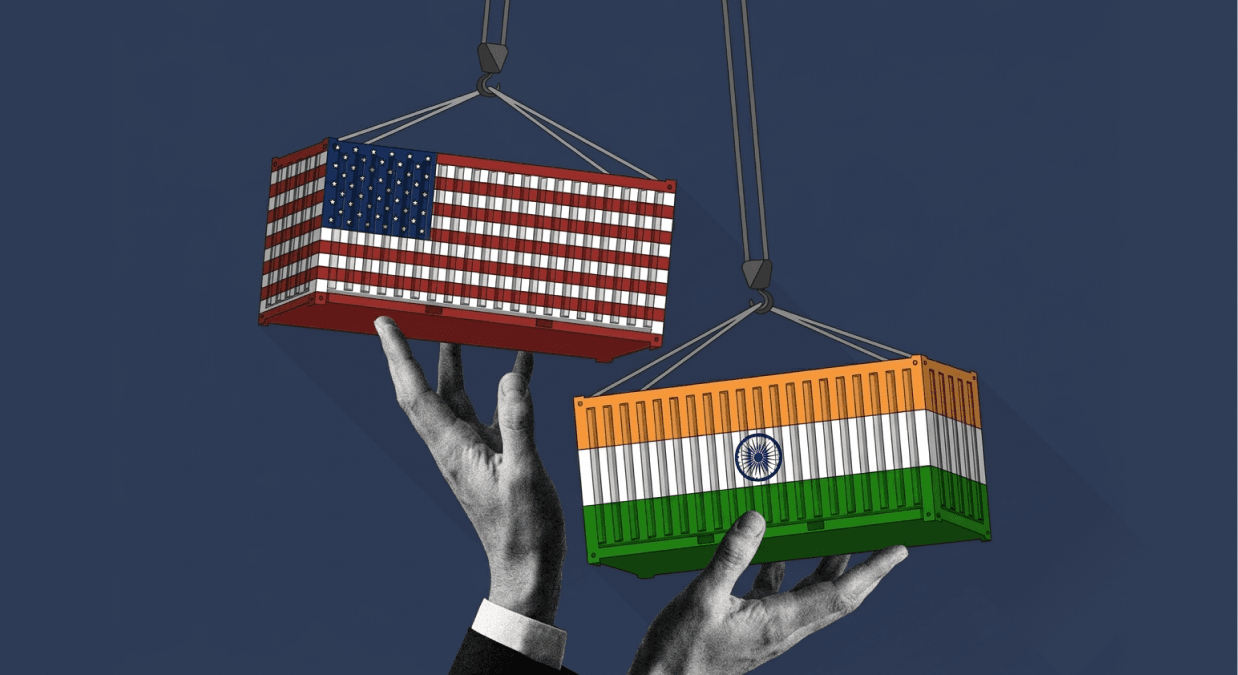
For most of the industry's history, a drug's US market access depended on FDA approval, pricing, and patent status. Since April 2026, a fourth factor sits alongside those three: Where the product, and its active ingredient, is actually manufactured. Section 232 of the Trade Expansion Act of 1962 has turned plant location into a tariff variable and for manufacturers, CDMOs, and API suppliers, that changes how sourcing and site decisions get made.
Here's what the rule actually says, when it applies to you, and how exposure differs depending on your manufacturing footprint.
What does the Order Cover?
On April 2, 2026, the White House proclaimed a 100% ad valorem tariff on patented pharmaceutical products and their active pharmaceutical ingredients (APIs), following a year-long Commerce Department investigation opened April 1, 2025. Commerce's finding: the US imports too high a share of its patented medicines and APIs, and that dependence counts as a national security exposure.

For manufacturers, the operative document isn't the proclamation's headline number, it's the four annexes that determine what you actually owe:
Annex I — Defines the covered products and the HTSUS classification codes the duty attaches to. This is the first thing your compliance team should map every SKU against.
Annex II — Companies with Most-Favored-Nation (MFN) pharmaceutical pricing agreements signed before April 2, 2026. These get preferential treatment.
Annex III — Names the 17 large pharmaceutical companies facing the earliest compliance deadline.
Annex IV — HTSUS codes carved out entirely, at a zero tariff rate. Don't assume a covered product code triggers liability — check Annex IV first.
Two Deadlines, Not One
July 31, 2026 — Applies to the 17 companies named in Annex III (120 days after signing).
September 29, 2026 — Applies to every other covered importer (roughly 180 days out).
Beyond the calendar, four mechanisms shape what a manufacturer actually pays:
0% rate for companies with a signed MFN pricing agreement and a Commerce-approved onshoring plan, running through January 20, 2029.
+20% reduced rate for firms mid-way through an approved onshoring plan without full MFN status yet, through 2030.
Generics, biosimilars, and orphan/specialty products remain exempt "at this time," though Commerce must review that exemption within a year — this is not a permanent carve-out.
Country-of-origin ceilings stack on top of company status: UK at 10%; EU, Japan, South Korea, and Switzerland/Liechtenstein at 15% — both reducible to zero under bilateral pricing agreements.
Reading Your Own Exposure By Footprint

The practical question for any manufacturer isn't "what's the headline rate" — it's "where does my supply chain actually sit." Four footprint categories, four different outcomes:
US-based finished-dose or API sites, largely shielded from the duty, regardless of parent-company nationality. This is the strongest incentive the order creates for reshoring.
Generic manufacturing based in India or similar generics hubs, exempt for now, but under active one-year review. A separate proposal floated in July 2026 to bring generics into the tariff regime at rates up to 200% signals this exemption is a live policy question, not settled ground.
Patented-drug plants in the EU, UK, Japan, South Korea, or Switzerland — face defined 10–15% rates, reducible through pricing-agreement negotiations already underway.
Any covered exporter without an MFN agreement or onshoring plan, faces the full 100%, phased in by the Annex III or general deadline.
For contract manufacturers with flexibility in site selection, this is now a live variable in every new-product or contract-renewal decision, not a background compliance item.
Manufacturing location is becoming a strategic decision, making onshoring increasingly important for pharma supply chains.
→ Read: The Future of Pharma: Onshoring API Manufacturing
Where India's Manufacturing Base Actually Stands?
India supplies close to a fifth of the world's generic medicine volume, and roughly 79% of its pharma exports are formulations and biologics, overwhelmingly generic. That composition is why India doesn't appear in the country-specific rate table at all: its dominant export category is the one still outside the tariff.
India's total pharmaceutical exports reached $30.4 billion in FY25 (April 2024–March 2025), up from $27.8 billion in FY24, with industry bodies reporting a record above $31 billion for FY26.
The United States takes roughly 34% of India's pharma exports, its single largest destination, putting US-bound shipments in the $10–11 billion range in recent years.
On the US import side, using calendar-year trade data, US pharmaceutical imports from India were valued at $15.26 billion in 2025, a broader product scope than India's own export classification, so the two figures aren't directly comparable.
Roughly 60% of India's total pharma exports go to highly regulated markets, reflecting a manufacturing base built around FDA and EMA-grade compliance.
One reporting note that matters for anyone benchmarking these numbers: India's fiscal year runs April–March, while the US fiscal year runs October–September and most global trade databases default to calendar-year data.
Mixing these up is the most common error in cross-border pharma trade comparisons, always confirm which twelve-month window a figure refers to before using it in a forecast.
What Manufacturers With An India Footprint Should Actually Watch?
Several large Indian manufacturers like Sun Pharma, Dr. Reddy's, Aurobindo, and Cipla already operate US-based manufacturing sites, giving them partial insulation regardless of how the generics review concludes.
Companies without existing US capacity face a binary bet: continue relying on the generics exemption, or begin evaluating onshoring pathways before the one-year review lands.
CDMOs and sponsors selecting a new manufacturing partner should treat country-of-origin as a cost variable now, not a compliance afterthought at contract renewal.
Tariff exposure is also changing how pharma companies evaluate manufacturing partners and capacity strategies.
→ Read: CDMO Trends 2026: What's Driving Mergers And Acquisitions
The Bottom Line
Section 232 has effectively created a two-speed pharmaceutical trade regime: one for patented products, tightly scheduled around July and September 2026 deadlines, and another for generics, running on a policy exemption that expires on review.
For manufacturers with India-based capacity, the near-term outlook is manageable but the underlying rule was built to be revisited, and footprint decisions made today will determine how exposed a company is when it is.
FAQs
1. What Does The US Pharmaceutical Tariff Order Cover?
The order applies a 100% tariff to certain patented pharmaceutical products and active pharmaceutical ingredients (APIs), subject to specific exemptions and preferential treatment. Manufacturers need to review the relevant HTSUS codes and the four annexes to determine whether their products are covered and what tariff rate may apply.
2. How Does A Company's Manufacturing Footprint Affect Its Tariff Exposure?
Manufacturing location has become an important factor in determining tariff exposure. US-based finished-dose and API facilities are largely shielded, while covered patented products manufactured overseas may face tariffs ranging from preferential or country-specific rates to the full 100%, depending on the company's agreements and onshoring plans.
3. Are Generic Drugs Manufactured In India Subject To The US Tariff?
Generics manufactured in India and other major generics hubs remain exempt for now. However, the exemption is subject to review, so companies should not treat it as a permanent protection. Any future policy change could significantly affect manufacturers that depend heavily on India-based production for the US market.
4. What Should Pharma Companies With Manufacturing In India Be Watching?
Companies should closely monitor the review of the generics exemption, potential changes to tariff rates, and opportunities to expand US manufacturing capacity. Indian manufacturers with existing US facilities may have greater flexibility and protection, while companies without US capacity may need to evaluate onshoring options.
5. Why Does Manufacturing Location Now Matter In Pharma Contract And Sourcing Decisions?
Country of origin can directly affect the cost and risk of supplying the US market. For pharma companies, CDMOs, and API suppliers, manufacturing location should now be considered when selecting partners, negotiating contracts, planning new products, and deciding where future production capacity should be built.
Reporting on the science, business and regulation shaping the pharmaceutical industry.
More from the Knowledge Hub
All articles →
Pharmaceutical Regulatory Affairs: Challenges, Innovations, and Global Harmonization

Cold Chain Logistics in Pharma: Building Resilient Supply Chains

Discussion