PROTACs and Molecular Glues: How Targeted Protein Degradation Is Redefining Drug Discovery
How PROTACs and molecular glues are redefining drug discovery through targeted protein degradation strategies.

Amid expiring patents, escalating R&D expenditures, and shrinking returns from conventional small-molecule pipelines, the pharmaceutical industry faces a critical crossroads. As competition intensifies, traditional drug discovery approaches fail to keep pace with the requirements.
In this environment, one scientific paradigm is quietly but decisively reshaping the therapeutics: Targeted Protein Degradation (TPD).
Unlike classical therapeutics, which merely inhibit protein function, TPD introduces a fundamentally different approach to disease intervention. It selectively eliminates the disease-causing proteins altogether. This shift has profound implications for addressing drug resistance, expanding the druggable proteome, and unlocking targets long considered unreachable.
For you, seeking sustainable innovation and differentiated pipelines, TPD represents not just scientific novelty, but strategic leverage.
At the core of this transformation are two breakthrough modalities: PROTACs (Proteolysis-Targeting Chimeras) and Molecular Glues. Together, they form more than a new class of therapeutic, marking a strategic inflection point for pharmaceutical innovation, pipeline resilience, and portfolio diversification.
By harnessing the cell’s own protein disposal machinery, these technologies offer the potential to reshape oncology, immunology, and beyond. In this blog, we explore the science, strategy, and growing industry momentum behind PROTACs and molecular glues, examining why they matter, how they differ, and what they signal for the future of drug discovery.
Read on to understand how targeted protein degradation is redefining the next era of pharmaceutical innovation.
Significance of Targeted Protein Degradation
The traditional drug discovery model has the following limitations:
- Using conventional inhibitors, only 15–20% of the human proteome is druggable;
- The Neurology and rare disease programs stall due to “undruggable” targets
- The cost of drug development is approximately USD 2.5 billion
Targeted protein degradation offers a strategic reset.
Instead of inhibiting proteins, TPD removes them entirely, enabling pharmaceutical companies to target previously undruggable targets and achieve stronger, longer-lasting pharmacological effects. For pharma companies, this science translates into portfolio transformation.
What Are PROTACs?
PROTACs (Proteolysis-Targeting Chimeras) are bifunctional small molecules engineered to hijack the cell’s intrinsic protein quality-control machinery, specifically the ubiquitin–proteasome pathway. Rather than inhibiting protein function in a reversible and occupancy-dependent manner, PROTACs introduce a paradigm shift by eliminating the disease-causing protein altogether.
In every cell, the ubiquitin–proteasome system acts as a surveillance network, continuously tagging damaged, misfolded, or excess proteins for degradation. PROTACs cleverly exploit this endogenous system by redirecting it toward selected pathological targets, effectively turning the cell into its own drug delivery and execution platform.
Structural Architecture of a PROTAC
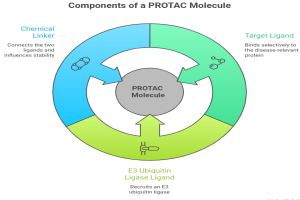
A PROTAC molecule consists of three precisely engineered components:
- Target Ligand (Protein of Interest, POI): This moiety binds selectively to the disease-relevant protein, even if that protein lacks an enzymatic active site. This feature alone enables PROTACs to engage targets traditionally considered undruggable, such as transcription factors and scaffolding proteins.
- E3 Ubiquitin Ligase Ligand: This component recruits an E3 ubiquitin ligase, such as CRBN or VHL, which transfers ubiquitin molecules to the target protein.
- Chemical Linker: The linker connects the two ligands and plays a critical role in spatial orientation, flexibility, and ternary complex stability. Its design directly influences degradation efficiency, selectivity, and pharmacokinetics.
Mechanism of Action: From Proximity to Protein Elimination
By simultaneously binding the protein of interest and the E3 ligase, PROTACs force a transient but productive proximity between the two. This induced interaction leads to ubiquitination of the target protein, labelling it for recognition and destruction by the proteasome. Once degradation occurs, the PROTAC molecule is released and can engage another target protein, enabling repeated cycles of degradation.
How PROTACs Are Shaping the Future of Drug Discovery
Here are the ways in which PROTAC's mode of action influences drug discovery & development:
Catalytic Mechanism
Unlike traditional inhibitors that require continuous target occupancy, PROTACs function catalytically. A single PROTAC molecule can degrade multiple proteins, fundamentally altering pharmacodynamics and improving therapeutic efficacy.
Lower Dosing Potential
Because PROTACs eliminate proteins rather than merely suppress activity, effective responses can often be achieved at lower systemic exposure, which, in turn, reduces toxicity risk, widens therapeutic windows, and improves patient compliance.
Expanded Target Space
PROTACs enable access to high-value targets such as transcription factors, epigenetic regulators, and oncogenic drivers that lack classical binding pockets. This expanded target landscape creates new first-in-class opportunities across oncology, immunology, and rare diseases.
Pipeline Differentiation
In crowded therapeutic areas, PROTACs offer a powerful way to differentiate a pipeline. Their novel mechanism supports differentiated clinical profiles, premium positioning, and extended lifecycle management strategies.
The Strategic Impact: Changing the Economics of Drug Discovery
From a leadership perspective, PROTACs fundamentally change the economics of drug discovery. By increasing biological reach, improving pharmacological efficiency, and enabling durable responses, they reduce the risk profile of complex targets while enhancing long-term portfolio value.
For pharmaceutical organizations seeking sustainable innovation, PROTACs represent not just a scientific advance, but a structural advantage in the race for next-generation therapeutics.
While PROTACs are deliberately modular and structurally engineered, molecular glues represent a more minimalist yet equally powerful approach to targeted protein degradation. Rather than physically tethering two proteins together, molecular glues operate by subtly reprogramming existing protein–protein interactions within the cell.
Molecular glues are single, monovalent small molecules that induce or stabilize interactions between a target protein and an E3 ubiquitin ligase. By strengthening or creating a previously weak or nonexistent interaction, they promote ubiquitination of the target protein, ultimately leading to its selective degradation by the proteasome.
This elegant mechanism allows molecular glues to degrade without the need for large, bifunctional architectures or chemical linkers. From a mechanistic standpoint, molecular glues often act as conformational modulators, reshaping the surface of an E3 ligase to recognize new substrates. This subtlety gives them an almost surgical precision, enabling degradation through biologically natural pathways rather than forced proximity.
Why Molecular Glues Are a Better Alternative?
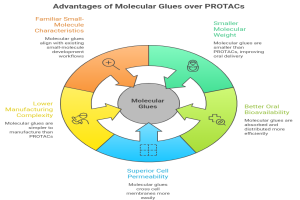
Molecular Glues prove to be a better alternative in the following ways:
Smaller Molecular Weight
Molecular glues closely resemble traditional small molecules in size, avoiding the molecular bulk associated with PROTACs. This smaller footprint improves their suitability for oral delivery and systemic circulation.
Better Oral Bioavailability
Because of their compact structure, molecular glues generally exhibit improved absorption and distribution profiles. For pharma leaders, this translates into simpler formulation strategies and greater commercial flexibility.
Superior Cell Permeability
Their physicochemical properties allow molecular glues to cross cellular membranes more efficiently, enhancing intracellular target engagement and therapeutic consistency.
Lower Manufacturing Complexity
Unlike bifunctional PROTACs, molecular glues do not require precise linker optimization or complex synthetic routes. This reduces CMC complexity, scale-up risk, and cost of goods, critical considerations for late-stage development and commercialization.
Familiar Small-Molecule Characteristics
Perhaps most importantly for pharma leadership teams, molecular glues align closely with well-established small-molecule development workflows, regulatory pathways, and manufacturing infrastructure. This familiarity lowers execution risk while still enabling cutting-edge biology.
Proven Clinical Precedence
The therapeutic potential of molecular glues is not theoretical. Blockbuster drugs such as lenalidomide and pomalidomide were later revealed to function as molecular glues, recruiting the E3 ligase cereblon to degrade specific transcription factors. These discoveries occurred long before the concept of molecular glues was formally articulated, underscoring how this mechanism has been hiding in plain sight within successful drug portfolios.
What was once serendipitous is now becoming intentional.
A Risk-Balanced Degradation Strategy for Pharma Leaders
For pharma leaders balancing innovation with developability, molecular glues offer a compelling middle ground. They deliver the transformative biology of protein degradation while retaining the favorable drug-like properties of classical small molecules. As discovery platforms mature and AI-driven screening accelerates the identification of molecular glues, molecular glues are increasingly viewed as scalable, commercially viable degraders rather than experimental curiosities.
In a portfolio strategy that demands both breakthrough science and executional discipline, molecular glues provide a risk-balanced entry into targeted protein degradation, making them an essential consideration for forward-thinking pharmaceutical organizations.
PROTACs vs Molecular Glues- A summary
20260213174013.svg)
In short, PROTACs and molecular glues are complementary, not competitive.
Market Size and Growth
The commercial momentum behind Targeted Protein Degradation (TPD) reflects more than scientific enthusiasm—it signals a structural shift in pharmaceutical investment priorities. As traditional small-molecule pipelines face diminishing productivity, pharma companies are increasingly allocating capital toward platforms capable of delivering durable innovation. TPD sits squarely at this intersection of science and strategy.
Targeted Protein Degradation Market Outlook
The global TPD market is currently valued at approximately USD 700 million in 2025, but this figure captures only the early innings of a rapidly accelerating curve. Market projections indicate that TPD-based therapeutics will surpass USD 3 billion by 2033, with a compound annual growth rate (CAGR) of around 20% over the next decade.
Such sustained growth is rare in mature pharmaceutical markets and underscores the perception of TPD as a platform technology rather than a single-asset opportunity. For pharma leadership teams, this growth trajectory supports long-term capital deployment, strategic partnerships, and early-stage acquisitions.
Technology Share: PROTACs vs Molecular Glues
Within the TPD ecosystem, PROTACs currently account for roughly 50% of total market activity, driven by their modular design, broad target applicability, and strong early clinical validation—particularly in oncology. Their dominance reflects significant early investments by both biotech pioneers and large pharma.
However, the molecular glues segment is the fastest-growing, with a CAGR exceeding 22%. This acceleration is fueled by their superior drug-like properties, simpler manufacturing pathways, and closer alignment with traditional small-molecule development frameworks. For pharma strategists, this suggests an evolving balance: PROTACs drive platform expansion, while molecular glues optimize execution and scalability.
Together, these modalities form a complementary innovation engine, rather than a zero-sum competition.
Clinical Pipeline Snapshot: Depth, Breadth, and Momentum
The clinical and preclinical pipeline further reinforces TPD’s long-term potential:
- 40+ TPD programs are currently in clinical development, spanning early- to late-stage trials
- 180+ assets are in preclinical stages, indicating strong discovery-stage momentum
- Oncology remains the dominant therapeutic area, reflecting the urgent need to overcome resistance and target transcription factors
- Autoimmune and inflammatory diseases are emerging as high-growth applications, driven by the need for precision immune modulation
This depth of pipeline activity signals durability, not trend-driven enthusiasm. It also indicates that pharma companies are committing resources across the entire value chain—from discovery to late-stage clinical validation.
Clinical Progress: What’s Moving the Needle in Targeted Protein Degradation
The true measure of any emerging therapeutic modality lies not in preclinical promise, but in clinical validation. Over the past few years, Targeted Protein Degradation (TPD) has crossed a critical threshold, transitioning from an experimental concept into a clinically actionable strategy.
A growing number of PROTACs and molecular glues are now generating human data, offering tangible proof that protein degradation can translate into meaningful therapeutic outcomes.
Which are the Leading PROTAC Candidates?
ARV-110
(Androgen Receptor Degradation in Prostate Cancer)
ARV-110 represents one of the first PROTACs to advance into clinical trials, targeting the androgen receptor (AR) in metastatic castration-resistant prostate cancer. By degrading the AR protein rather than inhibiting its activity, ARV-110 aims to overcome resistance mechanisms that limit the efficacy of existing anti-androgen therapies.
Early clinical data have demonstrated:
- Target engagement and protein degradation in patient samples
- Activity in heavily pretreated populations
- Proof that orally administered PROTACs can achieve systemic exposure
For pharma leaders, ARV-110 serves as a clinical proof-of-concept that degradation-based therapies can be safe, bioavailable, and effective in humans.
ARV-471
(Redefining Estrogen Receptor Targeting in Breast Cancer)
ARV-471 is an estrogen receptor (ER) degrader developed to address limitations of selective estrogen receptor degraders (SERDs). Unlike traditional SERDs, ARV-471 leverages PROTAC technology to induce deep and sustained ER degradation, even in tumours harbouring resistance-conferring mutations.
Clinical observations to date suggest:
- Robust ER degradation across patient cohorts
- Potential efficacy in endocrine-resistant breast cancer
- Favorable pharmacokinetic and safety profiles
For R&D leaders, ARV-471 highlights how PROTACs can outperform legacy drug classes while building upon well-validated biological targets.
Next-Generation PROTAC Targets: IRAK4, BRD9, and BCL6
Beyond hormone receptors, several PROTACs targeting IRAK4, BRD9, and BCL6 are advancing through early clinical or late preclinical development:
- IRAK4 degraders are being explored for inflammatory and autoimmune disorders, offering precise immune pathway modulation
- BRD9 degraders target chromatin remodeling complexes implicated in oncology
- BCL6 degraders address transcriptional drivers in lymphoma
These programs demonstrate the breadth of biological targets accessible through PROTAC technology, extending well beyond oncology into immune-mediated diseases.
Molecular Glue Programs
Iberdomide, Mezigdomide, and Avadomide
Molecular glues have arguably achieved clinical success before the term itself became mainstream. Drugs such as iberdomide, mezigdomide, and avadomide are advanced cereblon modulators that promote the degradation of key transcription factors involved in hematologic malignancies and immune dysregulation.
These agents have shown:
- Strong clinical activity in multiple myeloma and lymphomas
- Predictable pharmacology and safety profiles
- Clear translational biomarkers of target degradation
These programs validate molecular glues as commercially viable degraders with regulatory and clinical precedence.
Challenges Pharma Leaders Must Acknowledge
While Targeted Protein Degradation (TPD) holds transformative potential, its successful translation into approved medicines requires pharma leaders to confront a set of non-trivial scientific, operational, and organizational challenges.
Ignoring these realities risks stalled programs and inflated timelines. Addressing them head-on, however, can turn complexity into competitive advantage.
Design Complexity
PROTAC design demands a level of medicinal chemistry sophistication that goes well beyond conventional small-molecule optimization. Each component: the target ligand, E3 ligase ligand, and chemical linker must be individually optimized and then harmonized as a single functional entity.
Small changes in linker length, flexibility, or orientation can dramatically alter:
- Ternary complex formation
- Selectivity of degradation
- Cellular potency and stability
This requires deep integration of structural biology, computational modeling, biophysics, and medicinal chemistry. For R&D leaders, success in PROTAC development depends on building or accessing multidisciplinary expertise, rather than relying on traditional linear discovery workflows.
Off-Target Risk
By design, TPD therapies engage the ubiquitin–proteasome system, a central cellular pathway with broad reach. This introduces the risk of unintended protein degradation, particularly when ternary complexes form with off-target proteins.
Mitigating this risk requires:
- Advanced quantitative proteomics
- Global degradation profiling
- Predictive safety biomarkers
For pharma leaders, this represents both a challenge and an opportunity. Organizations with strong translational science capabilities can turn safety profiling into a differentiation strategy, enabling smarter candidate selection and de-risking earlier in development.
Manufacturing & CMC
The relatively large molecular weight of PROTACs presents unique challenges in formulation, stability, and manufacturing. Issues such as solubility, permeability, and chemical stability become more pronounced as molecules increase in size and complexity.
From a Chemistry, Manufacturing, and Controls (CMC) standpoint, this impacts:
- Route design and scalability
- Cost of goods
- Oral formulation feasibility
For pharma operations and technical leadership, early CMC engagement is essential. Waiting until late-stage development to address manufacturability can significantly delay timelines and inflate costs.
Discovery of Molecular Glues
Unlike PROTACs, molecular glue discovery has historically been largely empirical, often emerging from phenotypic screens or retrospective mechanism-of-action studies. This lack of a clear rational design framework has slowed systematic exploration.
However, the landscape is evolving rapidly. AI-driven screening, structural proteomics, and high-throughput interaction mapping are beginning to bring order to what was once serendipity. Pharma leaders who invest early in these technologies stand to unlock scalable and repeatable molecular glue discovery platforms.
The Leadership Imperative: Integration Over Isolation
For R&D leaders, the most critical insight is organizational, not technical. TPD success cannot emerge from siloed innovation. It requires tight cross-functional integration across discovery biology, chemistry, structural science, translational medicine, safety, and CMC.
Pharma organizations that align these disciplines early—rather than sequentially—will move faster, fail smarter, and ultimately lead in this space. In targeted protein degradation, integration is not optional; it is strategic.
The winners in this space will not be those who chase trends, but those who embed targeted protein degradation into their core R&D philosophy.
FAQs for Pharma Leaders
1. Are PROTACs and molecular glues commercially viable?
Yes. Multiple late-stage assets and strong investor interest confirm commercial readiness.
2. Which modality is better for pharma pipelines?
Both. PROTACs offer modularity and reach; molecular glues offer drug-like simplicity.
3. Will TPD replace traditional small molecules?
No. It will complement and extend existing drug discovery approaches.
4. Is TPD limited to oncology?
No. Autoimmune, inflammatory, neurodegenerative, and rare diseases are emerging targets.
5. What should pharma leaders do now?
Invest in platforms, talent, partnerships, and early pipeline integration.
Reporting on the science, business and regulation shaping the pharmaceutical industry.
More from the Knowledge Hub
All articles →
Pharmaceutical Regulatory Affairs: Challenges, Innovations, and Global Harmonization

Cold Chain Logistics in Pharma: Building Resilient Supply Chains
Discussion