Akari Therapeutics Adds Global RNA Biology And Cancer Research Leader Dr. Olga Anczukow To Its Scientific Advisory Board
Akari Therapeutics appoints RNA biology expert Dr. Olga Anczukow to its Scientific Advisory Board.

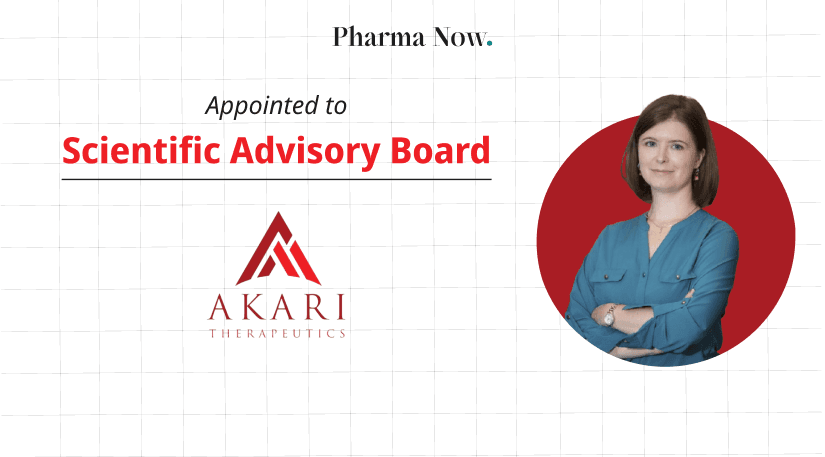
Akari Therapeutics, Plc, an oncology-focused biotechnology company advancing antibody drug conjugates (ADCs) with innovative immuno-oncology payloads, announced the appointment of Olga Anczukow, Ph.D., to its Scientific Advisory Board (SAB). This addition strengthens the company’s scientific leadership as it continues developing its next-generation PH1 ADC payload designed to target RNA splicing mechanisms in cancer cells.
Abizer Gaslightwala, President and Chief Executive Officer of Akari Therapeutics, stated that Dr. Anczukow’s expertise comes at a pivotal time for the company. He noted that she is widely regarded as a leading expert in RNA splicing and cancer biology—areas that are becoming increasingly important in the evolution of new cancer treatments. He emphasized that her rigorous scientific approach, strong translational research background, and extensive experience in guiding RNA-based discoveries toward clinical applications make her an exceptional fit for the SAB. Gaslightwala added that Akari looks forward to integrating her insights as the company advances its PH1 payload and broader ADC platform.
Dr. Anczukow expressed enthusiasm about joining Akari’s advisory board. She shared that she appreciates the company’s science-driven mindset and believes its approach holds significant potential for meaningful therapeutic development. She looks forward to contributing to research planning, evaluating new scientific opportunities, and helping guide the translation of promising biological concepts into clinically relevant therapeutic programs.
Dr. Olga Anczukow is internationally recognized for her work in RNA biology and cancer research. She currently serves as an Associate Professor at The Jackson Laboratory for Genomic Medicine and co-leads a research program at the Jackson Laboratory Cancer Center, a National Cancer Institute–designated center. In addition, she holds a faculty appointment at the University of Connecticut School of Medicine. Across these roles, she leads a multidisciplinary research initiative focused on understanding how alternative RNA splicing—a fundamental regulatory process in gene expression—becomes disrupted in cancer and contributes to tumor initiation, progression, metastasis, and resistance to therapy.
Her research program bridges molecular biology with translational science, working to uncover biomarkers, therapeutic targets, and pathways that can be exploited for cancer treatment. Dr. Anczukow’s laboratory employs a range of advanced tools, including genomics platforms, patient-derived organoid models, and in vivo systems, to investigate how cancer cells reprogram RNA splicing to enable survival and evade existing therapies. Her work has broad relevance across multiple cancer types and has appeared in leading peer-reviewed journals, including major publications in oncology and molecular biology.
Dr. Anczukow earned her Ph.D. from Université Claude Bernard Lyon 1 in France, where she focused on breast cancer genetics. Her doctoral work included studying BRCA1 and BRCA2 mutations and their impact on RNA processing—research that contributed significantly to understanding how defective RNA splicing mechanisms drive cancer development. She produced early evidence that correcting splicing defects could form the basis of new therapeutic strategies, laying groundwork for many current RNA-targeted treatment approaches.
She went on to complete her postdoctoral fellowship at Cold Spring Harbor Laboratory, one of the world’s leading research institutions. There, she expanded her work on RNA splicing factors and their role in tumor growth and metastatic progression, providing deeper insights into how disruptions in RNA regulation contribute to cancer biology.
Throughout her career, Dr. Anczukow has collaborated across scientific disciplines, participating in initiatives that connect basic RNA biology with drug development and emerging therapeutic modalities. Her research has been consistently supported by competitive federal and private funding, underscoring her position at the forefront of efforts to translate foundational scientific discoveries into innovative treatments for cancer and age-associated diseases.
With her appointment, Akari Therapeutics strengthens its scientific advisory capabilities as it continues its mission of developing novel ADCs with unique, mechanism-based payloads designed to address major gaps in cancer treatment.
Simantini Singh Deo works on the latest and trending news happening daily in the pharma world.


Discussion