AstraZeneca’s Fasenra Gains FDA Approval for Treating Eosinophilic Granulomatosis with Polyangiitis
FDA approves AstraZeneca’s Fasenra for treating rare vasculitis, eosinophilic granulomatosis (EGPA).

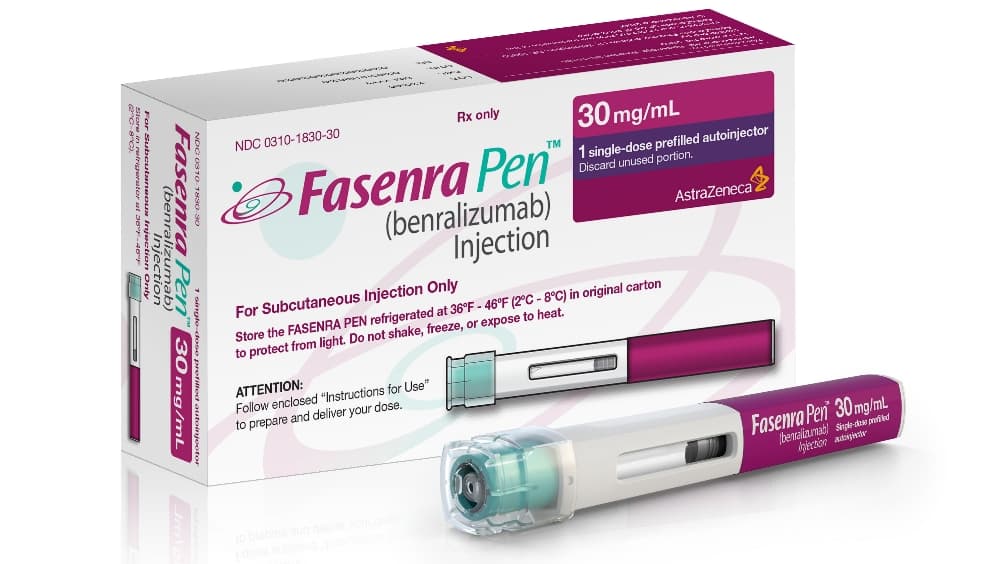
AstraZeneca’s Fasenra (benralizumab) has gained FDA approval
for treating eosinophilic granulomatosis with polyangiitis (EGPA) in adult
patients. EGPA is a rare and potentially fatal inflammatory vasculitis that can
cause damage to multiple organs, including the lungs, heart, and nervous
system.
The approval follows positive results from the Phase III
MANDARA trial, the first head-to-head study comparing biologics for EGPA. The
trial showed Fasenra to be as effective as mepolizumab, the only other approved
treatment for EGPA, in achieving remission. Approximately 60% of
Fasenra-treated patients reached remission, and 41% were able to fully taper
off oral corticosteroids, a significant improvement over the 26% in the
mepolizumab group.
Dr. Michael Wechsler, who led the MANDARA trial, highlighted
the importance of this approval, noting that Fasenra offers patients a new
option that reduces dependence on corticosteroids, which are linked to serious
side effects. The approval is expected to benefit the 15,000 patients in the
U.S. living with EGPA.
Ruud Dobber, AstraZeneca’s Executive Vice President,
emphasized Fasenra’s established role in treating severe eosinophilic asthma
and its potential in addressing other eosinophilic conditions. The drug is
already approved for severe eosinophilic asthma in more than 80 countries and
continues to be developed for other conditions like chronic obstructive
pulmonary disease and hypereosinophilic syndrome.
The safety profile of Fasenra in the MANDARA trial was
consistent with its known safety record.
My international experience as a researcher in Taiwan for three years has equipped me with a global perspective, enabling me to create content that resonates with an international audience.
More from Pharma News
All stories →
CPHI Milan Pharma Awards 2026 Finalists Announced
Pharming Group Gains FDA Approval for Leniolisib in Children Aged 4–11 with APDS

Discussion