Neuland Labs Signs Partnership with LIR Life for Transdermal GLP-1 Obesity Therapy Platform
Neuland Labs partners with LIR Life to develop a patch-based transdermal delivery platform for GLP-1 obesity therapies.
Neuland Labs' move into patch-based GLP-1 delivery signals a deliberate repositioning along the obesity therapy supply chain, with implications for API sourcing, formulation development timelines, and the manufacturing infrastructure required to support transdermal dosage forms at scale.
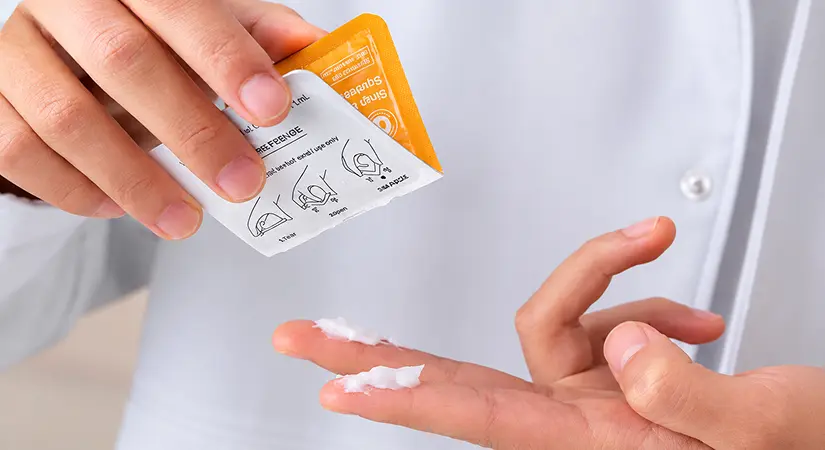
The Hyderabad-based API manufacturer has entered a partnership with LIR Life to co-develop a transdermal delivery platform for GLP-1 receptor agonists targeting obesity. LIR Life is advancing a patch-based system designed to bypass the injectable route that currently dominates the GLP-1 class, a shift that would alter upstream API specifications, release-rate requirements, and the permeation-enhancer chemistry that process development teams will need to qualify under 21 CFR Part 211 and ICH Q10 frameworks.
For plant heads and QA directors already supporting GLP-1 injectable programs, the transdermal route introduces a distinct set of manufacturing controls. Patch fabrication demands tighter control over adhesive matrix composition, drug loading uniformity, and moisture barrier integrity than conventional solid-dose or parenteral lines. Sterility assurance requirements differ from aseptic fill-finish, but cleanroom classification, in-process controls, and release testing protocols will need to be re-scoped against the intended delivery mechanism and regulatory pathway.
The commercial logic is straightforward: injectable GLP-1 therapies face patient adherence constraints that a patch format could address, and several large-molecule programs are already exploring alternative delivery modalities. Neuland Labs, as an API supplier, is positioning early in a development cycle where transdermal-grade peptide specifications are not yet standardised across the industry. Regulatory affairs leads should note that transdermal GLP-1 products will require dedicated bioequivalence strategies and in vitro permeation testing protocols that remain under active discussion at agency level.
No clinical-stage timeline or deal value was disclosed in the announcement. Process validation milestones and any regulatory submission targets have not been made public.
The partnership's first measurable checkpoint will be the demonstration of consistent in vitro permeation data sufficient to support an IND-enabling package for the transdermal GLP-1 candidate.
Source: Media4Growth via Indian Pharma Post, 6 May 2026.
Reporting on the science, business and regulation shaping the pharmaceutical industry.
Discussion