Regeneron’s Lynozyfic Delivers Rapid, Deep Responses In Newly Diagnosed Multiple Myeloma; Phase 1/2 LINKER-MM4 Data Highlight Strong Efficacy And Manageable Safety
Regeneron presents Phase 1/2 data showing Lynozyfic delivers rapid, deep responses in newly diagnosed multiple myeloma at the ASH Annual Meeting.

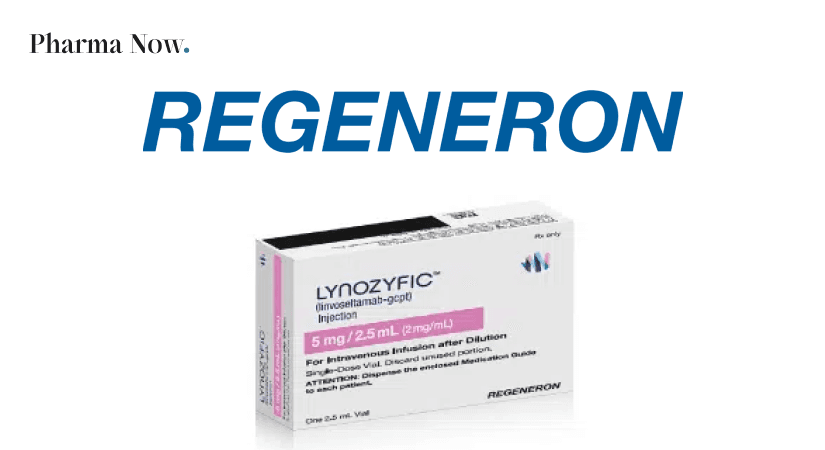
Regeneron Pharmaceuticals has reported promising new data from its ongoing Phase 1/2 LINKER-MM4 study evaluating its investigational agent Lynozyfic™ (linvoseltamab) in adults with newly diagnosed multiple myeloma (NDMM). Presented at the American Society of Hematology (ASH) Annual Meeting, the findings reinforce Lynozyfic’s potential as an early-line therapy, both as monotherapy and in combination approaches, across a broad development program that also spans precursor disease stages.
The LINKER-MM4 trial assesses Lynozyfic in both transplant-eligible and ineligible patients. During Phase 1A, patients were treated using a step-up regimen and escalating dose levels of 50 mg, 100 mg, and 200 mg. The lowest and highest tolerated doses, 50 mg and 200 mg, were selected for further study in Phase 1B. Across both phases, 45 patients were treated, including 28 who were transplant eligible and 17 who were not.
“The treatment of newly diagnosed multiple myeloma often relies on complicated combinations of quadruplet or triplet regimens, each with its own toxicities, in order to achieve rapid and durable responses, which can be incredibly burdensome for these patients,” said Robert Orlowski, M.D., Ph.D., Deputy Chair, Professor of Medicine, and Director of Translational Myeloma Research in the Departments of Lymphoma/Myeloma and Experimental Therapeutics at The University of Texas MD Anderson Cancer Center and the lead investigator for the LINKER-MM4 trial.
He also said, “As the first to evaluate a BCMAxCD3 bispecific monotherapy in this setting, LINKER-MM4 seeks to understand whether frontline intervention with a single agent can deliver strong efficacy, enabling the simplification and potentially greater tolerability of these regimens. Lynozyfic monotherapy is already achieving MRD negativity rates comparable to quadruplet regimens but earlier in the treatment course, and these compelling results are expected to deepen with longer follow up. These results underscore Lynozyfic’s potential as a foundational component of frontline treatment regimens for multiple myeloma – or even a monotherapy regimen – for both transplant-eligible and transplant-ineligible patients.”
Results showed rapid and strong responses, with a median time to response of just 1.2 months across dose levels. All three dose groups achieved a rate of at least 70% for very good partial response (VGPR) or better, despite limited follow-up. The depth of response was notable: of 20 evaluable VGPR+ patients, 95% achieved MRD negativity at a 10⁻⁵ sensitivity, indicating early and deep disease clearance during therapy.
Safety findings were in line with expected profiles for T-cell–engaging therapies. The most common treatment-emergent adverse events were low-grade cytokine release syndrome (44%) and neutropenia (38%, with 33% Grade 3/4). Infections occurred in 84% of patients but declined after the first three months, and no Grade 4 or 5 infections or dose-limiting toxicities were observed. Ten patients proceeded to autologous stem cell transplant, all achieving adequate stem cell yields. Regeneron continues to advance Lynozyfic through a robust clinical program, including ongoing Phase 2 testing at the 200 mg dose and combination strategies in the LINKER-MM6 study. The therapy remains investigational and unapproved for this indication.
Reporting on the science, business and regulation shaping the pharmaceutical industry.

Discussion