FDA Accepts Revolution Medicines’ Daraxonrasib Application For Advanced Pancreatic Cancer Treatment
FDA accepts Revolution Medicines' daraxonrasib application for advanced pancreatic cancer treatment.

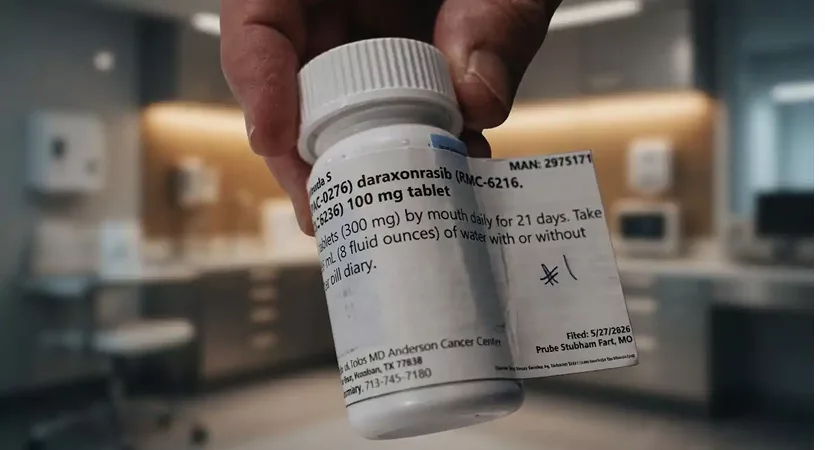
Revolution Medicines, Inc., a late-stage oncology company focused on developing targeted therapies for cancers driven by RAS mutations, has announced that the U.S. Food and Drug Administration (FDA) has accepted its New Drug Application (NDA) for daraxonrasib. The application seeks approval of the oral RAS(ON) multi-selective inhibitor for the treatment of patients with previously treated metastatic pancreatic ductal adenocarcinoma (PDAC), one of the most aggressive and difficult-to-treat forms of pancreatic cancer.
The FDA's acceptance of the NDA marks an important milestone in the regulatory review process and allows the agency to formally evaluate the therapy for potential approval. If approved, daraxonrasib could provide a new targeted treatment option for patients whose metastatic pancreatic cancer has progressed following previous therapy.
Mark A. Goldsmith, M.D., Ph.D., Chief Executive Officer and Chairman of Revolution Medicines, said the FDA's decision to accept the application brings the Company one step closer to making daraxonrasib available to patients with previously treated metastatic pancreatic cancer. He noted that the therapy was specifically designed to inhibit RAS, a key driver of pancreatic cancer, and that the application is supported by strong clinical data from the Phase 3 RASolute 302 trial. According to Goldsmith, the study results suggest that daraxonrasib has the potential to become a new standard treatment for this patient population while also helping establish a new class of RAS-targeted therapies. He added that the Company will continue working closely with the FDA and international regulatory authorities as it advances the review process.
The NDA is supported by data from the global, randomized Phase 3 RASolute 302 clinical trial, which compared daraxonrasib with standard cytotoxic chemotherapy in patients with previously treated metastatic PDAC, regardless of whether their tumors had a confirmed RAS mutation. The study successfully met all of its primary and key secondary endpoints, demonstrating significant improvements in both overall survival and progression-free survival compared with standard chemotherapy.
In addition to improving survival outcomes, daraxonrasib demonstrated a manageable safety profile during the study. Patients receiving the treatment also experienced a significant delay in the worsening of cancer-related pain, overall health status, and quality of life when compared with patients treated with conventional chemotherapy. The findings from the RASolute 302 trial were presented at the 2026 American Society of Clinical Oncology (ASCO) Annual Meeting and were simultaneously published in *The New England Journal of Medicine*.
The FDA previously selected daraxonrasib for its Commissioner's National Priority Voucher pilot program, an initiative intended to accelerate the review of therapies that address major public health needs. The investigational therapy has also received Breakthrough Therapy Designation and Orphan Drug Designation from the FDA for the treatment of patients with previously treated metastatic pancreatic ductal adenocarcinoma, recognizing both its potential clinical benefit and the need for improved treatment options in this rare and serious disease.
Beyond the United States, Revolution Medicines is also advancing the regulatory review of daraxonrasib in Europe. The Company recently announced that the European Medicines Agency's (EMA) Committee for Medicinal Products for Human Use has initiated a phased review of the therapy, allowing clinical data to be assessed as they become available before the submission of a complete marketing authorization application. Daraxonrasib has also received orphan medicine designation for pancreatic cancer in Europe and has been granted high-priority status under the EMA's Cancer Medicines Pathfinder program due to its potential to address a significant unmet medical need.
Simantini Singh Deo works on the latest and trending news happening daily in the pharma world.
More from Pharma News
All stories →Hepion Pharmaceuticals Gains FDA Backing for GV104 Modeling
FDA Extends Coral Snake Antivenin Lot CL6814 Expiration to June 2026 on Stability Data
Discussion