The Wall Between the Therapy and the Patient: Archana Ganesh on CAR-T Manufacturing
CAR-T therapies can cure blood cancers. They cost $400k-$500k per patient. Ms. Archana Ganesh on why manufacturing — not science — is the last wall standing.

CAREER & EXPERTISE
Q1. Could you briefly introduce yourself and tell us about your journey in biochemical engineering?
Honestly, I never planned to end up in cell therapy. I started my career developing fermentation processes for biopesticides — thinking about how microorganisms could replace synthetic chemicals in farming. That feels like a world away from where I am now.
Over the past 12 years I have moved through four completely different manufacturing platforms: fermentation in agricultural biotech, biologics, gene therapy, and now commercial cell therapy manufacturing. Each time I thought I was settling into a specialty, something more interesting came along.
What I have realized is that the underlying question has always been the same: how do you take something that works beautifully in a lab and make it work reliably at scale? That question turns out to be endlessly interesting regardless of what the product is. Right now I am at Cellares in the Bay Area working on process characterization for FDA-approved cell therapy programs, and I genuinely feel like all those years of working across different platforms led me exactly here.
Q2. Over the past 12 years, you've worked across bio agriculture and biopharma. What key differences have you observed between these two sectors from a bioprocess development perspective?
The regulatory worlds are completely different — EPA versus FDA, agricultural efficacy versus pharmaceutical quality standards — but the biological fundamentals are surprisingly similar. Cells and microorganisms do not care which industry they are in.
What I found moving from agriculture into biopharma is that the stakes feel different. In agricultural biotech you are competing against cheap synthetic chemicals, so cost efficiency is everything. In pharma, your product is going into a human patient, which changes the weight of every decision. A batch failure in biopesticide manufacturing is a business problem. In cell therapy it can mean a patient does not receive their treatment.
What agriculture gave me was a deep comfort with biological variability and an appreciation for commercial constraints that I think a lot of pharma scientists lack. When you have spent years trying to make a fermentation process cheap enough to compete with a synthetic pesticide, you develop an instinct for efficiency that translates remarkably well into pharma.
Q3. Your expertise spans both upstream and downstream processing. How do these two disciplines complement each other in developing an efficient manufacturing process?
Upstream and downstream are deeply interdependent, and I think the most dangerous mindset in bioprocess development is treating them as separate domains. What happens in your bioreactor — cell density, viability, metabolite accumulation, product expression level, product variant distribution — directly determines what your downstream team will face. If I produce a high-titer upstream process that also generates significantly more product-related impurities, I may have created a downstream nightmare that negates every efficiency gain.
In cell therapy specifically, this interdependence is acute. The activation, transduction, and expansion conditions I work with upstream directly shape the phenotype, potency, and quality attributes of the final CAR-T cell product. A downstream formulation or cryopreservation step cannot rescue a product that was compromised upstream.
The best process development happens when upstream and downstream scientists work together from the beginning — designing experiments that account for the full process, sharing data transparently, and building a shared understanding of the critical quality attributes that both functions need to protect. In my experience, the most successful programs I have worked on had tight upstream-downstream integration from day one.
Q4. What are the most common challenges organizations face when scaling a process from laboratory research to GMP manufacturing?
One of the best pieces of advice I received from a manager early in my career was: think of the end in mind. It sounds simple, but it is genuinely transformative when you internalize it.
A lot of settings and conditions that are perfectly possible at small scale simply cannot be replicated at larger scale. You can control temperature to within a fraction of a degree in a bench-top bioreactor. You cannot do that in a 500-liter vessel where heat transfer dynamics are completely different. You can use expensive analytical methods and reagents in a research setting that are not feasible for routine GMP manufacturing. You can get away with a process that requires constant operator intervention at lab scale — and then discover at GMP that intervention is either not allowed or not reproducible.
The teams that scale up successfully are the ones who ask, from the very beginning: will this actually work at the scale and in the environment where it needs to work commercially? Not just can we make it work in the lab, but will it work in a GMP facility, with the equipment that exists there, operated by a team who did not develop it?
The warning signs are almost always visible early. Scale-up failures are predictable in retrospect precisely because nobody wanted to slow down and ask the hard questions when they were moving fast.
Q5. You've led successful technology transfers from lab scale to commercial production. What factors determine whether a tech transfer succeeds or fails?
I have been on both sides of tech transfers — sending the process out and being physically on-site at the manufacturing facility as the company representative. That second experience, as Person in Plant during GMP campaigns, changed how I think about knowledge transfer completely.
When you are standing in a GMP suite watching a team execute your process for the first time, you realize very quickly that the batch record does not capture everything you know. There is a moment when something looks slightly off — and you know from experience whether it matters. That judgment does not live in a document. It lives in the scientist who developed the process.
The tech transfers I have seen succeed are the ones where the sending team invested in the human relationship with the receiving team — spending real time together, being genuinely available for questions, creating a culture where the CDMO team felt safe surfacing early warning signals rather than managing them quietly. The document package is necessary. The relationship is what actually transfers the process.
Q6. Process optimization is often described as both a science and an art. How do you approach improving bioprocess efficiency while maintaining product quality?
I think the 'art' in process optimization is really disciplined intuition — pattern recognition built from scientific rigor over time. You develop a feel for where the biological system has room to improve, where the real constraints are, and which experiments will give you the most information.
My technical approach relies heavily on Design of Experiments — multivariate statistical frameworks that let me study multiple process parameters simultaneously rather than one factor at a time. DOE is powerful because biological systems are full of interactions: the effect of temperature on your cells is different at different glucose concentrations, and studying them separately will miss that relationship entirely.
But before I run a single experiment, I invest time in understanding what quality attributes I am trying to protect. Process efficiency is worthless if it comes at the cost of product quality. I build a risk assessment that maps process parameters to quality attributes, which tells me where the risks are and where I can safely push for efficiency gains.
The 'art' comes in the experimental design itself — knowing which hypotheses are worth testing, how to interpret data that doesn't fit the model, and when to trust your biological intuition over what the statistics are telling you.
Q7. How have emerging technologies such as automation, digital twins, AI, or advanced analytics changed the way bioprocesses are developed and optimized?
I get asked about AI a lot, and I think my honest answer might surprise people. I am not someone who dismisses it — I have presented on AI and digital tools in pharmaceutical manufacturing at various industry forums, and I genuinely believe these technologies matter. But I have also seen what happens when organizations reach for AI before they understand their own process.
The most important thing automation has done in my field is shift the conversation from 'can we make this work' to 'can we make this work reliably for everyone.' Manual cell therapy manufacturing depends heavily on individual operator skill. Two people following the same protocol in two different facilities can produce meaningfully different products. Automation removes that variability — and when you are making a therapy for a cancer patient, variability is not acceptable.
What I find genuinely exciting about digital tools and advanced analytics is not the automation itself but the process understanding it enables. When you can integrate data across dozens of parameters simultaneously and model how they interact, you start to see relationships that human analysis would never catch. That is not replacing scientific judgment — it is giving scientific judgment better tools to work with.
Where I get cautious is when organizations use these tools to bypass the hard work of actually understanding their biology. An algorithm trained on a process nobody fully understands is a liability, not an asset. The fundamentals have to come first.
Q8. In your opinion, what are the biggest bottlenecks currently limiting innovation in bioprocess development?
The most significant bottleneck is the disconnection between scientific innovation and manufacturing readiness. We are extraordinarily good at discovering new therapeutic modalities — allogeneic cell therapies, gene-edited cells, viral vectors for in vivo editing — but the manufacturing science consistently lags. Therapies reach clinical trials using processes that everyone knows are not commercially viable at scale, and the manufacturing challenge is deferred rather than addressed.
For cell and gene therapy specifically, cost of goods is the existential bottleneck. Currently approved CAR-T therapies cost $400,000-$500,000 per patient primarily because of manufacturing complexity. Until we solve the manufacturing problem — through automation, process intensification, and better process understanding — these transformative therapies will remain inaccessible to most of the patients who need them.
A second bottleneck is the shortage of scientists with deep cross-platform bioprocess expertise. The field needs people who understand both the biology and the engineering, who can navigate regulatory expectations, and who can work across the upstream-downstream-regulatory interface simultaneously. That profile is genuinely rare, and training pipelines have not kept up with industry demand.
Q9. Sustainability has become a major focus across biotechnology. How can bioprocess engineers design manufacturing systems that are both economically viable and environmentally responsible?
Sustainability and economic viability are more aligned than they might appear. The most wasteful bioprocesses are also often the most expensive — excessive buffer consumption, high energy requirements for temperature control, single-use plastics that are used once and discarded. Process intensification — doing more with less — serves both sustainability and cost goals simultaneously.
For cell therapy manufacturing, the move toward automated, closed-system platforms reduces contamination risk, which reduces batch failure rates, which reduces material waste. The environmental argument and the economic argument point in the same direction.
I also think the industry needs to think more carefully about water usage, energy efficiency in manufacturing facilities, and the carbon footprint of cold chain logistics — particularly for cell therapies that require cryopreservation and controlled-temperature shipping globally. These are engineering problems that bioprocess engineers are well-positioned to solve, but they require the right incentives and the right framing within organizations.
Q10. Looking back at your career, what project or achievement are you most proud of, and what did it teach you?
The program I mentioned earlier — the allogeneic islet cell therapy for Type 1 diabetes — is what I am most proud of from a personal standpoint — being connected to a patient outcome in that direct way stays with you.
But the achievement I think about most in terms of what I want it to mean is the work I do now on manufacturing automation for cell therapy.
Here is the reality: CAR-T therapies work. For certain blood cancers, they can achieve complete remission in patients who have run out of other options. The science is not the problem. The problem is that making these therapies is extraordinarily complex, mostly done by hand, and costs $400,000 to $500,000 per patient. That price is not greed — it is what manual, operator-dependent, one-patient-at-a-time manufacturing actually costs.
What that means in practice is that the vast majority of patients who could benefit from these therapies will never receive them. Not because the drug doesn't work. Because we haven't solved the manufacturing problem.
That is what drives me about automation. If we can demonstrate that an automated platform produces a cell therapy that is equivalent in quality and safety to the manually manufactured version — and if we can do that at scale, consistently, across thousands of patients — then suddenly the economics change. The cost comes down. More patients can be treated. The therapy stops being something that only reaches a small fraction of the people who need it.
I am one person working on one piece of that problem. But I think about the patients on the other side of it every day. Getting to the drug itself is hard — the biology, the clinical development, the regulatory approval. All of that is genuinely difficult. But even after you solve all of that, manufacturing is the last wall between the therapy and the patient. That is the wall I am working on.
Q11. As someone who has built internal upstream and downstream capabilities, what advice would you give organizations developing these functions from the ground up?
Hire for scientific judgment, not just technical skills. The person who can design a DOE, interpret unexpected results, troubleshoot a failing bioreactor, and write a deviation report that accurately represents what happened — that person is worth far more than someone who has executed a protocol many times without understanding it.
Invest in documentation culture from day one. It is far harder to retrofit good documentation practices onto a team with bad habits than to establish them at the beginning. Every experiment should be documented as if it will need to be reproduced — or defended in a regulatory submission — years later.
Build cross-functional relationships early. Your upstream team needs to understand what downstream needs. Your process development team needs to understand what regulatory will require. The silos that slow organizations down almost always form in the early days when everyone is too busy to talk to each other.
And finally — invest in understanding your biology before you invest in optimizing your process. You cannot efficiently optimize what you do not understand. The front-end investment in characterization and mechanistic understanding pays dividends throughout the program lifecycle.
Q12. How important is cross-functional collaboration between R&D, manufacturing, quality, and regulatory teams during process development?
It is not just important — it is the difference between programs that succeed and programs that fail. I have seen technically excellent science fail in regulatory submissions because the regulatory team was not involved in process development decisions early enough to ensure the data package would support the filing. I have seen manufacturing scale-up failures that could have been anticipated if the manufacturing team had been consulted during lab-scale development.
The most effective model I have worked in is one where process development, analytical development, quality, manufacturing, and regulatory are genuinely integrated from the start — not just informed periodically. This means shared risk assessments, joint process design discussions, and a culture where it is safe to raise concerns across functional boundaries.
In my experience, the programs with the most seamless tech transfers and the cleanest regulatory submissions are always the ones where the cross-functional relationships were strongest from the beginning. The investment in those relationships is one of the highest-return investments an organization can make.
Q13. What emerging trends do you believe will shape the future of bioprocess engineering over the next decade?
Several trends are converging in ways that will fundamentally reshape the field.
First, the shift toward automation and closed-system manufacturing will accelerate. The manual manufacturing processes that were acceptable in early clinical development are not viable for commercial scale, and the industry is actively building the automated platforms to replace them. This will require a generation of bioprocess engineers who understand both the biology and the control systems.
Second, the move toward allogeneic and off-the-shelf cell therapies will transform the manufacturing landscape. Autologous therapies — made from each patient's own cells — are manufacturing-intensive by definition. Allogeneic approaches, where cells from a single donor can be manufactured at scale and stored for multiple patients, have the potential to dramatically change the economics of cell therapy. The bioprocess challenges are significant, but the potential impact is enormous.
Third, continuous manufacturing will gain traction across biologics and cell therapy. The efficiency advantages — higher productivity, smaller facility footprints, better real-time process control — are too significant to ignore.
Finally, I believe AI and machine learning will become integral to process development — not as a replacement for scientific judgment, but as a tool that augments it by finding patterns in complex, multivariate datasets that human analysis would miss.
Q14. For young engineers entering biotechnology today, which technical and soft skills will be most valuable for long-term success?
On the technical side: master the fundamentals first. Thermodynamics, transport phenomena, reaction kinetics, microbiology — these are not outdated. They are the foundation on which everything else is built. An engineer who deeply understands why cells behave the way they do under different conditions will always outperform one who has memorized protocols without understanding the underlying principles.
Statistical thinking is essential and undervalued in engineering education. Design of Experiments, multivariate analysis, and the ability to design and interpret studies that give you maximum information with minimum experiments — these skills will serve you throughout your career.
On the soft skills side: learn to communicate across functional boundaries. The ability to explain a complex bioprocess concept to a regulatory strategist, a business development team, or a clinical scientist — without condescending or oversimplifying — is genuinely rare and genuinely valuable.
Develop resilience for ambiguity. Biology is messy and experiments fail. The engineers who thrive are the ones who can hold uncertainty without paralysis, extract learning from failure, and keep moving forward with intellectual rigor and scientific humility.
And find mentors — not just for technical skills, but for judgment. The most important things I have learned in my career came from watching how experienced scientists and engineers made decisions under pressure.
Q15. If you could solve one major challenge in biopharmaceutical manufacturing tomorrow, what would it be and why?
The cost of CAR-T cell therapy manufacturing. Without hesitation.
CAR-T therapies are among the most transformative medicines ever developed — they can achieve complete remission in patients with cancers that were previously considered terminal. But at $400,000-$500,000 per patient, they are accessible to only a tiny fraction of the patients who could benefit from them. In India alone, thousands of patients die each year from blood cancers that could potentially be treated with CAR-T therapy, but the cost and manufacturing complexity make it unreachable.
This is not a scientific problem — it is a manufacturing and engineering problem. The biology has been proven. The clinical efficacy is documented. The barrier is that we don't yet know how to make these therapies at the cost and scale required to reach everyone who needs them.
Solving this — through automation, process intensification, allogeneic approaches, and better process understanding — is the work I am most committed to. It is why I find my current work at Cellares meaningful beyond its scientific interest. Every advance we make in automated CAR-T manufacturing is a step toward the day when these therapies are as accessible as a standard chemotherapy regimen.
NGO & SOCIAL IMPACT
Q16. Alongside your work in biochemical engineering, you're actively involved with an NGO. Could you tell us about the organization's mission and your role within it?
I serve as a Scientific Advisor to Blood Warriors Foundation, a Hyderabad-based NGO founded in 2020 by Krishna Vamshi and Sandeep Kaveti with a stated goal of a Thalassemia-Free India by 2035. It is India’s largest thalassemia patient network.
Beta thalassemia is a genetic blood disorder where the body cannot produce functional hemoglobin. In its severe form, patients require blood transfusions every two to five weeks for their entire lives. India has approximately 56 million carriers and 10,000 children born with severe thalassemia every year. Over a lifetime, the cost of managing this disease can reach Rs 1.8 crore per patient — for families who can access care at all.
What Blood Warriors has built is remarkable. Their Blood Bridge platform started as a donor-matching service connecting willing blood donors with thalassemia patients — addressing a real and urgent gap in India’s chronic blood shortage. Over five years it has evolved into something much larger: a continuum of care built on longitudinal patient relationships and community trust networks.
One initiative that stands out is their HPLC screening drives. India has 56 million thalassemia carriers — people who carry one faulty copy of the gene, are healthy themselves, but can pass the condition to their children. A blood test — the HPLC test — that costs Rs 800 at market price identifies carriers before they have children. Blood Warriors runs these drives at a subsidized cost of Rs 300–350, making screening accessible to students and community members who would otherwise not get tested. They run these drives in colleges, corporate campuses, and community settings — targeting the moment before marriage and pregnancy when this information is most useful. Positive results are followed by counselling that addresses the stigma and fear that cause many families to suppress diagnoses.
In my advisory role I contribute expertise on the gene therapy landscape, the Indian regulatory pathway for cell and gene therapies, and the manufacturing and access challenges that determine whether a future cure actually reaches the families who need it. I have also authored educational articles that Blood Warriors uses to help patients and families understand what gene therapy is and what it could mean for them.
Q17. What inspired you to contribute your scientific expertise to the nonprofit sector?
Honestly, it started with discomfort. I spend my days working on manufacturing processes for therapies that cost hundreds of thousands of dollars per patient. And I am aware that there are children in India — 10,000 born every year with severe thalassemia — who need gene therapy that could potentially cure them, and it is completely out of reach.
I cannot solve that problem alone. But I had something specific to offer: I understand how these therapies are made, what the regulatory pathway looks like, what the manufacturing barriers are. That is knowledge most patient advocates do not have.
So I started contributing to Blood Warriors Foundation, which is India's leading thalassemia patient community. Not because I had extra time, but because the discomfort of doing nothing was greater than the effort of doing something.
Q18. In your view, what role can scientists and engineers play in addressing societal and environmental challenges beyond the laboratory?
Scientists and engineers have a unique form of credibility in public discourse — when we speak about technical challenges, we are speaking from direct knowledge, not opinion. That credibility comes with responsibility.
Beyond the laboratory, I think the most valuable contribution scientists and engineers can make is translation — taking complex technical realities and making them accessible to policymakers, patient advocates, and the general public in ways that inform better decisions. The gap between what the science says and what policy does is often not a failure of political will — it is a failure of communication.
For bioprocess engineers specifically, I think there is an opportunity to engage with questions of manufacturing equity. Who gets access to advanced therapies, at what cost, and under what regulatory frameworks — these are questions that bioprocess engineers are uniquely positioned to inform, because we understand the manufacturing constraints that drive cost and access.
I also believe in the power of role models. When young scientists from India see Indian-origin scientists working at the frontier of cell therapy in the US while also contributing to patient advocacy in India, it expands what they believe is possible for themselves.
Q19. What has been the most rewarding experience you've had while working with the NGO?
What has been most rewarding is the direct engagement with patients and families — people who are living with thalassemia or supporting someone who is, and who are trying to understand what cell and gene therapy could mean for them.\n\nI come to this with a specific background. I worked on gene therapy manufacturing at Sangamo Therapeutics, where I contributed to an AAV-based gene therapy program. I understand the science of gene editing, the manufacturing complexity, the regulatory pathway — not from reading about it but from having worked on it directly. When I engage with Blood Warriors’ patient community, I can explain how these therapies are actually made, what the real barriers to access are, and what needs to happen for a cure to reach Indian patients.\n\nEngaging directly with patients has been humbling. The families Blood Warriors works with are navigating something profoundly difficult — a lifelong, demanding disease with real economic and social weight. Being able to contribute knowledge that is genuinely useful to them, in a form they can act on, is one of the most meaningful things I do.
Q20. Have you witnessed a project or initiative that demonstrated the real-world impact of science on communities? Could you share that experience?
The experience that stands out most for me is one I have already touched on — my contribution to manufacturing the drug for an allogeneic islet cell therapy for Type 1 diabetes.
For the communities of people living with Type 1 diabetes, the daily burden is real and relentless — monitoring blood glucose, managing insulin, navigating a healthcare system that requires constant engagement. A therapy that could restore natural insulin production without lifelong immunosuppression would be transformative for those communities.
The first patient in the clinical trial received the therapy without immunosuppression. After 14 months, those transplanted cells were still alive and producing insulin. The results were published in the New England Journal of Medicine.
I was not the clinical scientist who treated that patient. I was not the researcher who discovered the underlying platform. I was the person in the manufacturing facility making sure the drug was made correctly. And I think that connection — between the work I do and the outcome a patient experiences — is something every bioprocess engineer should feel the weight of.
Q21. Many young professionals want to contribute to social causes but don't know where to begin. What advice would you give them?
Start with your specific expertise, not a general desire to help. Blood Warriors works at the intersection of patient awareness, treatment advocacy, and community support for thalassemia families. What they needed was someone who could bridge their patient-facing work with the science and manufacturing realities of gene therapy — explaining how these therapies are actually made, what the regulatory pathway in India looks like, and what the real barriers to access are. That is where my background was genuinely useful.\n\nMatch your expertise to the gap. A general desire to contribute is not enough on its own — organizations like Blood Warriors need people who bring specific knowledge that their community cannot easily access elsewhere.\n\nDon’t wait until you feel expert enough. I started contributing when I felt I had something specific and accurate to say. The patients and families Blood Warriors works with don’t need me to be the world’s leading expert. They need me to be more knowledgeable than they are about a specific technical question, and to communicate that knowledge honestly.\n\nAnd let it teach you something. My work with Blood Warriors has made me more aware of the human stakes of what I do every day. That awareness makes me a better scientist.
RAPID FIRE
One innovation in bioprocessing that excites you the most?
Fully automated, closed-system cell therapy manufacturing. The ability to replace manual, operator-dependent processes with a controlled, reproducible automated platform — and to demonstrate to the FDA that the automated process produces an equivalent product — is the key to making cell therapies accessible at scale. This is not a future vision; it is what I work on every day.
Upstream or downstream: Which presents the greater challenge?
Upstream — because you are working with living biological systems that are inherently variable, and every decision you make there is inherited by downstream. You cannot separate them, but if I had to choose, the fundamental unpredictability of biology makes upstream the harder domain.
A book, podcast, or resource every bioprocess engineer should explore?
'Bioprocess Engineering: Basic Concepts' by Shuler and Kargi — it is my go-to for practical fundamentals. It covers the core principles of bioprocess engineering in a way that is rigorous without being inaccessible, and I find myself returning to it even now. If you genuinely understand what is in that book, you have the foundation to figure out almost anything else.
One misconception people have about bioprocess engineering?
That it is primarily about biology. Bioprocess engineering is fundamentally an engineering discipline — transport phenomena, thermodynamics, fluid mechanics, systems thinking — applied to biological systems. The engineers who forget the engineering half of their title often struggle when their processes encounter the physical constraints of scale-up.
One word that defines the future of biotechnology?
Access. The science has never been more powerful. The question that will define the next generation of biotechnology is not whether we can develop transformative therapies — we clearly can — but whether we can make them accessible to the patients who need them, regardless of geography or economic circumstance.
PHARMA NOW SIGNATURE QUESTION
As biotechnology continues to evolve through AI, automation, continuous manufacturing, and synthetic biology, what do you believe will define the next generation of bioprocess engineers, and how should the industry prepare for that future?
The next generation of bioprocess engineers will be defined not by what they know, but by how they think.
The technical landscape of our field is changing faster than any curriculum can keep up with. The specific tools and platforms that are cutting-edge today will be standard in five years and obsolete in ten. Engineers who have anchored their identity in mastery of specific technologies will find themselves constantly running to catch up. Engineers who have invested in foundational scientific thinking — first principles reasoning, quantitative intuition, experimental design discipline — will be adaptable to whatever the technology landscape becomes.
This means the industry has a responsibility to resist the temptation to hire for specific technical skills at the expense of scientific depth. The engineer who deeply understands why a cell behaves differently at 37°C versus 36.5°C — mechanistically, not empirically — will add more value over a career than one who has run a hundred bioprocesses without asking why.
For automation and AI specifically: these are tools, not replacements for judgment. The risk I see is a generation of engineers who outsource their thinking to algorithms without understanding the assumptions those algorithms are built on. The most dangerous bioprocess is one controlled by a model that nobody on the team truly understands. We need engineers who can build and interpret these tools, not just use them.
For the industry: invest in education partnerships with universities that emphasize fundamentals alongside emerging technologies. Build mentorship cultures where experienced engineers explicitly transfer tacit knowledge — the judgment, the pattern recognition, the feel for when something is wrong — to the next generation. Create career paths that reward deep technical expertise alongside leadership.
And finally: keep the patient in view. The best bioprocess engineers I have worked with are the ones who remember, every day, that there is a person at the end of the manufacturing process whose life depends on getting it right. That sense of purpose is not soft — it is the most powerful motivator for the sustained rigor that great bioprocess engineering requires.
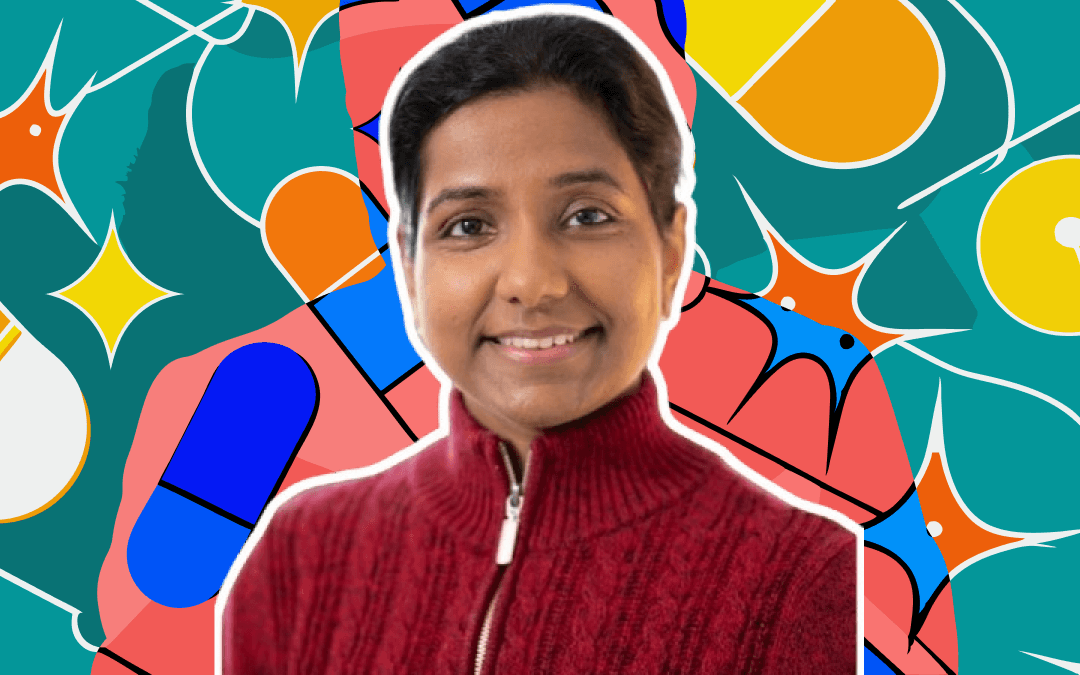
Archana Ganesh, M.S. is a bioprocess engineer and Scientist II in Process Characterization at Cellares Corporation, Bay Area, working on FDA-approved cell therapy manufacturing programs. With 12+ years across agricultural biotechnology, biologics, gene therapy, and CAR-T manufacturing, she specialises in translating innovative science into scalable, GMP-ready processes.
Her expertise spans upstream and downstream bioprocess development, technology transfer, process optimization, DoE, and manufacturing automation — focused on making advanced cell therapies more accessible.
She also serves as Scientific Advisor to Blood Warriors Foundation, India's largest thalassemia patient network, bridging gene therapy science with patient education and advocacy.
More interviews
All interviews →
The Untold Story of COVID-19 Vaccine Development: Dr. Subhash Thuluva Speaks

Mastering Pharma Regulations: Rajni Jha's Guide to Global Compliance Success
