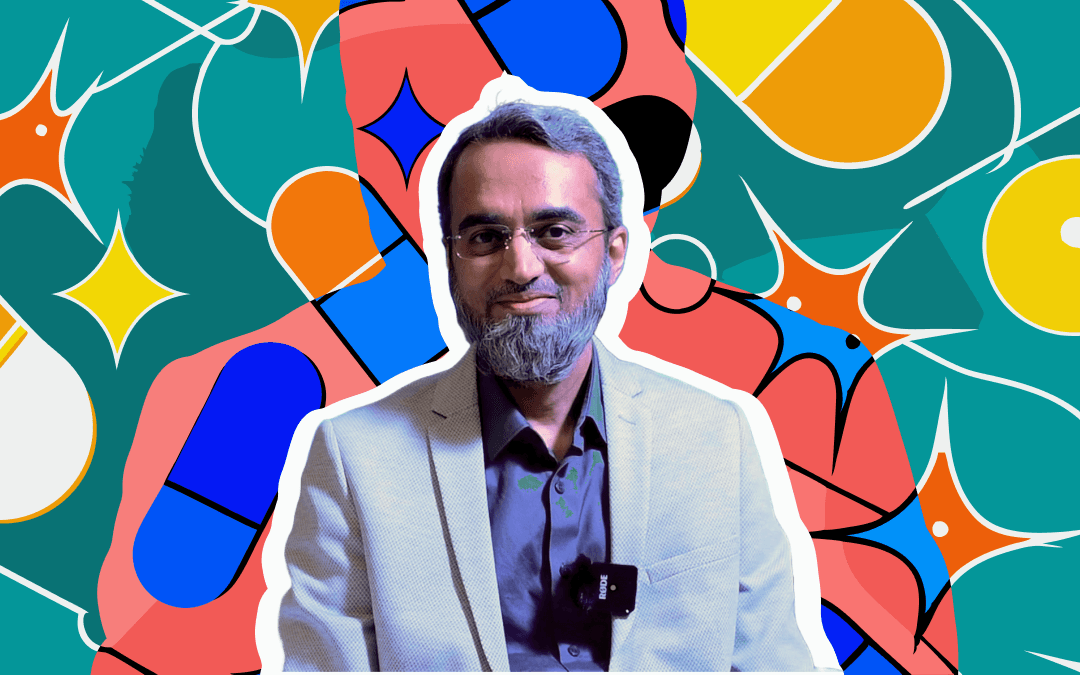
From ‘Why Reject?’ to ‘How Release?’: Deepak Kasbi on the Cultural Shift in Pharma Quality
One question flipped pharma quality culture. Kasbi on why India still struggles with sustained compliance and what QA policing gets wrong.

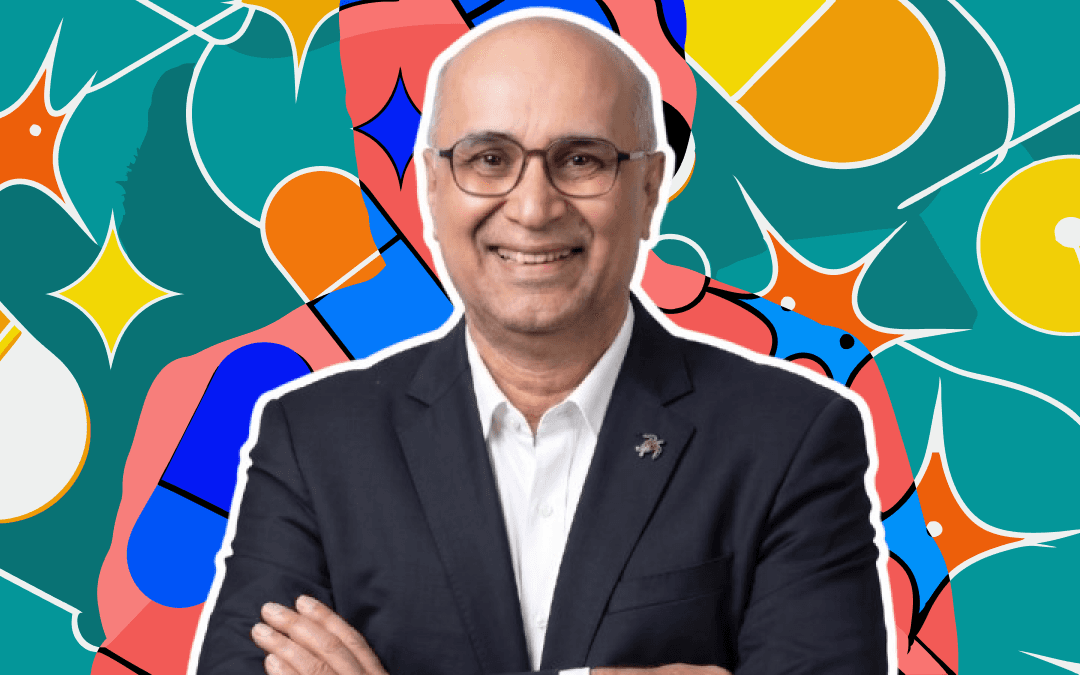
Pharma Now: Today’s guest is someone who has quietly shaped the backbone of pharmaceutical quality in India for decades. A veteran quality leader, former Senior Vice President of Corporate Quality at Lupin, and now a force behind a new industry-driven initiative, Courtesy 23. He brings not just experience, but conviction. Known for his uncompromising stance on integrity and systems, today’s conversation is not about shortcuts, it’s about doing quality the right way. Welcome Mr. Deepak Kasbi.
Sir, you’ve lived through multiple eras of Indian pharma, from growth years to intense global scrutiny. Looking back, what was the toughest phase of your career? And how did your journey begin?
Mr. Deepak Kasbi: You’re right, we entered the pharma sector around 1985. At that time, pharma was not under as much focus as it is today. We were fortunate to grow alongside the industry, whether in terms of technology, awareness, or regulations.
When you ask about the toughest phase, I would say it was managing change. Change is constant, but what we experienced was transformation. The toughest part was a complete cultural shift.
In the earlier days, owners would ask, “Why did you reject the batch?” Today, the same question has become, “How could you release a failing batch?”
I’ve seen this shift firsthand, especially since I had the opportunity to work closely with top management and owners. That period, roughly from 1994 to 2003 or 2004, was particularly challenging. We had to balance business expectations, compliance, quality, and our own professional integrity.
Another difficult phase came when the industry faced intense scrutiny from the US FDA, with a surge in 483 observations and warning letters. That period created significant pressure for quality leaders. Later, when compliance became directly linked to business outcomes, things became easier. In the last 10 years of my career, it was relatively easier to convince leadership because they understood the cost of non-compliance.
As for my journey, I’m a postgraduate in Organic Chemistry from Vikram University. I actually started my career as a teacher. I taught at the same school where I studied, for about six months. Then I got an opportunity at Ranbaxy, which is now part of Sun Pharma.
I began at a very basic level as a chemist, doing water testing. From there, I grew step by step. My seniors noticed potential in me and supported my development. I was part of several leadership programs, which helped both my personal growth and the organization’s growth.
Over about 15 years at Ranbaxy, I moved from a junior role to Senior Manager, going through multiple promotions. I was also given a special assignment for quality transformation at the Crosslands facility in Goa, which Ranbaxy had acquired. I was sent there as the Quality Head to establish systems.
That was a defining phase because I had to take independent decisions.
If someone wants to grow, they must be able to take decisions. After that, I moved briefly to IPCA, but due to family considerations, I transitioned to Alembic. There, I achieved a major milestone.
After 97 years of Alembic’s history, I was the first person under whose leadership the company received US FDA clearance.
That remains one of the most significant moments of my career. I didn’t have a roadmap or a mentor for that specific challenge. I was fully responsible, accountable for everything. Fortunately, I had a strong team.
In fact, when I look back, many of the people who started their careers with me in the early 1990s stayed with me until my last working day. Around 50% of my team consisted of people I had worked with before. That made execution easier, we had mutual understanding and trust. People often asked why I carried my team along. The answer is simple, it works.
After Alembic, I joined Lupin in 2005. There, too, we had challenges. We achieved multiple FDA approvals, and we also faced setbacks, including a warning letter, which we resolved within six months.
I give a lot of credit to our late Dr. Desh Bandhu Gupta. He played a key role in aligning and motivating the team. During the warning letter phase, he personally visited multiple times to ensure we stayed focused and committed.
From there, my journey expanded into global vendor qualification, electronic quality management systems, where I served as the Business Process Owner, and contract manufacturing across India. I was also given international assignments for quality transformation, including work with Lupin’s sister concerns and operations in Mexico.
This gave me global exposure. I’ve traveled extensively for audits and business purposes, almost across the world, except Australia and New Zealand. Overall, I would say I’m satisfied with my contributions. But I still want to give back to the industry.
That’s why I started Courtesy 23, a service where I offer my experience at a nominal fee of ₹23. But there’s a condition. I’m not interested in just advising, I want to see implementation. Without that, there’s no value. That, in short, has been my journey. It’s been fulfilling.
Pharma Now: That’s a great journey. The part where you spoke about the shift, from “why did you reject the batch?” to “how could you release the batch?”, really reflects how the industry is evolving toward a stronger future. And when you said there was a time when no one was there to guide you, and you had to take decisions on your own, you were fully accountable. Does that mean you were a strict boss?
Mr. Deepak Kasbi: I was fortunate to have a boss who gave me a lot of freedom. He would say, “Deepak, you take the decision. I’ll stand by you. You may fail, but you will learn.” That confidence played a huge role in shaping my decision-making ability.
Over time, I learned to convert decisions into analytical ones. I would evaluate risks, quality risk, patient risk, safety risk, and business risk. By weighing these factors, I could determine whether something was doable, and if yes, to what extent. That approach helped me bring structure and clarity into decision-making.
One important lesson I often shared with my team came from my time in Goa. If you can think of the right option even 1.5 seconds ahead of others in a meeting, you become the differentiator. That small gap is what separates a doer from a leader. Many people can follow instructions and execute tasks well, but leadership comes from adding value beyond what is told.
In our industry, there are many people who can clearly explain problems, but they don’t always think about how those problems could have been avoided or solved. That’s where the shift from reactive to proactive thinking becomes critical.
It is always better to prepare to protect rather than react to repair.
I often share a simple story. A father once took his son to a doctor, saying the child was cranky and behaved oddly. The doctor asked the father to lie down on the stretcher and started examining him. The father was confused and said, “I’m not the patient, my son is.” The doctor replied, “I’m trying to find the root cause.”
That’s exactly what we often miss, we don’t go deep enough to identify the root cause. We stay at the surface level instead of asking the right questions.
To truly excel, you need a certain instinct, a drive to dig deeper and understand problems thoroughly. It also requires complete involvement in your profession. You can’t simply switch off mentally once you leave work. From my experience, even when I was not physically present, I was always thinking about the organization, the challenges, and possible solutions. That continuous thought process eventually leads to clarity.
I was also very fortunate to have a strong team. I won’t name individuals, but all my deputies were exceptional. Many of them have grown far beyond what I had initially expected. Some are now leading large organizations as global quality leaders. That, for me, is one of the most satisfying outcomes, seeing people you mentored grow and succeed at the highest levels.
Pharma Now: Sir, you mentioned that decision-makers are often the strongest leaders. Can you share an instance where things were out of your control, and a decision you took impacted the entire situation?
Mr. Deepak Kasbi: I won’t disclose all the details, but there was a situation in 2008 at Lupin. Inspectors arrived at the gate for a surprise inspection, and there was internal chaos. Everyone was tense.
I asked a simple question: “Have we done anything wrong?” The answer was no. So I said, “Then why are we afraid?”
Someone pointed out that there were a lot of papers in the scrapyard. I clarified, if it’s routine destruction and nothing wrong has been done, there is nothing to worry about. I told the team to stay calm and continue their work. I took responsibility to face the inspectors.
A big part of decision-making is how you react in a situation. If a leader panics, the entire team will panic.
I’ve always believed that leadership is not about claiming credit. It’s about guiding the team. But at the same time, if you don’t understand the work yourself, you cannot lead effectively. People eventually recognize whether a leader truly knows the subject or is just trying to manage perceptions.
Another example comes from a different organization. There was a sterile ampoule batch where white particles were observed. The management initially did not want to destroy the batch. I was very clear, it had to be destroyed, and that too in front of QA.
The matter escalated to senior leadership. I was questioned about my decision. I responded with a simple question: “If you are confident, would you take two shots of this injection yourself?” That ended the discussion. The entire batch was destroyed in front of me, with proper documentation and videography.
As long as your intent is right, your approach is scientific, and you understand your subject deeply, the right decision becomes clear.
Surface-level management doesn’t work. You need deep, hands-on experience to understand what is happening on the shop floor. That’s why many strong leaders are those who have grown from the ground up. Management education gives you tools, but knowing how to use them comes only with real experience.
Pharma Now: Quality leadership often means saying no when everyone expects a yes. Was there a moment when making the right quality decision came at a personal or professional cost? How did that shape you?
Mr. Deepak Kasbi: That’s a very valid question. I’ve always believed there are two types of GMP. One is Good Manufacturing Practices, and the other is cGMP, current Good Manufacturing Practices, because the industry keeps evolving.
But I introduced a third concept for myself: EGMP, Ethical GMP. If I manufacture a medicine, I should feel confident giving it to my own grandson. That is my definition of ethical quality.
In Lupin, during a quality meeting, I raised a question with the Managing Director. I asked, “Why should only a QA person have the authority to stop a machine when there’s a visible quality issue in packaging? Why can’t anyone on the line stop it?”
This led to a significant change. Following that discussion, a daily coordination meeting between QA and production was introduced across locations. The idea was to improve alignment and communication.
Quality is not the responsibility of one department, it’s a shared responsibility across the organization. QA and production have different roles, but they must work in sync. The role of QA is not just to check, it is to act as a form of legal and ethical safeguard for the organization.
Pharma Now: Sir, what are the top two to three quality risks that Indian pharma companies are still underestimating today, especially in areas like data integrity, digital systems, or global inspections?
Mr. Deepak Kasbi: This is really an extension of what we discussed earlier. Let me put it very clearly, if we do not improve, we will be out. That’s the blunt reality.
The industry has evolved significantly. Requirements have increased, and awareness around quality has grown. Today, we are dealing with stricter expectations, NDMA, NDEA, elemental impurities, carcinogenic impurities, all of these have raised the bar. So the challenge is no longer about knowing what to do; it is about how consistently and sustainably we do it.
To my understanding, the biggest gaps in India today are consistency and sustainability. Companies are very good at drafting strong responses to 483 observations or warning letters. They commit to multiple actions and often implement them, for a short period. But what is missing is long-term sustenance.
Sustenance of compliance is the real key to success.
And when we talk about sustaining compliance, we are indirectly talking about data integrity. The basic GMP principle, do what is written and write what you do, still holds true globally. Yet, even after decades, we struggle to implement this consistently across all levels.
The issue is not just systems, it’s discipline and mindset. Data integrity cannot exist without discipline. And discipline comes from culture, which is driven by mindset, whether it’s the operator, the supervisor, or leadership.
Another major gap is the lack of percolation. You may have excellent policies, strong presentations, and well-drafted procedures, but if they don’t reach the shop floor in spirit, nothing changes.
Compliance is not about what is written in SOPs, it’s about what actually happens on the shop floor every single day.
We still see basic mistakes being repeated. For example, writing observations on paper or by hand in uncontrolled ways, something we’ve known for 20–30 years is not acceptable. Yet it continues to happen, even during inspection periods.
That’s where mindset becomes critical. We need to move toward what I call “anytime readiness” (ATR). We should not prepare for inspections. If we fail an inspection, it means we were not ready. If we pass, it means we were always ready.
The goal is not to move from bad to good, it is to move from good to great. That shift requires discipline, sustained compliance, and a deeply embedded quality mindset.
There are already examples where companies have become non-viable because they failed to sustain quality standards. When quality collapses, the financial impact is not in millions, it can run into billions. The real risk is that when the consequences arrive, it is often too late to recover.
So if I summarize, the three key risks are lack of sustenance, lack of discipline, and a weak quality mindset. Address these, and many of the other issues, data integrity, compliance gaps, inspection failures, will automatically improve.
Pharma Now: So, when the US FDA scrutiny intensified, what was your experience like? What was your role during that time?
Mr. Deepak Kasbi: I was on the front line. The pressure was directly on me, from within the company and from the inspectors. But that is part of the QA role.
I always believed that if you are doing the right thing, there is no reason to be afraid. I used to tell my team that whenever they were closing a document, they should pause for 30–40 seconds and think like an inspector. How would the inspector read it? How would they interpret it?
There are two important aspects, context and concept. From a context perspective, the document should clearly tell the story in a proper sequence. When an inspector reads it, they should immediately understand what was done and why. But even if the context is correct, the concept must also be sound. If the logic or reasoning is weak, the document will still fail.
This is a common issue in the industry. Whether it is a deviation, change control, or inspection response, many people struggle with constructing a clear, chronological narrative. Inspectors are highly trained, but they still assess how well you understand and handle failures and deviations.
Typically, the first inspection in a company goes relatively smoothly. The second brings some turbulence. From the third onward, serious issues start surfacing. There are companies that have never recovered from warning letters. They continue operating in other markets, but not in the US. The reason is simple, they did not fix the fundamentals.
One inspector once remarked that in India, people take the effort to write, but don’t open their eyes. It’s a powerful observation. You may be writing everything, but you are not thinking deeply about it. You are hearing, but not truly listening.
That lack of focus weakens the system. There are, of course, companies that are far ahead. They operate with a single mindset, compliance is non-negotiable. Some are even moving toward integrating QA with production.
The day production fully owns quality, and QA becomes unnecessary as a policing function, that is when true compliance maturity is achieved.
Today, QA often acts like a policing system. But ideally, quality should be built into the process itself. Think about it, a QA person with a few months of experience is sometimes expected to challenge someone who has been working on the shop floor for 10–12 years. That itself shows a gap in ownership.
In one audit, I saw a temperature probe placed directly in front of an AC blower instead of the actual hotspot. It was done deliberately to show controlled conditions. These kinds of shortcuts may go unnoticed sometimes, but they reflect a deeper issue.
The fundamental principle is simple, do it right the first time.
You need to understand your processes, identify your problems, and fix them permanently. Quick fixes and cosmetic compliance, what we call “window dressing”, do not work anymore. That era is over.
Unfortunately, some companies still operate with the mindset that “if it gets caught, we’ll respond.” That approach is dangerous. Instead, every document, every batch, every process should be treated as if it will be questioned.
Ask yourself: can we defend this? Can we explain it? Can we confidently say that what we did was right?
Inspectors often focus on how well you handle failures. And this is where many organizations struggle. For example, if your SOP clearly states that a process should not proceed until a stage is cleared, why does it still move forward when it fails? The answer lies in intent and discipline.
We need to move away from shortcuts and plan better. Concepts like just-in-time may work in certain industries, but pharma has inherent variability, raw materials, processes, environmental factors, all introduce complexity.
In the last 10–15 years, awareness has definitely improved. But the pace of action, especially in scientific rigor, compliance systems, and automation, still needs significant improvement across the industry.
Pharma Now: You’ve started a new initiative, Courtesy 23, as a way of giving back to the pharma industry. What problem are you solving through this platform that traditional consulting models fail to address?
Mr. Deepak Kasbi: The primary reason behind Courtesy 23 is to support companies that cannot afford high-cost consulting, especially those priced in dollars. There are many organizations that genuinely want to improve but hesitate because they fear large compliance budgets and long, expensive recommendations.
My intention is to help such companies, those who want to grow, even if slowly, but in the right direction. Many organizations are willing, but they are not properly aligned in terms of compliance, business needs, and long-term strategy. If I can help bridge that gap, that is the purpose of this initiative.
I am not focused on training. Training often lacks sustenance. You train someone today, and over time, that knowledge fades. Instead, I focus on real issues, core quality concerns, infrastructure gaps, design flaws, and conceptual understanding. I want to assess whether teams truly understand what they are doing.
If you don’t know what you don’t know, you will never learn what you are supposed to know. This is a simple idea, but it carries deep meaning. Many people are unaware of their own gaps, and that creates a false sense of confidence. Learning is a continuous process, it doesn’t end.
I also try to shift the mindset. People are often afraid of inspections or tough questions. But in reality, life itself presents much bigger challenges every day.
If you are prepared and confident in your domain, there is no reason to fear an inspector or a question.
Another important aspect I emphasize is accountability. Many people try to use their intelligence to cover up mistakes. I’ve always believed in accepting mistakes openly and learning from them. That’s how systems improve.
Learning comes from accepting failures, not hiding them.
Through Courtesy 23, I provide practical tools as well. I’ve developed simple Excel-based models where companies can input their data and get a clear picture of their compliance status. These tools help them understand where they stand and what needs improvement.
This initiative is especially focused on MSMEs and small-scale companies. Large organizations usually have access to resources and expertise, but smaller companies often struggle despite having the right intent.
So far, I’ve worked with a few organizations, and the response has been encouraging. They’ve found value in the approach and even asked for extended engagement. At the end of the day, it’s about giving back to the industry. If someone benefits and improves, that itself is satisfying.
Pharma Now: That’s truly impactful. This initiative is definitely needed in the industry. We’re grateful to learn from your experience. Thank you so much, sir, for joining us.
Deepak Kasbi is a pharmaceutical quality veteran with nearly four decades of experience across India's pharma landscape. A postgraduate in Organic Chemistry, he began as a chemist at Ranbaxy, rising to Senior Vice President – Corporate Quality at Lupin Limited. His career spans Indian pharma's early years through intense US FDA scrutiny.
Across Ranbaxy, Alembic, and Lupin, Kasbi led quality transformations at scale. At Alembic, he secured the company's first US FDA approval without precedent. At Lupin, he managed global quality systems, vendor qualification, and regulatory remediation, resolving a warning letter within six months, with assignments in India and Mexico.
Known for Ethical GMP, Kasbi places patient safety above compliance optics. His leadership centres on proactive thinking, root-cause problem solving, and sustained compliance. Through Courtesy 23, he supports small and mid-sized pharma firms with execution-driven quality guidance.
More interviews
All interviews →
The Untold Story of COVID-19 Vaccine Development: Dr. Subhash Thuluva Speaks

Mastering Pharma Regulations: Rajni Jha's Guide to Global Compliance Success