From Discovery to Delivery: Inside Phillips Medisize’s Approach to Drug Delivery
Twenty-six years, one company, zero career plan to leave. Justin Westendorf of Phillips Medisize on the crushed rib that cost six months, the acquisition that changed inhalation, and why turning weaknesses into strengths is the wrong move.

Pharma Now:
Somewhere right now, a patient is alone at home and is about to give themselves an injection with a device they have never used before. If that device is confusing or the instructions are unclear, the consequences are not theoretical, and almost nobody outside the industry knows how much work goes into making sure that moment goes right.
Welcome to the Inside CDMO: Behind the Glass series, where we explore what it is really like to run a CDMO today. Today’s guest has spent his entire career working on exactly this problem. With 26 years at one company, Phillips Medisize, he started in engineering and training. He worked his way through mold design, program management, and engineering leadership on drug delivery devices and inhalers.
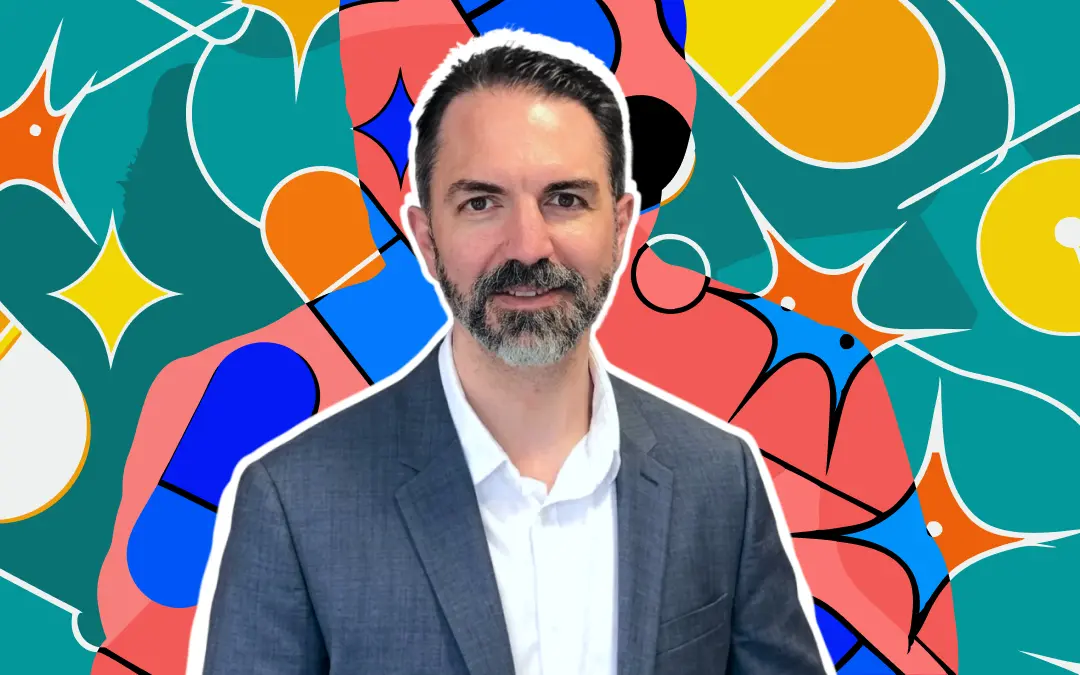
Then, in 2022, he built a new global team bringing together human factors, design, and innovation. This is Justin Westendorf’s job now, and he is helping to ensure that every device his team touches is intuitive, safe, and effective in real-world use.
Today, we find out how. Justin, welcome to Inside CDMO. So, going ahead, I guess the first question that everybody wants to know about is: what kept you at one single company for 26 years in an industry that is well known for job hopping?
Mr. Justin:
Yeah. Well, how much time do we have? Yeah, there are maybe two answers to the question, and I’m going to abbreviate the first one. That’s to say the people, and we should come back to that at some point to talk about the people and the culture, and the culture of learning and personal development.
But the other part of it is told in my career journey. I started on the high-volume manufacturing side of the business, and I had lots of ideas for improving those products. Working with customers when my job was to get automation up and running and get tools qualified, I would share my ideas with them, and they would say things like, “Well, that’s great, that’s adorable, but you know, we’ve passed DV testing. We’ve gone through clinical studies. We’re not going to repeat that.”
As a young engineer, I was like, " What’s this DV thing, and why can’t we just repeat it? This is a really good idea. And that kind of started my journey of learning more about what happens during product development.
That moved my career. I got to work on one of our first drug-handling programs. That customer was looking to go through an optimisation cycle before going to commercial scale. So, I got to share ideas and get involved in some of the DV testing, but I had more ideas because now I was like, there are better ways for the user to interact with this. And they would say, “We’re past that point.”
So that got me going further. Every time I had questions and would go through some learning, there was an opportunity. And I think that’s one of the things that, yes, there are a lot of different companies that do parts of these things, and for a lot of people, they would have to go and leave the organisation that they’re in and go to a design agency or something like that to move further upstream.
But for us, the CDMO is discovery. It’s not DFM. So, my journey didn’t end once I got good at DFM and DFA. I got to move even earlier and start to learn: what do users really want? How will this product be used in their home environment? How do we design something that is for them and their unique condition, therapeutic needs, and fits in their lifestyle?
And then how do we also make it effective? And then, how do we solve engineering problems and make sure they're scalable? So, it’s really two things. It’s the people and culture, but then the opportunities to truly span all the way from where I started, which was in high-volume production and delivery, to the really early stuff in discovery.
Yeah, we kind of joke. In our world, in global R&D, we say we want engineers who play musical instruments or designers who work on cars. We’re always looking for that. Because we need that pragmatism, the ability to actually see and get your hands dirty and understand how things work if you’re a designer.
But we also want engineers who have that artistic, creative side and use both halves of their brain. Because to make something that is—you’ll hear me say this phrase a few times—useful, usable, meaningful, and viable, you’ve got to use both halves of your brain.
And it doesn’t mean that if you’re an engineer and we’re in a creative cycle, you have to be the most creative person; you just need to understand and value the creative process. And vice versa. You can’t just create all day long. You’ve got to value getting real and getting specific and solving engineering problems, too.
Pharma Now:
Yeah, and you definitely need that creative side. I really like your quote, the sentence that you just said, because it really shows that you need your creative side to accomplish a technical job. And the other way around, you need your technical skills to accomplish a creative job, as in the case of a designer with car expertise or passion.
Yeah, I really like that. I think I’m going to steal it from you, actually. That’s a very clever point coming off of your story. Another very interesting thing is that when you work for a company for so long and go through such a long journey, you surely learn many lessons.
So, the one thing that I’m actually very curious about is, if you were to say you’re talking to a junior engineer or somebody who’s just joined the company. You want him to grasp what it’s like to be on such a long journey, what’s a hands-on lesson that you’ve learned in your early years and that still helps you or shapes your leadership today or the way you work today?
Mr. Justin:
We are very fortunate to have a really talented intern pool that comes in every year, and the engineering training—now called the Rotational Engineering Program—that I was part of. I get to talk to these young kids, and the thing that I focus on with them, because I could easily overwhelm them with stories and tactical lessons learned, is agency.
Young people don’t know how much agency they actually have. And when I look back on my career, I was very, very fortunate to have really strong mentors around me that took time to teach me, but it did require me to ask questions. And this is part of what I encourage them to do—and to fail —but maybe review my plan in advance and ask, "Is this a well-thought-out experiment?" Get the okay, get the go-ahead, not be successful in the outcome, but be successful in the learning process.
The agency can apply to everybody. If you’re 15 or 20 years into your career and maybe you feel like you’ve kind of done everything, have you actually realised how much control over your own career you actually have?
It does require you to step out of your comfort zone, ask a question, set up a meeting with someone who may not be in your field but is over there, and just explore possibilities. Ask them questions about what fulfils them in their role that’s different from your role.
So, that’s something that I really focus on with kids: learning. And I share books,d podcasts and YouTube videos that have inspired me to embark on my learning journey.
And then the last one is critical thinking. And I think this is really, really important for the younger generation. To be successful, to have agency, you have to think critically.
That person, myself included, who’s been here for 26 years—when I tell you something, you should be a little suspicious. You should go and find the source. I should give you a reference to an ISO standard, an FDA guidance document or something like that, and you should look it up and learn from the source itself.
So, thinking critically is the other thing. Rather than focusing on the one time I did this and learned this lesson, I try to focus on principles they can apply to many different scenarios in their young careers.
Just one more thing on that, from a technique perspective. When a younger engineer—really, any engineer—comes to me and asks a question, I think the temptation is, in this very busy world, that we give them the answers so that they can keep going. And the better thing to do is to ask them, “What would you do? Why do you think that’s a good idea?”
And it just opens this completely different conversation because it forces them to propose their own idea. And they know the next time that they come and ask me a question, I’m going to say the same thing.
So, rather than coming to me and asking me a question, the next time they show up, they say, “Here’s what I think we should do for this situation. Here’s why I think it’s a good idea.” Now, I may still ask them another “why” question just to probe, push them to think even more deeply.
What we’re teaching is not giving them the answer, but teaching them how to think and what the expectation is of a critical thinker: that you explore your own ideas first, and then you come to see if they are valid or invalid, or what a blind spot you have.
So, I just wanted to share that from a technical perspective.
Pharma Now:
And coming back to the company, though, since you’ve seen so much, I guess if we come back to the problem that we proposed in the introduction about someone who is using a device they’ve never used before and is trying to figure out how to do it, you want those instructions or guidelines to be as clear as possible.
I’d say there’s a lot of mystification, probably is the right term, I’m not sure, of some of the drug delivery devices around the globe. So, what’s the biggest myth that you see people have about how a drug delivery device is actually designed or meant to be used?
Mr. Justin:
This is a great question because we get to work with both very large pharmaceutical companies and startups. So, I think the first biggest myth is that there’s a formula to it. And the second is that it’s a linear process. The reality is neither of those is true.
We have companies that grow up with a great technical solution. They’ve got a really solid molecule, they know where it needs to go, and maybe they’ve said, “Here’s how we’re going to get it there.” And that’s just the useful part of it. That’s the part where a device concept serves a purpose, but they haven’t actually thought about the user workflow. They haven’t foreseen the potential use errors.
So, let’s take a step back. Let’s make the workflow really solid, and then see whether that’s the right technical solution.
Sometimes they show up with the greatest—I saw an epinephrine auto-injector product that was completely redesigned for a user’s lifestyle. How would they actually carry this thing? How can we make it smaller? How can we make it a different shape from the normal one? Something that fits in their lifestyle really well.
That’s really awesome. They’ve got a solid workflow. They’ve got a meaningful product that’s going to fit into users’ lives. It’s a life-saving product, but with that comes reliability, and the engineering has to be rock solid. The viability and manufacturability have to be rock solid because it has to be ready on demand to fire.
And they didn’t have those different things figured out. So, the idea that it is, first of all, going to show up as, “Let’s figure out how to deliver the molecule first, and then we’ll wrap everything around it,” or, “We figured it out outside-in, but we haven’t figured inside-out”—we always talk about those two things as different approaches.
There’s almost always a “take a step back.” And why I’ve said useful, usable, meaningful, and viable are four things that have to exist simultaneously in a successful product is because sometimes one of those is out ahead. That’s fine. We need to bring the other three into balance.
Otherwise, we’re going to be in for a really expensive do-over if one of those, you know, if the engineering gets really, really locked in and we can’t change anything.
Pharma Now:
Well, we may have to when we get into a usability study, and everybody’s confused, and now it’s really expensive.
Pharma Now:
Yeah. Now, I’m actually very curious. I want to go a little bit deeper into this. So, I’m going to ask you a more personal question. What’s a specific design choice that looked fine at the beginning, or on paper, but then would have definitely failed if it came through to the customer’s hands?
Mr. Justin:
I won’t speak about a specific device. Still, I’ll speak about a specific category of problems we see: the relationship between what it takes for the technology to do its job and what it takes to manufacture that technology.
In a typical engineering approach, if we just refer to the V-model, we’re going to figure out intended use, use environment, and user needs. Then we’re going to figure out design input requirements. Then we’re going to do detailed design. Then we’re going to verify the design input requirements and validate to the needs.
But nowhere in that V-model do we really talk about establishing a solid link between detailed design and the required manufacturing processes. A lot of times, that happens. We may, for example, conduct a tolerance analysis.
I may design the product to have press pins and interference pins to hold the housings together. And the tolerance analysis looks great, and this single-cavity version survived the drop. But have I really studied the variation we know will occur in four-cavity or 16-cavity tooling when I did that? No. Typically not. Most companies, not.
But part of our origin story of being a commercial manufacturing organisation first and then adding design and development in the ’80s means that we were always kind of looking at the endgame.
So, when we’re coming out of detailed design, we have a stage in our Stage-Gate model called manufacturing development. And that stage is there to build the link between foreseeable manufacturing variation that our production site is going to encounter, and help us ideate around specific manufacturing development for the key areas required for product performance.
That linkage, if you can make that really strong, you’ll be successful when you go to launch. And the variation that normally occurs—you may not account for all of it, but you’re not going to be surprised by the big ones.
Pharma Now:
So, talking about that, it all comes down to basically assessing and accepting some kind of risk. Every time you make a design choice and put it down in a detailed design, you accept a certain percentage risk that it will be problematic or faulty in the real world, right?
About risk, and I’m still picking you for examples, can you tell us about a design risk or something that happened that you caught later than you would like to admit? And what did you learn from it?
Mr. Justin:
So, I will give an example of inhalation. Inhalation, as an engineer, is the most fun for me because it’s the most complex. Everything about the device is both an engineering problem and a geometry, airflow, and particle-size problem. So, there’s a lot of complexity in inhalation products.
An example of something that we missed was—we now describe this as unknown unknowns, known unknowns, and known knowns. A way to think about a product development process is: can you convert unknown unknowns into known unknowns, and then can you move that to things that you control, known knowns that you can control?
In inhalation, there are many unknown unknowns. And where we got caught, where I got caught, was that we didn’t spend enough time imagining sources of variation during the engineering verification and design verification testing.
So, when we went to CLA for cavity tooling and started to go through the commercial equivalency testing, we had all these flow characteristics that were different. Now, what did we do differently? We literally CT-scanned assemblies. Everything fit together the same as with the single-cavity tools.
Where was the variation that we didn’t pick up on? It was this single crushed rib that was crushed, but it wasn’t crushed by the same amount. And because of how the user could inhale and draw through, a different amount of airflow and a different back pressure occurred in that one zone, which changed the plume geometry.
So, it took us six months to find that one little crushed rib not being crushed by the same amount as the single-cavity tool. And what I would now say is it was a failure of imagination.
Now, when we’re in detailed design, we try to be intentional about what I call variation ideation. It’s why you need that left brain, right brain together in the same room.
If you’re a manufacturing engineer who’s great at process, awesome. You need somebody creative to think about what if this happened? What if that happened? Identify those sources so we can plan how we’ll either invest to reduce that risk or better understand it.
Or we may make an intentional decision, based on subject-matter expertise and experience, in partnership with our customer, to take that risk. It may not show up as an issue, and we move forward.
So, yeah, imagination, even when you’re in the detailed engineering and design phases of a program, is still really critical. It’s just now about sources of variation.
I mean, as I said, the engineering complexity side is fun. It’s just unfortunate when it comes at the expense of—I mean, this is one of the things, right? When you have a delay in launching a product, it isn’t just about the milestones. It is also about the patients.
And that means that, for that particular product, 60,000 people who were planned to get that therapy didn’t get that therapy in that span of time. And that’s one of the things that I think is really important to continuously keep in front of engineering teams, design teams and program management teams.
That milestone isn’t just a milestone. It’s not just an obligation or a commitment to our customers and our internal teams. It is about getting that therapy to the market and into patients’ lungs or bodies to deliver therapy.
Pharma Now:
And just because you talked about inhalers, I wanted to ask you about the acquisition which your parent company recently made, because that adds a lot more leadership in inhalation devices. So, does that unlock anything? Does that change the game for you in any way?
Mr. Justin:
It is absolutely a game-changer. I was so excited because I’ve—I don’t know, I’ve probably worked on 20 inhalation programs in my career before that acquisition, and every one of them ran into the same roadblock.
When we were doing characterisation testing, we would have to send the device to the pharma company because they were the ones who could actually perform next-gen impact testing or delivered-dose unit testing. They could do that.
There’s always a bridge linking the device and the formulation. And when things didn’t work out, you’re pointing fingers. You’re saying it’s a formulation problem. No, it’s a device problem. What did you do differently?
Formulation people don’t necessarily understand that devices inherently have variation in them, and formulation doesn’t. And now we have that all under one roof, in one company.
And that, to me, is huge because in terms of the life cycle of product development, a full product being the combination product, it is so invaluable to be able to have both of those pieces in one organisation, working together, talking together.
The device team gets to get involved early while formulation is still flexible, to kind of let them know, “If we’re going to put it into this form factor and a blister strip or whatever, we would be better off if you could tweak the formulation this way. If you can’t, that’s okay. It just means this in terms of downstream consequences.”
So, I sincerely was and am very, very excited about having them as part of the team.
Pharma Now:
So, from your point of view, what’s the biggest change that you’ve seen in drug delivery technology, and how has Phillips Medisize contributed to this kind of evolution?
Mr. Justin:
It’s a good question. I mean, obviously, a lot of things are going toward more personalised healthcare, and that can mean a lot of different things.
It is about the molecule, certainly, but it is also about the person who’s interacting with the molecule and how they’re going to do it. I think we were really fortunate in 2016 to acquire Medicom Innovation Partners, which is now part of our global R&D network.
They were very progressive in the field of electromechanical drug delivery devices and auto-injectors and, very early on, were advancing those products to market.
The fact that you could have a reusable electromechanical handset that was better from a usability perspective because you could include a lot more indications and confirmation that the user did steps right—now, with biologics, larger molecule chains, larger volumes, a lot of programs and products are moving into that type of product need, or device need.
So, the fact that we were maybe a little bit ahead of that particular trend but already making electromechanical devices, I’m really proud of what the team has done there because now we’re able to offer a broader suite of capabilities and device solutions that are either starting from a technology origin story or a product origin story to help customers and pharma partners get molecules through design development and into commercial faster.
So, that’s one way that we’ve contributed. And on the inhalation side, I know the team in the UK is also working on biologics and considering next-generation devices that will again help bring these products to market and into patients' hands sooner.
The other trend is on the usability side. I mean, the FDA guidance on usability, really, when you think about it, isn’t that old relative to how long drug delivery devices have been used by users.
When I started my career in 2000, we were already making pen injectors. Millions and millions of people were using those on their own. But the FDA, EU, everybody else—there are now standards for usability. There weren’t when those products were first around.
We were doing things based on user preferences, not on "do patients understand this?" Could they potentially use it incorrectly, miss a dose, or not realise that they missed a dose?
So, there is definitely a lot more intentionality and focus on making sure that devices that are more than likely going to be used by the patient, not a caregiver, are safe and effective, that they are not confusing, that patients will know they’re getting their treatment and can trust what they’re getting.
Pharma Now:
And you mentioned a lot about pharma partnerships. Do pharma companies come to you to propose new products as well, or does that happen?
Mr. Justin:
From a device perspective, yeah. I think one of the places where we can add more value is when they’re developing formulations. Even just having a day-and-a-half-long workshop to explore potential device solutions—not for the purposes of picking one, but for the purposes of educating and understanding the trade-offs when you’re considering formulation.
Do we use a larger volume at a lower dose frequency, or a smaller volume at a more regular dose frequency? What are some of the options from an overall delivery workflow perspective that create value for users?
Delivery-minded thinking is not just about how the molecule gets into the patient’s anatomy. It’s about the whole user experience.
We all took COVID tests, where you had to stick the thing up your nose. It was really uncomfortable. You didn’t want to do it, but you had to do it for some reason.
But imagine that’s your therapy, and you’re going to be on it for the rest of your life. If you can, early on, have a conversation with the formulation team and say, “Look, this is a life-sustaining drug. Let’s try to make this as tolerable as possible.”
And just to go back to the COVID test that we all took, even the difference between trying to get that thing all the way up here and being able to do it down here is still not a pleasant experience, but the tolerability is better.
Now you can see adoption being linked more to whether this is a more tolerable experience than an intolerable one. And you can really only have those kinds of conversations while formulation is still taking shape. If it gets too far down the road, it’s just like when engineering gets too far down the road—you’re starting to constrain the available options.
Pharma Now:
But another key aspect of COVID, and something that just sparked my next question, is that therapies are getting more and more complex. So, how has drug delivery device development evolved as therapies have become increasingly complex? It’s still becoming more and more complex right now.
And also, patient expectations have changed. Twenty years ago, it was not so unusual to have your drug injected. Right now, you try to avoid injections as much as possible for several reasons. Discomfort is one of those, right?
So, how does your drug delivery device development change with respect to patient expectations and more complex drugs to deliver? Is there any chance because the drug itself is more complex?
Mr. Justin:
I’ll maybe key in on two things. One is that the decision-making is more complex, and the thing that slows device development down more than anything else is decision-making.
One of the things the innovation management team I’m responsible for focuses on is making constructs and decision-making processes visible to our customers, first of all. Second, make sure that we’re describing the complexity. And then, third, use frameworks and approaches to help them prioritise decision-making.
Because if you can get a whole team aligned on the priorities of not one or two things that impact it, but ten, and they understand how those ten different key decisions all interrelate to one another, teams can move.
The more complex things get, the more you need frameworks and approaches to funnel that complexity into, while keeping everybody aligned and moving in the same direction.
So, that’s one way we help customers: by addressing the complexity of decision-making, stakeholder management and users.
The second thing you said is a really good point to pick up on: user expectations. Users expect the devices they interact with to be more like consumer goods.
And we all know we’re not launching the next drug 12 months after the previous one just because we added a new camera or something like that, right? But nevertheless, they have an in-home expectation that the thing is going to work like their phone does, or like their remote control does, or like the things around them every day.
In some areas, we have not done a lot of disruptive technology to move people from one device platform to another. I mentioned pen injectors before because when I started my career, we were making them.
And just like my pen, they have this little clip. When I started, I still remember engineers who had six pens in their pen protectors, and that was normal. That’s not normal now.
So, as we think about the users and what their expectations are, what’s a normal way for them to interact with the world around them, we do have to think about a new patient coming onto a new drug type and needing it to be meaningful to them.
And yeah, that was the fourth dimension that I talked about: useful, usable, meaningful, and viable.
Meaningful is about making connections to users and meeting them where they are—with the devices, with the therapies, with the whole therapeutic workflow, not just the injection point.
And the more that we can do to make a product not just safe from a usability perspective, but also meaningful—fitting within their world and their life—the better we’re going to see adoption and the better therapeutic impact they’re going to have.
Not because the molecule is better, but because the device fits in their life better.
Pharma Now:
Totally. And since you mentioned the gaps, another thing that I’m curious to get your opinion on is what a gap is in device design or human factors? You also mentioned earlier about the decision-making process and how that can slow things down, right?
That sounds like a human capital issue to me. Taking a decision takes time because it takes time to gather all the numbers, gather all the facts, and therefore be able to make the decision. If you had all those numbers, information, and facts on your desk and you could just snap your fingers and everything was there, you’d be able to make that decision much quicker.
So, to me, it sounds like a technology platform and/or a human capital problem, in the sense that you have to allocate enough resources to do that. My next question would be: what’s a gap, either in terms of device design or human factors, that you think the industry is not taking seriously right now, or not yet, or not enough?
Mr. Justin:
It is, and actually, the thing that I wrote down—we did talk about it a little bit—was decision-making. But I think there is a danger, maybe, in thinking about usability from a utopian perspective versus a pragmatic perspective.
Just to give an example, if we were considering a really expensive user interface that walked the user through, you know, on a screen, just like they would interact with their phone, right? Because we talked about their expectations for the world around them. And that delays launching that product in multiple countries by a year and a half because we have to validate different software and things like that. Is that worth it?
So, there is a kind of usability-utopian perspective, where the more we make products safe and design out the potential for user errors, the more we sometimes burden the device. And we have to be cognizant that there is a point where the risk-benefit does line up.
And while we should be visionary, innovative and user-focused, we also have to be practical. If we make that too expensive and an insurance company doesn’t cover it, the patient doesn’t get the therapy.
So, sometimes when we’re thinking in proof-of-concept land, where we have the most flexibility, and we are experimenting with step, stretch, leap—visionary, utopian versus maybe very rudimentary but pragmatic, but also potentially more prone to use errors—we need to be doing that testing as early as possible.
And it cannot be with a, you know, looks-like, works-like prototype. It can be a combination of things. The second thing is that I think we need to listen to users earlier in the process.
We are fortunate enough to have a usability lab here. The number of times that I’ve heard engineers say, “A user would never use it that way,” and then they sit in the back room as we do a test—even if we’re just doing a quick cafeteria study with people in our own building—and they’re like, “Oh my gosh, they do. They will use it that way.”
There are so many lessons that we can learn early and often to help go from where is that crossover from utopian to utilitarian? Where’s the right balance for that molecule, with the risk profile and safety profile, and the user group that’s going to interact with it?
We usually can get the direction set pretty early on. One of the mistakes I think companies sometimes make is treating human factors and user testing as a test they have to pass rather than as part of the discovery journey.
Sometimes you will see it as almost like, “We have to pass this test, and once we’ve passed the test, we’re good.” No, no, no. Get these groups involved early on. Help them learn and translate usage errors into engineering challenges to solve as early as possible.
Pharma Now:
So, what’s your strategy to anticipate those problems? Say you have a promising device. You have it on your program for this device, and it’s the most awesome device you could possibly have in your company. Fine.
Now, as it moves forward, you said this device will face increasingly complex challenges as it approaches the real world, right? So, what are your strategies, and what are your teams doing to anticipate the potential problems?
Do you have protocols or a sort of checklist? I don’t know, maybe you have a magic checklist to follow or something like that. How does that work?
Mr. Justin:
I think, you know, “culture eats strategy for breakfast”—another one of those famous quotes.
So, from a culture philosophy perspective, the way that we approach product development, again because we grew up this way and built capabilities this way, is that we believe every product, if it’s going to be successful in the market, has to be simultaneously useful, meaning it serves a purpose and performs a function; usable, safe and effective for users to interact with it; meaningful, adapting into the patient’s way of life and making connections; and viable, if we can’t produce it for a cost of goods at scale with reliable quality.
So, every check mark that we’re kind of going through in a Stage-Gate model, we’re assessing against those four things. And you need cross-functional teams to be able to do that.
As an engineer, I don’t innately have the training to understand whether or not that product is going to fit in a user’s life or whether or not it’s going to be safe and effective.
Maybe one quick sidebar: it is an approach thing as well. It’s “project killers” in proof-of-concept and early-stage development. You’re trying to identify what the thing is that, if this doesn’t work, will kill this product.
And that’s where you’re going to spend your money and your time and test. And if that fails, move on. Other concept, whatever it is.
Once you’ve kind of gone through that gauntlet of project killers from a useful, usable, meaningful, viable perspective, and you’ve weeded out the ideas that aren’t going to work, the thing that does survive is the thing that you want to develop.
And now it is about making that thing successful because it survived. So, we should always treat proof of concept from, again, not a linear journey where we do A and then B and then C, but we attack it from multiple angles and different perspectives.
If it doesn’t survive, if it can’t do this thing, if this piece of technology doesn’t work, if we can’t actually manufacture this one component that the whole technology is relying on, it’s not going to work. We shouldn’t keep investing in it.
So, again, going back to decision-making, because we have all of these different perspectives and disciplines involved in those early stages, we can identify what the top three things are that we should subject this idea to and see if it survives.
We’re always trying to make sure, even if we get ahead of things on maybe the engineering side or the usefulness side, we need to bring that thing back into balance.
So, it’s more of a philosophy than a checklist. It’s more of a cultural norm and a cultural way of looking at things that, again, you can kind of only do if you also have, from discovery through delivery, all of those different perspectives weighing in at the right times.
No magic checklist. Well, I mean, in all honesty, when you go through every design review, the questions that are asked in that design review are centred around those four ideas. How mature is this idea through these four lenses? And then, do we have the quality documentation to back it up?
But that’s the boring part.
Pharma Now:
So, I have one last question for you. It’s more of a philosophical question or advice to provide to younger people.
Since you probably have the answer to this question off the top of your head, because you mentioned that in your company, you have a lot of contact with young engineers, if you were to meet a young engineer today, what would be the single piece of advice that you would give them to enter a career like yours?
Mr. Justin:
The single piece of advice—you don’t know me very well. I don’t give only one piece of advice.
Here’s what I would say. If I can, I’ll tell a little bit of a story as to why I would give this advice.
There was a time early in my managerial career when I was very passionate about helping people struggle less in their jobs. And I had figured out a lot of things that worked for me. My approach was, “If I can just teach them how to do the things that I do, their life will be easier. They won’t have as much stress because I’ve figured these things out.”
And I had an employee who said, “Justin, you should read StrengthsFinder. You should learn about that.” And I said, “That sounds great. I love learning. I’ll do it.” And I didn’t. And two months went by.
And I gave a town hall where I was still kind of on this mantra, and she came back to me afterwards and said, “You really need to check this out.”
What I was doing was, with every person under my charge, I was trying to turn their Ds into Cs—areas where they didn’t have natural strengths. I was saying, “Work on those areas. They’re not up to par with Gary or Carol or whoever.”
No. Instead of recognising what was unique, where they were strong, and turning their Bs into As, the phrase that I remember from that journey was, “People don’t pay for Cs, they pay for Bs and As.”
So why waste all that time turning the areas where you are a D into Cs? You’ve got to discover what your Bs and your As are, and you’ve got to make those exceptional.
And that began a different phase in my career and my own journey. I realised that I was messing up with all the right intentions. I was not being a very good manager or a very good leader.
So, I wanted to share that because I see it in a lot of managers, especially when they’re early in their managerial careers. They have all the right intent, all the best passion behind it, but they’re trying to turn everybody into versions of themselves.
And that is still a temptation for me today, and something that I’m grateful I have a great team to hold me accountable for not doing.
But it is definitely a temptation for younger managers.
Pharma Now:
For someone who has never heard of Phillips Medisize, what should they know before they walk up to your booth at CPHI Milan?
Mr. Justin:
I think the biggest thing I would highlight is that we are a CDMO, and the D for us starts at discovery, not DFM.
Pharma Now:
That was great. Very good. Into the rapid-fire. That kind of comes back to some of the questions that we had before.
The first question is: what’s the biggest myth about drug delivery devices that people outside the industry believe?
Mr. Justin:
It’s not linear, and it doesn’t have a single starting point. There are lots of different ways that it starts.
Pharma Now:
A book that changed how you think about design and leadership?
Mr. Justin:
I’ll give two. The first one was StrengthsFinder. The second one was The 21 Irrefutable Laws of Leadership.
Pharma Now:
I love that book.
Pharma Now:
What’s one aspect of device development that customers are often surprised by?
Mr. Justin:
That variation is inherent in manufacturing processes and, thus, inherent in device performance.
Pharma Now:
The mistake that taught you the most?
Mr. Justin:
Trying to turn other people into me, thinking the way that I think.
Pharma Now:
One shift in device design that most people are not taking seriously yet?
Mr. Justin:
That patients are going to be using these devices more than caregivers, and they are naïve—most of them. I mean naïve in the human factors sense, not—
Pharma Now:
It was very insightful and very helpful. You gave a lot of information and a lot of useful tips and tricks for young people and for leaders. So, I thank you very much for your time, for your presence, and for joining us at Pharma Now.
Mr. Justin:
Well, thank you very much. I enjoyed the conversation.
Justin Westendorf is Director of Global R&D at Phillips Medisize, where he leads a team spanning human factors, design, and innovation across drug delivery devices and inhalation products. His group works to ensure every device is useful, usable, meaningful, and viable before it reaches a patient.
Over 26 years at Phillips Medisize, Westendorf has moved from engineering and mold design through program management and engineering leadership on drug delivery devices and inhalers, before building the company's current global human factors and innovation team in 2022.
Westendorf champions a patient-centered, cross-functional approach that links formulation, engineering, and manufacturing to real-world user needs. His work focuses on making complex drug delivery technologies safer, more intuitive, and more scalable, while helping teams sharpen decision-making through critical thinking and early user testing.
More interviews
All interviews →
The Untold Story of COVID-19 Vaccine Development: Dr. Subhash Thuluva Speaks

Mastering Pharma Regulations: Rajni Jha's Guide to Global Compliance Success