Inside HIPRA Biotech Services: Building the Next-Generation Biologics CDMO
He left 18 years at BCG to build a CDMO from zero inside a 70-year vaccine maker, betting on a 12-18 month sales cycle. Nine months later, HIPRA Biotech had its first client. Eduard Viladesau on the leap and what he never saw as an advisor.

Pharma Now:
Welcome to the Pharma Now episode of Insight CDMO: Behind the Glass. This Pharma Now series is about what it’s really like to run a CDMO today. Every guest here works with a kind of pressure most industries never talk about: zero safety stock and clients who see everything in real time. We call that “Behind the Glass.”
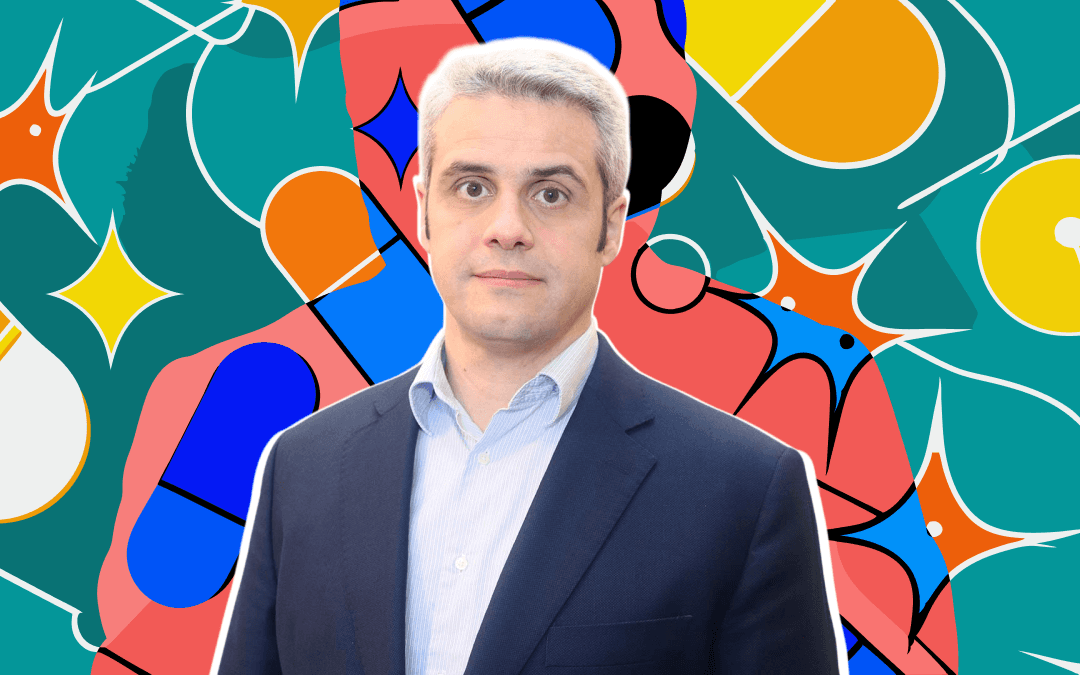
I’m the Marketing Head of Pharma Now, and I welcome our guest today, Eduard Viladesau. He has spent 18 years at Boston Consulting Group, advising the world’s top CDMOs and building and leading teams as the Topic Lead for CDMO and External Supply in Pharma. In January 2025, he took that experience in-house, becoming Managing Director of HIPRA Biotech Services, the newly launched CDMO arm of HIPRA, a company with over 70 years of experience building trusted vaccines, including Vimorvax, Spain’s first COVID-19 vaccine.
He’s also an engineer by training, with dual master’s degrees from Paris and Barcelona. Now, he is applying that experience to building something entirely new. Eduard, welcome to Insight CDMO.
Before we start your journey from BCG to HIPRA, I would really like to understand HIPRA's history.
Mr Eduard:
Sure. So, as you said, HIPRA is a company with 70 years of history. For the last 50 years, we’ve been developing, manufacturing, registering, and commercialising biologics, specifically vaccines for animal health.
But since 2020, we have had the right expertise and experience, so we decided to join the effort to fight the pandemic. Therefore, we leveraged our resources and capabilities to develop a COVID-19 vaccine, a recombinant protein produced in CHO cells. For the last five years, we’ve combined our animal health business with our human health business, and we’ve been growing that.
And most recently, as we will discuss today, for the last couple of years, we’ve added a third piece to the equation: how we can best use our capabilities to further contribute to global health and make them available to third-party customers through our CDMO, HIPRA Biotech Services.
Pharma Now:
70 years of patience and then two enormous leaps in five years. And somewhere in the middle of that second leap, you get a phone call. What made this opportunity worth leaving your 18 years at BCG for?
Mr Eduard:
As you said earlier, at BCG, I was the Topic Lead for Contract Manufacturing and External Supply. Therefore, I had the opportunity to work with most of the big pharma companies worldwide. I visited more than 30 factories and supported both pharma companies and CDMOs globally on operational, strategic, and commercial matters.
Indeed, in 2023, we began conversations with HIPRA at BCG, and in 2024, we launched a project to consider the next steps in the human health journey. As part of that, I had a chance to meet with HIPRA. And I have to say, I fell in love with the company.
The factories were amazing—brand new, state-of-the-art, among the best, or the best that I had ever seen in my career. I really liked the culture as well, and I was very much bought into the mission: to contribute to One Health and to expand our footprint from animals to humans.
Ultimately, I truly thought that HIPRA was something special and that it could bring that capability to a broader set of patients than if we only targeted our own patients. By starting a CDMO, we could make those capabilities available to others as well. Obviously, I had industry expertise and knowledge, and I thought it was a very, very good fit.
And honestly, as a consultant of 18 years, this is the sort of opportunity I just could not let pass. It was an incredibly exciting biologics project with a company that has state-of-the-art facilities, a very nice culture, and a strong commitment to patients and clients. It was also right next door to where I live. So, frankly, without any hesitation, I jumped into the opportunity.
Pharma Now:
Great, perfect. So, you said you were at BCG when HIPRA came to you for consulting.
Mr Eduard:
That’s right. HIPRA worked with BCG, or let’s say, BCG advised HIPRA on a strategic project about the future of the company and the future of human health. Part of the conclusion of that project, among other things, was that there was an opportunity to contribute meaningfully to this mission by making our development and manufacturing capabilities available to third-party customers as well.
Pharma Now:
Okay, but at that time, did you know that HIPRA had made the human COVID-19 vaccine? Almost no animal health company has done that. It made the human COVID-19 vaccine that was approved in Europe. So, were you aware earlier that HIPRA had made the COVID-19 vaccine?
Mr Eduard:
You’re right that HIPRA is historically an animal health player, and, naturally, before 2020 or 2022, let’s say, it was not well known or even present at all in human health. So, I did have some awareness of HIPRA because I happen to live next door, and the facilities are really very hard to miss.
Then, obviously, in Spain, this was the only Spanish COVID-19 vaccine. So, there was a certain level of general public awareness, I would say, or at least there was at the time.
I think it’s now much, much more prominent. But at the time, I did have some awareness. I do have to admit, though, that getting to know the company, the people, and the factories was really a treat. It was quite a surprise and a fantastic discovery.
And then my reaction was, “It can’t be that the world doesn’t know about this.” So, I decided to make it my mission to ensure the world knows about this and takes advantage of it.
Pharma Now:
So, Eduard, you spent 18 years at BCG, and you worked across four cities: Boston, Barcelona, Tokyo, and London. Then, in January 2025, you walked away from all of that and built something from zero inside a 70-year-old family company in Girona, Spain.
So, let’s start with that. What made this opportunity worth leaving your career? And there’s also the fact that you closed your first client within the first nine months after the company went live in January 2025.
Mr Eduard:
Yes. So, maybe you’re right. To be fair, I think consultancy, and in particular BCG, which I’m obviously very fond of, is a fairly entrepreneurial place. When you think about it, you need to develop new relationships and new clients. I’ve always liked a bit of this sort of adventure, as you say.
I started in Spain, very junior, moved to the US, then spent a year in Japan, and then some years in the UK. So, I’ve always liked this sense of adventure. And I think this move to HIPRA, or to start HIPRA Biotech Services, had, for me, the perfect blend of entrepreneurship and a safety net.
Because, at the end of the day, I am leveraging—or what we’re building is leveraging—not just this experience, but also the fact that the factories and laboratories literally exist. The division is literally commercialising or making available a pre-existing set of capabilities and capacities.
And there’s also the corporate support. I don’t need to worry about people, legal, finance, or IT. That’s all provided by the group. So, to me, it was an entrepreneurial endeavour, but with a fantastic safety net and the full backing of a very long-standing company.
And as a family-owned company, it can afford to invest for the long term, with no pressure from external capital. Therefore, it can take its time to do things well and to invest ahead of time.
Indeed, the company developed the COVID-19 vaccine entirely on its own means, with incredibly limited public help, or public support, let’s say, from an economic perspective. So, it is a company known for investing in mid- to long-term projects, and that’s what this is.
We started HIPRA Biotech Services with the vision that this would be a 10-year plan. I had been telling the company that sales cycles in CDMO are incredibly long, 12 to 18 months, so they should probably wait for that time to get the first revenue.
But it turns out that the value proposition is so real and tangible when you visit the facilities that we managed to secure a client nine months in, which is truly incredible for this kind of business.
And I think it’s a testament to the fact that when clients get to know us and visit the facilities, they really appreciate the expertise and capabilities HIPRA offers.
And also, as you may have read in the news, there is a second client that we secured 12 months in, or 13 months in. Which, really, for a total upstart in CDMO in human health, is something.
So, overall, I’m incredibly happy. The culture is great. It is everything that I could hope for, and I think the business case and the opportunity are being borne out by the facts.
Pharma Now:
That’s really incredible, and it’s truly a testimony. I really like that you came in with an entrepreneur mindset. You have spent nearly two decades on the other side of the table, telling companies like HIPRA how to run. What made me curious is: what’s something you told clients as a consultant that turned out to be even more interesting when you actually did it in practice after joining HIPRA?
Mr Eduard:
For me, what has been maybe the most fulfilling or liberating is that, at the end of the day, as a consultant, you’re always advising and, to a certain extent, on the sidelines.
Even if I was incredibly invested in my clients' success over there, at the end of the day, it was the clients who needed to do the work and execute, right? And here, obviously, I syndicate my work, my decisions, and my progress with the rest of the company.
And there is no HIPRA Biotech Services without HIPRA, because we leverage its facilities, laboratories, and people. It is now my responsibility to do it. And that’s quite different from being a consultant.
Now the eyes are on me and on my team to deliver what we said. What I, as a consultant, advised others to do.
And at BCG, we used to have a saying: you need to think about the shadow of the future. It’s great that, to a certain extent, you are held accountable for your own past decisions, and that’s great.
Because now we really have a plan and a roadmap on slides, and it is literally being materialised ahead of us, in front of us.
Other things that maybe surprised me or were different from what I expected: I remember when we were researching a project, we interviewed many executives at CDMOs, and I always asked, “What would be a growth target, or how much should I ask my business development people to deliver?”
And many times, the answer was, “That’s not going to be the bottleneck, actually. You need to deliver the work with excellent capacity.”
That’s really the situation we need to grow mindfully and carefully, because we need to ensure we deliver excellent work for our clients.
And that keen realisation that we need to balance the speed of growth, which is phenomenal, as I said, two clients in the first year, with the fact that we need to ensure that we do things properly, that we grow carefully, and that we take care of our clients.
Pharma Now:
So, that’s the theory meeting the floor. And the floor here is enormous: microbial, mammalian, fill-finish, 15 expression systems, with so many platforms to choose from. How did you decide what to build first?
Mr Eduard:
Right. So, it’s true that HIPRA's breadth of capabilities and knowledge, thanks to more than 50 years of vaccine development, is quite broad. And as a result, we do have three core platforms, at the end of the day. There’s a mammalian cell culture platform for drug substance, a microbial platform for drug substance, and a fill-finish.
And so, naturally, we can do many other things. We can even do finished-goods packaging and expediting, but that’s not necessarily the priority of how we go to market. So, we’ve been quite disciplined in going to market with these three core offerings.
I think we’ve also realised that, as a newcomer, our sweet spot, let’s say, in terms of client size and phase, is somewhere that is not too early-stage, but also not the very big pharma. And so, we’ve segmented the market. Coming from consulting, I have pretty good ideas on who our client base should be and how to segment the market.
So, we’ve really segmented the market, and we have a pretty good understanding of the kind of mid-sized biotech with a Phase II-to-late Phase III program. That is really for either final development or tech transfer and can benefit from having a European partner at the end of the day that can provide process development, manufacturing, and, let’s say, process analytical method development as well.
So, we’ve been diligently speaking to those potential customers. Of course, we reach out to them, attend fairs and trade events, and, very importantly, try to welcome them to our facilities because seeing is believing.
To us, having clients come and see and touch what's on offer is super important.
Pharma Now:
Also, you are very considerate about what type of equipment in the factories. The equipment is very modular, and then there are reactors. So, all of those are already there in the facilities?
Mr Eduard:
Exactly. And that’s what really impressed me. I would say there is an enormous part of HIPRA that manufactures for animal health, which, of course, we don’t advertise or sell. But even that is state-of-the-art.
You may know that in Europe, the regulatory environment is the same. It’s the same inspector, it’s the same agency. So, we keep the highest possible standards everywhere in our facilities.
But it just so happens that in human health specifically, everything is new because we built it, in part, to support the journey or the foray into the coronavirus vaccine. This means that all the facilities are brand new, with top-of-the-line equipment.
We only purchase from the very best equipment manufacturers. Over these 50 years, by the way, we’ve tested many, many different configurations and types of equipment, and we have an incredibly strong perspective on what works and what doesn’t.
And we know that we need to go top-shelf. We need to go with top-of-the-line equipment so that it works every time. And as you say, we have a modular facility design where we consciously build the shell first, then enable some areas, and within those areas we add reactors little by little so we are sure to build ahead of time.
We build our capacity ahead of demand, but we do so judiciously so we don’t end up with too much idle capacity either. And when you look at the campus and how it’s grown over the last few years, you can really see how it’s being built in a very judicious way.
Pharma Now:
So, those are the decisions that HIPRA collectively took. But decisions don’t really sign the contracts. People do. And in the first year, in a new unit, there is a long stretch of building with nothing to show yet. What kept your team motivated during that pivotal first year?
Mr Eduard:
I think for sure, in the first two years of any new project, people have this romance or something, some kind of love-affair period. And I think it was not too hard to keep the team motivated because most of the team that I started to lead were, in fact, very much part of the consulting project on the HIPRA side that led to this.
So, that was also fantastic for change management. When I came on board, many of the people who ended up being part of the project had seen it from its very inception. They knew what was coming because they had seen the roadmap, let’s say, and there were relatively few surprises.
So, I don’t think it was overly difficult to keep people motivated, especially for the first year. Normally, people give you the benefit of the doubt, but, naturally, the fact that, after nine months, we were starting the first project only served to re-energise and reinforce the momentum.
So, I really don’t have a motivation problem. It’s quite the opposite. People are like, “Can we do more? How can we improve? How can we make it better?” And they’re very motivated.
Maybe in five years’ time, when this is a very strong, ongoing business, maybe the attitude will change. But so far, we haven’t had this.
It’s also important to say that we are a very small team. The HIPRA team that supports us comprises, overall, 450 scientists and about 1,500 people in operations. But, to be fair, a lot of them work for animal health.
Specifically for human health, there are about 150 people in R&D and about 400 in operations. This is the core team that does the work and already exists, and hopefully we’ll continue to build it.
What I am building around me is a relatively small team. It’s 5-10 people focused on marketing, business intelligence, business development, and project management. That’s a small team.
And because of that, it’s all hands on deck. Nobody wears too much of a hat. We are helping each other. If a project manager is struggling with the workload, somebody else will step in.
If a business development person needs some support with event attendance, somebody else steps in. So, I think this ability to keep it fluid with some basic roles, but where we can help each other, also keeps it interesting for the whole team.
Pharma Now:
Okay, now I understand. When you mentioned earlier that you really like the company's culture, that's right.
Mr Eduard:
It’s a very entrepreneurial place. And to be honest, a company that was in animal health, that was, let’s say, not anymore, but at the time in 2020, a total unknown—non-existent in human health—privately owned with no public money, to think that they could do a vaccine in record time. I don’t know if I would call it enthusiastic or maybe foolish, if you allow me.
There’s a saying here, which is, “We did it because we didn’t know it was impossible.” And this is very much the attitude. This can-do attitude, this enthusiasm that you can see transpire everywhere, really enticed me to join. And the CDMO is a bit like that. We bring this attitude.
Maybe sometimes I need to tell my team to hold their horses because when they take a client project, they really make it their own. They go ahead, they want to solve all the problems, to do right for the client, but even for the pleasure of pursuing a scientific pursuit.
And I think that’s very visible. Our scientists and engineers really want to make it right because that’s a valuable project that will save lives, even more so than because it’s a client project and we need to do well by the client.
Pharma Now:
What did you learn running this that you’d never have seen as an outside advisor?
Mr Eduard:
Yes, and I alluded to this partially earlier. The fact that, to a certain extent, you need to balance the commercial drive with the ability to build a robust delivery mechanism. I think that’s probably something that, as a consultant, you never really see the inside of. And I didn’t quite believe it when we interviewed these experts before the business unit started.
I thought, “What do you mean that you’re not going to just press the pedal to the bottom and put all the commercial energy?” What I realise is that we need to be judicious and mindful and make sure that we don’t overstretch ourselves and that we are able to manage client projects very, very carefully.
Then, other things about how a company works. I really like being able to also shape the technology strategy of the company in a way that, maybe, as a consultant, you do have these thoughts about what the strategy should be. But here, we are making decisions, and the decisions we make will impact the future of the company.
As I said earlier, the shadow of the future is very long when you are inside, and that’s really great.
And then finally, I think that being able to own the business, the P&L end-to-end, gives you unprecedented access to understanding really the end-to-end working of the company—its financials, but also its people, its processes, etc.
As a consultant, sometimes you only get a narrow window, although, to be fair, management consulting typically tries to get a broad window. This is a company that is still small enough that, as a Managing Director in the company, I can really understand, or I feel I can grasp, how the totality of the company works. And that’s also a very nice thing about the size of HIPRA.
It’s about, you can look online, about 3,000 employees globally. So, still, you know, a mid-sized—I mean, it is a large mid-sized company, don’t get me wrong. But I feel that between the enthusiasm and the size, change can propagate much faster.
As a consultant, sometimes we work with very large organisations, and change management is incredibly difficult because there’s so much enshrined, or there’s so much immobility and petrification in very large companies.
This is a company where we can plant the seed of change and watch it grow. You watch the change fructify in real time. And if it were very small, we wouldn’t have the resources. If it were very big, it would be very difficult to drive change. This is a very nice sweet spot in which the change can really propagate fast. And I love that.
Pharma Now:
Okay, so you talked about people and procedures. When you joined back in January, were the procedures or the processes already in place, or did you work on processes or procedures right from scratch? And how were the building processes? Is it really important to build new processes from scratch?
Mr Eduard:
So, to be clear, everything that is GMP naturally existed. All the processes that are about how to develop, manufacture, register, and commercialise biologic medicines were in place because we’ve been doing this forever.
What was brand new and did not exist at all were all the processes around managing the CDMO. And that is something that I was very keen on. I think I spent the couple of weeks before, when I had already left BCG and was about to join HIPRA, dreaming about them. I was so enthusiastic and had so much desire to start that I was always thinking about the processes I needed to write.
So, yes, absolutely, this was something that needed to be done. And I did spend, together with my team, the first four or five months really landing on a set of processes. We wrote them, and we are now in the process of adopting them, adapting them and making sure that they stick.
Some of them are processes that are self-contained within HIPRA Biotech Services, but there are many processes that are very transversal and therefore need syndication and buy-in from the rest of the organisation.
Of course, I will never tell Quality how to run Quality, but if we have a client who conducts an audit, there is an intersection between the client and Quality aspects of the audit. I’m just picking on that one as an example.
Or we run a project-based business, so we need a way to think about financials that gives me visibility into the project economics that may not be how we run a product business. So, many of these processes need to be written.
And I’m very happy to say that they are up and running. I mean, it’s not that difficult at the end of the day, and we successfully implemented them.
One thing I would say is quite revolutionary, and everybody’s talking about it, is IA as a company. And we are just starting to scratch the surface. I’m sure that all of the viewers are there, too. But I see so much potential in how AI can help us better run, streamline, and design our processes.
At the end of the day, I will say what everybody will say: it should add value to the company and to our clients, ensuring they get their product faster and in a more robust way.
So, if there’s something incredibly exciting about the next 18 months, I would say it is how we embrace IA in a responsible, safe, and secure way, while still contributing value to the company and to our clients.
Pharma Now:
So, Eduard, while CPHI is around the corner, many people will be meeting HIPRA Biotech Services for the very first time. If someone has never heard of HIPRA, what should they know before they walk up to your stand?
Mr Eduard:
I would say, if somebody has an incredibly difficult biologics process to crack, or is looking to expand in, let’s say, the early or late-stage development phase, or they’re looking to expand their European biologics manufacturing footprint in drug substance or drug product, or a combination of both, in mammalian or microbial, I think their time will be worth their while to come and speak to us.
By the way, at the booth, I need to say that. So, for sure, I genuinely think we have seen almost every biologics process under the sun in the 50 years we’ve been doing this. And we are truly capable of addressing and solving the most complicated biologics development and manufacturing processes.
And I know that most people may already have a preferred partner or a network of CDMOs they work with. That’s totally understood, and naturally, I respect that.
But I think if you have a difficult problem or you want to expand your footprint in Europe, come and visit us.
Pharma Now:
Eduard, any closing note you'd like to share with our readers before we move on to our rapid-fire section?
Mr Eduard:
No, thank you so much for the questions so far. I look forward to the rapid fire. But if there’s something that people can take away, it is that we are experts at many, many biological processes. We are EU GMP, with all the quality, scale, and geographic stability that this brings.
And I hope to see many clients at CPHI. But please, go ahead with the rapid fire, yes.
Pharma Now:
So let’s move on to the Rapid Fire.
So, tell me the biggest myth about CDMOs that people outside the industry believe.
Mr Eduard:
That by working with a CDMO, you may somehow relinquish control or lose some capability. And to be honest, I have, including HIPRA but not limited to HIPRA, seen CDMOs—many CDMOs out there—that are absolutely top class in terms of the science and the technology.
They invest in the future with state-of-the-art technology. And many clients who hesitate, or could hesitate, would be surprised or well served by relying on teams that have maybe seen more projects than they have.
Pharma Now:
A book that changed how you think about leadership or people.
Mr Eduard:
We typically lead very small teams. And here, I have responsibility for a significantly larger, more syndicated team. So, I think I’ve had to change the way I think about leadership to focus more on building a team.
By the way, in consulting, every team is assembled for the project and then oftentimes disbanded, even though you keep working with some people.
While here, I need to make sure I build a team that is there for the ages, can grow together, and works well together for years to come.
And in particular, because CDMO projects are very long. You start a project, and the next thing you know, it may be five or six years long, which is orders of magnitude longer than a consulting project. So, that’s how I need to think about my team-building and leadership style.
Pharma Now:
One thing sponsors get wrong about CDMOs that you can finally say out loud.
Mr Eduard:
Again, I wouldn’t say it’s very wrong to think that the CDMO may not have the, let’s say, technical competency or the experience or the level of investment that your own internal team may have.
I think what I genuinely see in HIPRA, and at CDMOs, is an eagerness to support the client. And again, for every CDMO I’ve worked with, there is a desire to support the client, to do right by the client, and to invest and to do a very good job.
Pharma Now:
One mistake that taught you the most.
Mr Eduard:
I mean, in BCG, probably underestimating the size of change. I think we all make this mistake, and you think that because something is maybe self-evident on a slide, people will jump on it.
I think in HIPRA, so far, I hope I haven’t made any mistakes, but that’s maybe not for me to say. Not a major one, but the importance of change management and syndication is always true.
Pharma Now:
One shift in the CDMO model most leaders aren’t taking seriously yet.
Mr Eduard:
As I was saying earlier, maybe people are taking it seriously, but AI is a big one for me. And I don’t want it to sound like I’m just jumping on the bandwagon because it’s in the headline news.
We are here judiciously adopting AI, and I can see its value firsthand. It’s something that will dramatically change how we work.
Not us as a CDMO, but generally speaking, how pharma and biotech will discover new medicines, for sure, but also how we accelerate the development and manufacturing of medicines, how we make it more robust, and how we improve the way that we prepare and review documentation so that there are fewer mistakes.
I see so much potential there, and we’re only starting now.
Pharma Now:
Okay, great. Perfect. Eduard, I think you started the conversation with why you left your 18-year career, and you have ended it with what most leaders aren’t seeing yet and the revolutionary change that HIPRA has come up with.
So, it was a really great conversation, and it was really great to have you on. Thank you so much, and we’ll see you in Milan.
Mr Eduard:
Super. Thank you, and I look forward to seeing you in Milan too. Thank you.
Eduard Viladesau is Managing Director of HIPRA Biotech Services, the biologics CDMO arm of HIPRA, a 70-year-old Spanish vaccine developer. He leads process development, drug substance manufacturing, and sterile fill-finish across mammalian and microbial platforms.
Before joining HIPRA in January 2025, Viladesau spent 18 years at Boston Consulting Group as Topic Lead for CDMO and External Supply in Pharma, advising CDMOs and pharma companies across Barcelona, Boston, Tokyo, and London.
An engineer by training with dual master's degrees from Paris and Barcelona and an MBA from MIT Sloan, Viladesau built HIPRA's client-facing processes from scratch, securing two clients within thirteen months.
More interviews
All interviews →
The Untold Story of COVID-19 Vaccine Development: Dr. Subhash Thuluva Speaks
Mastering Pharma Regulations: Rajni Jha's Guide to Global Compliance Success