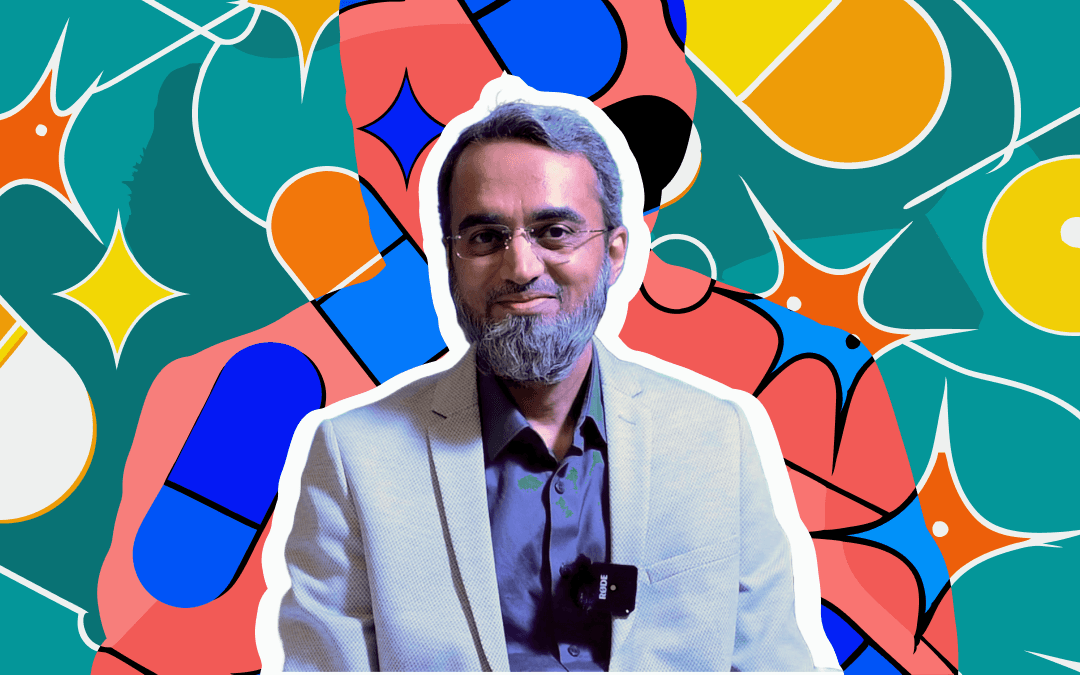
From Compliance To Accountability: Redefining Quality Leadership With Bruno Morgado
Bruno Morgado challenges a core industry assumption — that compliance systems drive quality. The Fresenius Kabi QP on why culture, not technology, is still the only thing that truly protects patients.


Pharma Now: You have progressed from GMP Compliance Manager to Qualified Person and Head of Quality Unit. What were the most defining moments in your journey that prepared you for full-quality leadership responsibility?
Bruno: The transition from cGMP Manager to Qualified Person and ultimately Head of Quality was less about accumulating technical knowledge and more about developing a decision-making process, accountability and the ability to lead under uncertainty.
A few defining moments stand out:
Making decisions in grey areas under pressure: Some decisions are relatively straightforward when you operate with clear, non-negotiable principles such as quality and patient safety. And that has remained constant throughout my career. Anyhow, taking on additional responsibilities often means navigating ambiguity. These situations have taught me how to structure uncertainty, make risk-based decisions and justify them clearly with science and data.
Owning critical deviations and investigations: Leading major investigations, especially those with potential impact on product quality or patient safety, is always a turning point. It requires moving beyond procedural compliance to adopt a truly scientific, risk-based approach. Defending conclusions to inspectors reinforced accountability and strengthened my ability to make well-founded decisions under scrutiny.
Leading regulatory inspections: Taking ownership during inspections - rather than just supporting - was a key milestone. It shifted my mindset from internal compliance to external regulators.
I learned to communicate decisions clearly, demonstrate control over systems and ensure that quality narratives were consistent, credible and evidence-based.
Transitioning from individual contributor to organizational leader: Becoming Head of Quality meant expanding my focus from individual decisions to building systems, developing people and shaping quality culture. This included ensuring that decisions were made consistently across the organization and that teams were empowered while still maintaining strong oversight.
Pharma Now: As an EU Qualified Person, you carry legal accountability for batch certification. How has this responsibility shaped the way you approach risk and decision-making?
Bruno: As an EU Qualified Person, the legal accountability for batch certification profoundly shapes how I approach both risk and decision-making. Every decision must balance compliance, scientific evidence and patient safety. This responsibility has reinforced my understanding of the legal and ethical dimensions behind each batch decision, reinforcing the importance of diligence. It also makes me proactive rather than reactive to reduce uncertainty and has strengthened my commitment to team empowerment: while the QP holds ultimate accountability, I ensure that the entire organization understands the risks and their roles in mitigation. This shared vision creates a culture where quality decisions are consistent, defensible and always patient-centric.
Pharma Now: At the Pharma & Biotech Quality Summit, quality transformation and digitalisation are key themes. How do you see digital tools and AI realistically supporting quality decision-making in regulated environments?
Bruno: In my view, digital tools and AI are not about replacing human judgment - they are about enhancing it. In regulated environments, these technologies can:
Improve data integrity and accessibility: Digital batch records, automated trend analysis, and real-time monitoring reduce errors and ensure compliance with GMP standards.
Enable predictive quality: AI can identify patterns in deviations or manufacturing data, allowing proactive interventions before issues escalate.
Support risk-based decision-making: Advanced analytics help quantify risks, compare scenarios and prioritize corrective or preventive actions with evidence-based insights.
Streamline regulatory reporting: Automation reduces manual documentation burden while ensuring traceability and audit readiness.
The key is that AI and digitalization must be validated, controlled and fully aligned with regulatory expectations, ensuring they complement rather than replace the QP’s decision-making authority.
Pharma Now: You will be speaking at the Summit. What key message are you looking forward to sharing with fellow quality leaders, and why should attendees prioritise this discussion?
Bruno: The key message I’m looking forward to sharing is that quality leadership today is about leveraging digital tools and AI responsibly to make informed, proactive, and patient-centric decisions. Equally important is maintaining a strong quality culture, which remains the true driver of excellence. Data-driven insights help us anticipate risks and strengthen processes, but technology can never replace the judgment, accountability, and values that define a robust Quality System. This discussion is critical for anyone leading quality transformation in Pharma & Biotech today.
Pharma Now: Leading quality across multiple manufacturing technologies requires alignment across teams. How do you build a culture that sees quality as a shared responsibility rather than a department function?
Bruno: Leading quality across multiple manufacturing technologies requires alignment, visibility, and empowerment:
Clear expectations and accountability: Every team member, from operators to senior management, must understand how their actions impact quality. Embedding quality objectives in performance and metrics helps reinforce ownership.
Open communication and transparency: Sharing data on deviations, investigations and corrective actions fosters learning rather than blame. Teams are more engaged when they see the outcomes of their contributions.
Cross-functional collaboration: Quality is integrated into every step - from R&D, supply chain to manufacturing. Regular workshops, joint reviews and multidisciplinary problem-solving sessions reinforce that quality is everyone’s responsibility.
Role modeling by leadership: Leaders must consistently demonstrate that quality decisions take precedence over shortcuts or speed. Examples from the top set the tone for the entire organization.
The result is a culture where quality is embedded in daily decisions, not just checked off by the QA.
Pharma Now: In your experience, what differentiates a reactive quality organisation from a truly mature, proactive one?
Bruno: I would say that a mature quality organization doesn’t just correct problems - prevent them, continuously improves and empowers every team member to act as a guardian of quality.
Reactive organizations respond to problems only after they occur. Risk is managed retrospectively rather than anticipated and these organizations often fail to consolidate lessons learned, quickly forgetting to find the real root causes of the issues.
Proactive, mature organizations embed risk-based thinking and continuous improvement into every process. They leverage data trends, predictive analytics and preventive strategies to anticipate issues before they occur. When issues do arise, the root cause is thoroughly investigated and CAPAs are implemented across other potentially affected areas. The culture encourages early reporting and learning from near-misses.
Pharma Now: With increasing regulatory scrutiny around contamination control and data integrity, what areas should quality leaders prioritise today to stay inspection-ready?
Bruno: Quality leaders should prioritize:
Robust contamination control strategies: Ensuring environmental monitoring, personnel practices and cleaning procedures are not just compliant but fully risk-based and validated.
Data integrity and digital governance: Implementing controls to ensure accuracy, completeness and traceability of electronic and paper records, with clear audit trails.
Committed and engaged people. When teams are fully committed:
Processes are followed consistently: Engaged staff are more likely to adhere to SOPs, GMP practices and reporting requirements without shortcuts.
Deviations and risks are reported proactively: Employees who feel responsible and valued will flag potential issues early, allowing corrective actions before they escalate.
Inspections run smoothly: Inspectors notice confidence, knowledge, and transparency; committed teams provide clear, consistent and accurate responses.
Continuous improvement is embedded: Engaged people actively seek ways to improve processes, which strengthens the overall quality culture and leaves the site better prepared for inspections.
Continuous training and competence: Teams must understand inspection expectations, report deviations early and treat audits as opportunities to improve rather than just check boxes. Keeping personnel updated on GMP changes, regulatory trends and emerging risks to maintain inspection readiness across all sites.
Pharma Now: How do you ensure consistency and harmonization of quality systems across sterile, non-sterile, and medical device operations?
Bruno: Consistency and harmonization require:
- Integrated quality systems: Standardized SOPs, aligned KPIs and common risk assessment frameworks across different technologies.
- Cross-functional governance: Regular quality reviews and harmonization committees to ensure lessons learned and CAPAs are applied across all operations.
- Culture of shared accountability: Embedding quality ownership at every operational level, so sterile, non-sterile and device teams all adhere to the same principles of compliance and continuous improvement.
- Committed and engaged people.
Pharma Now: Annex 1 implementation has reshaped sterile manufacturing expectations. From your perspective, what are the biggest operational challenges companies still face?
Bruno: One of the biggest operational challenges is managing facility and process upgrades to meet evolving regulatory requirements without disrupting production or the supply chain value stream. This requires careful planning, cross-functional coordination and risk-based decision-making to balance compliance, product availability and operational efficiency. Effective change management, thorough validation strategies and clear communication across teams are essential to ensure upgrades enhance quality while maintaining continuity of supply.
Rapid Fire
Pharma Now: One word that defines quality excellence.
Bruno: Trust.
Pharma Now: Most critical audit focus area.
Bruno: Any area can become critical without a strong quality culture and mindset.
Pharma Now: Biggest misconception about Quality Assurance.
Bruno: Quality is just QA´s responsibility.
Pharma Now: Data integrity or contamination control, which worries you more today?
Bruno: Integrity is the foundation for all.
Pharma Now: One leadership habit every Quality Professional should develop.
Bruno: Accountable listening.
Pharma Now: Future of QA in one sentence.
Bruno: Change - driven by the capacity to adapt, evolve and lead.
Bruno Morgado is a pharmaceutical quality leader with over a decade of experience in GMP compliance, batch certification, and quality systems across complex manufacturing environments. He currently serves as Head of Quality Unit and Qualified Person at Fresenius Kabi, where he leads inspection-ready systems and regulatory compliance across multiple sites.
His career progression from GMP Compliance Manager to Qualified Person and Head of Quality reflects strong expertise in risk-based decision-making, data-driven oversight, and accountability in high-stakes environments. He also contributes to the broader industry as a board member within the pharmaceutical sector.
Known for a pragmatic approach to quality transformation, Bruno focuses on digital integration, data integrity, and building cultures where quality is a shared responsibility, enabling consistent, science-based decisions that protect patient safety and product reliability.
More interviews
All interviews →
The Untold Story of COVID-19 Vaccine Development: Dr. Subhash Thuluva Speaks

Mastering Pharma Regulations: Rajni Jha's Guide to Global Compliance Success