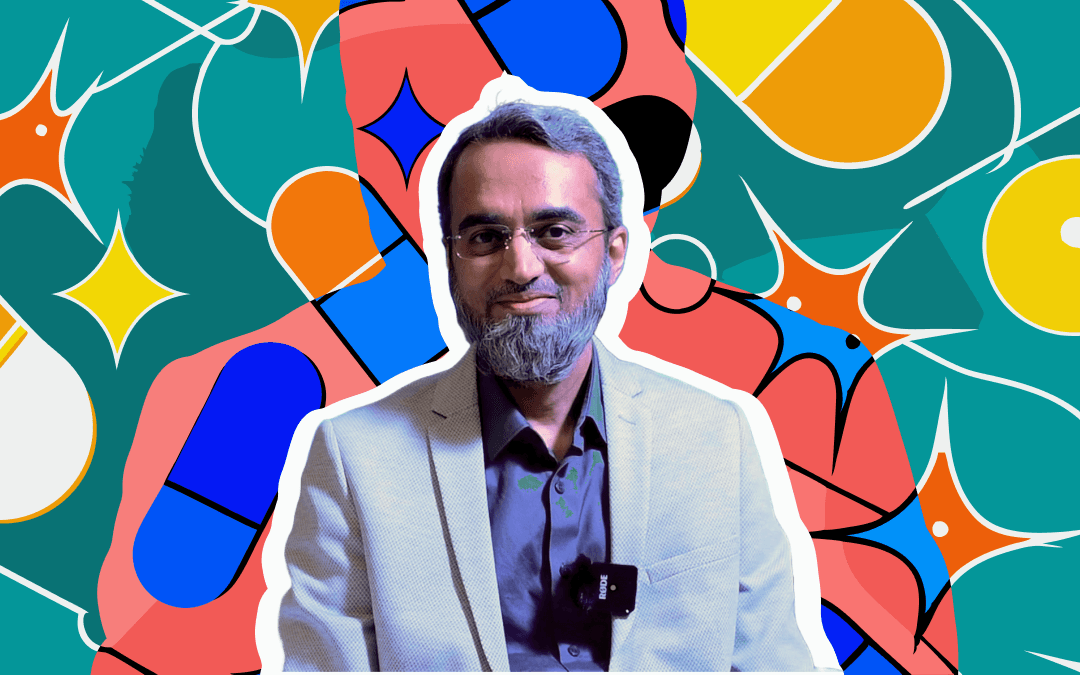
Managers Manage. Leaders Develop. — Dr Jagmohan Singh Rishi on Redefining Leadership In Pharma
Dr Jagmohan Singh Rishi shares insights on leadership, learning culture, AI in HR, and building future-ready pharma teams.

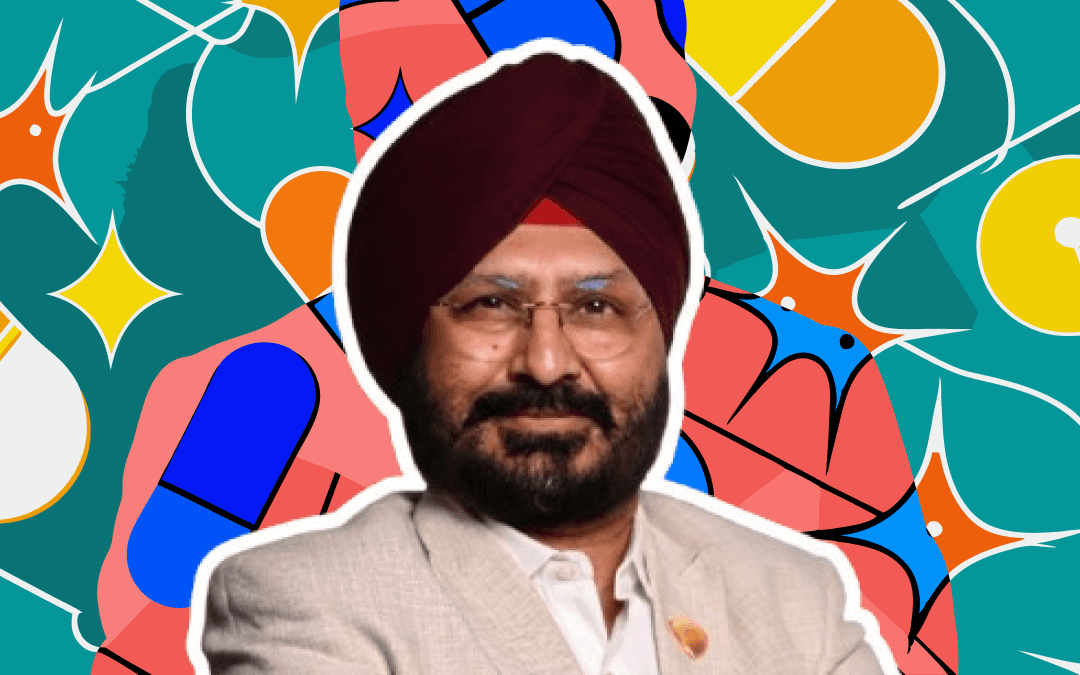
Pharma Now: I'm delighted to welcome Dr Jagmohan Singh Rishi to our podcast. With over 25 years of leadership experience spanning executive business roles, L&D, digital transformation, and coaching CEOs, Dr Rishi brings a unique blend of strategic, human-centric, and future-facing thinking. Today, he joins us to explore how the pharma talent and learning ecosystem can evolve.
Dr Rishi, you’ve worn many hats: business executive, L&D leader, and coach to CEOs. How did your path evolve into focusing on people development and learning?
Dr Rishi: That’s a fascinating question. This has been a continuous journey. Often, we hear that you should have a clear goal in mind and then work toward achieving it. That approach has worked for me in many ways, but my journey evolved differently. I’ve always been curious and willing to step out of my comfort zone to keep learning and innovating.
I began my career as a sales representative at a multinational company. From there, I moved into a training role, then into L&D, later into marketing and digital strategy, and eventually into coaching. The one constant throughout has been a growth mindset, continuously learning and challenging myself.
While managing teams as a sales leader, I realised I could contribute more meaningfully by focusing on learning and leadership development. That’s when I transitioned fully into L&D, leadership development, and coaching. Today, as President of BMA, Global Head of Learning & Development, and a professional coach, I’m able to create more leaders through my work. That shift, from managing performance to developing people, defined my journey.
Pharma Now: How important do you think it is to have that growth mindset?
Dr Rishi: It’s essential, whether you’re a professional, an entrepreneur, or even a homemaker. A fixed mindset limits growth. A growth mindset keeps you curious, humble, and open to learning.
Even at a senior level, I can make mistakes. If I can learn from someone junior to me, someone just out of college, from Gen Z or Gen Alpha, I’m open to that. Growth happens the moment you accept that learning can come from anyone.
Recently, I participated in a forum with three agencies. They mentioned that I am a great experimenter. I had given opportunities to all three agencies at the beginning of their journey. Today, they are doing very well, have secured funding, and are expanding into the US and UK. That is the power of experimentation and risk-taking. You cannot grow without taking risks and trying new approaches.
For example, some people believe classroom training is practical, while others believe virtual training is not. That is a fixed mindset. Before COVID, classroom training dominated. During COVID, everything shifted to virtual. Now, we operate in a hybrid mode. So we must remain open to experimenting, whether it’s classroom facilitation, virtual sessions, or one-on-one coaching, both face-to-face and online.
My personal mission, as reflected on my social media, is to help create 100,000 leaders who can make a positive difference in the world. The world is in a state of chaos, and I believe we need leaders, whether political, administrative, corporate, or social, who can truly impact people’s lives. If we build the right leaders, we can create a better world.
Pharma Now: I attended your book launch. Is your new book, Real Deals, Real Stories, by Dr Jagmohan Singh Rishi, also part of one of your experiments?
Dr Rishi: Yes, this is also part of my experimentation journey. My first book was Are You a Digital Dinosaur?, which focused on digital transformation strategies, a need of the hour at the time. When we launched it, it became an Amazon bestseller. I’m thrilled that I donated all the revenues from that book to a foundation that supports the widows of the Indian Army. The same will happen with this book as well.
Real Deals, Real Stories is designed to be a quick, one-hour read. You can finish it while travelling. It includes real coaching stories, whether I’m coaching a salesperson, a CEO, or a marketing manager. There are also self-evaluation templates that allow readers to assess themselves against key competencies. If you evaluate yourself honestly, you can immediately identify areas for improvement.
This book is primarily for young leaders. Many of them say they want leadership training, but this book gives practical insights into how they can coach and develop their own teams. It’s not just about learning leadership, it’s about practising it in real situations. I hope readers use it to build successful careers.
Pharma Now: Moving on to your work in leadership development and digital learning, how should pharma organisations think differently compared to other industries when it comes to upskilling and capability building?
Dr Rishi: Pharma is a unique industry. We operate on evidence-based research and evidence-based selling. Because of that, our strategies need to differ from sectors like FMCG or BFSI.
From a digital perspective, pharma was once what I call a “digital dinosaur.” The industry was slow to adopt digitisation. But that has changed significantly.
At the same time, the traditional pharmaceutical selling model, through medical representatives, was largely product-oriented and evidence-driven. While evidence remains critical, today’s customers are far more informed. With AI and other technologies, doctors and stakeholders already have access to medical data on brands.
That means we must strengthen soft skills. In-clinic effectiveness, communication skills, building rapport, asking persuasive questions, and handling objections are now essential capabilities. These skills are equally crucial beyond sales. On the production floor or during a US FDA audit, professionals must be confident and composed.
Often, during a US FDA audit, an official may ask a question, and the person responding becomes nervous, even though they know the answer. Body language, executive presence, and demeanour matter. You must look the auditor in the eye and respond confidently. Technical knowledge is not enough; confidence and communication complete the equation. That is what we are focusing on developing today.
Pharma Now: I’m really intrigued by the phrase “digital dinosaur.” Your social media also asks, Are You a Digital Dinosaur? Why a dinosaur?
Dr Rishi: There’s a story behind that. I was invited to speak to CEOs, scientists, and general managers from the pharmaceutical industry. During my introduction, I was mentioned as leading both leadership development and digital transformation.
In the Q&A session, most questions were about digitisation, while very few were about leadership. That was a turning point. I decided to give the market what it needed. When I returned, I consulted my life coach. We discussed my observations in depth, and finally, we arrived at the title: Are You a Digital Dinosaur?
Many people misunderstand the word “dinosaur.” They assume it means 'big' or 'powerful'. But dinosaurs are extinct. The real question is: Are you digitally extinct? If you are not continuously upgrading yourself, you risk becoming irrelevant.
The book outlines transformation strategies tailored to different roles, CEOs, sales professionals, medical representatives, and supply chain leaders.
My next book, What Is Your Elemental Wire?, is focused on Gen Z. It explores psychometric and personality analysis, based on the idea that each person operates from a dominant element. One person may have a fire element, another, water; another, air. Understanding your element helps you know how you operate and how you can grow.
Pharma Now: When we talk about building a learning hub in pharma, one where talent is developed not just for today’s role but ahead of tomorrow’s disruptions, what are the three key ingredients organisations should emphasise?
Dr Rishi: In a pharmaceutical learning hub, three elements are critical: content, experience, and implementation.
First, you provide strong, relevant content. Second, you allow participants to experience it during training sessions through practical exposure. Third, they implement it in their actual roles and then provide feedback and reflection.
Learning cannot be a one-time activity. It must be a continuous loop. Content, experience, and implementation, when these three work together, learning becomes transformational rather than informational. If organisations structure their learning strategy around this cycle, they will build truly successful learning ecosystems.
Pharma Now: Digital, data, and learning are converging rapidly, from AI-driven learning and microlearning modules to immersive experiences. How should HR and L&D in pharma navigate this shift without losing the human touch?
Dr Rishi: That’s an excellent question. I strongly believe in balancing high-tech and high-touch strategies. You cannot rely solely on technology, nor can you depend solely on human interaction. The right blend is essential.
For example, with AI, it has become easier to shortlist candidates. I’ve introduced an AI-driven interview tool that conducts initial interviews and shortlists candidates. Out of 100 applicants, it identifies the top 10. However, from those 10, the final decision is made by humans.
We train the AI carefully, just as we train people, to ensure it understands what we’re looking for. Testing is still ongoing, but the principle remains clear: technology should enable decisions, not replace human judgment. That balance preserves both efficiency and empathy.
Pharma Now: Could you share an example of a transformation or learning initiative you led that significantly changed how people learn, behave, or perform in an organisation?
Dr Rishi: One initiative very close to my heart is the LEAP program—Leadership Empowerment, Accountability, and Performance.
In today’s fast-paced environment, leadership programs rarely exceed three days. But we designed an 11-day residential workshop for mid- to senior-level managers. They were brought in from headquarters and fully immersed in the program.
It wasn’t just classroom learning. We combined structured content with extensive role plays and experiential workshops. I began by administering a DISC personality profile assessment and providing detailed feedback sessions. Based on those insights, we conducted targeted experiential exercises.
Initially, participants questioned how they would spend 11 days in training. But as batches progressed, they realised how much there was to learn. We deliberately invested in leadership development.
The impact was measurable. Performance improved. Attrition decreased. The organisational culture strengthened. I evaluated effectiveness through performance metrics and retention data, and both showed positive results.
Many participants still stay in touch and tell me it was transformational. I was personally involved in coaching each individual and closely observing their behavioural shifts. That program transformed managers into leaders, not just performing managers, but performing leaders.
Pharma Now: What is the key differentiator between a manager and a leader?
Dr Rishi: A manager typically operates by the book. They focus on ticking off activities and following SOPs. The approach is process-driven, but often without deeper emotional investment.
A leader, on the other hand, works with dedication and passion. A leader thinks, “I have selected this person. I will develop this person. I will ensure this team succeeds together.” That ownership mindset makes the difference.
If a manager finds that someone isn’t performing, they may simply replace the person. A leader invests time in developing that individual. A manager manages tasks; a leader develops people and builds commitment.
This reminds me of another initiative I call the Excellence Blueprint. I firmly believe the best trainer in any organisation is not from L&D, it is the immediate manager—the boss. There’s a saying: people don’t leave companies, they leave their bosses. If the boss is compassionate and acts as a leader, people stay.
I’ve had team members stay with me for more than five years, not because of money, but because of the relationship and development support. I take responsibility for their growth and career progression, and even after they move on, they remain in touch for guidance and coaching.
One practice I follow is complete transparency during hiring. After selecting someone, I tell them, “This is my LinkedIn profile. Please feel free to do a reference check on me in the market. If you’re satisfied, then join my team.” Leadership begins with transparency and accountability.
Pharma Now: For pharma organisations facing skill gaps, regulatory pressures, field force changes, and hybrid workforces, what would be your three strategic focus areas for HR and L&D over the next couple of years?
Dr Rishi: The first focus area is upskilling. The market is evolving rapidly, and both business and L&D leaders must continuously upgrade themselves and their teams. Capability building cannot stop.
Second, leaders must focus not only on outcomes but also on processes. In the race for short-term success, many organisations lose sight of long-term development. Sustainable growth comes from strengthening processes, especially in people development.
Third is belongingness, the connect factor. Teams must feel they are working with their leaders, not merely for them. When people feel connected and valued, performance follows naturally. So the three areas are capability building, process orientation, and team connect.
Pharma Now: Since you mentioned that immediate managers are more responsible than L&D, could you share one tip for leaders who want to upskill both their teams and themselves, while still managing their daily responsibilities?
Dr Rishi: The first step is to understand people deeply. Spend time with your team. Earlier in my career, my manager would ask me about my goals, my challenges, even aspects of my personal life that influenced my performance. That investment shaped who I am today.
Today, many leaders say they don’t have time. I would urge them to make time. Walk the talk. Be transparent about your own limitations. My status says, “I’m flawsome.” It doesn’t say I’m awesome; it acknowledges that I have flaws, yet I continue to grow.
When leaders openly reflect on themselves, it builds trust. At the same time, they must clearly define expectations, KRAs, OKRs, and KPIs, so to ensure clarity on performance standards. Alongside that structure, they must build bonding and team spirit. Clarity in expectations combined with genuine connection creates high-performing teams.
Pharma Now: Speaking of OKRs, priorities often change from one quarter to the next. Should OKRs remain the same, be pivoted, or be carried forward?
Dr. Rishi: The advantage of OKRs is flexibility. Certain KRAs from an organizational perspective may remain constant, but the execution strategy can evolve. Market conditions change, and by the second quarter, you may need to adjust your approach.
OKRs allow that agility. They are more dynamic compared to traditional performance appraisal systems. However, while execution may shift, the larger goal should remain constant. The goal must stay sacred, even if the path to achieving it evolves.
Pharma Now: For our listeners in pharma, especially those in HR and L&D, if you had them focus on just one thing right now to build a sustainable learning hub, what would it be, and why?
Dr Rishi: If I had to narrow it down to one focus area, I would say: innovate yourself. Continuous self-innovation is essential. At the same time, don’t limit development to only digital capabilities or only human skills. You need both. A growth mindset remains fundamental.
More importantly, build transparent processes. We are in the era of visual dashboards. But dashboards should not serve only senior leadership. They must cascade down to execution teams as well. When execution leaders can clearly see performance data, implementation becomes easier and more accountable.
There’s a growing trend of “digital managers” sending automated nudges: your call average is this, your incentives are this, your targets are this. While such nudges are helpful, I don’t believe technology should replace human managers. It should complement them. Technology can send reminders, but only humans can build commitment.
Another vital aspect is inclusivity in strategy building. Pharma strategies are often designed at the head-office level by marketing and senior sales leaders. I would recommend involving field teams, zonal managers, medical representatives, training teams, and even production. When you include cross-functional inputs, you gain an accurate 360-degree view of the customer.
I’m also a strong proponent of design thinking. It helps organisations understand customer personas, map processes clearly, and implement solutions with empathy and structure. If pharma companies adopt design thinking in their learning strategies, sustainability will follow naturally.
Pharma Now: We’re moving to our last segment, the rapid-fire round. One leadership quote you live by?
Dr Rishi: “Woods are lovely, dark and deep, but I have promises to keep, and miles to go before I sleep.”
Pharma Now: Your favourite food?
Dr Rishi: I love parathas, especially aloo parathas.
Pharma Now: One irreplaceable tool or tech you can’t live without?
Dr Rishi: WhatsApp.
Pharma Now: Favourite hobby outside work?
Dr Rishi: Spending time with my family. It’s rare because work takes up most of my time, so I truly value it.
Pharma Now: One word that describes you best?
Dr Rishi: Experimental. I’m a big risk-taker. And the second word would be “flawsome.” I have flaws, but I continue to grow.
Pharma Now: It was wonderful having you, Dr Rishi. I’m sure our audience gained valuable insights from this conversation, and many will be checking out your books as well. Thank you for joining us.
Dr Jagmohan Singh Rishi is a globally recognized leadership coach, author, and digital transformation strategist with over 25 years of experience across the pharmaceutical and corporate sectors. He has held leadership roles in organizations such as Pfizer, Warner-Lambert, UCB, ERBA Mannheim, and Wockhardt, focusing on learning & development, talent transformation, and leadership capability building.
More interviews
All interviews →
The Untold Story of COVID-19 Vaccine Development: Dr. Subhash Thuluva Speaks
Mastering Pharma Regulations: Rajni Jha's Guide to Global Compliance Success