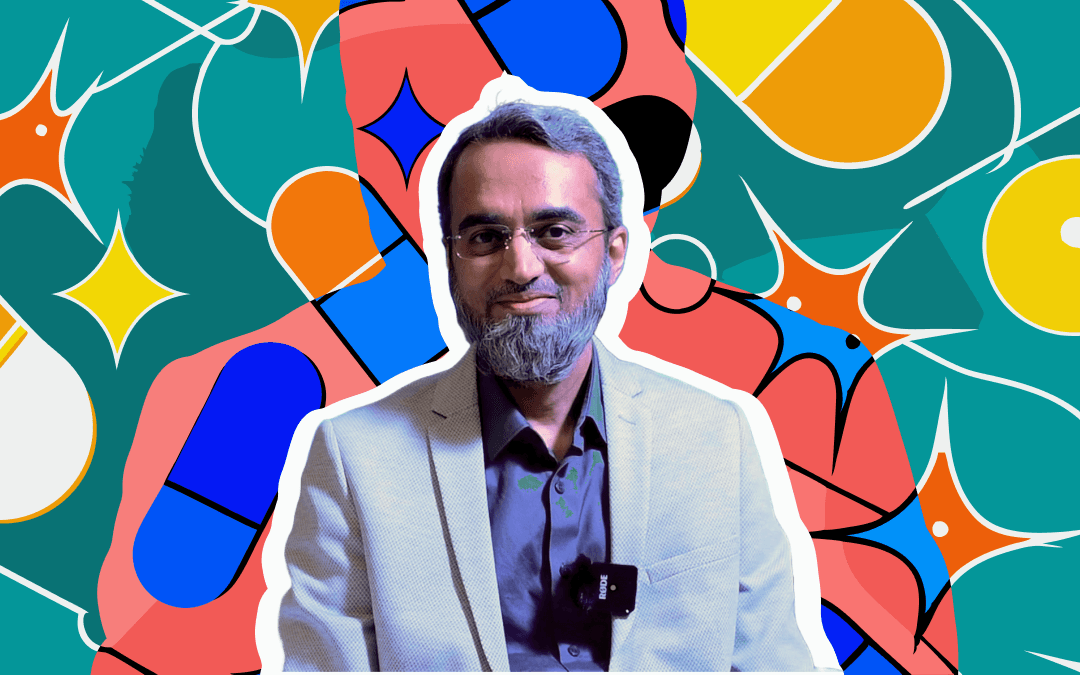
Quality Without Compromise: Lessons In Sterility, Strategy, And Leadership With Manish Bhatkar
He wanted to drive buses. Instead, he became the man pharma calls when sterility can't be tested — only assured. Manish Bhatkar's journey is the career nobody planned and the expertise nobody else has.


Pharma Now: Welcome to the new series of Pharma Now. This series is dedicated to Microbiology Matters. On today’s episode, we have a very special guest, a true friend, mentor, and a well-known personality in stability assurance.
We’re joined by Manish Bhatkar, Founder & CEO of Red Lotus Pharmatech Private Limited, a company dedicated to consulting and advisory services across audits and stability assurance. Sir is regarded as a stalwart in the field. I’m truly inspired by the way you work and think. It’s an honour to have you with us, especially since it’s not easy to get your time. Thank you so much for joining the show.
Let’s begin with your career journey. We have many topics to cover, but I feel people may not be fully aware of the wide range of roles and global experience you’ve had. Today, you’re known as a consultant and advisor, but you’ve held many significant positions across the world. So let’s start from the beginning.
Mr Manish: Thank you very much for the lovely introduction. I completed my postgraduation in Pharmacy with a specialization in Pharmacology in 1992. Microbiology was part of my curriculum, but only a small portion. I did my M.Pharm from the Department of Pharmaceutical Sciences, Nagpur University, which was a pioneering institute. In the 1970s and 80s, there were only three pharmacy colleges in the country, BHU, Nagpur University, and Sagar. They were considered the best.
I finished my M.Pharm in 1992. Interestingly, I never wanted to become a pharmacist. I’ll tell you why. I wanted to become a medical doctor. My mother was a medical professional, a public health nurse in the Ordnance Factory hospitals. I used to accompany her to hospitals and noticed that doctors received immense respect. People looked up to them. That inspired me.
I also saw well-dressed professionals in suits meeting doctors and educating them. I asked my mother who they were, and she said they were medical representatives. So, I thought I would either become a doctor or a medical representative, not out of passion, but because of the respect they commanded.
But my real passion was driving. I wanted to become a driver. My younger brother and I were fascinated by the red ST buses in Maharashtra. We loved the idea of driving large vehicles and traveling to different places. At home, we would role-play, one of us as the driver and the other as the conductor. That thrill stayed with me. Eventually, I understood the difference between profession and passion. Professionally, I wanted to become a doctor. Passionately, I wanted to drive.
There was also a pharmacist in the government hospital where my mother worked. He sat behind a window and dispensed medicines, usually three tablets: white, pink, and yellow, packed in small paper sachets. I asked my mother who he was. She said he was a pharmacist. At that moment, I decided I never wanted to become that person.
When I was in 12th grade, there were no centralized competitive exams like NEET. Admissions were merit-based within individual colleges. I applied to two medical colleges in Nagpur but didn’t get admission. It was heartbreaking.
My mother encouraged me to pursue pharmacy. I refused, saying I didn’t want to spend my life dispensing three colored tablets. She explained that pharmacy offered many career paths. She reminded me of the professionals in suits and ties and said I could become one of them. That changed my perspective.
My hobby was electronics, so I also considered engineering. I didn’t get admission in electronics but got civil engineering, which didn’t interest me. My father was an engineer and wanted me to follow that path, but I was intimidated by mathematics. I thought electronics would make math easier for me, but that didn’t work out.
Eventually, my mother convinced me to join pharmacy. I had missed medical admission by half a mark, so getting into pharmacy was easy. At that time, students who missed medical seats would opt for dental, then pharmacy. That’s how my journey began.
I started B.Pharm in 1986. It was a four-year program, completed in 1990. After that, I appeared for the GATE exam, now known as GPAT, conducted by the IITs for postgraduate admissions. I qualified and pursued postgraduation in Pharmacology, completing it in 1992. That’s when my professional journey began.
Through campus placement, I joined Core Parenterals in Ahmedabad. It was a pioneering and fast-growing company that introduced Form-Fill-Seal technology in India using Rommelag machines from Switzerland. I was fascinated by the technology, machines producing four bottles per minute felt revolutionary at the time.
However, I struggled with being away from family. I had always been a day scholar and had never lived in a hostel. Living far from home was difficult. Meanwhile, I applied elsewhere and received an offer from Lupin, which was setting up a facility in Mandideep near Bhopal. I joined Lupin, and that became my first real organization. My earlier role had lasted only two months in training.
At Lupin, I worked in sterile dosage manufacturing, then across packaging, technical services, validations, and projects. From 1992 to 1999, I spent nearly eight years there. That phase laid the foundation for my career and deepened my interest in aseptic processing.
I consider myself fortunate to be at the right place at the right time. In the early 1990s, Indian pharma was evolving. The government was encouraging domestic manufacturing, and progressive companies were exploring exports. Lupin became one of the first Indian companies to get facilities approved by European authorities like MHRA and the USFDA. We gained deep exposure to global regulations.
At that time, there was no dedicated QA function, only Production and Quality Control. Lupin and Ranbaxy were fierce competitors, both under ₹500 crore then. I still remember the celebration when Lupin crossed that milestone.
After several years, I felt drawn to Quality Assurance. I joined Ranbaxy’s Corporate Quality Assurance team in Gurgaon. But after ten months, I realized I was too young for a corporate desk role. I missed working with machines and people on the shop floor. I felt corporate QA was something I should do closer to retirement.
My boss offered a transfer to manufacturing, but around that time I discovered ISPE and started reading Pharmaceutical Engineering magazine in Ranbaxy’s library. That sparked my interest in pharmaceutical engineering. One day, I saw an advertisement for Pharmaplan, a German engineering company specializing in pharma facilities.
I called them and visited their office. I told them I was looking for a job, even though I wasn’t sure how I would contribute. Coincidentally, they were planning to start a Validation and GMP Compliance division. They offered me a role, but with no salary hike. My younger brother questioned the decision to leave a large corporation for a small garage office. But I chose to take the risk. That turned out to be one of the wisest decisions of my career.
At Pharmaplan, I worked with numerous companies as a GMP expert. I had to rely entirely on my knowledge, which pushed me to read extensively and constantly upgrade myself. It built my confidence, presentation skills, and subject mastery. Over five years, I also learned significant engineering concepts.
We followed a structured process, GMP teams designed concepts, engineers executed details, and later we supported validation and dossiers. We worked on innovative projects involving isolation technology. With Dabur Pharma, we built an oncology facility with 100% containment using domestic isolators, rare at the time. I also worked closely with Dr. Burman, Chairman of Dabur Pharma.
In 2004, I joined Dabur Pharma’s Corporate Quality function. Within months, I was sent to the UK to assess an underperforming manufacturing facility. I stayed initially for three months, submitted my report, and recommended improvements. The technology was old and fragmented, with early-stage isolator systems. I joined as Site Quality Manager, was promoted to Production Manager within six months, and later became Site Head.
We faced our first USFDA inspection and successfully got the facility approved despite technical challenges. I spent about six years in the UK. Later, my former boss’s position opened in India. On my mentor, Mr Shyam Khante's recommendation, I returned as Global Quality Head and worked from Delhi for two years.
After the company’s acquisition, I rejoined Lupin in 2009 in a corporate role aligned with Business Development. Lupin was expanding aggressively through mergers and acquisitions. My role involved due diligence and advising management on acquisition decisions.
This phase involved extensive global travel and exposure to diverse regulatory environments. We completed major acquisitions in Brazil and Japan. Understanding Japan’s exceptionally high quality expectations was one of my biggest learning experiences. After four years, I received an offer from Zydus with a significant raise.
I joined in a similar leadership role and moved to the US to manage a facility near St. Louis that was under a consent decree. I spent two years in the US, but my family was in India. Relocation became challenging, and my family preferred to stay in Mumbai. After years of global travel across more than 50 countries, I decided to slow down.
I had considered entrepreneurship earlier and registered Red Lotus Pharmatech in 2013 but lacked the courage to begin fully. I briefly returned to India and joined Dr. Reddy’s Laboratories, my last employer. After three years, in August 2016, I left permanently and started working full-time on my company, Red Lotus Pharmatech Private Limited. Next year, we will complete ten years.
Pharma Now: Tell us more about Red Lotus. What exactly do you do? We understand consulting and advisory, but we’d love more clarity.
Mr Manish: At Red Lotus, we focus on three specific areas. The first is pure consulting. This includes advisory support on quality and operational matters. Our primary engagements involve helping companies understand regulatory and GMP compliance requirements, drafting responses to regulatory observations, and supporting remediation activities.
The second area is technical services. Here, we help companies solve technical problems. For example, if they are facing challenges with a specific technology, we assist in selecting the right technology, improving existing systems, troubleshooting issues, and conducting failure investigations.
The third area is engineering support. We help companies design new manufacturing facilities, select appropriate equipment, define processes, and build efficient setups. These are our three core service areas.
Going forward, we are also expanding into custom-designed software solutions tailored to client needs. In addition, we are strengthening our work in human resource development, particularly in training and capability building.
Pharma Now: Mr Manish, you have deep expertise in stability assurance. Before we get into that expertise, I’d like you to explain what stability assurance really means, perhaps in simple terms.
Mr Manish: Let me explain it this way. Medicines come in different forms. You’ve seen and used many of them: tablets, capsules, liquids like syrups, ointments, pastes, and injectables. Broadly, they fall into two categories. One is enteral products, which are taken through the mouth. The other is parenteral products, which are administered through routes other than the mouth. This category includes injectables, nasal sprays, ointments, and more.
Injectables are parenterals, but not all parenterals are injectables. Injectables have a critical requirement, they must be sterile. Sterile means completely free from any living microorganisms. Sterility is absolute. A product is either sterile or non-sterile. You cannot say a product is 99.9% sterile, it’s a black-and-white requirement.
Contamination can come from many sources. Microbial contamination is probabilistic. Microorganisms are everywhere around us. Some are harmless, some are harmful, but any microbial contamination in a sterile product is unacceptable. There is a sterility test used for compliance purposes.
A few samples are collected and tested to check for contamination. However, this test has limitations. It is destructive and only checks sampled units, not the entire batch. Sterility is the only quality attribute that cannot be fully tested, it must be assured. That is where the concept of sterility assurance comes in. A common term used here is Sterility Assurance Level (SAL). It measures how confident we are that a product is sterile.
Sterile products are manufactured using two main technologies. The first is terminal sterilization. The product is manufactured first and sterilized at the end of the process. If any contamination exists, it gets destroyed during sterilization. The second is aseptic processing. Some products cannot withstand heat or radiation. These are manufactured in highly controlled sterile environments.
Aseptic processing is extremely challenging. Theoretically, if a room is completely sterilized and air movement is tightly controlled, sterility can be maintained. But practically, it’s very difficult. Humans are the biggest source of contamination. We continuously shed particles, and our skin carries microorganisms like bacteria and fungi. These can contaminate the environment and, in turn, the product.
Since absolute sterility cannot be guaranteed in aseptic processing, we rely on sterility assurance levels. For terminally sterilized products, the probability of a non-sterile unit can be as low as one in a million or even one in a billion. For aseptically processed products, the sterility assurance level is lower compared to terminal sterilization.
Typical SAL targets are 10⁻³ or 10⁻⁶ depending on the process. Terminal sterilization can achieve much higher assurance levels such as 10⁻⁶ or even 10⁻¹² in overkill processes. Such extreme assurance levels are not usually required for pharmaceutical sterile products, but may be relevant in industries like electronics or advanced fabrication. In pharmaceutical sterile manufacturing, Class 100 environments represent the highest level of hygiene for critical operations.
Pharma Now: Okay. You mentioned humans are the biggest challenge. When we talk about man, machine, and material, how do you handle all three?
Mr Manish: As I said, humans are the most significant contamination source, and the limitation is that you cannot sterilize people. Air, on the other hand, is comparatively easier to control. You can pass air through specialized filters that retain particulates. These are called HEPA filters, High Efficiency Particulate Air filters, and similar advanced filtration systems.
They can trap extremely small particles, even down to around 0.1 micrometers, depending on the specification. Cleanroom classification is typically based on particle counts, primarily particles equal to or larger than 0.5 micrometers and 5 micrometers. That becomes the key measure of cleanliness. As a sterility assurance expert, the approach is risk-based. You identify all possible contamination sources and assess the risks.
Based on that, you recommend mitigation measures to prevent contamination. You evaluate every element, humans, machines, air, water, materials, processes, everything. Anything entering a facility can become a contamination source and can potentially reach the aseptic core. People, air systems, machines, and even handling practices all matter.
Pharma Now: Can you share the most difficult assignment you’ve had related to maintaining sterility?
Mr Manish: I wouldn’t say maintaining sterility, but getting a facility approved. At the Dabur UK facility, the biggest challenge was securing approval from the USFDA. This was during the early days of isolation technology. We had a filling machine inside an isolator. The isolator had HEPA filters but no laminar airflow system. Air was supplied, but laminarity was not maintained, it created turbulent airflow.
Regulations required that areas where products and primary packaging materials are exposed must meet Grade A conditions. Grade A requires laminar airflow and strict microbial and particle control. In conventional sterile manufacturing, the surrounding area of Grade A must be Grade B. Microbial limits between Grade A and B are similar, but Grade B acts as a protective surrounding zone where personnel operate.
A sterile facility is designed like layers of an onion. The center is the Grade A zone where product exposure happens. Surrounding layers provide increasing levels of protection. In our case, regulators could interpret the isolator interior as Grade B because laminar airflow was absent. That was the core challenge.
We were filling sterile product in a zone without laminar airflow, and we had to prove it still met Grade A sterility assurance expectations. We presented extensive scientific data and risk justifications. We acknowledged the absence of laminarity but demonstrated that our controls still delivered equivalent sterility assurance.
There were multiple rounds of meetings with the USFDA. They challenged us rigorously and requested substantial supporting data. We responded with detailed evidence and technical explanations. After nearly three to four months of sustained effort, we finally secured approval for the site.
Pharma Now: Correct, but I have a question, it may sound simple. I’ve heard that in an isolator, if airflow directly hits the vial, that’s considered non-compliant.
Mr Manish: No, that’s not the correct understanding. HEPA filters are designed to guarantee a Grade A environment. These filters are made of multiple pleats with separators in between. You can imagine them like structured channels through which air flows downward. This creates an invisible curtain of highly filtered air. Through each pleat, air moves in parallel streams, forming a clean airflow zone that is free from particulate matter, including microbes.
Now imagine this clean zone surrounded by areas that may have contamination. A contaminant might cross one air curtain, but it cannot pass through multiple parallel air streams. That’s how protection is maintained. The air flows downward in a smooth, unidirectional manner. It touches the exposed product and components and then exits the area. This continuous flushing action protects the product at rest.
As long as this airflow remains uninterrupted and unidirectional, contamination risk is minimized. However, interventions can disturb this flow. For example, when an operator inserts their hands, even while wearing sterile gowns and gloves, turbulence can occur. Contamination is always probabilistic. Even with full sterile garments, humans continuously shed particles.
Some particles may be smaller than what protective garments can fully contain. During interventions, the probability of particulate contamination increases due to airflow disturbance. Let me put this in perspective. From a technology standpoint, the most difficult pharmaceutical product to manufacture is actually a tablet.
A tablet contains multiple materials, including the active ingredient, compressed precisely to deliver a pharmacological effect. Once ingested, it must release the drug within a specific time so that it becomes bioavailable. That’s complex science. Our stomach has a highly acidic pH, around 1. Some drugs degrade instantly in that environment. So, they must be protected until they reach the intestine.
That’s why we apply enteric coatings. The tablet remains intact in the stomach and dissolves only in a basic environment, releasing the drug where it can be absorbed. Extended-release systems add another layer of complexity. From a formulation and process technology perspective, tablet manufacturing is extremely complex.
Sterile products can also be complex, but many are relatively straightforward, you dissolve the drug, stabilize it, filter it, and fill it. A large proportion of injectables fall into this category. However, the real challenge is sterility. Protecting a sterile product from contamination throughout manufacturing is the most complex part of injectable production.
From a process technology standpoint, tablets are the most difficult. From a sterility and manufacturing controls standpoint, injectables are the most difficult. India now has many world-class sterile manufacturing facilities. Isolation technology, closed RABS, and open RABS systems are widely adopted. Many companies operate highly advanced facilities today.
Pharma Now: Let’s talk about your leadership side. You’re considered a stalwart leader in this space. What are your leadership mantras?
Mr Manish: My leadership mantra is simple, understand people, identify what they’re good at, and help them grow in that area. If people feel satisfied and valued, they will naturally do a good job. When I interact with someone, I often get a gut feeling about their strengths. Some people are good with people, some with technology, some with execution. There’s no formal framework I follow, it’s instinct and observation.
People are the most difficult to understand. Sometimes it takes years. I still joke that I haven’t fully understood my wife. It’s about talking to people, understanding their interests, and aligning roles with their strengths. That’s the principle I follow. I don’t know if I’ve always been successful, but this approach has helped me lead teams effectively.
From my college days, I’ve been closely involved in adventure sports. I’m a life member of the Nagpur Adventure Sports Club. During college, I did many long-distance bike tours. I loved cars, but I couldn’t afford one then. So I rode a motorcycle everywhere. We traveled from Nagpur to Nepal by bike, no cargo transport, no train support. It was a sponsored and organized expedition. Yamaha supported us, and I rode a Yamaha RX100. I also rode to Goa and many nearby places.
Later, when I bought my first car, a Maruti 800 during my Pharmaplan days, I started long road trips. I lived in the Delhi NCR region and would drive all the way to Nagpur instead of flying. Just last month, I drove from Mumbai to Jaipur. My dream is to drive from Mumbai to London and back. I’ve read about organized expeditions, and someday I’ll definitely do it.
Right now, I drive an Audi A4. It’s a beautiful car. I’ve owned several cars over the years, but I prefer SUVs because they feel safer. My dream car is the Land Rover Defender, that’s what I want next. Whenever I travel to Nagpur, I always drive. I never take a train or flight.
Pharma Now: Perfect, sir. Since we’re short on time, let’s do a quick rapid round. You’re an avid reader. One book every leader must read, what’s your recommendation?
Mr Manish: I’m not very inclined toward self-help or leadership books. A book I really enjoyed recently is Sapiens: A Brief History of Humankind.
It’s based on the author’s academic work in anthropology but written in a very engaging narrative style. It offers a fascinating perspective on the evolution of humankind. It’s his interpretation, but very compelling and insightful.
Pharma Now: Your guilty pleasure?
Mr Manish: Sweets.
Pharma Now: A leadership myth you want to break?
Mr Manish: That only a few people can become leaders. I believe anyone can be a leader in their own way.
Pharma Now: Tea or coffee?
Mr Manish: Tea.
Pharma Now: The best advice you’ve ever received?
Mr Manish: My mentor once told me that sometimes it’s important to be diplomatic. I’m not naturally diplomatic, so that advice stayed with me.
Pharma Now: What would you be if not a pharmacist?
Mr Manish: I would have been an ST bus driver.
Pharma Now: One word that describes you?
Mr Manish: A happy person.
Pharma Now: Wonderful. It was truly great talking to you. We went deep into the engineering side, and the rapid round was a lot of fun. Thank you for sharing your insights, wisdom, and leadership mantras. It was a pleasure speaking with you.
Mr Manish: Thank you very much. It was a pleasure for me as well to be part of this discussion.
Manish Bhatkar is a pharmaceutical leader with over three decades of experience in sterile manufacturing, quality systems, regulatory compliance, and global operations. He is the Founder & CEO of Red Lotus Pharmatech Private Limited, advising organizations on GMP compliance, sterility assurance, and contamination control strategies.
Over his career, Manish has held senior roles at Lupin, Ranbaxy, Dabur Pharma, Zydus Cadila, and Dr. Reddy's Laboratories. He has led sterile manufacturing, corporate quality, business development, and global due diligence across markets including the UK, US, Brazil, and Japan.
Recognized for translating complex regulatory expectations into practical shop-floor execution, Manish is known for his risk-based, systems-led approach to quality. His leadership philosophy centers on people development and building quality cultures that go beyond compliance to deliver patient-centric outcomes.
More interviews
All interviews →
The Untold Story of COVID-19 Vaccine Development: Dr. Subhash Thuluva Speaks

Mastering Pharma Regulations: Rajni Jha's Guide to Global Compliance Success