Why Doesn't the Best Technical Solution Always Win? Meribel Pharma’s COO on the Lesson That Shaped His Career
He believed the best technical solution wins. The shop floor taught him otherwise. Meribel Pharma COO Steve Leonard on adoption, cadence and why bad news never ages well.

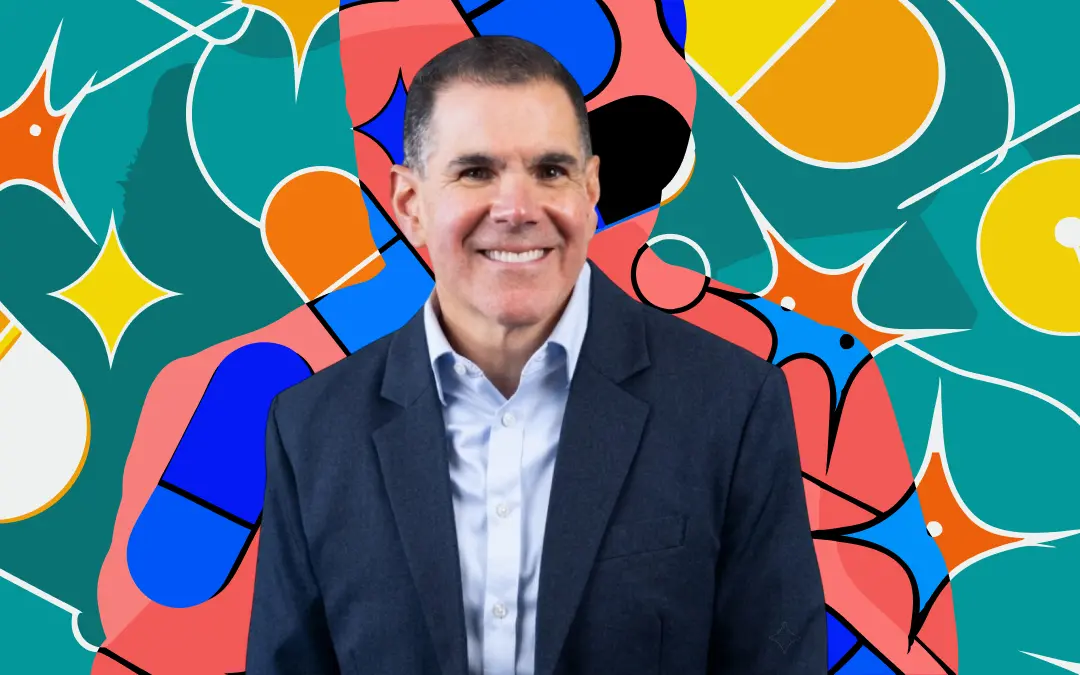
"The human interaction with that technology"
Pharma Now: What first pulled you towards manufacturing and operations, rather than design or R&D?
Leonard: I trained as an engineer, and you think you're going to be working on a lot of very technical things, which is certainly the case. But I quickly realised that bringing those technical things to life takes people, some kind of operation and a lot of processes. I gravitated much more towards the human interaction with that technology than towards the technology itself.
Pharma Now: Looking back across GE, Catalent and AMRI, is there a moment from your earliest GE years that still shapes how you lead?
Leonard: Not one specific moment, but certainly a combination of moments. I had the privilege at GE of working with many terrific mentors, and I always tried to learn from each one. I quickly learned that I could learn not only from the leaders but also from the people on the shop floor. The importance of listening to the people who touch the product every day should never be underestimated.
Pharma Now: Is there a moment you got it wrong, and what changed because of it?
Leonard: In a long career of almost 40 years, there are lots of things you get wrong. The key thing is that you learn. As a young engineer in my 20s, trained to solve technical problems, I believed that the best technical solution was the best solution. What I quickly realised is that it's only a good solution if the people you're working with are ready to adopt it.
That changed for me very early in my career, as I started interacting more with people on the shop floor and moved into supervisory and management roles. You have to engage the people early and often. The best technical solution doesn't always win. The best technical solution that gets adopted is the one that wins.
"Cadence and rigour and rhythm are really the keys"
Pharma Now: You've run operations across devices, CDMO and pharma: three very different worlds. What's the one skill that transferred everywhere?
Leonard: I would say three similar worlds. The products are different, but some of the regulations and processes really are the same. The one thing that really is common, particularly in operations, supply chain and manufacturing, is the need to operate with a certain degree of rigour and rhythm, and a cadence around it: not just making sure of today, but planning for tomorrow, next month, next quarter and next year.
That discipline is the same across all these different technologies, and I imagine it's the same in electronics, in automotive, anywhere high reliability and high repeatability are required. Cadence and rigour and rhythm are really the keys.
Pharma Now: And on the flip side, what did you have to unlearn as you moved between industries?
Leonard: I don't know about unlearning from industries, but unlearning as technology progressed, yes. When I graduated many years ago, there were no computers on the shop floor: just lots and lots of paper, and giant schedules on the wall. As things progressed, we had to evolve how we led, how we ran the operation and how we enabled people to do their jobs.
Now we're in the early phases of the next giant revolution, with AI coming into play. We're all going to have to learn again: unlearn some old things and learn some new things.
"Bad news doesn't age well"
Pharma Now: You joined months before Meribel launched publicly. What were you actually building in that window, and what's the hardest part of designing an operating model for a company the market hasn't met yet?
Leonard: The company was formed by combining operations that were already fully running, so when these assets came together near the end of 2024, we had customers to serve every day. Our first order of business before we launched the brand was to continue running the business well.
In the CDMO space, if you want to grow, one of the most important things is to run the business well: delivering reliably to customers every day. We had to sustain that while bringing the company together and minimise the distraction in our plants, where we had to change the branding, the signs and your email address. All those things can be disruptive and stressful for people. So we made sure we communicated what would happen, and we never lost focus on our priority: getting those medications to our customers. Hence, they were ultimately available to patients.
Pharma Now: Thirteen sites, three countries. What does "one standard" actually mean in practice, and how do you get there without flattening what makes each site good at what it does?
Leonard: We have a lot of different technologies: from basic solid oral dose, like tablets and capsules, to sterile and ophthalmic products that require different manufacturing technologies. So the sites are all different in what they do. What needs to be the same is our core values around safety, quality and compliance, and what our customers experience when they reach out to us with a difficult problem to solve: our responsiveness, our agility, how we respond to those challenges.
In a space this complex, what our customers expect is good day-to-day, week-to-week communication. Like anybody else, we have day-to-day issues, and I always say bad news doesn't age well. If you have a problem, engage the customer immediately and let them know what you're doing about it.
So I don't expect everything to be the same across all sites, but we do want a similar customer experience and a common set of core values in how we interact with customers and each other. It starts with safety, compliance and quality, and comes into respect and transparency. The way we operate internally translates into the way our customers perceive us externally.
Pharma Now: Across thirteen sites, is it difficult to communicate internally before you communicate externally?
Leonard: No, we don't find it difficult. We operate in different native languages, so we tend to communicate in English, which is typically our customers' preferred language as well. Sometimes we need to slow down and realise it's not everybody's primary language.
We have also developed a common language for how we operate, backed by a common set of KPIs (operating metrics). On-time delivery is measured the same way across sites, with the same gauges at the same frequency, and communicated to the customer in the same way. At the foundation of that is a common language, and the common set of values we have curated.
It matters a lot. We can never forget that there's a patient at the end of the supply chain. What we do matters, and people need to take care. When they see a potential issue, we want them to be transparent and escalate it, and as a leadership team we have a responsibility to be responsive and act on it.
"A CDMO with a real emphasis on the D"
Pharma Now: You also take on special and complex projects that other CDMOs turn away. What does that require operationally that a standard project doesn't?
Leonard: Our size and shape is a little unique. We're a mid-size CDMO with a lot of speciality technologies, and customers tend to value that we can manage complexity: small batch sizes, and batches identified for lots of different markets in Europe. That means a lot of complexity in packaging: things that go to Germany need to be in German, and things that go to Sweden need to be in Swedish. With different languages and sometimes regulatory requirements in each market, batch sizes tend to be small.
One of the things we do particularly well is serve small to mid-sized customers that may have smaller products with a lot of complexity, but that are just as important to get to patients as some of the bigger, more generic products that may be top of mind.
The other important thing is that we call ourselves a CDMO with a real emphasis on the D. We certainly do contract manufacturing. Still, we also help customers bring a complex product to market: formulation, development, designing lyophilisation cycles, designing packaging for their specific needs. Being able to take a customer from a molecule all the way through to market is an important differentiator for us.
Pharma Now: Sterile ophthalmics push aseptic fill even further: no visible particulates, tight pH and preservative control. Where does that complexity bite hardest for you: formulation, fill or inspection?
Leonard: Through that entire process. The ophthalmics business is challenging, particularly in the preservative-free segment. It takes a completely aseptic filling environment to ensure the product is sterile when it reaches the customer. But we also use speciality devices that let the patient continue administering drops for maybe 30 days of that vial's life, and the vial remains sterile.
We work closely with the manufacturers of those devices, which either filter the air or perform other proprietary functions, so that once a dose is dispensed, what remains stays sterile.
Pharma Now: How do you run a combined human and veterinary health portfolio across the same network, without one side pulling resources from the other?
Leonard: To us, products are products. We have a responsibility to ensure very clear segregation and no cross-contamination, whether it's two human products or one destined for the animal health market. Contamination control, cleaning between batches and line clearance: all of these good manufacturing practices need to be at the highest standard, particularly in a CDMO's high-changeover environment. We need to make sure that whatever we were making yesterday doesn't interfere with what we're making today.
"If you're 100% ready for the job, you probably don't want it"
Pharma Now: In your engineering days, did you ever imagine you'd end up in a role like this?
Leonard: Not very early on. Like most people in their 20s, you may have some ideas, and then people in your career influence you, give you a chance and push you one way or another. By the time I was seven to ten years into my career, I realised I wanted to be in operations. I wanted to be engaged with people. I wanted to do things on a global scale.
I had lots of good leaders who mentored me and took a chance on me. People always ask how I got ready to take this job, and I always say: if you're 100% ready for the job, you probably don't want it. There's not much more to learn and not much more room to grow. So in our organisation, we're always looking for people with that sparkle in their eye. Maybe they don't think they're ready, but you see something in them, so you pull them along, put them in that next role and give them a chance to grow.
Pharma Now: When you see that sparkle in someone on your team, how do you mentor them?
Leonard: Spending time with people in person is just so important. Zoom, Teams, even the way you and I are meeting today: they're wonderful for productivity. But there's no real substitute for being in the room: having lunch with someone, taking them to dinner at the end of the business day, getting to know them, listening, and helping them figure out a good path to keep growing.
Building those relationships, even in this new world of AI, is still irreplaceable. We're a company of almost 2,000 people, and we make products that ultimately serve people. However much automation and AI there is, and there'll be more, at the end of the day, there are people. We need to know what makes them tick, keep them motivated and help them have a long career at Meribel.
Pharma Now: If a client visited all thirteen Meribel sites in one week, what's the one thing you'd want them to notice that doesn't show up in an audit report?
Leonard: The entrepreneurial spirit our teams have. Each of these sites is a little different, and in each one there's a spirit of continually finding ways to improve and grow. That spirit comes from the site, from the people at the site. Even though the products and the customers are different, we want people to feel that focus on the customer, that focus on the patient, that entrepreneurial spirit and that readiness to help.
"It gets funded by the margin that we generate"
Pharma Now: Looking ahead, where is Meribel investing next: capacity, capability or geography?
Leonard: A little of both. We want to continue to expand our capabilities, particularly in the sterile space, in fill-finish and vials, and in ophthalmics. Today we operate in three countries in Europe, and we serve really the entire continent. As we look to expand our footprint, we would love to have assets in other parts of Europe so we can be more present where our customers are.
Pharma Now: Zooming out, what's the biggest operational challenge the CDMO industry isn't taking seriously enough yet?
Leonard: I don't know that we're not taking it seriously, but the changes are real. There's a fair amount of inflationary pressure, a lot of it driven by petroleum prices, so there's a bit of unease: our costs are going up on a persistent basis. At the same time, because our business is mostly in Europe, there's significant downward pressure on drug prices.
Those two things are in direct conflict. Everybody wants more access and lower prices, while our costs and our peers' costs go up month to month, quarter to quarter. So the challenge is to keep finding ways to do what we do more effectively and efficiently, so the public keeps the access and pricing it needs, and we still have enough margin to reinvest in the business.
Making money in this business is important because it requires ongoing investment to update HVAC systems, water systems and packaging equipment. The regulations continue to escalate, and assuring the quality and level of compliance we're committed to requires an ongoing stream of investment. Someone in some far-flung place doesn't fund that investment. It gets funded by the margin we generate from the products we make. So I think that's an ongoing challenge across the industry: the need for investment can potentially outstrip the margin you can generate.
Rapid fire
Pharma Now: One myth about pharma manufacturing that outsiders believe?
Leonard: That it's fully automated.
Pharma Now: One operational habit you swear by, on any site, in any industry?
Leonard: Doing a safety walk through the plant every day and making sure people are safe.
Pharma Now: A book or mentor that changed how you think about leadership?
Leonard: There's a book called Execution, written by Larry Bossidy, a GE alumnus, that really changed the way I think about operating mechanisms and the cadence around running a factory.
Pharma Now: One future trend CDMO operations leaders should prepare for now?
Leonard: How AI is going to impact what we do, and how we make sure that AI helps us do what we do.
Pharma Now: But at the end of the day, there are still people?
Leonard: There are people. But we can always give people better tools.
Steve Leonard is Chief Operating Officer of Meribel Pharma Solutions, a mid-sized CDMO headquartered in the UK with 13 manufacturing and drug development sites across France, Spain and Sweden. He leads operations across technologies from solid oral dose to sterile and ophthalmic products.
Leonard joined from Integra LifeSciences, where he was Corporate Vice President, Global Operations & Supply Chain. Before that, he was Senior Vice President, Head of Global Operations at Catalent.
Trained as an engineer, he credits his GE mentors with shaping how he learns and leads. Across a career of almost 40 years, he moved into supervisory and management roles early and chose operations, people and global scale.
More interviews
All interviews →
The Untold Story of COVID-19 Vaccine Development: Dr. Subhash Thuluva Speaks
Mastering Pharma Regulations: Rajni Jha's Guide to Global Compliance Success