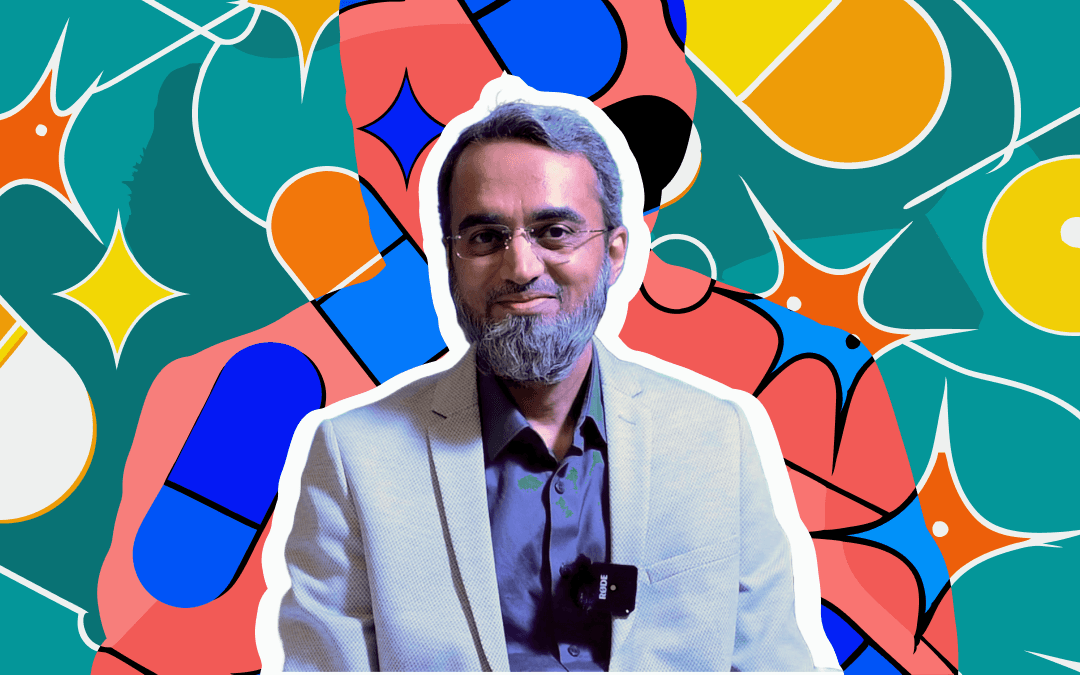
Mr. Laxmikant Tiwari On Compliance, Quality, And Shop-Floor Ops
A 26-year operations veteran argues that compliance culture isn't built in boardrooms — it's built on shop floors, through listening, root-cause discipline, and a right-first-time mindset that most leaders still underestimate.

Pharma Now:
Today, we’re joined by a leader who has spent over two decades shaping the backbone of India’s pharmaceutical manufacturing excellence. From leading large-scale operations and regulatory inspections to building world-class facilities for potent and complex molecules, he has seen the industry evolve from the inside out. A strategist, a problem solver, and a firm believer in an inspection-ready culture, Mr. Laxmikant Tiwari, Senior Vice President, Operations Pharma Division at Biological E Limited.
You’ve spent more than 26 years in one of the most demanding sectors in the world. People will be very keen to know about your journey. How did you get started? What did your early days look like? Let’s begin there.
Mr. Tiwari:
I was born and brought up in a district town in Maharashtra. I was always passionate about medicines and wanted to do something in that field. In Maharashtra, most students aspire to become either a doctor or an engineer. I wanted to become a doctor, but I didn’t score enough marks to get into MBBS. I did get admission into BDS, but I realized it wasn’t my cup of tea.
That’s when I decided to pursue pharmacy. Even during my school days, I had a strong inclination toward medicines. I studied in a convent school in a small village. Many people in my community didn’t know English, but I used to read medicine labels and instructions and explain them to others, even though I didn’t fully understand everything myself. This interest started around my 8th or 9th standard.
One of my friend’s father was a pediatrician, and we used to sit in his OPD. I observed medical representatives interacting with doctors, saw promotional materials, and read the booklets pharmaceutical companies distributed. I still remember one company, HMR (Hoechst Marion Roussel). Someone told me it was formed through a merger of French and German companies.
Somewhere in the back of my mind, medicines stayed with me. I initially aimed for MBBS, but since that didn’t work out and BDS didn’t interest me, I chose B.Pharm and completed my pharmacy degree. That’s how my journey began.
Many people also choose engineering. I have an interesting story about that. I actually got admission into mechanical engineering at a government polytechnic college. I attended classes for about 15 days but soon realized it didn’t excite me. At that time, saying no to engineering and choosing pharmacy was very difficult. My family supported me, especially my brother. That support made a big difference. I also consider myself fortunate to have very good friends.
Pharma Now:
Looking back at your early days, what was the hardest phase of your journey?
Mr. Tiwari:
I’m not from a big city, so access to information was a major challenge. When I was pursuing a degree in pharmacy, my college was still developing. I was part of the second or third batch, and the campus was still under construction. We didn’t have a strong academic ecosystem.
The internet wasn’t common then. I didn’t even have an email ID until I completed my B.Pharm. Most of our access to information came through personal networks. I remember some magazines that used to come to my friend’s father’s clinic, CIMS and MIMS, the Monthly Index of Medical Specialities. I still remember their cover pages. I used those resources to learn and apply to different pharmaceutical companies. The biggest challenge was a lack of access, something today’s youngsters are privileged to have.
Today, they have access to everything. With AI and digital tools, they can find exactly what they need. I often say: Google takes you to a market where you don’t know what to buy, but AI tools like ChatGPT take you directly to the shop that has what you want. It saves time and opens access to the entire world. Sitting in a village, if you have internet access on your mobile phone, you can reach anywhere and access anything, provided you have the curiosity to seek it.
Pharma Now:
Operations leadership comes with high pressure, tight timelines, and zero-error expectations. Was there ever a moment when everything seemed to go wrong at once? How did you manage such situations?
Mr. Tiwari:
In operations, situations like that happen quite often. In the early phase of my career, they were very frequent. Our education system makes us technically competent; we know how to handle processes and systems, but pharma operations are far more complex.
There are multiple verticals, such as Quality and Operations, and early in my career, I didn’t fully appreciate the importance of collaboration across these functions. I started my career in 1999, specifically the 2008–2010 phase. During that time, I faced many challenging situations.
What I learned was to go deeper into the problem, break it down into smaller parts, and understand the root cause of the event. Sometimes the issue is large; sometimes it’s minor. But the approach remains the same: collaborate closely with engineers, microbiologists, QA colleagues, and your own team. If you truly dissect problems and collaborate across functions, you will reach the root cause.
Over time, these lessons prepare you. With experience and a strong professional network, you begin to predict issues before they occur. That’s when you move toward a “right-first-time” approach, avoiding mistakes and identifying downstream impacts early.
I often give an example. Doctors know medicines deeply. Mechanical engineers understand mechanical systems. Computer engineers know computing. But pharmacy is different. A pharmacy graduate studies chemistry, engineering basics, drawing and projections, English, jurisprudence, microbiology, plant science, animal science, pharmacology, anatomy, and physiology, all within four years.
A pharmacy graduate is exposed to many disciplines but may not be a deep specialist in just one. I believe this multidisciplinary foundation helped me in the pharma industry. In the industry, you work with expert engineers, microbiologists, chemists, and quality professionals. Understanding and connecting across these domains has helped me immensely. It has played a key role in my journey.
Pharma Now:
You’ve led massive cross-functional teams, including production, engineering, quality, packaging, and more. What is one leadership habit you practice on the shop floor that most directly impacts team performance and compliance?
Mr. Tiwari:
Listening to the team is extremely important. I strongly believe the team on the ground is often more informed than leadership. The level of information they have is significant. As a leader, you may interact with 10–15 people a day, but they interact with 50. They hold valuable information and practical knowledge. They may not always understand the full impact, but they observe important signals. Signals are everywhere if you pay attention.
Take a water system, for example: microbial monitoring data, conductivity trends, and TOC values all give signals. The same applies to people and processes. When you add many new team members and rely only on paper-based training while expecting zero errors, that’s unrealistic. That world doesn’t exist.
Early signals, when heard carefully, prevent major failures. In the first 5–10 years of my career, I was curious and collaborative, but I wasn’t a good listener. As I moved into leadership roles, I was fortunate to receive honest feedback. There were structured forums like skip-level sessions where my team could share feedback openly, even when I wasn’t in the room. Those experiences helped me develop the habit of listening. It made a huge difference.
Most solutions emerge through discussion, but the person raising an issue may not fully understand its broader implications due to limited experience. As a leader, you see 100 interconnected factors, while they may see only one or two. Your role is to connect their observations to the larger picture. When you do that, people learn, signals become clearer, problems get solved faster, and many issues can be prevented altogether.
Pharma Now:
From an early age, you were clear that you wanted to work in pharma and were fascinated by medicines. But you also mentioned joining a polytechnic institute. The term “polytechnic” is quite well known in regions like Amravati and Vidarbha. Did you actually enroll, start studying, and then drop out? How did that phase unfold?
Mr. Tiwari:
Yes, I secured admission into a government polytechnic college, which wasn’t easy. My 10th-grade score was very strong, and my 12th-grade performance was also good, so I qualified on merit. I went through the full admission process, bought the drawing boards, drafting tools, and all the materials engineering students typically need. The campus was large and well-established. But after joining, I realised I couldn’t continue.
Mathematics was never my strength. Biology was always my favourite subject. Physics fascinated me, chemistry was manageable, but mathematics was very difficult for me. That clarity made me rethink my decision. There was also a cultural aspect. When you grow up in a certain environment, engineering is seen as a prestigious path. I remember thinking that if I continued for several months and then left, the seat would remain vacant and go to waste.
My father told me, “If you’re not interested, don’t waste your time.” My brother supported me, and some of my friends who were already in engineering also advised me. I finally decided to leave. That seat may have gone to someone else, I’m not sure, but I know I made the right decision.
Otherwise, I would have become a very poor engineer. It was the right call at that moment. I then pursued pharmacy there itself. Later, I went through a separate selection process and secured admission in the free seat category purely on merit.
Pharma Now:
You’ve worked extensively with isolators, containment facilities, and the manufacturing of potent molecules. From your perspective, what is the biggest shift happening in sterile manufacturing and high-potency facilities today? What should pharma leaders start preparing for now?
Mr. Tiwari:
I’ll answer this in two parts, handling highly potent molecules and the role of isolators. Handling potent molecules in oral solid dosage forms is primarily about containment. The intent is to protect people and prevent cross-contamination between modules within the facility. Occupational exposure must be minimised for personnel working in these environments.
One approach is engineering containment, such as split butterfly valves that allow powder transfer between stages without exposing materials to the environment. When the equipment separates, exposed surfaces remain contamination-free.
Facility design also plays a major role. HVAC systems for potent facilities differ significantly. If processes can be enclosed within isolators, typically negative-pressure isolators in oral solids, risk is further reduced. While it’s difficult to contain every step in oral solid manufacturing, it’s feasible in certain cases, like small granulators used in development for oncology or hormonal products. The final layer of containment is personal protection, full suits, half suits, and specialised breathing equipment that protect the operator’s breathing zone. That covers potent oral solids.
When it comes to injectables, especially potent ones, the risk focus shifts from operator safety to patient safety. Except for powder handling during dispensing, most operations become safer once materials are in solution. The core objective is sterility and patient protection.
This demands a different strategy. Injectable manufacturing applies much stricter safety factors. For example, cleaning validation limits are often 10 times more stringent than those for oral solids. If an acceptable carryover in oral dosage is “1x,” injectables may require “10x” tighter limits. Because of this, quality and operations teams prefer product-dedicated contact parts. Either equipment parts are dedicated to a product, or single-use systems are adopted, used and discarded.
Now, regarding isolators, they play a critical role in sterile pharma manufacturing. Regulatory expectations are also evolving. Annex 1 strongly emphasises automation and advanced technologies, encouraging the industry to move from open or closed RABS toward isolator-based systems.
I was fortunate that, while working at an Indian multinational company, my facility became the organisation’s first USFDA-approved site. It was also the first facility there to manufacture batches using injectable isolators, specifically positive-pressure isolators. Isolator-based facilities provide significantly greater assurance against contamination.
No system is without risk or limitations, but comparatively, isolators reduce contamination risk to the minimum possible level. In injectable manufacturing lines, isolators physically separate the aseptically filled product from the surrounding environment, typically a Grade C area, and from personnel. That separation is a major shift in sterile manufacturing and a direction pharma leaders must prepare for.
Pharma Now:
What should pharma leaders start preparing for now?
Mr. Tiwari:
Leaders generally know what needs to be done. Technical competence is essential when you’re at the base of the leadership pyramid. But as you grow, your role shifts toward understanding people. You need to be empathetic and pay attention to the human side of operations.
Let me give an example. Investigation practices have evolved over the last 7–8 years. Earlier, when investigations were conducted, the root cause was often labelled as “human error.” The focus would remain on the individual, the operator, the analyst, the microbiologist, or the person handling documentation.
We rarely went deeper to understand why the mistake happened. In many cases, the causes were linked to leadership decisions. The person might not have had clarity on the task, might have been overloaded with work, or might not have been properly trained.
Frequent role shifting also creates gaps. Operators may be moved from one line to another without sufficient continuity. A microbiologist might handle water sampling for months and then suddenly shift to stability testing with minimal retraining. Leadership plays a critical role in managing people, skills, and operational dynamics.
Leaders must identify the right skills, appreciate the right people, and build a culture of recognition and listening. It’s important to understand employee challenges, spend time on the shop floor, and conduct meaningful gemba walks, gemba for root-cause understanding and gemba based on specific themes.
For example, leaders can conduct focused gembas on water system sanitisation, sampling practices, or visual inspection in injectables. These activities allow leaders to add value beyond technical expertise. Technical knowledge is important, but most professionals in pharma are graduates or postgraduates. People entering the industry are qualified and capable.
What truly differentiates leadership is the human and cultural dimension, the “software” that drives the technical “hardware.”
Pharma Now:
You’ve actively led on-site regulatory inspections. In today’s environment, is regulatory compliance still seen as a checkpoint, or has it become a core lever for business growth?
Mr. Tiwari:
Regulatory compliance is now a core business lever. Earlier, before 2008 or 2010, the approach was different. But as regulatory scrutiny increased and expectations became stricter, the industry transformed. Over the last 15–20 years, organisations have developed a much stronger understanding of compliance.
Today, compliance is a core organisational value. No promoter wants to risk their business through non-compliance. Everyone wants to remain compliant. The real challenge lies in how deeply people understand compliance.
Do they understand the consequences of deviating from SOPs? Do they realise how failing to report an issue can escalate into serious regulatory or patient-safety risks? Building that awareness into the culture is essential. Empowering shop-floor teams also plays a major role.
That said, it can still be disheartening to see certain regulatory observations. A few months ago, I read about cases where even basic systems required for medicine manufacturing were inadequate. Some pockets of the industry are still learning through difficult experiences.
But broadly, the industry understands compliance, values quality, and prioritizes patient safety. The level of awareness today is very different. I spend a lot of time on the shop floor, and I see that change clearly. People now know what to do and follow SOPs rigorously. They even challenge instructions that contradict procedures. If something isn’t aligned with their SOP, they refuse to proceed. That culture of procedural integrity is a major positive shift.
Most professionals understand their job responsibilities. They read their job descriptions, follow SOPs, and understand the why behind processes, why inspections matter, how labelling impacts safety, and where risks can arise.
Aseptic operators today understand how even small movements affect airflow and sterility. The way hands move, the speed of intervention, whether one or both hands are used, whether tools are sterile, every detail matters. Earlier, documentation felt like a burden. Today, professionals understand its purpose and value. When they create documents, they understand the responsibility that goes with them. That mindset shift defines the new compliance culture.
Pharma Now:
What mindset do Indian pharma companies still need to adopt?
Mr. Tiwari:
One mindset we must move away from is: “Regulators haven’t asked for it, so why should we do it?” We shouldn’t wait for regulatory observations before reacting.
I understand that, from an operations perspective, proactive improvements may require significant CAPEX and OPEX. But there’s no alternative. Things must be right the first time. We cannot afford to keep learning from mistakes when we are dealing with medicines.
That mindset shift is essential. To a large extent, the industry is moving beyond basic compliance. I’ve seen organisations that truly go beyond compliance and focus deeply on quality. Compliance is about meeting specifications; quality goes far beyond that.
Pharma Now:
Before we move to the rapid-fire round, any closing remarks?
Mr. Tiwari:
Whatever you do, understand what you’re doing. If you don’t know something, ask questions without hesitation. Get clarity on your activities and responsibilities. Keep learning and then execute. In pharma, we cannot afford to do anything we don’t fully understand.
Pharma Now:
One word to describe life in pharma operations.
Mr. Tiwari:
Exciting and satisfying. When you realise that the medicines you help manufacture are giving relief to patients, it’s deeply fulfilling.
Pharma Now:
Your go-to stress buster after a tough day at the plant?
Mr. Tiwari:
When I’m stressed, I stop talking and start listening. I keep listening and observing. When you listen more and observe more, you begin to see light at the end of the tunnel.
Gradually, over minutes or hours, solutions begin to emerge. I discuss them with colleagues, continue listening, and eventually reach workable solutions. By then, I’m also clearer about the risks involved.
Stress will exist, but I believe it should stay in the heart, not occupy the brain. If it affects the brain, it affects the entire system. So be patient. Listen to people. Understand situations holistically. We’re often judgmental. Sometimes we assume a problem is huge when it isn’t, or small when it’s actually serious. Let things unfold. Try to understand fully before reacting.
In pharma, many situations have multiple solutions. There are always ways to manage risk and safeguard patient safety. The key is to understand why something happened and how to prevent it in the future. With experience, you develop that perspective, and the stress reduces.
Pharma Now:
One leadership trait you appreciate most in others.
Mr. Tiwari:
I appreciate people who willingly take responsibility. Many are not only focused on their own area but also eager to help others. Such people naturally grow into larger leadership roles.
Pharma Now:
The biggest myth about plant heads.
Mr. Tiwari:
One myth is that plant heads don’t play an active role in regulatory inspections. Another is that they push quality systems only to chase results, creating pressure.
These are misconceptions. It’s always a collaborative effort. Times have changed. No one can force quality because everyone understands its importance, from leadership to shop-floor teams. The idea that plant heads are only tough taskmasters is a myth.
Pharma Now:
Your favourite food?
Mr. Tiwari:
Dal and rice.
Pharma Now:
Coffee or tea on a stressful day?
Mr. Tiwari:
Tea.
Pharma Now:
Your favourite destination?
Mr. Tiwari:
Any quiet, uncrowded place on a hilltop.
Pharma Now:
If not pharma, what career would you have chosen?
Mr. Tiwari:
That’s difficult to answer. I’m an accidental pharmacist. I wanted to become a doctor, but I ended up here, and I truly enjoy my career. I’m happy and fulfilled. If I had stayed in engineering, I probably would have become a very poor engineer.
Pharma Now:
Thank you, sir, for joining us and sharing your insightful journey.
Laxmikant Tiwari is Senior Vice President, Pharma Operations at Biological E Limited, with over 26 years of experience across India's leading pharma organisations — Zydus, Dr. Reddy's, Cipla, and Lupin. His career spans production, site leadership, and operational strategy, with expertise in sterile injectables, high-potency manufacturing, and isolator-based facilities.
Born in a small district town in Maharashtra, Tiwari's entry into pharmacy was driven by a lifelong fascination with medicines — one that predates his formal education. He holds a Bachelor of Pharmacy and built his career on a multidisciplinary foundation, which he credits as a key advantage across pharma's complex operational landscape.
His leadership centres on shop-floor presence, early signal detection, and a right-first-time mindset. He is known for building inspection-ready cultures and treating compliance as a core business value — shaped as much by people and culture as by systems.
More interviews
All interviews →
The Untold Story of COVID-19 Vaccine Development: Dr. Subhash Thuluva Speaks

Mastering Pharma Regulations: Rajni Jha's Guide to Global Compliance Success