Mr. Patrick Nieuwenhuizen on Contamination Control, AI, and Leadership
Patrick Nieuwenhuizen argues that in contamination control, technology is only as strong as the human behind it — and that AI, isolators, and robotics cannot replace scientific judgment.

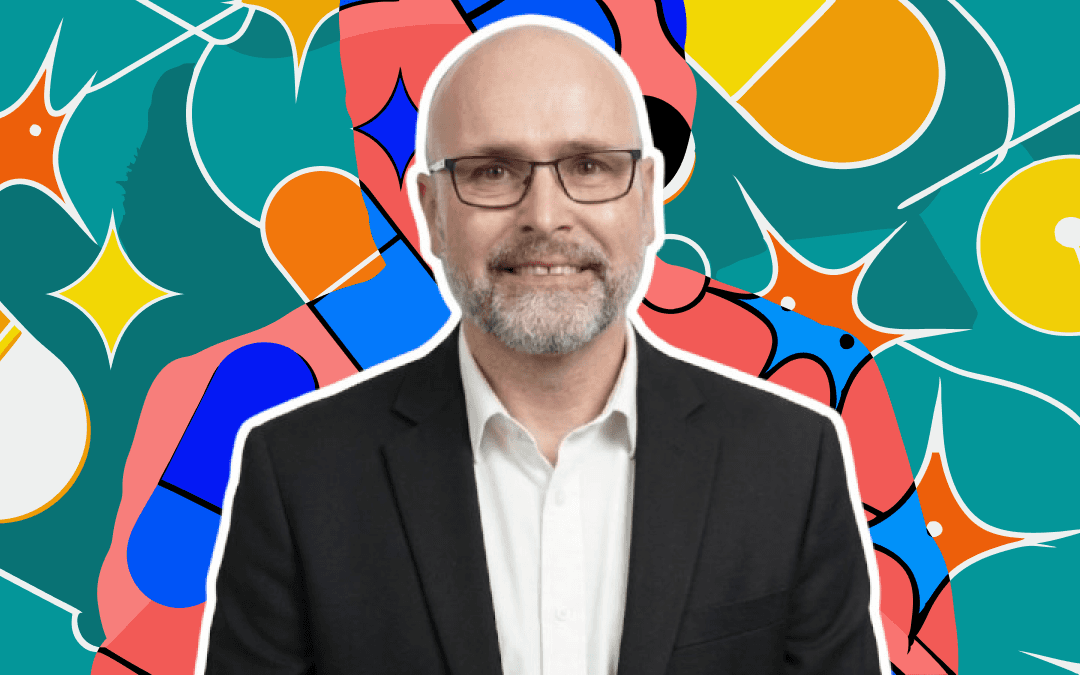
Pharma Now: On today’s episode of Microbiology Matters, we have a very special guest joining us from Ireland. We’re speaking with Patrick Nieuwenhuizen, a board member at Pharmig and an expert in GMP auditing and contamination control. It’s going to be a great conversation about his journey, his achievements, and of course, Pharmig.
Patrick, let’s start with your role as a senior member at Pharmig. I’ve heard a lot about the organization, and now that we’re working together, I’d love to understand it better. Tell me more about Pharmig.
Mr. Patrick: Pharmig is a nonprofit organization. It’s run by one full-time individual, and the rest of us, committee members like myself, contribute on a voluntary basis. The purpose of Pharmig is to bring people from the pharmaceutical microbiology world together, to educate, to teach, and to exchange expertise.
That’s one of the reasons we’re hosting this conference here in India. We want to bring as many people as possible on board and help them develop a better understanding of pharmaceutical microbiology, contamination control, and the importance of good GMP practices within the industry.
Pharmig was established in 1991, long before I joined. I moved to Ireland in 2011, you can probably tell from my name that I’m not originally Irish. I initially got involved with Pharmig as a conference attendee, simply to learn more about the field.
Gradually, I became more involved. I started presenting at different conferences, and later I was invited to join the committee. Since then, I’ve been contributing to developing programs and organizing conferences like this one in India. The goal has always been to educate and serve others in the industry.
Pharma Now: That’s great. So, what are the key areas you’ve worked on in Europe through Pharmig, especially in terms of events and workshops?
Mr. Patrick: Within Pharmig, we cover a broad range of topics, essentially anything related to pharmaceutical microbiology. Contamination control is a major focus, of course, but we go much wider than that.
For example, earlier this year and during this conference, we had excellent presentations on smoke studies, development of environmental monitoring programs, microbiological deviation investigations, and media fills.
Anything that touches pharmaceutical microbiology is within our scope. We either have the expertise in-house or collaborate with a strong network of industry experts to deliver these programs.
Pharma Now: Let’s move to your personal journey. You’re a pharmaceutical microbiologist, was that a planned career?
Mr. Patrick: No, believe it or not, it wasn’t. In my early teenage years, I actually wanted to become a pathologist. I started my college journey with that in mind, but then I got exposed to microbiology and found it really interesting.
I completed my college degree in 1994 and began working in a hospital microbiology lab. That experience was very beneficial because it gave me a real understanding of how devastating microorganisms can be for patients.
In 1995, almost by accident, I entered the pharmaceutical industry. I started working in a microbiology lab, literally at the lab bench, doing bioburden testing, environmental monitoring in cleanrooms, endotoxin testing, and identifications. Because of my background in medical microbiology, I understood the importance of preventing microorganisms from contaminating drug products. If you get it wrong, the consequences can be absolutely fatal for patients.
I worked there for about a year and a half before moving to another company, a CMO involved in biotech. That’s where I got more exposure to biotechnology. I also had the opportunity to help develop a microbiology lab at a very young age, around 25. I was involved in purchasing lab equipment, qualifying it, and developing assays. It was a steep but very enjoyable learning curve.
After that, I moved into broader quality roles, including quality assurance, and eventually became a QA supervisor. Later, I joined another pharmaceutical company focused on sterile fill-finish, with some involvement in cell and gene therapy, where I became a lab manager.
In 2011, I moved to Ireland with my wife and took on a lab manager role at a corporate pharmaceutical company. Later, I transitioned into a stability assurance lead role because it became difficult to manage both responsibilities. I’ve always enjoyed working with people and collaborating, but I’ve had a strong preference for the technical side. Whenever there was an issue, I liked getting involved, digging into it, and finding a solution.
About five and a half years ago, I moved into consulting, and I’m still doing that today. I support companies with inspection readiness, remediation, and client audits. My core expertise is in pharmaceutical microbiology, as well as quality management, compliance, sterility assurance, and sterile manufacturing.
That’s roughly 30 years of experience. It helps me understand different perspectives, whether it’s a lab analyst, a lab manager, or a production manager. There’s a big difference between solving a problem from behind a desk and actually experiencing something like a failed media fill and spending months investigating what went wrong.
Pharma Now: Where did you complete your college education?
Mr. Patrick: I completed my initial studies in the Netherlands, at a laboratory school in the southern part of the country. After that, I continued developing myself through additional and postgraduate courses.
Later in my career, through my involvement with Pharmig, I pursued a master’s degree in pharmaceutical microbiology with University of Manchester in the United Kingdom.
As a child, I had all sorts of ideas about what I wanted to be, like many kids, I thought about becoming a fireman. I was also very interested in computers, especially when they started becoming popular in the 1980s. I liked the idea of becoming a computer analyst, although I’m not a computer expert today, I can use tools like Word and Excel, but programming isn’t my strength.
At the same time, I was always drawn to the medical field. I was curious about how the human body works and wanted to understand it better. Somehow, that path led me into microbiology, then into laboratory work, and ultimately to where I am today.
Pharma Now: When you look back and connect the dots, are you satisfied with your career journey?
Mr. Patrick: Yes, I am. I genuinely love my job. Sometimes I say it doesn’t feel like a job, of course it is, but it gives me a lot of satisfaction. Alongside helping others, I’m constantly learning myself.
I believe that if you ever feel like you’ve reached the top and there’s nothing left to learn, you’ve hit a dead end. There’s always an opportunity to grow, especially in our field with emerging technologies, new manufacturing processes, rapid microbiological methods, and evolving medicinal products like cell and gene therapies. It’s an area where you never stop developing, if you’re open to it.
Even if I can make a very small contribution in that bigger ecosystem, it still feels meaningful.
Pharma Now: Tell me about an incident where you felt truly proud to be a pharmaceutical microbiologist.
Mr. Patrick: There are two situations that stand out.
The first is when working with newer companies, often filled with brilliant scientists, far smarter than I’ll ever be, but who may not fully understand the GMP requirements behind developing a medicinal product. Sometimes they’re surprised by how much is needed.
Being able to guide them through that journey, helping them prepare for inspections, and ultimately supporting them in obtaining a manufacturing license, especially for smaller companies, is incredibly rewarding.
Helping bring a medicinal product one step closer to patients is something I find very fulfilling.
The second situation is more intense. When companies face a serious issue, like contamination, they reach out for help. In those moments, it feels like being a firefighter responding to an emergency.
Often, the people within the company already know their systems best. But because they’re so deeply involved, it’s hard for them to step back. As an external consultant, you can come in with a fresh perspective, provide direction, and help them move toward a solution.
Guiding teams through critical problems and helping them find clarity is equally rewarding.
Pharma Now: What’s the toughest part of your job?
Mr. Patrick: Everything can be challenging, but in a good way. The toughest part is when you’re truly stuck and can’t find the root cause, it’s like searching for a needle in a haystack.
You want to give your best, but when you can’t find the solution, it can be frustrating. Those moments, when the answer isn’t immediately visible despite your efforts, are the most difficult part of the job.
Pharma Now: So what’s the toughest, man, machine, or material?
Mr. Patrick: I would say man. We’re all human, and we all have our own habits and intricacies. In pharmaceutical microbiology and contamination control, it’s widely recognized that people are often the biggest source of contamination risk in a cleanroom environment.
A lot of it comes down to habits. Working in something like a Grade B cleanroom is tough. You have to be constantly aware of how you behave. Simple things, like scratching your face or touching your arm, are completely prohibited. These are natural, unconscious actions in everyday life, but in a cleanroom, you have to train yourself to avoid them.
It’s not easy. You’re working in a highly controlled environment with excellent air quality, but you’re also wearing sterile gowns and goggles that fog up. It’s physically and mentally demanding. That’s why we always tell people not to underestimate how difficult and how important this work is.
In sterile fill-finish operations, you are the final barrier preventing contamination. While facility design and processes matter, people must understand the impact they can have. A single mistake can undo months of work.
In areas like cell and gene therapy or biopharmaceutical manufacturing, processes can take months, from a single vial to large-scale production. If something goes wrong at the final stage, that’s months of effort lost, along with high cost and, more importantly, patient impact.
I’ve worked with companies producing orphan drugs, where maybe a thousand patients worldwide depend on that product. If a batch fails, those patients may be left without treatment. What may look like a simple vial or a small white cake in a vial can make a life-changing difference to a patient.
Of course, technology is evolving. We now have isolators and even fully robotic systems that reduce human intervention. It’s incredible to see how far things have come. But many companies still don’t have access to such advanced systems. In those cases, the human factor becomes even more critical.
Pharma Now: As a consultant and expert in this field, how do you handle that? How do you train people to comply with these requirements? We often talk about building a culture of quality.
Mr. Patrick: Exactly, it comes down to quality culture and awareness, and it starts with education.
I always say that training programs should focus not just on how to do something, but why it needs to be done that way. People often don’t understand why they need to move slowly in a cleanroom, why they can’t touch their face, or why they need to disinfect their gloves repeatedly during a shift.
The challenge is that we’re dealing with microorganisms and particles you can’t see. Today, technologies like virtual reality help make these concepts more visible. But one of the most effective ways is still going back to basics, looking at agar plates in the microbiology lab.
When people see the colonies growing, those small dots, it becomes real. That’s when they understand: this is the result of your behaviour in the cleanroom.
Your movement, your habits, everything directly impacts particle generation and contamination risk. Humans naturally shed particles; it’s unavoidable. That’s why cleanroom garments act as personal HEPA filters, preventing contamination from reaching the environment.
Ultimately, it’s about building that understanding, helping people realise the impact of their actions on the cleanroom and, most importantly, on the final product.
Pharma Now: You highlighted how emerging technologies, such as isolators, are changing how cleanrooms operate. How easy is it to adopt these technologies, especially with legacy infrastructure in place?
Mr. Patrick: It can be very challenging. There’s no single solution, if there were, everyone would already be using it.
When we talk about contamination control strategy, it’s a holistic concept. It’s not just about behaving correctly in a cleanroom. It also involves the design, operation, and integration of the cleanroom. You can’t fix a poor design with good behaviour alone; you’re already at a disadvantage.
You need robust engineering from the start. The process design and associated equipment must be well thought out, properly engineered, and, where required, sterilizable.
Moving from a conventional cleanroom setup to systems like RABS (Restricted Access Barrier Systems) or isolators can be difficult, especially when retrofitting existing facilities. It’s much easier when you’re building a new facility because you can design everything around the concept from the beginning.
That said, there are excellent technology providers in the market. The key is collaboration, working with the right experts, because no single person or team knows everything. You need trust, strong partnerships, and a collaborative mindset.
If you approach it with ego, thinking you know everything, it simply won’t work. This field is constantly evolving. What was acceptable 10 years ago may not be acceptable today. Regulations evolve, technologies advance, and manufacturers must keep up.
A great example is the recent update to EU GMP Annex 1. For many companies, it was a wake-up call. While regulators may say the expectations were always there, the updated document has made them much clearer. It provides a defined baseline of what companies must comply with.
Pharma Now: If I ask you about the biggest game changers in Annex 1, what would you highlight?
Mr. Patrick: Robotics is definitely one of the biggest game changers. By reducing human intervention, it significantly lowers contamination risk.
It may sound futuristic, but these robotic systems are becoming more common. I expect their use to continue growing across the industry. That said, we won’t completely eliminate the human factor, but we can reduce its impact.
Another major development is the use of data, especially artificial intelligence. We’re seeing increasing use of AI in data trending and pattern recognition. These are areas where humans have limitations in processing large datasets.
AI is already being applied in pharmaceutical microbiology and quality assurance, for example, in batch record reviews or retrospective analysis of deviation trends. These technologies allow companies to identify patterns and risks much faster and more effectively than before. It’s a very promising space.
Pharma Now: When we introduce robotics and automation, maintenance becomes a concern. How do you see that challenge?
Mr. Patrick: It is a challenge. The more mechanical and automated systems you introduce, the higher the risk of breakdowns.
That’s why maintenance programs are critical. Prevention is always better than reacting to failure. You don’t want systems to reach the point of breakdown before taking action.
This is where collaboration with vendors becomes important again. They have experience across multiple installations and can guide you on best practices for maintenance and reliability.
Of course, issues will still occur. That’s where your quality management system comes into play, how you respond, how you investigate, and how you bring systems back into operation.
Another important aspect is the evolving skill set required. Ten years ago, engineers were focused on HVAC systems and traditional equipment. Today, with robotics and automation, there’s an increasing need for skills in programming and advanced system understanding.
The industry is expanding in terms of technical complexity, and teams need to evolve along with it. It’s crucial to understand the technology you’re working with, so that when something goes wrong, you know how to respond or who to reach out to for support.
Pharma Now: Let’s come back to AI. As someone with exposure to technology and entrepreneurship, I’ve seen that AI penetration in pharma is still not that high. Is that right?
Mr. Patrick: It’s starting to emerge. More and more companies are using AI to assist in areas like batch record review, deviation trending, CAPA management, and environmental monitoring data analysis.
That said, it’s not a silver bullet. There will always be a human aspect. One of the big discussion points is around how these algorithms are developed, how they are qualified, and ultimately who makes the final decision. Regulators are very clear, the final decision always rests with a human.
And we must remember: if you feed incorrect data into AI, you’ll get incorrect results. That’s a fundamental risk. AI is a powerful tool, but you cannot rely on it blindly. You always need to verify whether the output is accurate and whether it can be trusted.
In microbiology, a lot comes down to experience and intuition. You’re dealing with things you can’t see, and often it’s years of experience that tell you something isn’t right, even if all the numbers look acceptable.
A good microbiologist can sense when something is off, even without breaching alert or action limits, and that’s where human judgment becomes critical.
We discussed this recently in a conference while talking about microbiological identification. You can put a microorganism into a machine, and it will give you a result. But there have been cases where systems identified something like bubonic plague in a cleanroom. What are the chances?
That’s where human expertise comes in, to question the result and investigate further. AI and automation can guide you, but they cannot replace scientific judgment and critical thinking.
Pharma Now: From a global perspective, since you’ve worked across multiple countries, what differences do you see between regions like Europe and Asia in their approach to microbiology?
Mr. Patrick: One of the key differences is the use of technology.
I’m fortunate to be based in Ireland, which is a major hub for pharmaceutical manufacturing. Many of the top global pharmaceutical companies have facilities there, so you see a lot of advanced technologies being implemented.
At the same time, there’s also the reality of aging facilities. From a microbiology and contamination control perspective, that presents challenges. A brand-new cleanroom with isolators, real-time monitoring systems, and robotics is very different from an older facility operating with traditional Grade A/B filling setups.
In many parts of Europe, and even more so in emerging regions, you still find older infrastructure. And now, with evolving regulatory expectations, companies are under pressure to upgrade. For example, traditional Grade A/B setups are often no longer sufficient for new product approvals. Companies need to move toward at least RABS or isolator technologies.
I recently visited a facility in Bulgaria where they consciously chose RABS over isolators. It wasn’t about capability, it was a strategic decision based on flexibility, process needs, and financial considerations.
There is no one-size-fits-all solution. It always depends on the specific process, business case, and operational context.
That’s an important point, technology alone doesn’t solve everything. You can’t simply “plug in” a solution and expect perfect outcomes.
Even with the best isolators, if your cleaning isn’t effective or your processes are flawed, contamination can still occur. Technology supports you, but it doesn’t replace good practices, and again, it comes back to the human factor.
Pharma Now: I’d like to know, who is Patrick beyond microbiology?
Mr. Patrick: That’s a good question. I’m happily married, almost 20 years now. When I married my wife, I also gained two wonderful children. And although I may look young, I’m actually a grandparent.
We have four grandchildren. My son is now 41, and my daughter is 37. The oldest grandchild is 16, and the youngest is six. We also have two granddaughters who are nine and ten. It’s great fun, it really keeps you young.
Outside of work, I enjoy music. I used to play guitar and bass guitar. I also like running, hiking, and being outdoors. I enjoy good food, we had a wonderful meal yesterday, and I really like Indian cuisine.
I especially enjoy a good curry. While there are excellent Indian restaurants in Europe, it’s not quite the same as what you get here. Dishes like chicken tikka and pakoras are some of my favorites. My wife enjoys Indian food as well.
I also like cooking. I wouldn’t say I’m a great cook, but I enjoy it. Overall, I just try to enjoy life as much as possible.
Pharma Now: Wonderful. What’s your philosophy when it comes to work-life balance?
Mr. Patrick: I’ve always believed that you should be in a profession you genuinely enjoy, because work takes up a significant part of your life. On average, you spend around nine hours a day at work.
I used to joke with my team that they probably saw me more than they saw their own partners. That’s why it’s so important to like what you do and the people you work with.
Work is necessary, it pays the bills, supports your lifestyle, but you should still enjoy it. You need to give it your best. At the same time, nothing replaces your personal life.
If you’re happy at work, it supports your personal life, and if you’re happy in your personal life, it reflects positively in your work.
Work-life balance is very personal. Some people are happy working long hours because that’s what they enjoy. Others prefer to work their hours and then disconnect, and that’s perfectly fine too.
Not everyone wants to become the CEO. Some people are truly happy where they are, doing their job well, and that should be respected.
It’s important to recognize that ambition looks different for everyone. Some people strive for leadership roles, while others find fulfillment in mastering their craft. Both are equally valuable.
Pharma Now: What’s your leadership mantra?
Mr. Patrick: My leadership philosophy is simple, and I genuinely believe in it. Surround yourself with very smart people, people who are even smarter than you. Your role as a leader is to ensure they are doing what they enjoy and what they do best, so they can perform at their highest level as part of the team.
For me, a leader doesn’t need to be the best in technology or science. What matters is building the right team, giving them space to grow, and enabling them to thrive.
It may sound like a cliché, but learning from mistakes is important. As a leader, you should be a safety net for your team and support them so they can succeed.
I often think in terms of sports analogies. There’s a famous Dutch footballer, Johan Cruyff, who once said that as a coach, your job is to put the best players on the pitch and ensure they’re playing in the right positions.
That idea has always stayed with me, you don’t need a big ego as a leader. Stay humble, put people in the right roles, and let them excel.
Pharma Now: Patrick, what’s your plan now in India?
Mr. Patrick: This afternoon, we’re traveling to Hyderabad for our next session. I’m really looking forward to it. If the audience is even half as engaged as what we had yesterday, it will be fantastic.
Of course, I’ll also enjoy another great Indian meal. On Friday, I’ll be flying back to Dublin, and I’m hoping to be back home with my wife in Waterford by the evening.
Pharma Now: Wonderful. Patrick, it was truly a pleasure speaking with you. I really enjoyed your insights on microbiology, as well as your thoughts on leadership, personal life, and work-life balance. Thank you for sharing your time and wisdom with us.
Mr. Patrick: My pleasure. Thank you.
Patrick Nieuwenhuizen is a pharmaceutical microbiologist and quality consultant with over 25 years of experience across sterile manufacturing, biologics, and advanced therapies. As Director and Senior Consultant at PharmaLex, he specializes in contamination control, sterility assurance, GMP compliance, and global inspection readiness.
He began his career in medical microbiology before moving into pharma, where hands-on lab work in environmental monitoring, endotoxin testing, and cleanroom operations shaped his understanding of patient risk. Over time, he progressed into QA and microbiology leadership roles before transitioning into consulting, supporting companies with audits, remediation, and regulatory strategy.
Patrick is also an active Pharmig contributor, supporting industry-wide knowledge sharing on contamination control and GMP practices. He holds a master’s degree in pharmaceutical microbiology from the University of Manchester and is based in Ireland.
More interviews
All interviews →
The Untold Story of COVID-19 Vaccine Development: Dr. Subhash Thuluva Speaks
Mastering Pharma Regulations: Rajni Jha's Guide to Global Compliance Success