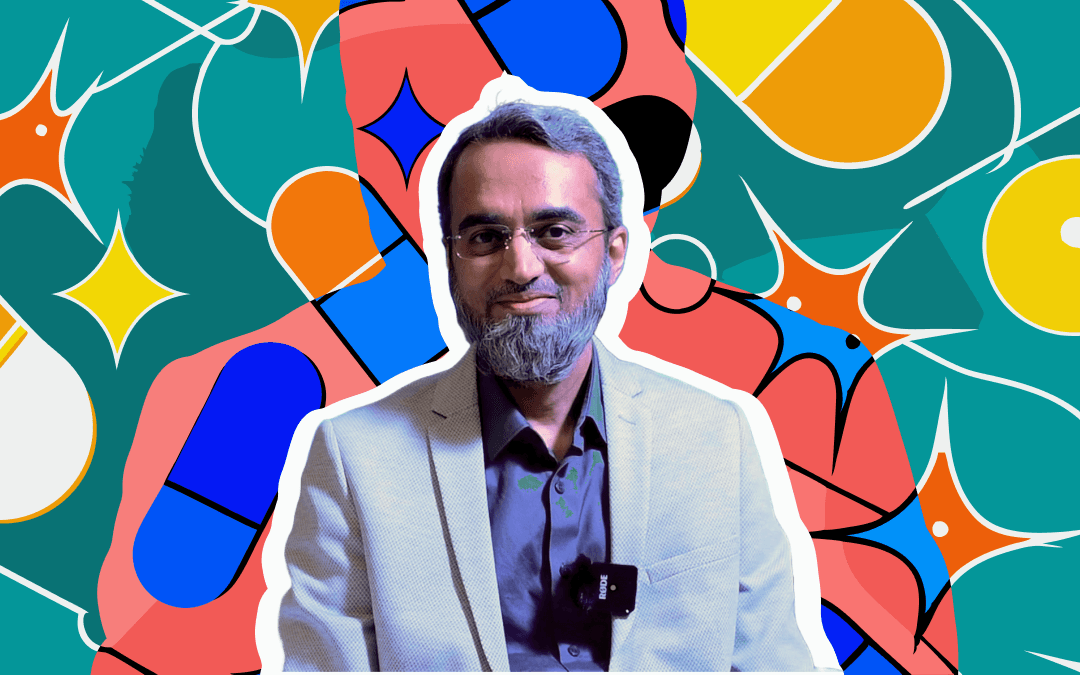
Ducking Nonsense: Why Sensible Leadership And Real Learning Matter In Pharma: Mr. Santosh Dayal
Santosh Dayal shares people-first leadership insights, learning culture lessons, and why growth, integrity, and mindset matter most.


Pharma Now: Mr. Santosh Dayal is a leader with deep insight into talent, people, and organizational growth, especially in high-stakes industries. He has a strong background in aligning human capital with business ambitions and firmly believes that people are at the core of any sustainable enterprise.
We’re glad to have you with us, Mr. Santosh. To begin, could you share your path into HR, talent, and leadership? What motivated you to choose this field? We’d love to understand your journey.
Mr. Dayal: Thank you for having me. It’s been a journey of a couple of decades, actually a little more than that. When I reflect on it, I realize it has been a process of discovery. You don’t plan a journey like this in advance; it evolves over time. I would say I’ve been fortunate to work with organizations that have provided me with exposure to talent development, training, and capability development.
Over time, I continued to receive assignments related to building capabilities. That helped me realize this was an area where I could develop real expertise and make a meaningful contribution to the organization. My core philosophy is simple: people need people, organizations need people, and organizations need capable people. Developing those capabilities is essential.
Everything revolves around people. It’s impossible to imagine living or working in an environment without people. When you work in talent development, training, or HR, you’re constantly surrounded by people, and that, for me, is a major source of inspiration. That’s my journey, in a nutshell.
Pharma Now: Very true. As you mentioned capabilities, there are times when we interview or hire people without fully understanding what they are truly capable of. Some individuals can do much more than what’s initially visible, while others may not meet expectations. Since this isn’t always clear at the beginning, how do organizations tackle this situation? What’s your perspective on it?
Mr. Dayal: People come with a certain level of competency and skills. The key issue is whether organizations are clear about the kind of skills they actually need. That clarity is often missing. When new employees join, they may or may not fully meet expectations, but organizations must ensure that they meet the minimum skill standards.
The gap exists on both sides. Many organizations are unclear about the skill sets they are looking for, so they end up hiring for opportunity rather than for fitment. That’s one pattern I’ve observed consistently. Clear definitions of required skills are critical.
As people grow within an organization, the challenge shifts. At higher levels, the issue is often less about skill and more about behavior. Senior roles demand the right behavioral and leadership attributes, not just technical competence. That’s where hiring decisions need to focus more closely.
In short, if I’m hiring for a frontline role, I need absolute clarity on the required skill level. There should be proper benchmarking, and only candidates who meet those benchmarks should be brought in. Development can happen after that baseline is established.
As individuals move into leadership positions, behavior becomes the deciding factor. Organizations need clarity on whether candidates demonstrate the required leadership behaviors. Otherwise, hiring based purely on past performance can create gaps later on.
Pharma Now: In your work across organizations, what patterns have you observed? What are the common mistakes or gaps companies make when it comes to nurturing talent and building a learning culture?
Mr. Dayal: Learning culture is a big topic. When we discuss culture, I define it as the way things are typically done. Organizations exist to run a business, so learning must be an integral part of the business. It must enable business outcomes and support growth.
People don’t usually join organizations to learn. In fact, many feel their learning is already complete. But in reality, on-the-job, continuous learning is very high. One of the major gaps I see is in job design. If job roles are clearly designed, learning naturally finds its place. Otherwise, learning is force-fitted.
People won’t be interested in learning if it’s just for the sake of learning. It has to help them do their job better. Any learning initiative is successful only when it directly improves job performance. People work to achieve their goals and aspirations, and if learning helps them do that, they will naturally engage and immerse themselves in it. Learning is effective only when people can clearly see how it helps them perform their job better.
When learning is delivered as a separate program, disconnected from daily work, interest tends to drop significantly. It then becomes just another set of information, and no one is interested in collecting information for its own sake. The key question for learning teams should be: has the learning been designed in a way that employees can see its direct value at the workplace?
Most learning fails not because people can’t learn, but because they aren’t interested. And they aren’t interested because they don’t see the benefit. People pay attention when something matters to them personally and professionally.
This design gap within L&D teams has a significant impact. Learning is not an event; it’s a continuous process. Organizations that treat learning as event-based often struggle to build a strong learning culture.
Pharma Now: What is your take on the application of learning? Organizations design programs to build capabilities, but how do you ensure that what people learn is actually applied at work?
Mr. Dayal: The answer lies in design. Learning must be designed in a way that clearly visualizes how it will be applied. The application should never be left to the learner to figure out on their own. You can’t expect people to attend a program for a few days, sit through presentations, videos, activities, and discussions, often in a comfortable setting, and then assume they’ll automatically apply it once they’re back at work. If the application is left to the learner, it usually never happens.
A facilitator’s effort shouldn’t end at the event. Ideally, approximately 25% of the effort should be devoted to the learning event itself, while nearly 50% should focus on the application phase. That means sustained engagement, stepping into the learner’s day-to-day work, checking progress, asking questions, and encouraging consistent practice.
Sometimes people refer to this as motivation, but I prefer to think of it as inspiration. Learners should not be left to apply their learning on their own. Their involvement and motivation are important, but they are not enough on their own.
There are three pillars that determine whether a learning application succeeds. The first is the learner’s own motivation. The second is the facilitator’s preparation and continued involvement. The third, and often the most critical, is leadership buy-in. Leadership must advocate the learning, be involved in it, and practice what is being taught. Learning succeeds when leadership practices the same behaviors it expects from others.
When even one of these pillars is missing, the application breaks down. Learning then becomes just a well-executed event, perhaps held at a five-star venue, but with limited impact. Regular check-ins, consistent follow-ups, and ongoing reporting on what works and what doesn't are essential. Redirection where needed and celebrating success also play a crucial role in ensuring learning translates into real workplace behavior.
Pharma Now: If you had to design an ideal, pharma-ready L&D or HR framework from scratch, what foundational pillars would you build it on?
Mr. Dayal: I believe I’m already working toward that, as I’m currently with a pharma company. That said, there’s no such thing as an ideal framework. Every organization behaves differently. However, if someone were starting fresh in 2025, there are a few realities they must take into consideration.
One unique aspect of the pharmaceutical industry is that customer interaction hasn’t fundamentally changed. Medical representatives continue to engage directly with doctors, discussing brands and communicating their value. When designing a framework from scratch, the first thing to examine is the type of talent being brought in, the journeys those individuals will undergo, and the expected duration of those journeys.
Second, the learning or facilitation team must have a voice in the job design process. If roles are not designed in a way that facilitates the application of learning, the learning function will struggle to succeed. Learning cannot be effective if it exists separately from the job. If learning doesn’t have a place in job design, the learning function cannot succeed.
From a foundational perspective, there must be a clear strategy and a blueprint for the entire journey. The focus should not be on isolated events, but on well-designed learning journeys. These journeys need to be technology-enabled, people-oriented, and rooted in a strong human connection. Most importantly, learning must be leadership-driven. The learning team cannot drive it alone; leadership has to own it.
Leaders need to speak the language of learning, and learning teams need to understand and speak the language of leadership. That exchange is critical. It’s a complex process, but it’s also an enjoyable one when done thoughtfully.
Pharma Now: How should leadership development and succession planning work in a pharma environment, especially considering regulatory sensitivity, specialized skill demands, and rapid change?
Mr. Dayal: Regulatory environments have made talent development and scientific communication even more critical. The ability to think on one’s feet, communicate science clearly, and speak with accuracy and relevance has become essential. In the pharmaceutical industry, the future belongs to those who can communicate science and make sense.
The need for continuous learning has increased as regulations have become more stringent. This was always important, but earlier, there was a belief that regulatory pressure might ease. Instead, it has only intensified. Going forward, scientific credibility and meaningful communication will be even more important.
This means placing a greater emphasis on developing people in the field, as well as those who support them. Leadership development and succession planning must account for this reality, ensuring that future leaders are not only commercially strong but also scientifically sound and compliant in their approach to engagement.
Pharma Now: Could you share a story about how your people or talent initiatives have significantly impacted organizational performance or culture?
Mr. Dayal: There are many examples, but one that stands out is something we’re actually discussing in this forum as well. It involves a learning intervention that helped turn around several underperforming headquarters. When performance is good, everyone celebrates. When performance drops, people start looking for scapegoats.
In this case, we identified headquarters that were not functioning well and were experiencing negative growth. Morale was low, and when demotivation sets in, attrition is never far behind. With consistent support over nearly a year, we focused on rebuilding confidence and creating belief that a turnaround was possible. When people believe a turnaround is possible, performance tends to follow.
As a result, around 80–85% of those headquarters or business units were transformed. They moved from negative growth to positive growth, and we also saw improved retention. This was a clear example of how a well-designed learning intervention can drive real business outcomes.
Traditionally, learning interventions were measured by the amount of knowledge acquired, the scores achieved, or the skills developed. However, learning is not just about skill acquisition; it’s about performance. If learning helps people perform better, it’s successful. Otherwise, it becomes academic rather than practical.
Pharma Now: What role should leaders play when employees or teams are underperforming, especially when underperformance leads to demotivation?
Mr. Dayal: One common issue is that when leaders see underperformance, they tend to panic. But stepping into a managerial or leadership role means accepting that both good and bad phases are part of the journey. You will have businesses that perform well, and you will also have phases where performance dips. People are not non-performing; performance is down.
What matters most is how leaders respond during those moments. Leaders need to remain sensible and composed, focusing on the quality of conversations they have with their teams. This is the time for real problem-solving and root-cause analysis, not blame.
Poor managers tend to blame individuals. Strong leaders look for what isn’t working in the system. People are usually working hard, something is simply not clicking. The leader’s role is to identify and remove those bottlenecks. The more leaders understand this, the more effectively they can turn demotivation into momentum.
Pharma Now: I see you’ve written a book on leadership titled Ducking Nonsense: How to Lead at Work Without Losing Your Mind. I believe the book has just been launched. The title is intriguing, and the cover design is quite striking as well. Could you tell us what “Ducking Nonsense” really means and what motivated you to write this book? Our audience would also appreciate knowing what the book is about.
Mr. Dayal: This connects well with your earlier question on leadership. The book is based on my observations of the mistakes people make when they step into managerial roles and begin leading others. Very often, they end up creating a lot of unnecessary nonsense.
When people become managers, there’s a tendency to believe they are somehow superior, almost like they are the chosen ones, and that the person in front of them is inferior. Even the terminology reflects this; managers are often referred to as “superiors,” which I personally have a problem with. That definition itself is nonsense. No human being is superior to another. No role makes a person superior—only more responsible.
What usually happens is that we copy a few behaviors from managers we’ve seen in the past, mix them with our own insecurities and assumptions, and then pass that combination on to others. This book is based on my observations of people around me, as well as honest reflection on myself, on the kind of nonsense I’ve created and the conversations I’ve had over the years.
The book examines leadership in today’s context, including the types of people entering organizations, the realities managers face, and how leaders can become more effective rather than striving for perfection. Everyone is chasing the idea of being the ideal or flawless leader. This book takes a different approach; it’s about being a sensible human being first, and a sensible leader next.
That’s where the title comes from. When nonsense shows up, whether from others or from within, you need to know how to duck it. And when you realize you’re creating nonsense yourself, awareness is the first step to stopping it. The book offers practical reflections and simple tips on how to avoid throwing nonsense at others, and how to protect yourself when it comes your way.
Pharma Now: It’s certainly an interesting title, and it feels like a book meant for leaders at every stage. We’ll be keeping this copy with us.
Mr. Dayal: You should also consider gifting it to your boss. The book is for anyone who is a leader, a manager, or someone who aspires to become a leader in the future. Essentially, it’s for anyone entering the corporate world with aspirations and expectations, especially those who realize that what they learned in business school or elsewhere often bears little resemblance to reality. In the end, leadership is about people-to-people relationships. That’s what it all comes down to.
Pharma Now: Moving on, in your opinion, how can pharma companies help employees view learning and development not as a compliance requirement, but as a key differentiator and real growth opportunity?
Mr. Dayal: When examining the pharmaceutical industry, numerous companies operate at varying scales. Organizations that operate at the top level tend to think differently. They understand that if learning teams are not actively building the capabilities of their people, they won’t be able to achieve their long-term ambitions. Capability building is not optional; it’s central to business ambition.
For many organizations, the shift needs to be in mindset. Learning should not be seen only as a regulatory or compliance requirement. It’s also about what the organization is doing for the people who are building the business every day.
There are employees who spend 15, 20, or even 30 years with an organization. If their capabilities remain the same throughout that time, have we truly given back to them? Learning is a way of serving people. It expands their horizons, strengthens their capabilities, and enables them to take on higher-level roles and more complex responsibilities within the same organization.
This creates a mutually beneficial system. Learning is not just a mandatory process or a set of compliance training; it is a transformative experience. It’s about understanding what people need to grow and achieve their personal and professional goals. When people grow, organizations grow alongside them.
Pharma Now: Organizations are built by people. And sometimes, people become very comfortable in their roles, and the work can become monotonous. In such cases, it becomes essential for companies to recognize this and provide opportunities for growth, as you mentioned. Creating programs that genuinely interest employees and help them grow ultimately works both ways. As people grow, organizations also grow.
Mr. Dayal: I’ve worked across sales, had a stint in marketing, been part of L&D and sales training teams, and worked with both Indian and international counterparts. I wouldn’t say this growth happened only because of my individual capability. It was also because the organization consciously designed programs that exposed me to different roles, trained me, and helped me discover my own potential. Organizations grow people, and people grow organizations—it has to work both ways.
That exposure helped me realize where I could contribute. Otherwise, people eventually say, “I worked here for 15, 20, or 30 years, but I’m still at the same level with just incremental pay hikes.” The real question then is: what is the organization giving back to the employee?
Pharma Now: True. But sometimes it’s also difficult for organizations. They try to identify people’s capabilities and offer opportunities accordingly, but today many employees say, “That’s not part of my KRA.” That mindset doesn’t help either the organization or the individual.
Mr. Dayal: If you keep doing only what’s written in your KRA, you’ll keep getting exactly what’s written there, usually a 6–7% increment. If you want real growth in life, you have to step beyond your KRA. Only a few people understand this, and those are the ones who become path-breakers. If you do only what’s in your KRA, you’ll get only what’s in your KRA.
Pharma Now: Very well said. This might sound controversial, but I think Gen Z especially needs to understand that going beyond KRAs is what shapes long-term growth.
Mr. Dayal: I’ll be honest, I’m not very driven by generational labels. Just before this conversation, there was a panel discussion at my book launch where Gen Z came up again. To me, these labels exist mainly to manage large workforces. When I interact with someone as a leader or manager, I’m interacting with a person, not a generation.
People carry individual values, beliefs, and motivations. Organizations should create space for individuals to grow. Generational categorization, Gen X, Gen Z, Gen Alpha, will keep changing. A few years from now, Gen Alpha will be the focus, and they’ll be called “the problem generation” too. But they aren’t the problem. Gen Z isn’t the problem either. The issue is not Gen Z—the issue is how leadership responds to change.
I recently interviewed a young professional who was surprised that I had worked with one organization for 15 years. She had changed jobs frequently, and that was working for her. If it works for her, that’s perfectly fine. Organizations also need to evolve with time. Why should only people be labeled as “Gen Z”? Why can’t organizations also become more Gen Z in their thinking?
Instead of blaming a group, we should ask tougher questions. Have we created enough opportunities for people to stay? Have we challenged them enough? What motivated me may not motivate someone younger. Am I able to crack that code? That, in my view, is the real responsibility of leadership, not just HR, but leadership as a whole.
If younger generations want different challenges, leadership needs to adapt. The workplace must be engaging for them. You can’t expect people to live by yesterday’s rules when the world has changed. This is a complex issue with no single answer, but one thing is clear, we need to stop blaming Gen Z. The future belongs to the younger generation, and leadership must learn how to serve them.
The challenge lies less with the people and more with how leaders choose to understand, engage, and evolve alongside them.
Pharma Now: With challenging workforce demographics, digital transformation, and evolving employee expectations, how should HR and L&D adapt over the next five years to stay ahead?
Mr. Dayal: One major trend everyone needs to catch up on is AI. The real question is how much AI is integrated into our work, how well we understand it, and how effectively it benefits us. We’re still learning and figuring this out. Most organizations are running pilots, and learning teams in particular are experimenting actively.
AI has immense capability. Work that earlier required four or five people, especially analytics and reporting, can now be done in minutes. The challenge is whether we’re able to keep pace with the speed of technological development. AI is freeing up time, but only if we’re ready to catch up with its pace.
From an HR and L&D perspective, this shift changes priorities significantly. If technology is taking care of analytics and data, then I need to become a master of people. I need to understand people better than ever before. Earlier, HR teams were handling data, processes, and people all at once. Today, technology can take care of much of the data and analytics, which frees us up to focus on human connection.
That means spending more time talking to people, understanding individual and group needs, and building cohesive teams. This actually requires more effort than before, not less. In the past, people joined organizations and stayed for long periods. That reality has changed.
Instead of blaming employees for leaving within a year, organizations need to reflect inward. Are we creating an environment where people want to stay for three, five, or six years? If people are leaving early, the first question leaders should ask is what environment they’ve created.
This is where HR and L&D must focus their energy going forward. Technology is giving them the time and tools, now the responsibility is to use that time to work deeply on people.
Pharma Now: Lastly, we’ll do a quick rapid-fire round.
What’s one piece of advice you wish someone had given you early in your career?
Mr. Dayal: I received a lot of advice early on. But perhaps one thing someone could have told me was, “You will make it big.” Sometimes, belief matters as much as guidance.
Pharma Now: Outside of work, what hobby or activity keeps you energized?
Mr. Dayal: Writing. I’m a reflective person, and writing helps me process my thoughts. I write poetry, and this book itself is the outcome of reflections over the last three to four years. Writing is something I deeply enjoy. Writing helps me reflect, reset, and reconnect with myself.”
Pharma Now: Your favorite leadership book or resource?
Mr. Dayal: Right now, this book is obviously close to my heart. But beyond that, I’m a big follower of Adam Grant. I read all his books. The genre and depth of thinking he brings strongly resonate with me.
Pharma Now: If you could teleport for a week, where would you go to reset your mind?
Mr. Dayal: You’re giving me ideas now. If I’m going alone, I’d prefer solitude. But if I’m going with people, then anywhere works, as long as it’s a beachside location with my favorite people around me.
Pharma Now: One value you never compromise on, personally or professionally?
Mr. Dayal: Integrity, without question. Integrity and hard work, these are the two values that have shaped whatever I’ve achieved. I’m not flamboyant, but consistent hard work has always delivered results for me. Integrity and hard work are non-negotiables for me.
Pharma Now: It was truly a pleasure speaking with you. You’ve shared many insightful perspectives, and I’m sure our audience will take a lot away from this conversation, both from this interview and from reading your book. Thank you for joining us on Pharma Now.
Mr. Dayal: Thank you so much. I really enjoyed the conversation. The questions were thoughtful and spontaneous, and I hope I was able to share something meaningful and useful for people.
And yes, don’t forget to check out the book Ducking Nonsense, available on Amazon and Flipkart. Thank you once again for having me.
Santosh Dayal is a seasoned L&D Leader, Coach, and Author with deep expertise in talent strategy, capability building, and performance development across India, APAC, and MEA regions. As Senior General Manager & Head – Sales Training at Glenmark Pharmaceuticals, he architects training strategies that enhance leadership, team performance, and organizational effectiveness. Known for his human-centered approach to learning and leadership, he bridges practical business challenges with people development, and his insights on modern leadership and coaching culture resonate across the pharma community. He also shares thought leadership on leadership mindset and capability creation, and is in the process of publishing his first book on real-world leadership practice.
More interviews
All interviews →
The Untold Story of COVID-19 Vaccine Development: Dr. Subhash Thuluva Speaks
Mastering Pharma Regulations: Rajni Jha's Guide to Global Compliance Success