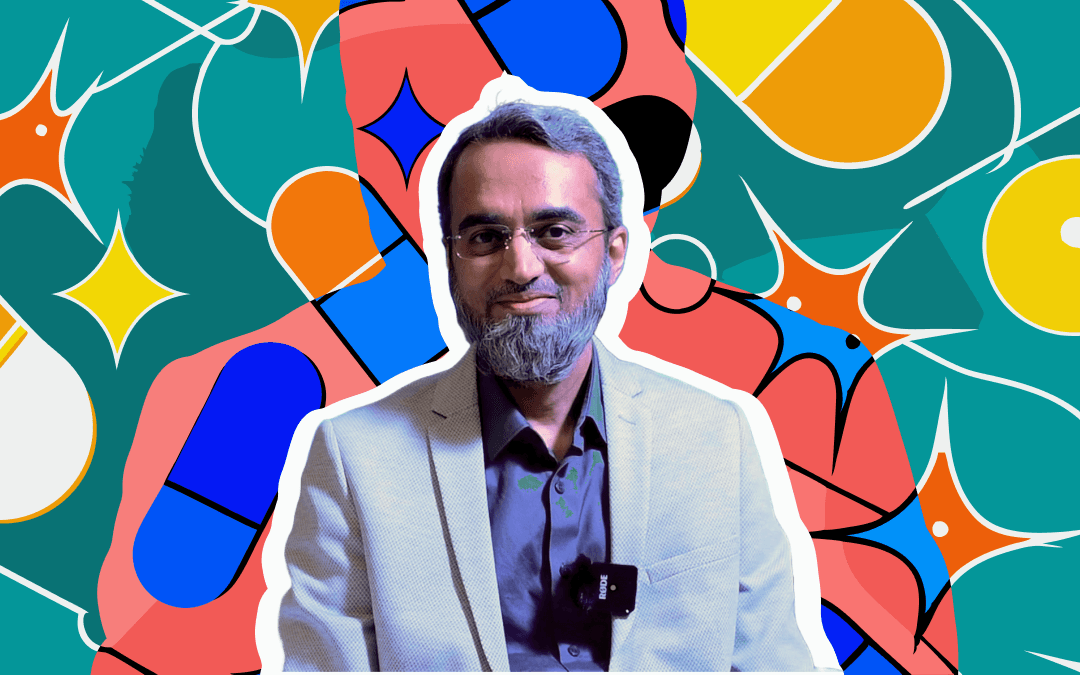
Mr Sekhar Surabhi On Pharma 4.0, AI, And The Rise Of Integrated Quality Systems
Sekhar Surabhi argues that pharma quality failures are rarely a technology problem — they're a data silo problem. The Caliber founder reveals why integrated systems don't just cut audit risk, they fundamentally rewire how people think about quality. One conversation you can't afford to skip.
20260306154744.png&w=1920&q=75&dpl=dpl_Fe2VLXz7WmA2eVjpEbUc2scjDNEB)
20260306154744.png&w=1920&q=75&dpl=dpl_Fe2VLXz7WmA2eVjpEbUc2scjDNEB)
Pharma Now: In today’s episode of Pharma Now, I’m thrilled to have with us Mr Sekhar Surabhi, Founder and CEO of Caliber Technologies. A trailblazer in pharma digitalisation and quality management, Mr Sekhar Surabhi has spent more than two decades helping regulated pharmaceutical companies move from paper-based chaos to fully integrated digital quality ecosystems.
Under his leadership, Caliber launched India’s first 100% paperless lab and today offers a robust suite of 16+ solutions spanning quality, laboratories, manufacturing, and data insights, helping pharma companies across 16+ countries stay compliant, efficient, and future-ready.
From pioneering lab automation to driving the global uptake of Pharma 4.0 tools, his vision is simple yet powerful: Quality matters because life matters.
Welcome, Mr Sekhar. We’re genuinely delighted to have you here. Our audience would love to hear about your journey. You founded Caliber Technologies with a vision to improve the quality of medicines produced worldwide. Looking back, what was the original spark that made you believe a digital quality management platform was needed in pharma?
Mr Sekhar: Thank you for having me. We started the company in 2001. Before that, I worked in instrumentation and managed a commercial test house for pharmaceuticals. During that time, I noticed a clear intersection between evolving technology and tightening regulations.
Technology was moving from client-server models to web-based systems. At the same time, quality systems were transitioning from paper-based processes to electronic records and electronic signatures. I saw that these two shifts would fundamentally impact pharma.
That’s when we decided to start the organisation. We were fortunate to have Dr Reddy’s as our first customer. From there, the journey has been remarkable. It has had its ups and downs, but it has always been deeply fulfilling.
Pharma Now: Caliber’s journey began with a legacy LIMS and evolved into a full suite covering laboratories, manufacturing, quality assurance, and data insights. What were the significant milestones in that evolution, and how did you decide which problems to solve next?
Mr Sekhar: When we started in 2001, it began with an opportunity at Dr Reddy’s. They were struggling to implement a small software system. We proposed replacing it with an innovative solution and delivered it within a week.
That built trust, and they entrusted us with broader automation initiatives. That was the starting point. In the early days, labs were moving from paper-based systems to basic IT automation. Instruments were not yet integrated, but quality information was being digitised within applications.
As regulations became more stringent, a significant shift happened. A regulator in India with experience from the US FDA began emphasising data integrity. He made it clear that unless instruments were integrated directly with systems, data integrity could not truly be ensured.
That marked the beginning of an entirely new era. Companies began focusing seriously on instrument integration. We were prepared with solutions that enabled full integration of laboratory instruments with LIMS.
We had the opportunity to implement the first paperless laboratory in India. That was a defining milestone. Today, more than 50 companies operate completely paperless through our systems, and the number continues to grow. Many of the top pharmaceutical companies now use our LIMS in an entirely paperless setup.
As this journey continued, auditors shifted their focus. Initially, attention was on quality control, which our lab systems supported. But gradually, regulators and auditors began emphasising quality assurance.
They made it clear that quality assurance is the responsibility of the industry, not the regulator. That shift changed how companies viewed quality management.
Instead of relying on isolated solutions, companies had to establish comprehensive systems, define policies, implement them, monitor trends, and continuously improve processes.
That’s when we established our second vertical: Quality Assurance. We introduced process, document, and training management systems. These products expanded our portfolio beyond quality control into enterprise-wide quality governance.
Later, regulators shifted their focus again, this time toward manufacturing. Even though we had developed manufacturing automation solutions earlier, adoption had been limited because regulatory emphasis was not strong.
Once manufacturing became a regulatory priority, adoption accelerated rapidly. In manufacturing, we offer solutions such as electronic batch records, e-logs, IPQC systems, and full automation of manufacturing equipment with data integration. We designed these solutions to allow companies to adopt automation in a staggered manner, starting with e-logs, then electronic batch record creation, execution, and IPQC, and eventually achieving 100% paperless operations.
We continuously monitor industry and regulatory trends to decide where to innovate next. In 2015, another significant development occurred. The US FDA and ISPE introduced guidelines on quality metrics. These guidelines focused on evaluating how well a company manages quality across products, plants, and the entire enterprise.
The idea was to assess a company’s quality capability and associated risk levels. If a company demonstrated strong quality metrics and lower risk, regulatory surveillance and audit frequency could be reduced. That benefits both regulators and companies.
This marked the next major transformation, from managing processes to measuring performance through data. Quality metrics rely heavily on data and analytics. Companies need to leverage data to build meaningful metrics that reflect quality capability and risk reduction.
That realisation led us to build another stream of products focused on data analytics and quality metrics, completing the evolution from quality control to quality assurance, to manufacturing, and finally to enterprise-level quality intelligence.
Pharma Now: From what I understand, whenever new gaps or opportunities emerged in the industry, you stepped in and addressed them, evolving year by year, decade by decade, delivering what the industry needed, backed by Caliber Technologies.
Mr Sekhar: Absolutely. One very important factor at Caliber—something that is truly in our DNA—is learning.
I have been associated with ISPE, the International Society for Pharmaceutical Engineering, for the last 15 years. We even ran ISPE activities from our company campus. Through that association, we regularly hosted industry leaders and conducted in-depth discussions.
Those interactions gave us a clear understanding of what was coming next, what challenges the industry was facing and what regulators were focusing on. We would take those insights, align them with emerging opportunities, and begin building solutions accordingly. That continuous learning culture gave us a clear roadmap for innovation.
Looking at the latest trends, artificial intelligence is now a significant focus. We have embedded AI methodologies into our platforms based on industry demand. We introduced a stream of products that help companies leverage AI while reliably strengthening their quality systems.
Pharma Now: As industry requirements evolve, companies must keep changing and adopting new technologies and tools. That’s how we serve the industry effectively. With so many initiatives and innovations, there must have been challenges along the way. Could you share one major challenge you or your team faced, and how you tackled it?
Mr Sekhar: Let me share an interesting challenge. We were working with a company in Bangalore that provided us with a URS. At the bottom of the document, it clearly stated that the system had to be 100% paperless and fully compliant with their SOPs. We signed it without fully realising the depth of what that requirement meant.
Once the project began, the Quality Assurance manager was substantial. When he said 100% paperless, he meant precisely that. Every balance, every pH meter, every instrument in the laboratory had to be connected. There could not be a single piece of paper used anywhere in the lab. That was a huge challenge.
However, one principle we follow is that we never back out of a commitment we’ve signed. That’s part of our company history. So we told ourselves, we are committed, and we will make this happen.
Our team worked tirelessly and delivered what became India’s first truly paperless laboratory. That challenge became a defining milestone for us and a powerful case study.
From that experience, we built deep expertise in instrument integration. Today, we can connect virtually any laboratory instrument with ease and execute projects far more efficiently than before. What began as a daunting requirement ultimately strengthened our capabilities and set a new benchmark for us.
Pharma Now: Caliber now spans laboratories, manufacturing, quality, and data insights, essentially enabling an integrated quality ecosystem. How does this holistic approach benefit a regulated company compared to disjointed legacy systems?
Mr Sekhar: That’s an excellent question. We’ve been advocating this integrated approach for quite some time. If you automate only one function, say the laboratory, then the data and systems remain confined to the lab. If you automate quality assurance separately, that data stays within QA. The same applies to manufacturing.
But in reality, pharmaceutical manufacturing and quality systems are highly interconnected. All departments must coordinate to deliver a compliant product. When systems are isolated, data remains in silos. Interdepartmental communication often continues on paper or through manual processes, leading to delays. More importantly, when an issue arises in one department, it may not originate there. The root cause could lie elsewhere.
Without connectivity between departments, you cannot see the complete picture. That’s why we emphasise integrated quality management, bringing laboratory, quality assurance, and manufacturing onto a unified platform. When all data reside in a single ecosystem, decision-making becomes faster and more accurate.
Today, this is no longer just a thought process; it is a necessity. If leadership wants to analyse quality performance across the organisation, they must understand how one department’s performance affects another.
Once data from all functions is consolidated on a single platform, meaningful analytics become possible. Otherwise, data remains just data; it does not translate into intelligence. When you bridge silos and unify data, it transforms from information into actionable intelligence.
Pharma Now: Culture and people remain critical, even if everything is digitalised. From your journey, how do you drive a mindset shift, from manual processes to trusting digital-first systems, especially among teams accustomed to legacy workflows?
Mr Sekhar: Cultural change never happens overnight. As the saying goes, Rome wasn’t built in a day. It takes time. When teams begin using automated systems, trust develops gradually. They start realising that specific errors simply cannot occur because the system has built-in checks and interlocks. Every workflow includes validations and balances.
Over time, this changes behaviour. Users understand that unless they perform a task correctly the first time, they cannot proceed. The system enforces discipline.
That leads to a shift in thinking. People begin planning in two steps. They focus on doing things right the first time because they know deviations will be recorded and tracked.
Automation doesn’t just digitise processes, it reshapes mindset and accountability. Gradually, this transforms the culture. Teams move from reactive corrections to proactive quality thinking. That is where proper digital quality management begins.
Pharma Now: Smaller and mid-sized pharma companies often resist digital transformation because of cost concerns. How do you convince them that investing in a unified quality system delivers long-term value?
Mr Sekhar: Quality systems and quality technology should always be viewed as investments, not expenses. The returns are long-term and strategic.
In a paper-based environment, companies spend an enormous amount of time and money on reviews and approvals. This cost is rarely appropriately calculated. If you have ten analysts working in a lab, you often have an equal number of people involved in reviewing and approving their work.
When you implement an automated system, many of these checks and balances are built into the workflow. Reviews happen by exception, meaning intervention is required only when something deviates. Otherwise, the system flows smoothly with self-disciplined controls. That shift alone significantly reduces review time, effort, and cost.
Senior reviewers and QA professionals are among the highest-paid resources in an organisation. Reducing repetitive manual review work leads to meaningful cost savings.
Another significant benefit appears during audits. With an automated system in place, audits become far more efficient. Today, many audits are conducted in conference rooms with the system open on a screen. Auditors simply ask for specific records, and the team retrieves them instantly.
There is transparency and confidence because the system enforces compliance. If the system is clean, you can show anything to the auditor without hesitation.
Automation not only saves time and money, but it also protects reputation. Auditors can drill down into records step by step, verifying the entire chain of data integrity. That level of traceability is nearly impossible with manual systems. When companies understand these advantages, they begin to see technology for what it truly is: a strategic investment.
They also recognise the risks of not implementing it, lack of knowledge transfer, dependency on individuals, poor traceability, and higher compliance risk. Once that perspective shifts, adoption becomes easier.
India, in particular, has made significant progress in quality automation. Mid-sized companies are increasingly thinking strategically about technology investments, and the growth in this space has been tremendous.
Pharma Now: So essentially, they are saving costs in the long run. Once they understand that, even mid-sized companies can confidently invest in such systems.
Mr Sekhar: Absolutely. Most mid-sized companies today are thinking seriously about technology. India has seen tremendous growth in IT-driven quality management investments, and organisations are progressing very well in this direction.
Pharma Now: What is your perspective on automation and technology today? With young professionals entering the industry, and people from other sectors choosing pharma as a career, how do you see Pharma 4.0 and digitalisation shaping the future?
Mr Sekhar: I’ve witnessed the entire growth journey of the Indian pharma industry. If I break it down decade by decade, earlier decisions around automation were primarily driven by Quality Control teams. They would identify a need, and Quality Assurance would support it if required for compliance.
Over time, IT began participating as a support function. But today, IT is no longer just a support team; it is part of the core decision-making process. Now, when any procurement or technology investment is evaluated, IT plays a strategic role.
They assess long-term maintainability, data management capabilities, scalability, and cybersecurity aspects. Technology and quality have become inseparable. Today, pharma quality and technology are completely interlaced. You cannot separate one from the other.
This creates tremendous opportunities for young professionals, especially those with technology and data science backgrounds. Take quality metrics, for example: they are fundamentally driven by data science. Data science is deeply rooted in IT capabilities.
As Pharma 4.0 advances, the integration of automation, analytics, AI, and compliance systems will only deepen. For the younger generation entering pharma, this is an exciting phase. The industry is no longer just about chemistry or manufacturing; it is about intelligent, data-driven quality ecosystems.
Pharma Now: What does success look like for you and Caliber over the next five to ten years? More labs, deeper automation, AI integration, or greater global penetration?
Mr. Sekhar: For us, success ultimately comes down to patient safety. How do we help companies become stronger in managing quality? If quality is robust, patient safety is protected. Of course, business growth, top line and bottom line, is essential. But our larger vision is about impact.
Over the next five to ten years, deeper global expansion will be a key focus. We are already strong in North America and are steadily expanding in Europe. Asian markets are also accelerating adoption. Strengthening our presence in these regions will be a significant milestone for us.
Our team is growing as well. We are around 700 people today and expect to grow to nearly 1,000 over the next few years. That growth will focus not only on support, but also on education, training, innovation, and customer enablement.
Technology evolves every day, and we are committed to adopting advancements quickly. We have substantial research and innovation teams dedicated to building next-generation solutions.
Innovation is part of Caliber’s DNA. We aim to deliver first-of-its-kind solutions to the industry continuously. For us, the journey doesn’t stop. It is about constant evolution, greater impact, and the strengthening of global quality standards through technology.
Pharma Now: In your introduction, I mentioned your motto: “Quality matters because life matters.” Why that quote?
Mr Sekhar: When you look at our entire product suite, everything we build supports quality management in the pharma industry. And what does pharma ultimately serve? Human life and safety.
If we think about the end customer, we naturally build better systems. Pharma supports healthcare. Healthcare supports patients. And those patients are people like us, our families, our communities.
At the end of the chain, a human life depends on the quality of every process we design. We all care for one another. If quality fails, life is impacted. That’s why quality truly matters, because issues of life.
Pharma Now: One final piece of advice for young pharma leaders today?
Mr Sekhar: The pharma industry in India is at a fascinating stage. It is currently valued at around $27 billion and is projected to grow significantly by 2030. That’s a massive opportunity.
But with growth comes responsibility. The focus must be on improving quality and on doing so through culture. Doing the right things, and doing them right the first time, is critical for every young professional entering pharma.
Senior leadership across the industry is now deeply committed to quality. If you look at India’s pharma sector, especially vaccines, we are among the global leaders. Many positive developments are happening.
Pharma is going to be one of the most critical and exciting industries for India in the coming years. For anyone considering a career in this field, this is a great time to enter it.
Pharma Now: A quick, rapid-fire round, sir. Paperless labs, love it or hate it?
Mr Sekhar: You have to love it.
Pharma Now: One word that defines Caliber’s mission?
Mr Sekhar: Quality and care.
Pharma Now: If you weren’t in pharma tech, what career would you have chosen?
Mr Sekhar: I would still choose innovation, perhaps in application innovation. That would always be my path.
Pharma Now: Thank you so much for joining us. We’re genuinely grateful for this insightful conversation.
Mr Sekhar: Thank you. It was a pleasure.
Sekhar Surabhi is the Founder and CEO of Caliber Technologies, specialising in digital transformation for the pharmaceutical and life sciences industries. With over three decades of experience in analytical instrumentation, quality systems, and enterprise software, he began his career in instrumentation before managing a commercial test house for pharmaceuticals.
He founded Caliber in 2001, with Dr Reddy's as its first customer, growing it to a 700-strong team with implementations across 17 countries. Under his leadership, Caliber delivered India's first 100% paperless laboratory and a 16+ product suite spanning quality control, quality assurance, manufacturing, and data intelligence.
Surabhi serves as Director of the ISPE India Affiliate and chairs the ISPE Pharma 4.0 Community of Practice in India.
More interviews
All interviews →
The Untold Story of COVID-19 Vaccine Development: Dr. Subhash Thuluva Speaks

Mastering Pharma Regulations: Rajni Jha's Guide to Global Compliance Success