Five Pillars Of Leadership That Built A Pharma Veteran: Shyam Khante’s 45-Year Pharma Journey
A gold medalist who swept floors, rejected an IIT-equivalent seat, and reached Technical Director at GSK by 34 — Mr. Shyam Khante's five leadership pillars are lived, not borrowed.

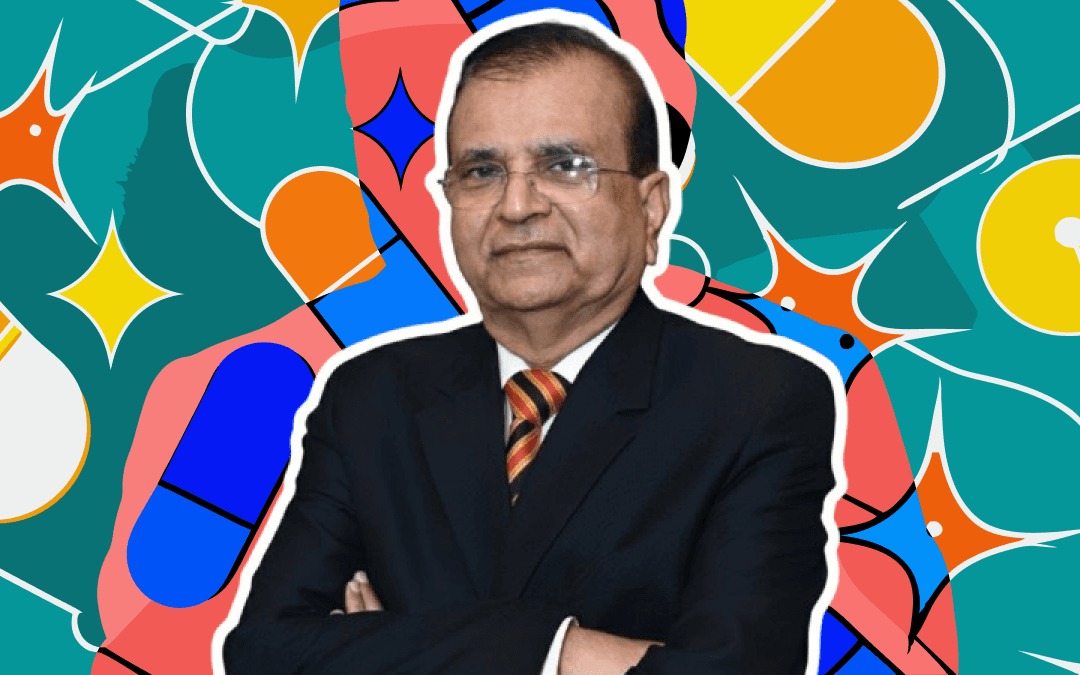
Pharma Now: Welcome to Pharma Now. I must admit, I’m a bit nervous about today’s interview. Over the past few days, I’ve heard so many stories about our guest, and I’ve been incredibly excited. I was up thinking, what kind of questions should I ask?
For our audience, this is not just a conversation. It’s about leadership lessons that don’t come from books, but from years of lived experience, almost 45 years. Today, we’re privileged to explore that journey, from Nagpur to almost every part of the world.
Let’s welcome Mr Shyam Khante. Sir, welcome to our show. We are truly honoured to have you with us.
Mr Shyam: Thank you very much for your kind words.
You asked me to speak about my early days, starting in Nagpur. One thing I can say very clearly is that the profession I chose did not come by accident or as a surprise. If you can believe me, when I was in the ninth standard, I had already decided to pursue a career in pharmacy.
What influenced me was the Laxminarayan Institute of Technology in Nagpur. They were celebrating their silver jubilee at the time, and the pharmacy department organised an exhibition showcasing how drugs and tablets are made. I was curious, and when I saw it, I thought, this is something I should do in my life.
From that moment, I focused only on this profession. When I completed my HSC, my academic performance could have easily secured me admission into a prestigious regional engineering college, equivalent to an IIT. But I chose to leave that opportunity and pursue pharmacy instead.
People even questioned my father. They said, “Why is your son leaving such a prestigious engineering program?” But my father trusted me. He said, “He knows what he has to do. That was the first defining moment of my life. I chose my path with clarity and determination.
I always tell people that if you are determined, there is no wasted time in choosing your career. Throughout my life, I’ve seen many people enter careers by accident because something else didn’t work out. That never happened in my case. I wanted to do this, and I did it.
I applied to only one place for my studies, the Department of Pharmaceutical Sciences, which was ranked third in India at the time. I joined the pharmacy, and throughout my four years of graduation, I performed extremely well.
I believe I did well because I truly wanted to be there. That passion made all the difference. For my postgraduation, I chose to specialise in pharmaceutics and pharmaceutical microbiology. It was a new discipline at the university, and I was the first to pursue it.
To be honest, I wanted to pursue a doctorate as well. Teaching was always my passion. However, I didn’t want to immediately remain in academia. I felt I should first gain some practical experience and then return to it later.
Since I was a topper, I was offered a lecturer position in the department even before my results were announced. My result was declared on 14th August, and I had already secured the job on 12th August. So technically, I was never jobless, not even for a single hour after my studies.
I started my academic career, but those were the days of the Emergency. My guide was transferred to a distant location, which deeply affected me. I had decided that if I pursued my doctorate, it would be under him. When that was no longer possible, I chose not to continue.
He tried to convince me, saying there were other capable mentors, but I had made up my mind. If I were to do it, I would do so with full conviction; otherwise, not at all. At that point, I began exploring other options. I applied for a position at BARC in Bombay. I travelled there for the interview, but when I arrived, I was informed that the interviews had been cancelled.
I didn’t know what to do next. I spoke to my elder brother, who was pursuing his doctorate. He suggested that since I was already in Bombay, I should explore opportunities in the industry.
I had no idea how to apply for jobs, write applications, address people, or where to go. I simply started visiting companies. At one place where some of my colleagues were working, I approached the security gate and said I wanted to meet someone.
They told me it doesn’t work that way in industry. When they asked why I had come, I said I wanted to apply for a job. Fortunately, the security staff was very professional. They contacted HR on my behalf. Someone from HR came, asked me to submit my details, and I quickly wrote down whatever I could and handed it over.
They called me for an interview a couple of days later. I went, performed well, and was asked to return for a final interview with the technical director, who was out of town. I came back for that interview, and I was selected. That’s how my journey into the industrial world began.
My first job was at Hex. I remain extremely grateful to that company. Had I joined somewhere else, I don’t know what my journey would have looked like. It was a great start. The salary was very high for those days, my parents could hardly believe it. Within 15 days of stepping into the industry, I had secured such a position.
Those were the days when strong academics, clear fundamentals, and the ability to answer questions confidently could truly shape your career. And that is how I began my industrial journey.
Pharma Now: But going back, you chose pharmacy early on. You even knew what you wanted to pursue in postgraduation. How did you get that clarity? Even today, many students struggle with it. And in your case, it started with just one exhibition where you saw how drugs are made.
Mr Shyam: No, it wasn’t just the exhibition, it was what I felt when I saw it. Those machines, the tablet compression units, the dissolution equipment, the bottle-filling lines, they fascinated me. As an average person, you see tablets all the time but rarely think about how they are made. When I saw the entire process, I became very curious.
I thought, this is something interesting. Then I realised that engineering is also involved in this field. Since the institute was part of a technology setup, I knew I could learn engineering aspects along the way.
But more importantly, one thought stayed with me: I would be part of making life-saving medicines. That idea, that I could contribute to something life-saving, felt very close to my heart. I knew I wasn’t going to discover a new drug, but even being part of making medicines that help people, that itself felt meaningful.
And when I eventually got a job in a good company with a good salary, it felt like everything had aligned. There was no compromise. I didn’t take up something out of compulsion. It was the job, the place, and the role I wanted; there was no compromise at any stage.
Pharma Now: Let me come to Hex. You mentioned that you give Hex a lot of credit for your career, your position, and your success. What made that experience so impactful?
Mr Shyam: The training I received at Hex was transformative. It was a German company, and one of the first things they told us was about their mindset. They said, “We are Germans. We rebuilt our nation from ashes.” After 1945, Germany had almost nothing: no proper roads, no infrastructure. But within 30 years, they became one of the world's leading countries.
And they said, this was possible only because of hard work. One lesson they emphasised stayed with me forever: “Impossible is nothing. There is nothing you cannot learn.” They told us, if you don’t know something, that’s not a problem. But not making an effort to learn is unacceptable.
Even though we were pharmacists, we were expected to learn engineering, engineering drawing, welding, everything. They made it very clear: your degree is just a permit to enter the organisation. After that, everyone is equal.
My training started with sweeping floors. When I first entered the injectable area, I was given a bucket, Lysol, and a mop. I was shocked. I even stepped aside and felt emotional. I was a gold medalist, and here I was, cleaning floors. But that was part of the training.
After a few days, I went to my boss, one of my first mentors, and questioned it. He simply said, “Do what you’ve been told. After 15 days, we’ll talk.” For 15 days, that was my only job: cleaning.
At the time, it felt frustrating. But later, I realised how important it was. Nobody needed to tell me how long a task should take, or whether it was done properly; I knew it myself. I understood what a complete job looks like, what an incomplete job looks like, and the impact of both.
That experience taught me the value of execution, not just documentation. Today, we talk a lot about cleaning validation and generate extensive data. We feel satisfied because everything is documented. But often, the actual outcome is missing. It’s like saying the operation was successful, but the patient is dead. At Hex, we didn’t just document, we did the work.
We handled everything, pushing trolleys, unloading lifts, lifting 40 kg containers, operating equipment. It was physically demanding, but it made us strong, both mentally and professionally.
Even the work timings were tough. My reporting time was 5:15 in the morning. Imagine the routine, waking up early, catching a train, then a company bus. Missing it meant spending your own money on alternatives, which wasn’t always possible.
But I always saw it as learning. My father played a big role in shaping this mindset. He told me, “If you want to achieve something in life, don’t expect anything to be easy. Nothing comes free. You have to pay the price.” That stayed with me, I never expected shortcuts.
Looking back, if I hadn’t gone through that phase, I might have ended up like many others, retiring as a supervisor or in a small managerial role. I’m not saying I did something extraordinary, but I can say this, by the age of 34, I became a Production Director in a multinational company.
I had no connections. My father was not in any senior position. It was purely hard work, nothing else. Think about it, at 23, I had just completed my M.Pharm. By 34, I was a Technical Director. That journey happened in just 11 years.
That’s why I always tell people: “Impossible is nothing.” And whenever I hear excuses, it makes me uncomfortable. Because excuses are simply ways of avoiding action, they are ways of not doing what needs to be done.
Pharma Now: I’m still going to stay on Hex for a bit. What were your most important takeaways from that experience?
Mr Shyam: My key takeaways from Hex actually come down to four people who influenced my life. Not just my time there, but my entire career. My first boss was a typical Gujarati gentleman. He believed in maintaining records of everything, very simple, but very effective.
He had a small notebook where he would write things down. For example, even for something like an infrared light in a tunnel, he would track its usage. He knew its burning hours, used about 90% of it, and noted an approximate replacement date.
The same with UV tube lights, if the life was 2,500 hours, he would plan the replacement at 2,000 hours and mark it clearly. We used to tell him, “Sir, this looks shabby.”
But he would say, “You may do it your way. I will do it my way. At any moment, I should know what needs to be changed.” That taught me the importance of simple, practical systems that actually work.
My second mentor was Mr Pradhan, our manager. He taught me managerial thinking and how to make decisions without emotion. He would say, “We can be good friends. But if you haven’t done something right, you must have the courage to say it.” He taught me to separate personal relationships from professional decisions. His structured and systematic approach stayed with me throughout my career.
My third mentor was Dr. Rosha, our Technical Director. He was a very tough man. When he walked onto the floor, there was complete silence. People would immediately become alert. He once told me on the very first day, “Whatever work I give you is required yesterday. Never ask me for time.” That stayed with me.
There was one incident, I had been awake the entire night because my young son was unwell. We had taken him to the doctor, and I still came to work the next day. I completed my assignment by evening. The secretary informed Dr. Rosha about my situation. He called me and scolded me heavily for not informing him.
I was too scared to explain. I could barely speak. Then he asked about my son, told me to call home immediately, check on him, and report back. That was his style, tough on the outside, but deeply responsible underneath. From him, I learned resilience, accountability, and the ability to perform under pressure.
Getting scolded by him was almost a matter of pride. It meant you were working closely with him and being pushed to improve. He had one clear belief, he didn’t care about how hard you worked. “Donkey work doesn’t matter. Smart work does.”
My fourth mentor was Mr George. From him, I learned the power of humor. He showed how humor can create bonds, bring warmth into the workplace, and still deliver results. He taught me that humor is not a distraction; it’s a leadership tool.
Later in my career, I saw that even organizations like GSK considered sense of humor as a leadership trait. And I had already seen that in practice years before. So these four individuals shaped my thinking. There were many others, but these were the most impactful lessons I took from Hex.
After Hex, I moved to Burroughs Wellcome. It was a very different, typically British organization. They focused more on appearance, what tie you wore, whether you were clean-shaven, rather than production output.
Initially, I struggled to relate to that culture. However, technologically, they were far ahead. I got exposure to international systems and professionals. At that time, I didn’t know that one day Burroughs Wellcome would become part of my own journey, when it later merged into GlaxoSmithKline, and I became the Technical Director there.
There was a room in Burroughs Wellcome, the top executive’s room. It was always closed. We used to wonder what was inside. Occasionally, we would peek in. It was luxurious, something we had never seen. I never imagined that one day, I would sit in that very room. But years later, as Technical Director, that same room was opened for me. That was a moment of realization.
But my biggest dream started even earlier. On 23rd May 1973, during a study tour, we visited Glaxo. At that time, I was a fourth-year B.Pharm student. We had never seen such a facility, clean environments, advanced machines, music systems, automated pallet trucks. It was a different world.
At that moment, I told myself, “If God exists, make me the Technical Head of this company.” That was just a dream back then. But I held onto it.
After my marriage in 1979, life was simple. I had a scooter. My wife once asked me about Malabar Hill. I told her it was where top executives lived. She said, “Why can’t we live there?” I told her it was beyond our reach, that we couldn’t even afford a bathroom there. But she said, “If you really want it, work hard.” That push from her became a driving force in my life.
She would literally push me to take extra work. At Hex, we used to get paid for overtime, which helped us grow financially. She kept motivating me to aim higher and work harder.
If your life's aim is clear, things start to align, but you also have to act and seize opportunities. At Hex, there were hundreds of executives, but I chose to learn from specific people. That choice mattered.
After that, I moved to an Indian company, and I consider that phase a failure. But I don’t blame the company. I blame myself. I made the mistake of not studying the organization before joining. That taught me an important lesson: never make career decisions without proper homework.
When I realized my mistake, I acted immediately. If you make a mistake, accept it and correct it as soon as possible. Don’t delay.
Then I moved to Parke-Davis in Hyderabad. That was another great learning phase. There, I found two more mentors, Dr D.B. Gupta and Mr Devendra Pal. From Dr. Gupta, I learned one of the most important values of my life, integrity. If I am an honest person today, it is because of what I learned from him.
Pharma Now: Can you give me an example?
Mr Shyam: I’ll start with personal integrity. Whenever we traveled on company work, we used to stay at a hotel called Sea Rock. This was before the 1994 blast.
At that time, Dr. Gupta’s son was studying at IIT Bombay. Whenever Dr. Gupta stayed there, his son would come to meet him, sometimes even for breakfast. Now, ideally, Dr. Gupta could have simply signed the bill under company expenses. It was allowed to have guests. Nobody would have questioned it.
But he never did that. He would always pay for his son’s breakfast separately. That stayed with me.
There were times when he would ask me to meet his son and pass something to him. He would clearly instruct me, “Shyam, if he eats anything, pay the bill separately. If you can afford it, you pay. Otherwise, give the bill to me, but it should not go to the company.” That is personal integrity, doing the right thing even when no one is watching.
On the professional side, his integrity was equally strong. We had tough union situations, especially in Hex. But even the union trusted him completely. That kind of credibility doesn’t come from position, it comes from consistent integrity. Later, when I was in SmithKline, I experienced something similar.
The union there used to say, “If Mr Shyam has said it, then it’s fine.” That level of trust is built over time. You earn it. Integrity is not a single act, it’s a way of life. It reflects in every small decision you make, both personal and professional. That was one of the biggest lessons I learned from Dr. Gupta.
So, from Hex, I had four mentors. From Parke-Davis, I gained two more. And then, in my later career at GSK, I had another important mentor, my regional director. He was highly accomplished, with an IIT, IIM, and Stanford background. A very sharp and capable person.
He appreciated me because of the results I was delivering. When I joined Glaxo, I honestly felt the company was not operating efficiently. Compared to what we had achieved earlier, I saw a lot of scope for improvement. We delivered strong results in a short time.
I resolved several long-pending issues, some related to acquisitions, others to legacy complications. There were complex challenges, but we addressed them quickly and effectively. But along with results, he taught me something even more important. He taught me to care for people.
Pharma Now: So, I’m coming to that point now. You spoke about the five principles.
Mr Shyam: Yes. The first is judgment.
I always say, you may be from IIT, IIM, or anywhere else, but if you don’t have common sense, it means nothing. In Hex, my immediate bosses were extremely intelligent, IIT graduates. They used to tell me, “One day, you will become our boss because you have common sense.”
That stayed with me. Judgment is about choosing the best option for the situation in front of you. You cannot apply a fixed rule everywhere. One size never fits all. You can’t say, “My predecessor did this,” or “the book says this.” That doesn’t work in real life. I always followed three principles: don’t do anything illegal, immoral, or unethical. As long as you stay within these three boundaries, you have the freedom to act and deliver results.
Pharma Now: When you talk about judgment as a pillar, how do you identify whether someone has it, especially for leadership roles?
Mr Shyam: Judgment comes from how you use the information around you. Most of the time, you already have all the data you need. You are not discovering something new. The key is your instinct, your ability to pick the right decision from the available facts.
I learned this from a senior lawyer, Mr Santosh Hegde. We were handling a case, and I was explaining technical details. He told me, “Don’t make me a chemist. A judge doesn’t need to be an expert in everything.” He explained, whether it’s a riot, an air crash, or a financial fraud, the inquiry is often led by a judge.
Does that mean the judge is an expert in all those fields? No. A judge’s strength is judgment, deciding what is right based on the facts presented. That lesson stayed with me.
The second principle is a sense of urgency. Problems will never stop. If you solve ten today, twenty will come tomorrow. You cannot get overwhelmed. You have to keep moving, redesign your strategy, and act quickly. Without urgency, even the right decisions lose their impact.
The third principle is enthusiasm. As a leader, you are always expected to bring energy. I compare it to an air hostess. She has to greet every passenger with a smile, no matter how she feels personally. She may be tired, unwell, or stressed, but her role demands consistency. That same consistency in energy and attitude is expected from leaders.
Let me give you a practical example, discipline and punctuality. In my entire career of over 45 years, I was never late. Whether I used public transport, had a company car, or even access to an aircraft, I was never late. Not because I was lucky, but because I decided not to be late.
If you decide something firmly, excuses disappear. People often say there was traffic. But in India, traffic is not a surprise, it’s expected. So why not plan for it? Whenever I had to go to a new place, I would study everything in advance, routes, timing, delays.
Even for an interview in Hong Kong, I went a day early, at my own expense, just to be prepared. That’s not rocket science, it’s just planning. This discipline impacts the entire organization. When I joined GSK and managed multiple plants, people knew I would be there before time.
Without saying anything, it improved the punctuality of others. People follow what you do, not what you say.
Another lesson I learned was about discipline in behavior. My manager once told me, “Never enter a production area without proper attire, apron, cap, nothing.” Because once you break the rule, others will follow. So I followed it strictly. Leadership is about setting the standard through your own actions.
Many people think qualifications define leadership. I don’t agree. I was not from IIT or IIM. Yet, I had many IIT and IIM graduates reporting to me. I even had over a hundred PhDs reporting to me. Education can take you to a position, but it cannot sustain you there, only leadership qualities can.
There is a difference between technical excellence and leadership. You can be an excellent technical expert, but that doesn’t automatically make you a good leader. Promoting a great technical person into leadership without the right skills can ruin both the person and the role.
Pharma Now: So coming back, we talked about three points: judgment, sense of urgency, and enthusiasm.
Mr Shyam: The fourth important pillar is care for people. This is something I learned from my bosses, especially Dr. Gupta and later from others I worked with closely. They genuinely cared for people, not just professionally, but personally as well.
I remember when my son had to undergo a medical procedure. My boss, who was based in Singapore, was constantly checking on the situation. He didn’t make a show of it. But he was quietly ensuring everything was in place, hospital arrangements, follow-ups, everything.
That silent support, that genuine concern, is what real leadership looks like. Even in small things, this mindset showed. Whenever we traveled, he would personally ensure all arrangements were properly taken care of, even though systems were already in place. Because leadership is not about assuming things will happen, it’s about making sure they do. You cannot expect people to care for work if you don’t care for people.
I saw the same value in Dabur. Once, during a plant setup, a massive tornado caused heavy damage. The next day, the chairman’s father, whom we called “Big Burman”, visited. We expected him to ask about financial losses.But the first thing he asked was: “Did any of our people get injured?”When I said no, he was relieved. That moment stayed with me. That is true care for people, prioritizing lives over losses.
This mindset builds teams.When people feel cared for, they go beyond their limits. I’ve seen it in my own journey. In Lupin, we built a USFDA-approvable plant in just 180 days, from land acquisition to completion. I worked continuously, day and night.
Once, during Diwali, my chairman called me and heard construction noise in the background. He asked, “What are you doing at the site today?” I said, “I’ve given a commitment. If I celebrate now, how will I complete the work?” That level of commitment comes only when you truly care about your work and your people.
I also saw this deeply in Dr. D.B. Gupta. If an employee was unwell, food would come from his own house. He would insist that the employee’s family should not worry about cooking. Even during meetings, if someone was present during lunch, he would share his own food, without formality.
That kind of warmth creates lifelong loyalty.People would go to any extent for such a leader.
The fifth pillar is humor. This was something I learned early in my career from Mr George in HR. Humor is often misunderstood. It’s not about cracking jokes. Humor is a leadership tool, it helps communicate complex ideas simply and effectively.
You can convey truckloads of information through one simple anecdote. Humor also helps in creating connection. It relaxes the mind, reduces tension, and improves understanding. People absorb ideas better when their minds are relaxed.
But humor does not mean taking things lightly. That’s a common misunderstanding. Humor means handling serious situations with a lighter approach, not reducing their importance. You still take work seriously, but you don’t carry unnecessary stress.
In leadership roles, tension is constant. It doesn’t matter whether you are a security guard, a manager, or a CEO, everyone has pressures. If that tension builds up continuously, it affects your thinking ability. A tense mind loses clarity, and poor decisions follow. That’s why humor is important.
Not laughter alone, but a calm, composed state of mind. Humor, in its true sense, means keeping your mind cool, balanced, and effective.
Pharma Now: But don’t you think in a very serious situation, if someone is humorous and cracks a joke, it might dilute the seriousness? Or people may take you lightly?
Mr Shyam: No, not necessarily. This is where your first principle, judgment, comes into play. Before using humor, you must assess the situation. You need to decide whether humor is appropriate at that moment or not. Humor without judgment can backfire, but humor with judgment can heal.
Let me give you a recent example. Just a couple of days ago, we hosted a function at my house. It was my friend’s daughter’s baby shower. Around 35–40 ladies attended. The house was decorated beautifully. Many of them were not even closely related to us. My wife simply felt that the girl deserved happiness, so we organized it.
Now, among the guests, there was a young woman who had gone through a difficult phase in life. Her marriage had broken within a few months. She came from a well-off family, but emotionally, she was going through a lot. Her parents were also deeply affected.
I knew the situation very well. So while interacting, I consciously used humor, but carefully. I avoided any topic related to marriage or sensitive areas. Instead, I used light, situational humor to ease the environment. Gradually, she began to relax. She started smiling, then laughing. By the end of the event, she was genuinely enjoying herself.
Later, her mother came to me, almost in tears. She said, “She hasn’t laughed like this in a long time.” That moment made everything clear. In that situation, humor was not dilution, it was medicine.
The key is intention and sensitivity. You are not using humor to make fun of someone or to ignore the seriousness. You are using it to gently lift people out of emotional stress. Humor should never offend, it should comfort.
So yes, humor can be very powerful, but only when used thoughtfully. It’s not about being funny, it’s about being aware of when and how to use it.
Pharma Now: I really love the five pillars you mentioned. I feel like I should frame them and put them in my office, so I always remember them, especially while hiring leaders. It’s beautiful.
So sir, at this point, you were Technical Director at GSK. Let’s continue from there, what happened next?
Mr Shyam: After GSK, I moved to Lupin.
My time there was brief, but one of my biggest contributions was setting up the Goa facility. A lot of credit goes to Mr Manohar Parrikar, who was the Chief Minister of Goa at the time. I have rarely seen such a decisive and supportive leader.
That project was completed in 180 days, not just because of us, but because of his support. Many approvals were fast-tracked. In some cases, we even started work before formal approvals came through, based on trust and commitment. That kind of administrative backing made a huge difference.
Pharma Now: So after Lupin, where did you go?
Mr Shyam: After Lupin, I joined Dabur.
I really enjoyed my time there because of my boss, Dr. Burman. He was a scientist at heart. He never focused excessively on profits, he focused on the work. Whenever I approached him for decisions, he would say, “You decide.” I remember once discussing a ₹6.5 crore lyophilizer. He didn’t question it, he trusted me completely.
Even for a ₹32 crore construction contract, he simply said, “You take the call.” That level of delegation comes only when there is complete trust.
He once told me, “We have our own systems to know what’s happening in the company.” He didn’t elaborate, but I understood what he meant. If you are honest, you don’t need to worry about anything.
There was one instance when I awarded a major contract to NCCL instead of the company’s usual contractors. People warned me that I might be in trouble. But when I met Dr. Burman’s father, he simply asked who I had given the contract to. When I said NCCL, he appreciated the decision. That confidence comes when your intent is clear and your integrity is unquestionable.
I have always believed in maintaining that standard. Even today, I can confidently say, no one can claim they have influenced me with favors. Integrity is not something you display, it is something you live every day.
There were many situations where I chose the harder path. Even during international visits, if transport was offered by external vendors, I would decline. I preferred using company-arranged resources, even if they were less luxurious. Because for me, it was never about comfort, it was about principles. Your choices define your character, especially when no one is watching.
Pharma Now: You’ve shared a lot about the positive aspects and learnings.
I’d also like to understand the challenging side. You must have faced situations where decisions didn’t work out. Any such experiences?
Mr Shyam: Of course. I don’t think there is anyone in the world who hasn’t made wrong decisions. In fact, if someone says they’ve made ten mistakes, I would say I’ve probably made a hundred. Making mistakes is not the issue, what matters is what you learn from them.
TO BE CONTINUED….
Shyam Khante is a veteran pharmaceutical leader with over 45 years of experience spanning global manufacturing, technical operations, and regulatory excellence. A postgraduate in pharmaceutics and pharmaceutical microbiology, he built his foundation at Hex, a German multinational, where rigorous training shaped his lifelong standards of discipline and execution.
His career trajectory took him through Burroughs Wellcome, Parke-Davis, and GlaxoSmithKline, where he rose to Technical Director — a role he had dreamed of since a study tour of Glaxo as a B.Pharm student in 1973. He later led critical contributions at Lupin and Dabur Pharma.
Khante has built world-class sterile and non-sterile facilities, led USFDA and global regulatory audits, and driven large-scale technology transfers. Today, he serves as Director at Amarant Lifesciences and continues to advise organisations on quality, compliance, and building high-performance teams rooted in integrity.