“Quality is Driven by Science” – Leadership Lessons from Zydus President Vikram Shukla
A President who moved from quality into operations because quality alone wasn't enough — Mr. Vikram Shukla makes the case that science, not inspections or ROI logic, is the only path to injectable credibility.

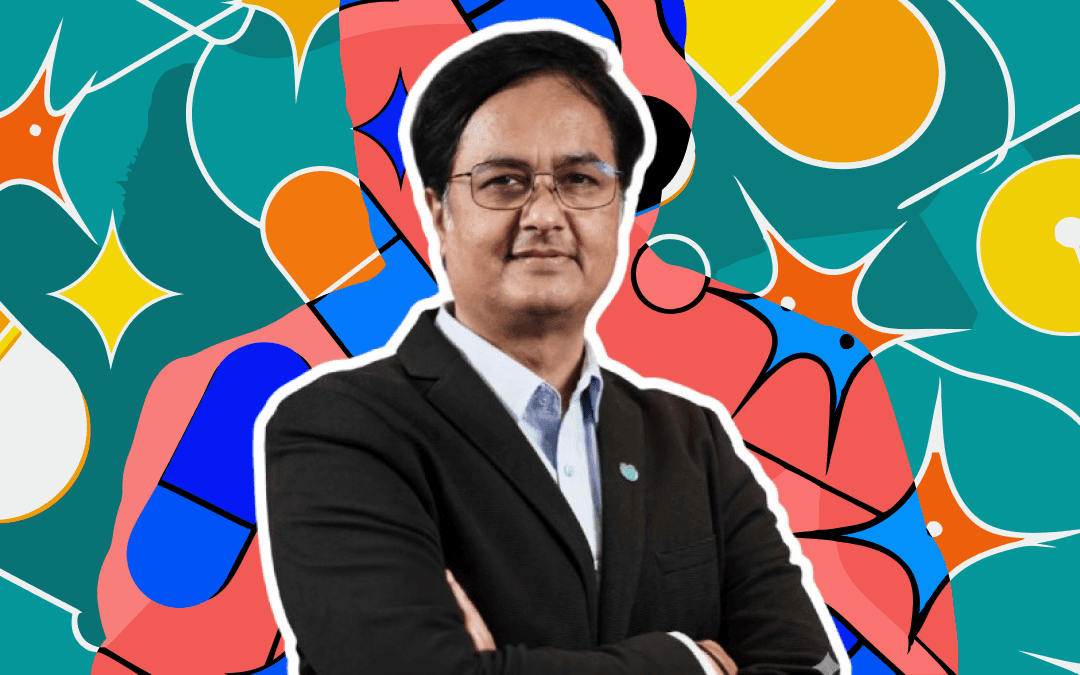
Pharma Now: Hello, everyone. In today’s Microbiology Matters series, we have Mr Vikram Shukla, President at Zydus Life Sciences. His style and personality are truly impressive, and in the world of microbiology, his name is held in great respect.
It’s an honor to have you here. I’m really glad to have the opportunity to speak with a leader like you. Let’s begin with your journey. Today, you’re serving as President, a role that carries immense responsibility, especially in a highly regulated pharma environment. How has your journey been? Did you ever imagine reaching this position?
Mr Vikram Shukla: Absolutely not. On a lighter note, I remember when I started my journey with Nicholas Piramal. Within a year, I got married. Around that time, my father, who was a government doctor, was retiring. When he retired, he bought his first car, a Maruti 800. I told my wife that my dream was to buy a Maruti 800 before I retired. That was my ambition back then. So no, I never imagined reaching where I am today.
I started as a microbiologist in the microbiology department, handling environmental monitoring and sampling. Things were very different at that time. Today, we have pre-prepared plates and disposables, but back then, everything was manual. We used glass plates and reusable test tubes for endotoxin testing.
When I was at Nicholas Piramal, and later when I joined Lupin, microbiologists were responsible for everything, including cleaning and sterilisation. We used to clean all the glassware ourselves. There were no external teams for cleaning.
Even in Grade B areas during sterility testing, microbiologists handled cleaning, including sweeping. We did everything ourselves. We never dreamed big, we just thought that maybe by retirement, we would reach a manager-level position.
My journey started in microbiology, but I was always clear about one thing, I had to keep learning, and I still follow that. I moved from microbiology into IPQA, and then into validation. That’s where I learned a lot. From validation, I moved into quality assurance, and eventually also handled the chemistry lab. Later, I became Head of Quality.
After spending about five to six years leading quality at different levels, including corporate quality, I decided to make a shift. I wanted to move into operations. The reason was very specific. I felt that from the quality side, I wasn’t able to contribute as much as I could if I moved into operations.
I believed that in operations, I could directly implement improvements that truly impact product quality. From a sterility assurance perspective especially, I felt I could make a bigger difference.
The management was very supportive. I truly respect that decision. At that time, around 2013, moving from Head of Quality to operations was not common, it was quite unusual.
But I took that role, and it turned out to be a very enriching experience. From handling multiple injectable sites, I later moved into a global role at Pfizer, where I was responsible for the Asia-Pacific region for injectable sites.
And now, I’m back with Zydus. Interestingly, Zydus was the company that first gave me the opportunity to move from quality into operations. I truly enjoy this role because I strongly believe that you need to balance operations and quality. If you have experience in both, it significantly improves your decision-making.
If you ask me honestly, I haven’t taken many strategic decisions in my career, maybe one or two. Most things just happened along the way. My belief is that success is not about technical knowledge. In any organization, there are always people who know more than you.
What truly drives success is your values. Values like honesty, integrity, continuous learning, and continuous improvement are critical. When I look at people growing in an organization, I value behaviour more than technical capability. And one thing I’ve consistently seen is this:If you are honest in your work, dedicated, and doing the right things, you will grow one day.
Pharma Now: Before we move further into your career, let’s start with the basics. As a microbiologist, what is microbiology all about, and why is it so important?
Mr Vikram Shukla: If you look at the future of the pharmaceutical industry, there is a clear shift happening. Earlier, most products were oral, but now the focus is moving toward injectables and biologics. Injectables are becoming increasingly important, and in that space, one of the biggest challenges companies face today is microbiology.
It’s not just about the microbiology department, it’s about microorganisms entering your product, often in ways you cannot detect. That’s why microbiology becomes critical. A basic understanding of microbiology is essential for everyone in the organization, whether it’s an operator or the president. Many decisions depend on it. Something as simple as touching a surface can have implications.
I was recently in a discussion where someone asked how to manage an intervention in an aseptic area. I asked them why the intervention was needed in the first place. If something is not available, the goal should be to make it available in a way that eliminates the need for intervention.
The best approach is to design systems that are intervention-free, rather than trying to control contamination after it happens. Spraying and disinfection are not always the solution. Without understanding microbiology, people tend to rely on such measures.
Microbiology is challenging because you cannot see microorganisms. What you can’t see is difficult to control. So everything depends on assumptions, knowledge, risk assessment, and a strong contamination control strategy. It’s not just a science; it’s an art that requires deep understanding to ensure product sterility.
Pharma Now: If we look at India, we are often called the “pharmacy of the world.” That’s true, especially in generics, where we’ve made medicines affordable and accessible. But where do we stand in injectables?
Mr Vikram Shukla: India is exceptional when it comes to oral solids, no one can beat us globally in that space. However, in injectables, the challenge has been different. It’s not about the capability of people, it’s more about leadership-level understanding of injectables and microbiology.
The leadership mindset needs to evolve to make the right decisions in this space. For example, when you propose an improvement in microbiology, the first question often is: “What is the ROI?” But in microbiology, you cannot always quantify ROI.
You can’t always measure the direct financial return of improving sterility assurance. You can only say that it will improve product quality and reduce risk.
Because of this mindset, India lagged behind in injectables in the past. But things are changing now. Regulatory inspections, especially from agencies like the U.S. Food and Drug Administration, have pushed companies to improve.
There has been a significant shift in the last decade. Companies are now investing more, not just to address inspection observations, but to truly improve product quality.
If we only react to inspection observations, we are missing the point, we need to understand and act on the science. Earlier, companies would fix issues only after receiving warning letters or observations, while ignoring other risks. But that approach is changing.
I’ve seen a significant transformation over the last 10 years, and I’m confident that over the next 5–10 years, India will become very strong in injectables.
Today, only a few multinational companies are willing to transfer biologics manufacturing to India. But that will change. As we build credibility, more companies will come here, not just for cost advantages, but for capability and quality.
Pharma Now: Do you think cost should be the main parameter, or should science drive decisions?
Mr Vikram Shukla: It’s very clear, quality is the most important factor, and quality comes from science. If you don’t understand the science behind what you’re doing, you will never achieve true quality. There’s a common misconception that improving quality increases cost and reduces productivity. That’s not true.
The more you focus on quality, the fewer problems you face, and the higher your productivity becomes. I’ve seen this firsthand. By focusing on critical quality parameters, we improved productivity by 20–30% without increasing costs.
Another issue in the pharma industry is how we handle problems. We tend to build systems around deviations instead of addressing the root cause. We are very good at managing deviations, but not always at eliminating the reasons behind them.
In injectables, one of the biggest risks is human intervention in aseptic environments, whether it’s a person entering, a gloved hand, or manual setup. These are all contamination points.
If you eliminate these interventions by maintaining machines properly and reducing alarms, you significantly reduce risk. And if a machine runs for 24 hours without human intervention, productivity naturally increases. So when you focus on the right quality parameters, productivity becomes a natural outcome rather than a trade-off.
Pharma Now: Do robotic processes or automation help improve processes in this area?
Mr Vikram Shukla: Absolutely, but it’s important to understand why you need robotics.
If you look at the current machines, especially from leading European manufacturers, whether for vial filling, pre-filled syringes (PFS), or cartridge systems, they are already designed to run with minimal operator intervention. You set up the machine, switch it on, and it continues running with built-in controls.
So, the issue is not always about needing robotics. Robotics is just the next level. Even existing systems can run efficiently without intervention. The real problem is not the machine; it’s how well we maintain it.
Maintenance is a major concern in our industry. Often, preventive maintenance becomes a checklist exercise rather than a true effort to keep machines in optimal condition.
Because of this, we frequently see vials get stuck, break, or fall. These problems lead to repeated human interventions. And every intervention increases the risk of contamination.
So fundamentally, this is an engineering challenge. If you focus on reducing machine-related issues, you automatically reduce the need for interventions, thereby improving both quality and productivity.
Pharma Now: When we talk about engineering, most advanced technologies seem to come from Europe, Germany, Italy and Switzerland. Why aren’t Indian manufacturers leading in this space?
Mr Vikram Shukla: I wouldn’t say Indian manufacturers cannot do it, that’s not correct. If you go back 15–20 years, even for manufacturing vessels with clean-in-place (CIP) and sterilization systems, we depended heavily on Europe. Today, we can get those systems entirely within India.
Similarly, in packaging machines, India already has world-class capabilities. Even in the filling machine industry, some very good Indian companies are emerging. The key difference lies in the level of controls, especially software and system integration. European machines come with highly advanced control systems.
If Indian manufacturers adopt similar controls, their machines will still be cheaper than European ones, but not by much. They might be around 50–60% of the cost. At that point, many buyers think: “If I’m paying that much, why not go for a European machine?”
So the challenge is not capability, it’s positioning, investment in controls, and market expectations. Another important factor is ecosystem integration. To build advanced systems, you need collaboration between engineering experts and pharma professionals who understand compliance and regulatory expectations.
If Indian manufacturers bring in people with real compliance experience and combine that with engineering expertise, they can absolutely match global standards. Yes, costs will increase, but that’s part of building high-quality, compliant systems.
Today, many manufacturers focus on supplying cost-effective machines for the domestic market. But if they shift toward higher compliance and advanced controls, their competitiveness will change.
When it comes to quality, I want to be very clear, top Indian pharma companies maintain the same quality standards regardless of whether they supply domestically or to markets like the US. For example, at Zydus Life Sciences, the expectation is consistent quality across all markets.
The difference lies more in regulatory expectations. When supplying to India, regulatory hurdles are relatively fewer compared to markets regulated by the U.S. Food and Drug Administration.
That said, not all regulatory observations are purely science-based. In my experience, European inspections tend to be more scientific in nature. The US FDA is evolving and increasingly focusing on areas like sterility assurance and contamination control strategies, which is a positive shift.
But companies still have to comply with all observations, whether they are fully science-driven or not.
Ultimately, the focus should not be on inspections, it should be on understanding the science and ensuring product quality.
India is definitely moving in the right direction. I am very confident that in the next 5–10 years, the injectable segment in India will become globally competitive and highly respected.
Pharma Now: On a personal note, I really wanted to ask, being the President of Zydus Life Sciences, a highly reputed organization with high standards, are you satisfied with where things are? And what other improvements would you still like to make?
Mr Vikram Shukla: First of all, I joined this organization about 11 months ago, and I’m very happy with the role. What keeps me engaged is the challenge. The more challenges you have, the more involved and energized you feel. If everything is smooth, no delivery issues, no regulatory challenges, no quality concerns, then the job becomes very simple, and honestly, a bit boring.
Real learning happens when you face challenges, especially regulatory and quality-related ones. That’s why I genuinely enjoy what I do. At Zydus, one of the best aspects is the freedom to take decisions. Since I joined, I’ve raised multiple capital expenditure requests, even without predefined budgets, and they’ve been approved.
That level of trust and authority is very empowering. The organization has capable people who are open to adapting to change, and that’s all you really need to drive improvement.
Pharma Now: What does a typical day look like for you as President?
Mr Vikram Shukla: Very relaxing. I strongly believe in empowering people and avoiding micromanagement. I trust my team to take decisions. If something goes wrong, I take accountability, but people must be allowed to decide and even fail.
You cannot build strong teams if you don’t trust them to make decisions. So I don’t interfere in everything. If there’s a problem, I’m always available, but otherwise, I let people do their work.
My routine is quite structured. I reach the office at 8:45 AM. And I’m very clear about one thing, office hours are 9 to 6, and I leave at 6:01. I make sure my work is completed within that time. I don’t stretch unnecessarily because if I stay back, my entire team feels the need to do the same, and I don’t want that.
Work-life balance is extremely important for people’s health, mindset, and overall organisational culture. I’m an early riser, I wake up around 4 AM. That’s when I get my best ideas, whether it’s about improvements, challenges, or strategy. That quiet time really helps with clarity and innovation.
Over the last 19 years, I’ve had an interesting journey. In my last four organizations, I joined at a time when they were under regulatory scrutiny, with warning letters, critical observations. I’ve consistently taken on such challenges, including in my current role.
But despite that, I maintain discipline in my schedule. Of course, if there’s an audit or regulatory visit, I stay longer, but otherwise, I stick to my routine.
Let me share a story from my early career. In my first job, there was a leader who didn’t want a male employee in the microbiology department. So I was kept out of core microbiology work.
Instead, I was assigned a repetitive sampling task involving aluminum and magnesium products. That’s all I did for six months. Then, by chance, three team members became unavailable, one left, one got married, and one fell ill. I was finally brought into the microbiology lab.
I remember one day around 12:30 PM, my manager asked why I was sitting idle. I told her I had completed all my work, environmental monitoring, plate exposure, water sampling, and testing.
She was surprised because earlier, the same work used to take until 5 PM. I’ve always been fast in execution and decision-making, and I try to complete work efficiently within the given time.
Even today, I keep meetings very focused. No meeting of mine lasts more than 30 minutes. I prefer standing meetings; they automatically stay short and to the point. We don’t need long, circular discussions. Be clear about the decision needed, take it, and move forward.
There’s a simple principle I follow: A delayed decision is a denied decision.
If you keep delaying, nothing moves. Even if a decision turns out to be wrong, that’s fine, you take accountability and correct it. But not deciding is worse. Whenever something is escalated, I focus on understanding which decision is required, bring the right people together, and close it quickly.
At Zydus, meetings are already relatively efficient, but in my previous multinational roles, I introduced standing meetings to ensure discussions stayed sharp and action-oriented.
Stay focused on the topic, avoid unnecessary discussions, and take decisions, that’s what drives execution.
Pharma Now: Let’s talk about your day-to-day challenges. What are the most difficult moments you face as a president or leader?
Mr Vikram Shukla: Honestly, I don’t see challenges as something stressful, they are part of the role. I don’t get tense easily. Even during audits, I remain very calm. We understand the process. If there is a problem, it means a mistake has happened. And if a mistake has happened, we need to accept it and address it.
There is no point in blaming people or questioning why it happened, we must take responsibility and fix it. The right approach is to identify the root cause and address it holistically, rather than just complaining.
Throughout my career, people have told me they’ve never seen me lose my temper. I think it comes down to accepting situations and understanding different perspectives. If you want to be a good leader, you have to listen first.
When you listen, you understand the other person’s perspective. Only then can you analyze properly and take the right decision. There’s no need to lose your cool. Nobody comes to work with the intention of making mistakes. Everyone wants to give their best.
Performance can vary; that’s fine. But intent is what matters. From a quality culture perspective, I am very clear, if someone is negatively impacting the culture of the organization, I don’t tolerate it. Culture is non-negotiable.
If someone is not aligned, I communicate very clearly. I give direct feedback, whether it means moving them to another role or asking them to look for opportunities elsewhere.
I’ll share a real example. There was a person with strong political connections who was causing serious issues at the site. When I looked deeper, I found concerns around integrity, financial integrity and data integrity. At that point, I decided that I couldn’t allow this to continue.
I spoke to the compliance team in the US, and they said there wasn’t enough proof to take action. I told them I would take the responsibility because I could not allow someone to damage the organization’s quality culture.
Sometimes, leadership requires you to take tough decisions, even when they come with personal risk. I made the call, and the person was asked to leave immediately.
There were concerns afterwards, HR was worried, and for a month, I even had police protection. But nothing happened. For me, the principle was clear: protecting the organization’s culture comes first.
Culture plays a huge role in motivation. People don’t get demotivated just because they aren’t promoted. They get demotivated when they see the wrong people being promoted, or when poor performance is ignored.
The biggest demotivation comes when employees feel that the organization is not taking action against the wrong behavior. That’s why leadership must act decisively.
Pharma Now: Let’s now talk about your love for movies. I’ve heard you’re a movie person.
Mr Vikram Shukla: Yes, I am. Whenever I get free time, especially on Sundays, I make sure to watch at least one movie. I enjoy light, entertaining films that don’t require much thought. I like South Indian movies in that sense. I’m not a big fan of very serious films. One of my all-time favorites is 3 Idiots. I found it extremely engaging and enjoyable.
Pharma Now: As we move toward the conclusion, I’d like to ask, what is your leadership mantra? What is that one message you would like to share, given your journey from the ground level to a leadership position?
Mr Vikram Shukla: That’s an interesting question. I believe there are two approaches to leadership, top-down and bottom-up. I strongly believe in the bottom-up approach.
People should be encouraged to share their problems, and leadership should focus on addressing them. Of course, the overall direction and vision of the company come from leadership. But the day-to-day challenges are faced by the people on the ground.
If you think about machines, we do preventive maintenance to ensure they run smoothly. Similarly, organizations are run by people. So, in the same way, we need “preventive maintenance” for people, ensuring they are heard, supported, and motivated.
This includes providing the right infrastructure, good facilities, open communication, and an environment where employees feel comfortable sharing their concerns. I always make sure that anyone can walk into my room and speak freely. If you build that kind of culture, where people feel valued and heard, the organization will perform at its best.
That’s my leadership mantra: listen to people, act on their concerns, and create an environment where they can thrive.
Pharma Now: That’s beautifully put, preventive maintenance for people. This has been a really insightful discussion. Thank you so much.
Vikram Shukla is President at Zydus Life Sciences, with a career spanning microbiology, quality assurance, and global injectable manufacturing. He began at Nicholas Piramal, working in environmental monitoring and sterility assurance, before moving into IPQA, validation, and quality leadership across organisations including Lupin.
Around 2013, Shukla made a rare shift from Head of Quality into operations, driven by his belief that true quality improvements happen on the shop floor. He went on to lead complex injectable manufacturing networks and held a global role at Pfizer, overseeing Asia-Pacific injectable sites, before returning to Zydus.
Shukla holds firm to the principle that quality is driven by science, not cost or regulatory pressure. His leadership is people-first and decisive, built on trust and a bottom-up culture where teams are heard and performance follows.
More interviews
All interviews →
The Untold Story of COVID-19 Vaccine Development: Dr. Subhash Thuluva Speaks

Mastering Pharma Regulations: Rajni Jha's Guide to Global Compliance Success
