AI Agents In Pharma Operations: Beyond The Chatbot
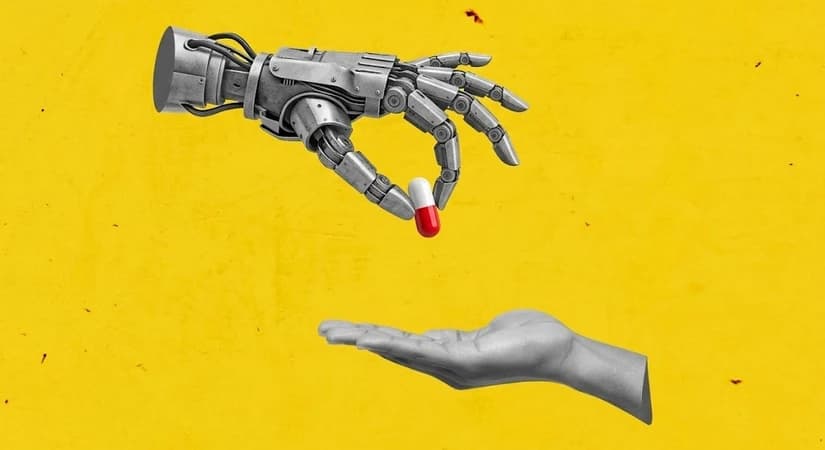
AI Agents In Pharma Operations plan, act, and complete real work, not just answer questions, here's where they're already being used.

Introduction
For the past few years, artificial intelligence in pharma mostly meant chatbots — tools you could ask a question and get an answer from. That's changing quickly. A new generation of AI tools, known as "AI agents," is moving beyond simply answering questions to actually completing multi-step tasks on their own, checking their own work, and only stepping back to involve a human when needed.
Industry surveys suggest this shift is happening fast: one 2025 study of pharma and biotech executives found that three out of four companies are already planning, piloting, or actively deploying these agentic AI systems.
So what exactly makes an "AI agent" different from a regular AI chatbot? In simple terms, a chatbot answers a question. An AI agent does a job. Give it a goal, and it can plan out the steps needed to achieve that goal, use different tools or data systems along the way, check whether its work is accurate, and adjust its approach if something goes wrong — much like a capable employee handling a task with limited supervision.
This article breaks down what AI agents actually are, where they're already being used across pharmaceutical operations, and the very real governance and safety questions companies must work through as these systems move from experimental pilots into everyday, regulated use.
What Makes An AI Agent Different?

A useful way to understand an AI agent is through what researchers describe as a repeating loop of behavior: the agent can “think, act, observe, and reflect”. In practice, this means an AI agent typically:
Understands a goal such as "check whether this batch record is complete and flag any missing data."
Plan the steps needed to achieve that goal, rather than requiring a human to spell out every instruction.
Takes action using connected tools or systems — for example, pulling data from a manufacturing execution system (MES) or cross-referencing a regulatory database.
Observes the results of that action to check whether it actually achieved what was intended.
Adjusts its approach if something didn't go as planned, much like a person would troubleshoot a problem.
Importantly, most AI agents used in pharma today are narrow and highly specialized rather than broadly autonomous. As one industry explainer put it, a well-designed agent typically does not attempt an entire complex task from start to finish — instead, it handles one specific, well-defined piece of a larger process very well, producing a draft or result that a qualified person then reviews.
Where AI Agents Are Already Being Used In Pharma?
While the technology is still maturing, AI agents are already showing up across several areas of pharmaceutical operations.
1) Manufacturing & Quality Operations
Interestingly, many industry observers point to manufacturing and quality, not flashy areas like drug discovery, as where agentic AI is creating some of the earliest real-world value. This is largely because manufacturing quality workflows are well-documented, procedure-driven, and governed by clear logic, which makes them a natural fit for AI agents to learn and execute reliably. Common applications include:
Reviewing batch records for completeness and flagging inconsistencies before human sign-off
Monitoring production data in real time and alerting quality teams to early signs of deviation
Assisting with root cause analysis by pulling together relevant historical data from past similar issues
Supporting standard operating procedure (SOP) compliance checks during production runs
2) Regulatory & Compliance Support
Regulatory compliance is consistently ranked as one of the top use cases pharma executives are focused on for agentic AI. Agents in this space are being used to:
Cross-check regulatory submission documents against current guidance requirements
Track evolving global regulatory requirements across multiple markets
Assist regulatory affairs teams in organizing and preparing complex submission packages
3) Clinical & Pharmacovigilance Operations
AI agents are also being applied to highly specific, well-bounded tasks within clinical development and drug safety monitoring, such as:
Drafting specific sections of clinical study reports — for example, generating an efficacy summary and automatically checking that the numbers in the text match the source data tables
Supporting pharmacovigilance teams by helping process and triage adverse event reports
Assisting with data standardization across large, messy clinical datasets, another leading use case cited by pharma executives
4) Commercial & Data Operations
Large life-sciences technology providers have already deployed AI agents at significant scale for commercial operations. One prominent example involves a major life-sciences data and technology company that, as of early 2026, reported having nearly 200 AI agents running in production across commercial, research, and real-world-evidence functions, with adoption from nearly all of the world's largest pharmaceutical companies. These systems are often built on top of unified, well-governed data platforms, since consistent, high-quality data is what allows the agents to function reliably.
5) Drug Discovery
Some of the most striking early results have come from research settings. In one widely discussed case, a multi-agent AI system was reported to have orchestrated an entire early-stage drug discovery workflow for a specific disease target, completing in under two hours a process that would traditionally take two to three weeks — though such results remain part of active, ongoing research rather than standard industry practice.
AI agents in manufacturing quality build on a broader shift already underway, see how AI is transforming quality assurance across pharma more generally.
Read: How AI Is Transforming Quality Assurance In Pharma
Why Is Interest Growing So Quickly?

A few key factors are fueling the rapid rise of AI agents across pharma operations:
Faster execution of repetitive, well-structured tasks, freeing skilled employees to focus on judgment-based work rather than routine data processing.
Consistency in following documented procedures, since agents can be designed to strictly follow approved workflows every time.
Improved reasoning capabilities of underlying AI models, which now allow agents to break down more complex, multi-step tasks reliably.
Growing confidence from real-world pilots, as more companies move past early experimentation and begin seeing measurable time and cost benefits from production use.
Competitive pressure, as industry adoption data shows domain-specific AI use in healthcare and pharma growing significantly faster than in most other sectors.
Governance: The Non-Negotiable Guardrail
Because pharmaceutical operations directly affect patient safety and product quality, the rise of AI agents comes with serious governance responsibilities that go well beyond ordinary software deployment. A few key principles are shaping how companies are approaching this:
1) Human oversight remains essential. Regulatory guidance, including FDA direction issued in January 2025, has emphasized that AI should support regulatory decisions rather than replace human judgment. Most companies are building "human-on-the-loop" processes, where the AI agent does the heavy lifting, but a qualified person reviews and certifies the final outcome.
2) Risk-based classification matters. Frameworks such as the European Union's AI Act, which began phased enforcement starting in 2025, classify AI systems based on risk level. Systems tied to clinical decision-making or product quality are generally treated as higher-risk and subject to stricter requirements around transparency, data governance, and human oversight.
3) Validation looks different for AI agents. Because these systems don't always behave identically given the same input, companies are adapting validation approaches, similar to how other GMP processes with natural variability are already validated using statistical methods rather than expecting one fixed outcome.
4) Scope discipline is a safety feature, not a limitation. Deliberately keeping most agents narrow and specialized, rather than broadly autonomous, makes their behavior more predictable and easier to validate, review, and trust.
AI agents aren't the only place governance frameworks are catching up fast, pharmacovigilance faces similar accountability and validation questions. See how AI governance is playing out there.
Read: AI in Pharmacovigilance | Challenges, Opportunities, and Global Trends
What's Likely Next?
Industry forecasts generally describe a gradual, staged path rather than a sudden leap to full automation. A commonly referenced outlook suggests that through the next few years, AI agents will largely function as “structured copilots operating under tight governance” — closely supervised tools that support human experts rather than replace them. Only later, as trust, validation methods, and regulatory clarity mature further, are agents expected to take on a broader role resembling semi-autonomous digital staff for more routine regulated work.
In Conclusion
AI agents represent a meaningful shift in how pharmaceutical operations get work done — moving from AI that simply answers questions to AI that can plan, act, and complete meaningful chunks of real operational work.
Early adoption is already visible across manufacturing quality, regulatory compliance, clinical operations, and commercial data functions, with some of the most promising results emerging in exactly the areas, manufacturing and quality, that depend on clear, well-documented procedures.
Yet in an industry where mistakes can directly affect patient safety, the excitement around AI agents is rightly paired with caution. Strong human oversight, risk-based governance, and careful validation aren't obstacles slowing this technology down — they're what will ultimately determine whether AI agents become a trusted, lasting part of how pharmaceutical companies operate, rather than just another passing technology trend.
FAQs
1. What Are AI Agents In Pharmaceutical Operations?
AI agents are advanced AI systems that can do more than answer questions. They can understand a goal, plan multiple steps, use connected tools or data, check their results, and make adjustments when needed.
2. How Are AI Agents Different From AI Chatbots?
A chatbot mainly responds to questions or instructions, while an AI agent can complete a task. For example, an AI agent can review a batch record, identify missing information, cross-check data, and flag issues for human review.
3. Where Are AI Agents Being Used In Pharma?
AI agents are being used in areas such as manufacturing and quality operations, regulatory compliance, clinical operations, pharmacovigilance, commercial data management, and drug discovery research.
4. Why Is Human Oversight Important For AI Agents In Pharma?
Human oversight is essential because pharmaceutical operations involve product quality and patient safety. Qualified professionals can review AI-generated results, make important decisions, and ensure that processes meet regulatory and quality requirements.
5. What Is The Future Of AI Agents In Pharmaceutical Operations?
AI agents are likely to become more capable and handle more routine, multi-step tasks. However, their adoption is expected to remain gradual, with strong governance, validation, and human supervision guiding their use in regulated pharmaceutical environments.
Reporting on the science, business and regulation shaping the pharmaceutical industry.


Discussion