Difference Between Hard and Soft Gelatin Capsules
Hard gelatin capsules hold powders. Softgels hold oils. Here's the full comparison, structure, fill, manufacturing, cost, and bioavailability.

Table of Contents
- What Are Gelatin Capsules?
- What Is a Hard Gelatin Capsule?
- What Is a Soft Gelatin Capsule (Softgel)?
- Hard vs Soft Gelatin Capsules: Comparison Table
- Advantages and Disadvantages of Each
- Difference in Composition and Raw Materials
- Difference in Manufacturing Process
- Applications and Common Uses
- Difference in Fill Material
- Which Capsule Type to Choose
- Conclusion
- FAQs
What Are Gelatin Capsules?
The history of the gelatin capsule begins in Paris in 1833, when pharmacist François Mothes and physician Joseph Gérard Auguste Dublanc received the first patent for a one-piece capsule designed to mask the bitter taste of medicines. Nearly two centuries later, capsules remain one of the most widely prescribed oral dosage forms in global pharmaceutical manufacturing.
Today, an estimated 180 billion capsules are produced annually worldwide, spanning both hard gelatin capsules and soft gelatin capsules, according to a 2021 market intelligence report by Lonza Capsugel. Their continued dominance reflects a fundamental patient and formulation advantage: capsules are easier to swallow than tablets, mask unpleasant tastes and odors, and accommodate an exceptionally wide range of fill materials, from dry powders to oily liquids.
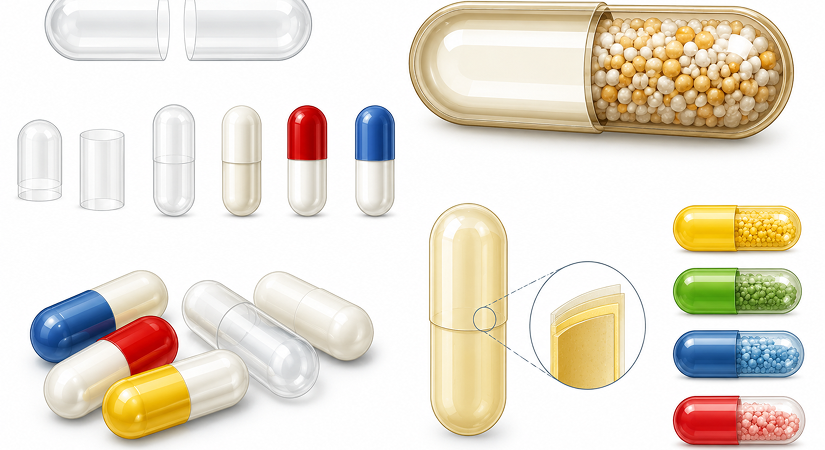
Gelatin capsules are composed primarily of gelatin derived from the hydrolysis of collagen, typically sourced from bovine hides, porcine skins, or fish. The gelatin concentration, bloom strength, and processing conditions determine whether the resulting shell is rigid and two-pieced (hard) or flexible and hermetically sealed (soft).
Understanding the difference between hard and soft gelatin capsules is not an academic exercise. It is a formulation strategy decision with direct implications for bioavailability, manufacturing complexity, cost, and regulatory pathway.
What Is a Hard Gelatin Capsule?
Structure
The hard gelatin capsule is a two-piece structure, consisting of a body and a cap that fit together with a precise telescoping lock. The body is slightly narrower and longer; the cap fits over it. When joined and sealed, they form a closed, rigid shell that contains the fill material and disintegrates in gastrointestinal fluid, releasing its contents.
Standard two-piece capsule sizes range from Size 000 (the largest, with a fill volume of approximately 1.37 mL) to Size 5 (the smallest, with a fill volume of approximately 0.13 mL), with Size 0 and Size 1 being the most commonly dispensed in adult pharmaceutical formulations according to Capsugel engineering specifications.
The shell wall thickness of a hard gelatin capsule is typically 0.10 to 0.12 mm, producing a rigid, brittle structure at ambient conditions. This rigidity is intentional: it enables high-speed automated filling at up to 200,000 capsules per hour with modern filling equipment such as the Bosch GKF 2500 or IMA Zanasi platforms.
Composition
The shell of a standard hard gelatin capsule contains three primary components: gelatin (the structural backbone, typically at 40 to 50% w/w in the casting solution), a plasticizer (water, retained at 12 to 16% w/w in the final shell), and optionally, colorants, opacifiers (titanium dioxide), and preservatives. No additional plasticizers such as glycerin or sorbitol are added, distinguishing it fundamentally from the softgel capsule composition.
Fill Type
Hard gelatin capsules are designed to contain solid or semi-solid fill materials. Conventional fills include dry powders, granules, pellets, minitablets, and combinations of the above. Modern formulation advances have expanded fill options to include thermoplastic semi-solid melts (lipid formulations) and low-water-activity pastes, broadening their utility for poorly soluble BCS Class II and IV compounds.
What Is a Soft Gelatin Capsule (Softgel)?
Structure
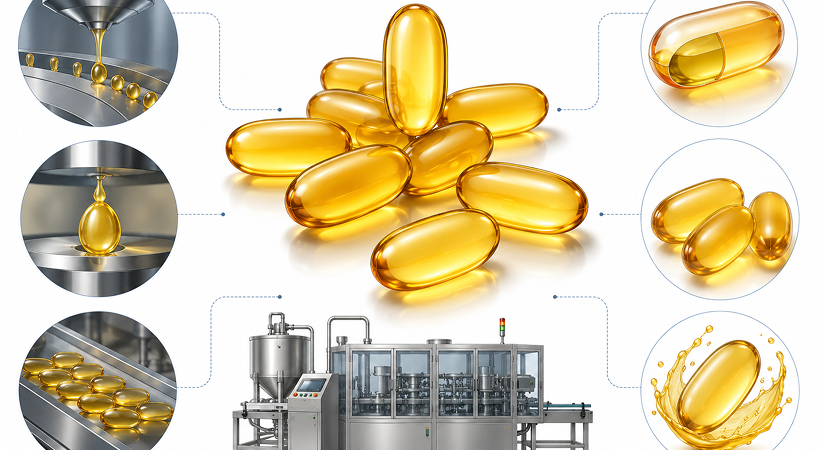
The soft gelatin capsule, universally referred to as a softgel, is a single-piece, hermetically sealed shell. There is no body-and-cap assembly. The shell is formed, filled, and sealed in a single continuous manufacturing operation, making the softgel a true one-piece capsule system.
The softgel shell is visibly different from its hard-capsule counterpart: it is pliable, smooth, and uniform in surface appearance. Shell thickness ranges from 0.30 to 1.00 mm, significantly thicker than hard capsule shells, owing to the plasticizer content required to maintain flexibility. The geometry of softgels varies widely, including oval, oblong, round, tube, and specialty shapes, offering formulation teams greater options for patient differentiation and brand identity.
Composition
The soft gelatin capsule shell contains three essential components: gelatin (typically 30 to 40% w/w of the casting mass), a plasticizer (glycerin, sorbitol, or a mixture, at 20 to 30% w/w), and water (at 30 to 40% w/w during manufacture, reducing to 6 to 10% in the final dried shell). The plasticizer content is the defining compositional difference between hard and soft gelatin capsule shells, directly conferring flexibility and the ability to hermetically seal around liquid fill materials.
Bloom strength of gelatin used in softgel manufacturing typically ranges from 150 to 250 g, balancing adequate film-forming strength with sufficient pliability. A 2018 Journal of Pharmaceutical Sciences study (Gullapalli & Mazzitelli) confirmed that bloom strength selection significantly impacts shell dissolution rate, fill compatibility, and storage stability.
Fill Type
Soft gelatin capsules are designed to encapsulate liquid, semisolid, or paste-type fill materials. Oils, lipid solutions, polyethylene glycol (PEG) solutions, and hydrophilic or lipophilic drug suspensions are all common softgel fill materials. This fill type is the primary reason softgels are preferred for BCS Class II compounds with poor aqueous solubility, since encapsulating the API in a lipid or surfactant vehicle can dramatically improve dissolution rate and capsule bioavailability.
Hard vs Soft Gelatin Capsules: Comparison Table
Table 1. Comprehensive comparison of hard and soft gelatin capsule specifications across key formulation, manufacturing, and regulatory parameters.
Advantages and Disadvantages of Each
Hard Gelatin Capsule: Advantages
Hard gelatin capsules offer formulation teams the highest manufacturing speed and lowest unit cost of any encapsulated oral dosage form. Fill flexibility across powders, pellets, and semi-solids is broad, and the two-piece design allows formulation changes to be implemented by modifying fill contents without shell retooling.
Tamper evidence is straightforwardly achieved through capsule banding or heat sealing, and the shell provides effective taste and odor masking for a wide range of APIs. Regulatory pathways are well-established, with extensive pharmacopeial specification support in USP/NF, Ph. Eur., and JP.
Hard Gelatin Capsule: Disadvantages
Hard gelatin capsule shells are moisture-sensitive in both directions: too dry (below 25% RH) and the shell becomes brittle and cracks; too humid (above 65% RH) and the shell softens and deforms. This places stringent demands on storage and packaging specification.
Liquid fills are not directly compatible with standard hard gelatin capsule shells, limiting their utility for oils and lipid-based formulations unless specialized equipment and sealed shell variants (Licaps) are employed. Hygroscopic or moisture-sensitive APIs require careful compatibility assessment with the shell gelatin.
Soft Gelatin Capsule: Advantages
The softgel capsule provides hermetic sealing as an inherent consequence of its manufacturing process, delivering superior protection for oxygen-sensitive and light-sensitive fills. Bioavailability enhancement through lipid-based drug delivery is the strongest scientific advantage: a 2020 meta-analysis in European Journal of Pharmaceutics and Biopharmaceutics (Pouton & Porter) found that lipid-based formulations in softgels improved oral bioavailability by 2 to 5-fold for BCS Class II APIs compared to solid oral formulations.
Dose accuracy is very high: fill weight uniformity below 1-2% RSD is routinely achieved with rotary die injection, surpassing that achievable with powder-fill operations on many compounds.
Soft Gelatin Capsule: Disadvantages
Softgel manufacturing requires significantly higher capital investment and specialized technical expertise compared to hard capsule filling operations. Unit cost is typically 30 to 60% higher than equivalent hard gelatin capsules at commercial scale.
Fill-shell compatibility testing is lengthy and complex, extending development timelines. Aldehydes, water-miscible fills above threshold water activity, and high-pH fills can each degrade shell integrity or retard dissolution. Softgel capsules are also generally not amenable to reformulation after launch without repeating the full compatibility and stability package.
Table 4. Comparative advantages and disadvantages of hard and soft gelatin capsules across key formulation and commercial parameters.
Difference in Composition and Raw Materials
Gelatin: The Shared Backbone
Both hard gelatin capsule and soft gelatin capsule shells begin with pharmaceutical-grade gelatin. However, the specifications diverge meaningfully. Hard gelatin capsule manufacturing typically uses gelatin with a bloom strength of 200 to 280 g and viscosity of 25 to 45 mPa·s in a 6.67% solution at 60°C, as specified in USP/NF and Ph. Eur. monographs. Softgel manufacturing uses lower-bloom-strength gelatin (150 to 250 g) to allow the ribbon to remain pliable during the rotary die encapsulation process.
A 2020 AAPS PharmSciTech study (Nair et al.) documented that a 50-unit bloom strength difference between two gelatin sources produced statistically significant differences in hard capsule shell brittleness, dissolution lag time, and susceptibility to cross-linking under accelerated stability conditions, underscoring the criticality of gelatin specification for both shell types.
Plasticizers: The Defining Difference
The gelatin capsule composition diverges most sharply at the plasticizer level. Hard gelatin capsules rely exclusively on residual water (12 to 16% w/w) as their sole plasticizer, making them rigid at ambient humidity but fragile under low relative humidity (below 25% RH), where shell brittleness and cracking become documented failure modes.
Soft gelatin capsules incorporate glycerin or sorbitol at 20-30% w/w, thereby fundamentally altering the shell's mechanical properties. The ratio of dry gelatin to plasticizer (the G:P ratio) is a critical softgel formulation parameter. A G:P ratio between 1.0:0.4 and 1.0:0.8 is typical for most fill types, shifting toward higher plasticizer content for more hydrophilic fills that would otherwise draw moisture from the shell.
Colorants, Opacifiers, and Preservatives
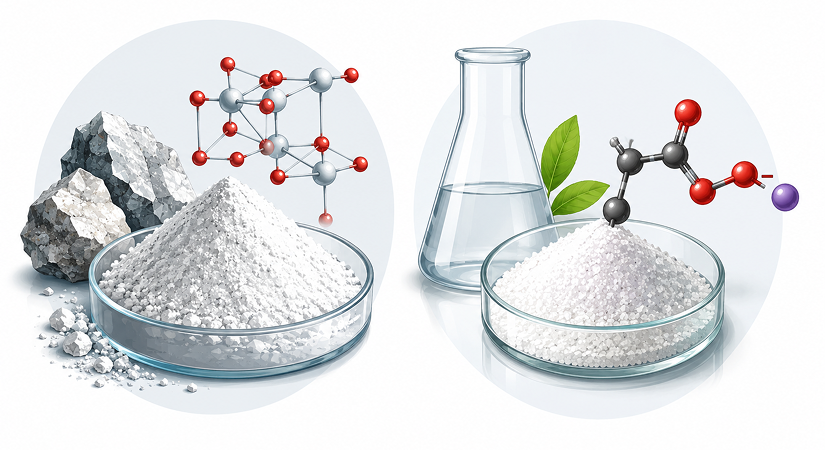
Both hard and soft gelatin capsule shells may contain FD&C or D&C certified colorants, titanium dioxide as an opacifier (for light-sensitive fills), and preservatives such as parabens or potassium sorbate where required by fill compatibility. Softgel capsule shells additionally may contain flavoring agents to improve chewable softgel palatability, a formulation option not relevant to standard swallowable hard gelatin capsules.
Difference in Manufacturing Process
Hard Gelatin Capsule Manufacturing
Hard gelatin capsule manufacturing uses the dip-molding process, a continuous operation in which stainless steel pins arranged in arrays are dipped into a temperature-controlled gelatin solution (typically at 45 to 65°C), withdrawn, rotated to distribute the film evenly, and passed through a series of drying kilns where humidity and temperature are precisely controlled.
The dried shells are stripped from the pins, trimmed to specification, and joined as body-cap pairs. The entire process is continuous, high-speed, and conducted on specialized equipment such as the Qualicaps HicapsitePlus or Capsugel Licaps platforms, capable of producing 1.5 to 2 million capsules per hour across multi-pin machines in large-scale facilities.
A 2019 Pharmaceutical Technology review (Tewes et al.) documented that drying parameters are the single most sensitive variable in hard gelatin capsule manufacturing, with shell moisture content deviations of as little as 2% w/w producing measurable differences in fill adhesion, dissolution, and capsule joining torque.
Soft Gelatin Capsule Manufacturing
Softgel manufacturing uses the rotary die encapsulation process, first commercialized by Robert Scherer in 1933 and still the dominant manufacturing technology for one-piece capsule production. Two continuous gelatin ribbons are fed over rotating die rolls; the fill material is injected between the ribbons at the die pocket, and the dies simultaneously cut and heat-seal the filled capsule in a single operation.
The rotary die process demands precise control of ribbon thickness (typically 0.4 to 0.8 mm), fill temperature, die temperature, and rotary speed. Fill injection pressure is critical: too low and underfilling occurs; too high and seal integrity is compromised. Production speeds of 50,000 to 100,000 capsules per hour are standard on modern equipment such as the RP Scherer rotary die machines or GIC Pharma softgel lines.
Following encapsulation, softgels must be dried to remove excess moisture from the shell, typically in tumble dryers or conveyor drying tunnels, to reach the target final moisture content of 6 to 10% w/w. A 2021 study in the International Journal of Pharmaceutics (Gullapalli) confirmed that drying rate control is critical to preventing shell deformation, dimpling, and leakage failures in commercial softgel capsule production.
Table 2. Side-by-side comparison of manufacturing processes for hard and soft gelatin capsules.
Applications and Common Uses
Where Hard Gelatin Capsules Dominate
Hard gelatin capsules are the dosage form of choice for the majority of solid oral pharmaceutical products, including small-molecule APIs in powder or granule form, over-the-counter analgesics and cold remedies, probiotics and live biotherapeutic products (where low-temperature processing is critical), botanical and herbal supplements, and multi-component combination products requiring physical separation of incompatible APIs via pellet fills.
They are also the default platform for early-phase clinical trial formulations. The ease of filling clinical quantities manually or on small-scale filling equipment, combined with the ability to rapidly adjust dose by varying fill weight, makes hard gelatin capsules the preferred vehicle for Phase I and Phase II dose-ranging studies.
Where Softgels Dominate
Soft gelatin capsules are established as the preferred dosage form for lipid-soluble vitamins (vitamins A, D, E, and K), omega-3 fatty acid concentrates (fish oil, krill oil), lipophilic APIs requiring bioavailability enhancement, and liquid nutraceuticals where consumer acceptability of the smooth, easy-to-swallow softgel format is commercially important.
In the pharmaceutical prescription market, major softgel capsule applications include cyclosporine (Neoral, an early landmark self-emulsifying softgel formulation), progesterone (Prometrium), and multiple antiretroviral and immunosuppressant compounds where lipid-based delivery is scientifically established.
A 2022 Drug Development and Industrial Pharmacy review (Trevaskis et al.) noted that over 40% of new molecular entities approved between 2015 and 2020 with BCS Class II or IV classification were formulated in lipid-based oral drug delivery systems, with softgel encapsulation representing the most commercially prevalent platform.
Table 5. Application-to-capsule-type mapping for pharmaceutical and nutraceutical products.
Similar capsule formats can follow entirely different regulatory pathways depending on the product.
→ Read: Nutraceuticals vs Pharmaceuticals: Key Differences and the Future of Integrative Health
Difference in Fill Material
Hard Capsule Fill Materials
The hard gelatin capsule is optimized for solid and semi-solid fill materials. Dry-powder blends, granules, pellets, and minitablets are all standard fill types that can be processed on high-speed dosing equipment. Fill weight uniformity of below 2% RSD is routinely achievable for free-flowing powders using vacuum-dosing or tamping-pin filling heads.
For poorly soluble APIs, hard gelatin capsules can accommodate lipid-based formulations (LBF) in semi-solid thermoplastic form, filled in the molten state and solidifying on cooling. This approach, commercialized by Lonza Capsugel as the Licaps system, bridges the bioavailability gap for some BCS Class II compounds without requiring a full softgel manufacturing platform.
Soft Capsule Fill Materials
The softgel capsule is uniquely suited to liquid, semi-liquid, and paste fill materials. Hydrophilic vehicles (PEG 400, PEG 600), lipophilic vehicles (miglyol, sesame oil, soybean oil), and surfactant-based self-emulsifying systems are all common softgel fill material categories.
Fill-shell compatibility is the most technically demanding aspect of soft gelatin capsule formulation. Water-miscible fills with water activity of approximately 5 to 10% w/w will migrate into the shell, softening it and causing deformation or leakage. Aldehydes (including those generated by oxidation of some excipients) can cross-link gelatin and dramatically retard shell dissolution, a failure mode documented extensively in the literature.
A landmark 2019 study in AAPS PharmSciTech (Augsburger & Hoag) demonstrated that formaldehyde generated by PEG oxidation in softgel fills produced dissolution failure (below 75% release at 60 minutes by USP Type II) in 8 of 15 commercial softgel products stored under accelerated stability conditions (40°C/75% RH for 6 months), confirming that softgel capsule fill selection cannot be made without rigorous compatibility testing.
Table 3. Fill material compatibility matrix for hard gelatin and soft gelatin capsules.
Hard gelatin capsules are commonly used for probiotic formulations. But what happens when living microorganisms become medicines instead of supplements?
→ Read: Live Biotherapeutic Products: Clinical Safety, Regulation & Market Potential
Which Capsule Type to Choose
Choosing between a hard gelatin capsule and a soft gelatin capsule is a formulation strategy decision that must integrate API physicochemical properties, bioavailability requirements, manufacturing capability, development timeline, and commercial cost considerations.
Choose a hard gelatin capsule when the API is a solid with adequate flowability or can be granulated, when BCS Class I or III classification suggests aqueous solubility is not a limiting bioavailability factor, when development speed and manufacturing cost are priorities, and when the program is in early clinical stages requiring rapid formulation flexibility.
Choose a soft gelatin capsule when the API is a liquid or oil, when BCS Class II or IV classification indicates poor aqueous solubility that a lipid vehicle can meaningfully address, when hermetic sealing is required for oxidation-sensitive fills, when the target patient population prioritizes swallowability (geriatric, pediatric), and when bioavailability enhancement is a regulatory or clinical necessity rather than a convenience.
Conclusion:
Hard and soft gelatin capsules serve fundamentally different formulation needs. Hard capsules offer speed, cost efficiency, and flexibility for solid APIs, while softgels deliver superior bioavailability enhancement and hermetic sealing for liquids and oils. The right choice depends on your API's solubility class, fill material, development timeline, and commercial priorities — not convention.
FAQs
Q1. What is the main difference between hard and soft gelatin capsules?
The primary difference between hard and soft gelatin capsules lies in their structure, plasticizer content, and fill material. Hard gelatin capsules are two-piece shells with water as their only plasticizer, designed for solid fills such as powders and granules. Soft gelatin capsules (softgels) are one-piece hermetically sealed shells with glycerin or sorbitol as plasticizer, designed for liquid and oil-based fills. The choice between them is fundamentally a formulation strategy decision driven by API properties and bioavailability requirements.
Q2. Which capsule type offers better bioavailability for poorly soluble drugs?
For BCS Class II and IV APIs with poor aqueous solubility, softgel capsules filled with lipid-based vehicles (oils, self-emulsifying systems, PEG solutions) generally offer superior bioavailability enhancement. Hard gelatin capsules filled with lipid-based formulations (LBF) via systems such as Licaps can partially bridge this gap.
Q3. Are hard gelatin capsules or softgels more stable during long-term storage?
Both formats present distinct stability challenges. Hard gelatin capsules are sensitive to low humidity (shell brittleness below 25% RH) and high humidity (shell softening above 65% RH), requiring controlled storage between 15 and 25°C at 35 to 65% RH. Softgel capsules face fill-shell migration risks (water-miscible fills softening the shell) and gelatin cross-linking risks from aldehyde-generating excipients, making long-term stability highly fill-dependent.
Q4. Can hard gelatin capsules be used for liquid fills?
Standard hard gelatin capsules are not compatible with low-viscosity liquid fills due to leakage risk at the body-cap junction. However, specialized hard capsule platforms such as Lonza Capsugel's Licaps system use banding or heat-sealing technology to achieve liquid-tight seals, allowing semi-solid lipid formulations filled in the molten state to be encapsulated. This approach is technically validated and commercially available, though it requires specialized filling equipment and adds formulation development complexity compared to standard solid fills.
Q5. What is the vegetarian or vegan alternative to gelatin capsules?
The primary vegetarian alternative to hard gelatin capsules is the HPMC (hydroxypropyl methylcellulose) capsule, commercially available from Capsugel (Vcaps), Qualicaps (Quali-V), and Suheung. HPMC capsules offer comparable manufacturing speed and fill compatibility to hard gelatin capsules and are accepted by USP/NF, Ph. Eur., and major regulatory agencies.
For softgel capsules, vegetarian alternatives are technically more challenging: modified starch-based and HPMC-based softgel shells are commercially available from manufacturers such as Procaps and Aenova, but scale and fill compatibility remain more restricted than conventional gelatin softgels. Market demand for non-gelatin capsule options continues to grow, with a 2022 Grand View Research analysis estimating the HPMC capsule market will grow at a CAGR of 8.9% through 2030.
Reporting on the science, business and regulation shaping the pharmaceutical industry.
More in Pharma Manufacturing
All articles →
Compliance In Pharma Manufacturing 2025: Key Regulations And Best Practices You Need to Know

Improving Pharmaceutical Manufacturing Flexibility: Agile Manufacturing and Rapid Scale-Up

Discussion