From Warning Letter to Boardroom: What Environmental Monitoring, Trending, and Sampling Problems Really Cost — And How to Fix Them
A combined review of what U.S. FDA warning letters found, what they cost the companies involved in money and reputation, and a practical, step-by-step plan to fix the root causes.

Disclaimer
All company names, warning letter references, and related information cited in this article have been drawn exclusively from publicly available sources, each individually referenced throughout this work. The purpose of this article is strictly academic and analytical — to examine the current state of regulatory compliance within the pharmaceutical industry, its financial and reputational implications, and to propose constructive solutions using the Design Thinking methodology — and it is in no way intended to defame, disparage, or cause reputational harm to any organisation named herein. All commentary reflects a good-faith, objective review of public information, with no malice implied or inferred against any named party. Should any organisation or reader perceive inadvertent harm from this article, the author sincerely apologises in advance, as this was never the intention, and welcomes outreach for any clarification or correction.
This review article is AI-assisted for: researching publicly available data, reports, press releases, regulatory and stock-exchange disclosures, market reaction, analyst commentary, reputational notes, and sales/revenue reports; structuring the report; refining ideas; and formatting the content into clear, professional, presentable language. All facts are drawn from publicly available sources, each credited individually in the References section at the end of this report. This report does not replace independent verification, legal advice, or financial advice, and readers are encouraged to consult the original sources linked throughout.
Executive Summary
Every year, the U.S. Food and Drug Administration (FDA) issues warning letters to drug companies whose factories do not meet basic safety and quality rules. These rules are often called Current Good Manufacturing Practice (CGMP). This report examines one specific type of problem found in these letters: failures in checking for microorganisms in the air and on surfaces (environmental monitoring), failures in collecting test samples properly (sampling), and failures in evaluating patterns in test results over time (trending).
This review is built in three parts, in a simple order: first, what happened; second, what it cost; and third, what companies can do about it.
Part 1 explains what these warning letters found using real company names and their official FDA case numbers, called MARCS-CMS numbers, so that every claim can be checked.
Part 2 shows what these letters cost the companies involved, how much their stock price dropped, whether they had to recall products, and how the media reports affected their reputation.
Part 3 offers a practical, step-by-step plan built using a proven problem-solving method called Human Centric Design Thinking for how any company can resolve these problems before they turn into a warning letter.
The single biggest lesson from this review: problems with checking for microorganisms and tracking test results over time are rarely the whole story. They are usually the early warning sign of a bigger issue, and companies that treat them as a box-ticking exercise, rather than a real safety check, are the ones that end up with a warning letter, a stock price drop, or a product recall.
Part 1: What Happened — The Warning Letters
An FDA warning letter is an official notice sent to a company when FDA inspectors find serious problems at a factory. It is one step below the most serious action the FDA can take (stopping a company from selling in the US). This review looked at 60 warning letters sent to drug companies between 2021 and 2026, and focused closely on the ones that mentioned three specific problems:
Environmental monitoring — regularly checking the air and surfaces in a drug-manufacturing area for (especially in a sterile, or “aseptic,” area) microorganisms.
Sampling — collecting test samples from the right place, at the right time, in the right way.
Trending — looking at test results over weeks and months to observe a pattern before it becomes a bigger problem.
What the Numbers Show
Out of the 60 letters reviewed, chart below is how often each type of problem came up:
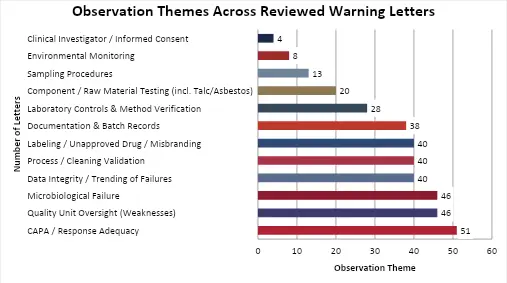
Fig 1: Observation Themes Across Reviewed Warning Letters
Checking for microorganisms in the air (“environmental monitoring”) and collecting samples correctly came up less often on their own, but as the examples below show, they are very often the hidden cause behind the much more common problem of microorganisms actually being found in finished products.
Real Examples
Somerset Therapeutics Private Limited (MARCS-CMS 711340, September 04, 2025)1: FDA found that the company's air-testing equipment failed 16 times during one inspection, and nobody investigated why. The results were simply filed as “for information only.”
Wizcure Pharmaa Private Limited (MARCS-CMS 726378, June 24, 2026)2: FDA found that test data had been changed to hide the actual results, and that the company was not regularly checking for microorganisms at all. This later led to a recall of eye drops sold under the brand names Vista Tear and BioGlow.
Eugia Pharma Specialities Limited (MARCS-CMS 681905, August 15, 2024)3, a factory owned by Aurobindo Pharma: workers wrote down air-quality test results from the wrong time and the wrong place, then changed the timestamps to hide it. FDA had already classified this factory as “Official Action Indicated” (OAI), its most serious inspection rating short of blocking imports outright, before this warning letter was sent.
Intas Pharmaceuticals Limited (MARCS-CMS 652067, July 28, 2023)4: An employee was seen pouring a chemical into a trash bin to destroy paper records before inspectors could see them. The destroyed records included Environmental Monitoring System (EMS) documents, and separately, FDA found the lab’s colony-forming-unit (CFU) counts in its environmental monitoring data did not match what inspectors observed on re-count.
Kilitch Healthcare India Limited (MARCS-CMS 672956, March 28, 2024)5: FDA found unsafe conditions and signs that lab records had been changed after the fact. This led to a nationwide recall of more than 27 eye drop products sold at major US pharmacy chains. The unsafe conditions specifically included residue found next to HEPA filters in an ISO 5 (highest cleanliness) manufacturing area, and staff working ungowned in areas meant to be tightly controlled for contamination.
Cipla Limited (MARCS-CMS 660904, November 17, 2023)6: Test results from routine safety checks were collected but never carefully reviewed before products were shipped. FDA separately found Cipla failed to prevent microbiological contamination in products meant to be sterile, citing a pattern of media-fill contamination incidents and environmental monitoring (EM) data that was never substantively evaluated.
Centrient Pharmaceuticals India Private Limited (MARCS-CMS 640196, December 07, 2022)7: The company's method for detecting leftover antibiotic residue on equipment was never proven to actually work, meaning it could have missed contamination. This kind of residue testing also matters for excipients, the inactive ingredients, like fillers or preservatives, mixed into a medicine. Poor document control also extended to records kept near the facility’s microbiology laboratory, adding to concerns about the reliability of its contamination-testing data.
Warning Letters reviewed
The seven examples above give the flavour of what these letters found. The table below lists all 48 warning letters (from 45 companies) from this review that touch on environmental monitoring (EM), microbiology, sampling, or trending out of the 60 total letters studied. Company names are shown with their official FDA MARCS-CMS number, matching how they appear throughout this report.
Company (MARCS-CMS Number) | MARCS-CMS # | Letter Date | Related To | Reference # |
|---|---|---|---|---|
Aurobindo Pharmaceutical Limited (MARCS-CMS 618091, January 12, 2022) | 618091 | January 12, 2022 | Micro, Trending | |
Indiana Chem-Port (MARCS-CMS 618173, February 02, 2022) | 618173 | February 02, 2022 | Micro, Sampling, Trending | |
Centrient Pharmaceuticals India Private Limited (MARCS-CMS 640196, December 07, 2022) | 640196 | December 07, 2022 | EM, Micro, Trending | |
Champaklal Maganlal Homeo Pharmacy Private Limited (MARCS-CMS 652319), April 10, 2023 | 652319 | April 10, 2023 | Micro | |
Centaur Pharmaceuticals Private Ltd. (MARCS-CMS 651080, June 05, 2023) | 651080 | June 05, 2023 | Micro, Trending | |
Medgel Private Limited (MARCS-CMS 654085, July 20, 2023) | 654085 | July 20, 2023 | Micro, Trending | |
Baxter Healthcare Corporation (MARCS-CMS 654136, July 25, 2023) | 654136 | July 25, 2023 | Micro, Trending | |
Centaur Pharmaceuticals Private Ltd. (MARCS-CMS 655231, July 25, 2023) | 655231 | July 25, 2023 | Micro, Trending | |
Intas Pharmaceuticals Limited (MARCS-CMS 652067, July 28, 2023) | 652067 | July 28, 2023 | EM, Micro, Sampling, Trending | |
Orchid Lifesciences (MARCS-CMS 663478, August 03, 2023) | 663478 | August 03, 2023 | Micro | |
Suhan Aerosol (MARCS-CMS 663489, August 03, 2023) | 663489 | August 03, 2023 | Micro | |
Sun Pharmaceutical Industries Ltd. (MARCS-CMS 636199, October 16, 2023) | 636199 | October 16, 2023 | EM, Micro, Trending | |
Cipla Limited (MARCS-CMS 660904, November 17, 2023) | 660904 | November 17, 2023 | EM, Micro, Sampling, Trending | |
Intas Pharmaceuticals Limited (MARCS-CMS 662868, November 21, 2023) | 662868 | November 21, 2023 | Micro, Sampling, Trending | |
Patcos Cosmetics Pvt. Ltd. (MARCS-CMS 669465, December 15, 2023) | 669465 | December 15, 2023 | Micro | |
Madhu Instruments Private Limited (MARCS-CMS 659694, February 01, 2024) | 659694 | February 01, 2024 | Micro | |
Kilitch Healthcare India Limited (MARCS-CMS 672956, March 28, 2024) | 672956 | March 28, 2024 | EM, Micro, Sampling, Trending | |
Natco Pharma Limited (MARCS-CMS 672564, April 08, 2024) | 672564 | April 08, 2024 | Micro, Trending | |
Velocity Pharma LLC (MARCS-CMS 676434, July 17, 2024) | 676434 | July 17, 2024 | Micro | |
Eugia Pharma Specialities Limited (MARCS-CMS 681905, August 15, 2024) | 681905 | August 15, 2024 | EM, Micro, Trending | |
Unexo Lifesciences, Private Limited (MARCS-CMS 688163, November 06, 2024) | 688163 | November 06, 2024 | Micro, Trending | |
Micro Orgo Chem (MARCS-CMS 686458, December 03, 2024) | 686458 | December 03, 2024 | Micro, Trending | |
Indoco Remedies Limited (MARCS-CMS 691594, December 16, 2024) | 691594 | December 16, 2024 | Micro, Trending | |
Akron Formulations India Private Limited (MARCS-CMS 693938, December 17, 2024) | 693938 | December 17, 2024 | Micro, Sampling, Trending | |
Bhargava Phytolab Private Limited (MARCS-CMS 691610, December 18, 2024) | 691610 | December 18, 2024 | Micro | |
Viatris, Inc. (MARCS-CMS 690897, December 19, 2024) | 690897 | December 19, 2024 | Micro, Trending | |
Global Calcium Pvt. Limited (MARCS-CMS 692000, January 16, 2025) | 692000 | January 16, 2025 | Micro, Trending | |
Granules India Limited (MARCS-CMS 697115), February 26, 2025 | 697115 | February 26, 2025 | Micro, Trending | |
Aspen Biopharma Labs Private Limited (MARCS-CMS 698665, March 05, 2025) | 698665 | March 05, 2025 | Micro, Trending | |
Macsen Drugs (MARCS-CMS 698202, March 05, 2025) | 698202 | March 05, 2025 | Trending | |
Mentha & Allied Products Private Ltd. (MARCS-CMS 700242, April 16, 2025) | 700242 | April 16, 2025 | Micro, Sampling, Trending | |
Kenil Healthcare Private Limited (MARCS-CMS 704786, June 12, 2025) | 704786 | June 12, 2025 | Micro, Trending | |
Glenmark Pharmaceuticals Limited (MARCS-CMS 708270, July 11, 2025) | 708270 | July 11, 2025 | Micro, Sampling, Trending | |
Shiva Analyticals Private Limited (MARCS-CMS 707857, July 23, 2025) | 707857 | July 23, 2025 | Trending | |
Hikal Limited (MARCS-CMS 709370, August 20, 2025) | 709370 | August 20, 2025 | Micro, Trending | |
Amneal Pharmaceuticals, LLC (MARCS-CMS 709894, August 27, 2025) | 709894 | August 27, 2025 | Micro, Sampling, Trending | |
Somerset Therapeutics Private Limited (MARCS-CMS 711340, September 04, 2025) | 711340 | September 04, 2025 | EM, Micro, Trending | |
Cdymax India Pharma Private Limited (MARCS-CMS 715022, November 13, 2025) | 715022 | November 13, 2025 | Micro, Sampling, Trending | |
Tentamus India Private Limited (MARCS-CMS 720463, March 03, 2026) | 720463 | March 03, 2026 | Micro, Trending | |
Flowchem Pharma Private Limited (MARCS-CMS 720719, March 11, 2026) | 720719 | March 11, 2026 | Micro, Trending | |
Patcos Cosmetics Pvt. Ltd. (MARCS-CMS 718220, March 12, 2026) | 718220 | March 12, 2026 | Micro, Sampling, Trending | |
Alchymars ICM SM Private Limited (MARCS-CMS 724429, May 21, 2026) | 724429 | May 21, 2026 | Micro, Trending | |
Gopaldas Visram & Co., Ltd. (MARCS-CMS 721755, June 02, 2026) | 721755 | June 02, 2026 | Micro, Trending | |
Umendra Life Sciences Private Limited (MARCS-CMS 721752, June 02, 2026) | 721752 | June 02, 2026 | Micro | |
Zydus Lifesciences Limited (MARCS-CMS 722576, June 02, 2026) | 722576 | June 02, 2026 | Micro, Trending | |
Wizcure Pharmaa Private Limited (MARCS-CMS 726378, June 24, 2026) | 726378 | June 24, 2026 | EM, Micro, Trending | |
BioMylz Pvt. Ltd. (MARCS-CMS 729483, July 13, 2026) | 729483 | July 13, 2026 | Micro, Sampling, Trending | |
Shimoga Chemicals (MARCS-CMS 727904, July 13, 2026) | 727904 | July 13, 2026 | Micro, Sampling, Trending |
Table 1: List of Warning letters related to Micro, EM Sampling and Trending
These EM, sampling, and trending failures aren't isolated. See the broader patterns behind FDA warning letters that startups and CDMOs often miss.
Read: The Pattern Behind FDA Warning Letters: What Startups & CDMOs Often Miss
Part 2: What It Costs — Money and Reputation
A warning letter is not just a paperwork problem. For companies whose shares are publicly traded, news of a warning letter often causes an immediate reaction in the stock market. For companies that are privately owned, the cost shows up differently through product recalls, lawsuits, and damage to their reputation in the press. The companies discussed in this part are the same ones covered in Part 1, all tied to environmental monitoring, microbiology, sampling, or trending failures, so the two parts of this report can be read side by side.
This part of the report looks at 38 companies in total: 13 companies whose shares trade on a public stock market, and 25 privately owned companies. For the public companies, we tracked the actual stock price movement. For the private companies, we searched for real news coverage, recalls, and other public consequences.
How Much Did Share Prices Drop?
The table below shows how much each company's stock price moved on the day (or in the days after) its warning letter became public news.
Company (MARCS-CMS Number) | Share Price Move | Reference # |
|---|---|---|
Sun Pharmaceutical Industries Ltd. (MARCS-CMS 636199) | -1.95% | |
Cipla Limited (MARCS-CMS 660904) | -0.21% same day; -8% over the following week | |
Aurobindo Pharmaceutical Limited (MARCS-CMS 618091) | -5% | |
Eugia Pharma Specialities Limited (MARCS-CMS 681905, Aurobindo unit) | -6.4% at the lowest point that day | |
Glenmark Pharmaceuticals Limited (MARCS-CMS 708270) | -0.56% (very little reaction) | |
Zydus Lifesciences Limited (MARCS-CMS 722576) | -2.24% at the lowest point that day | |
Natco Pharma Limited (MARCS-CMS 672564) | -1.6% | |
Granules India Limited (MARCS-CMS 697115) | -7.5% (the largest same-day drop in this review) | |
Indoco Remedies Limited (MARCS-CMS 691594) | -8.4% at the lowest point that day | |
Viatris, Inc. (MARCS-CMS 690897) | -15% when the true financial cost was revealed two months later | |
Hikal Limited (MARCS-CMS 709370) | -1.4% |
Table 2: Company-wise Share Price Drop Following Warning Letter Disclosure
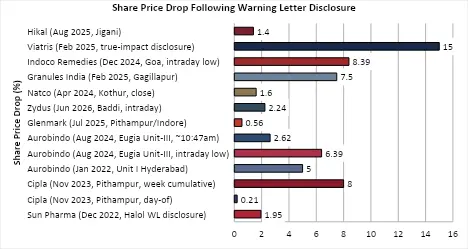
Fig 2: Share Price Drop Following Warning Letter Disclosure
The Biggest Story: Viatris
Viatris, Inc. (MARCS-CMS 690897, December 19, 2024)17 is the most serious case in this entire review. In December 2024, FDA sent a warning letter about the company's factory in Indore, India, and also stopped 11 products, including a major cancer medicine, from entering the US. At the time, Viatris told investors this would not affect its yearly financial targets.
Two months later, in February 2025, the real picture came out: the company had lost roughly $470 million in sales and $325 million in profit because of this one factory. The stock price fell about 15% in a single day when investors learned the true cost. Shareholders have since filed a lawsuit against the company, arguing they were misled about how serious the problem really was.
When the Company Isn't Publicly Traded: What Happens Instead
Intas Pharmaceuticals Limited (MARCS-CMS 65206721) is privately owned, so it has no stock price to track. But the consequences were still severe: the company's factory problems contributed to a nationwide shortage of chemotherapy medicines in the United States, serious enough that a US Senator wrote directly to the FDA Commissioner asking what was being done about it.29
Kilitch Healthcare India Limited (MARCS-CMS 672956, March 28, 2024)22 is also privately owned. Its problems led to a rare direct warning from the FDA to American consumers, telling them by name not to buy certain eye drop brands, and to a recall covered by major US health-news outlets.
Aspen Biopharma Labs Private Limited (MARCS-CMS 698665, March 05, 2025)23 admitted in writing to the FDA that it had backdated a quality document. The company then recalled all its US products and de-registered its factory with the FDA entirely, effectively leaving the US market.
Global Calcium Pvt. Limited (MARCS-CMS 692000, January 16, 2025)24 admitted that a manager had ordered staff to falsify production records to earn a financial bonus. The story was covered by STAT News, a well-respected health-news outlet.
Part 3: How to Fix It — A Step-by-Step Plan
The problems described in Parts 1 and 2 keep happening across different companies. That means the fix should not just be about punishing one company after the fact it should be about redesigning how the work actually gets done, based on how the people (Human Centric) doing the work really experience it.
To do this, we used a well-known problem-solving method called Human-Centric Design Thinking. It has four simple steps: understand the people involved, clearly define the real problem, come up with solutions, and test those solutions on a small scale before rolling them out everywhere.
Step 1: Understand the People Involved
We envisaged creating an empathy map for a typical, hardworking lab technician who checks for microorganisms every day, and thought about what they might say, think, do, and feel using a structured Question Ladder and Shadowing Observation Plan.
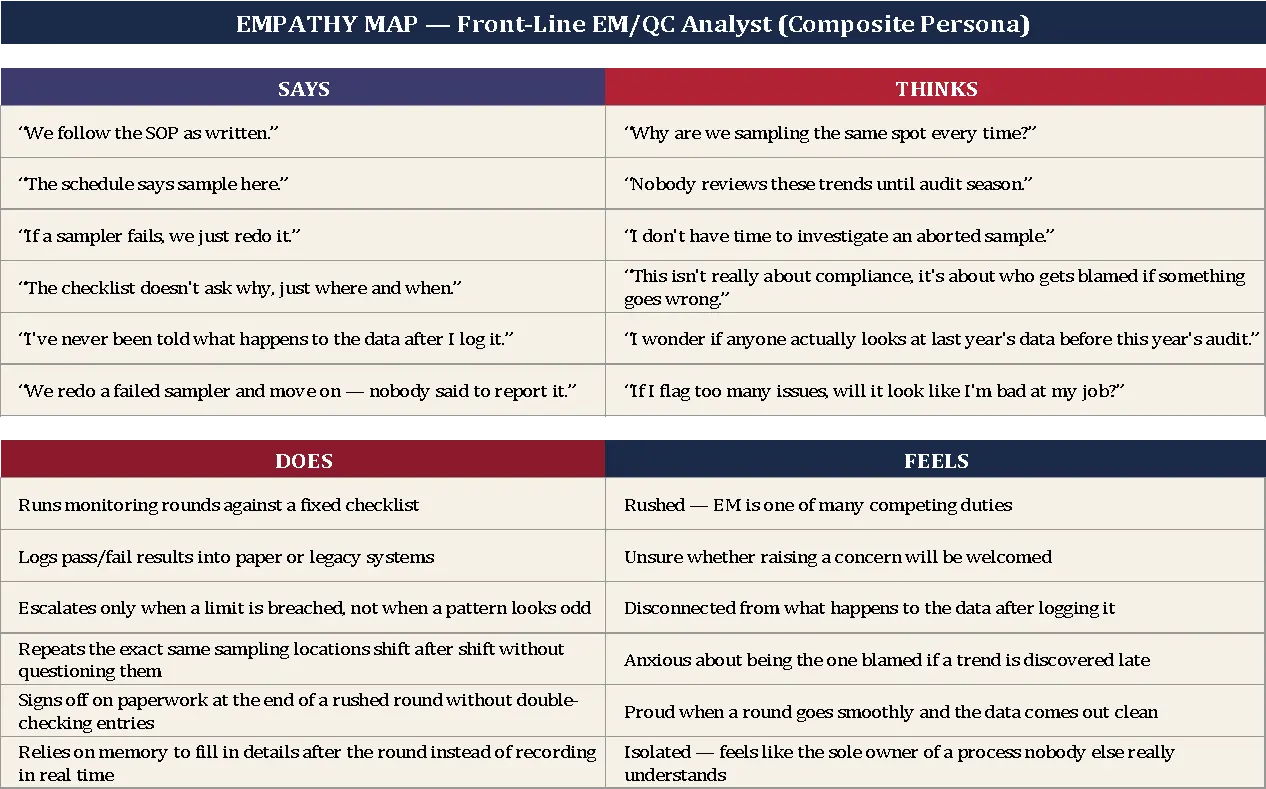
Fig 3: EMPATHY MAP — Front-Line EM/QC Analyst (Composite Persona)
Step 2: Creating Affinity Map
Out of the 60 letters reviewed, the observations are categorised into 12 Themes as presented in Fig 1.
Each of those 12 themes was assigned to one of 4 broader "systemic gap" clusters, based on what kind of failure it represents and presented in Fig. 4: AFFINITY DIAGRAM.
Detection Gaps (can the company even see the problem?) — Environmental Monitoring, Sampling Procedures, Component/Raw Material Testing
Analysis Gaps (do they understand what they see?) — Data Integrity/Trending of Failures, Laboratory Controls & Method Verification
Integrity Gaps (can the record be trusted?) — Documentation & Batch Records, Microbiological Failure
Governance Gaps (does the system respond?) — Quality Unit Oversight, CAPA/Response Adequacy, Process/Cleaning Validation, Labeling/Unapproved Drug/Misbranding, Clinical investigator/Informed Consent.
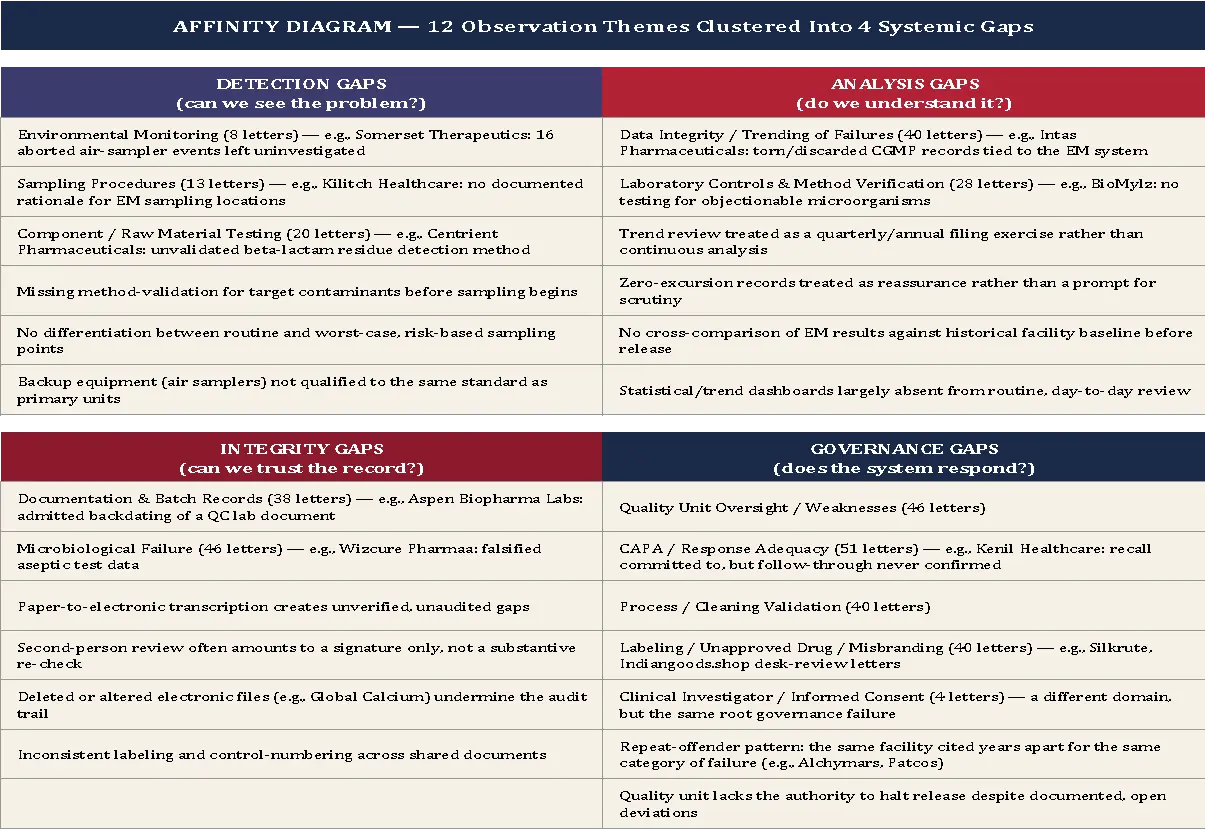
Fig 4: AFFINITY DIAGRAM — 12 Observation Themes Clustered Into 4 Systemic Gaps
Step 3: Define the Real Problem
The real, underlying problem is that companies are not consistently checking the right places, at the right time, and are not looking closely enough at test results over time to catch problems early. The main root causes we found are presented below as a problem Tree.
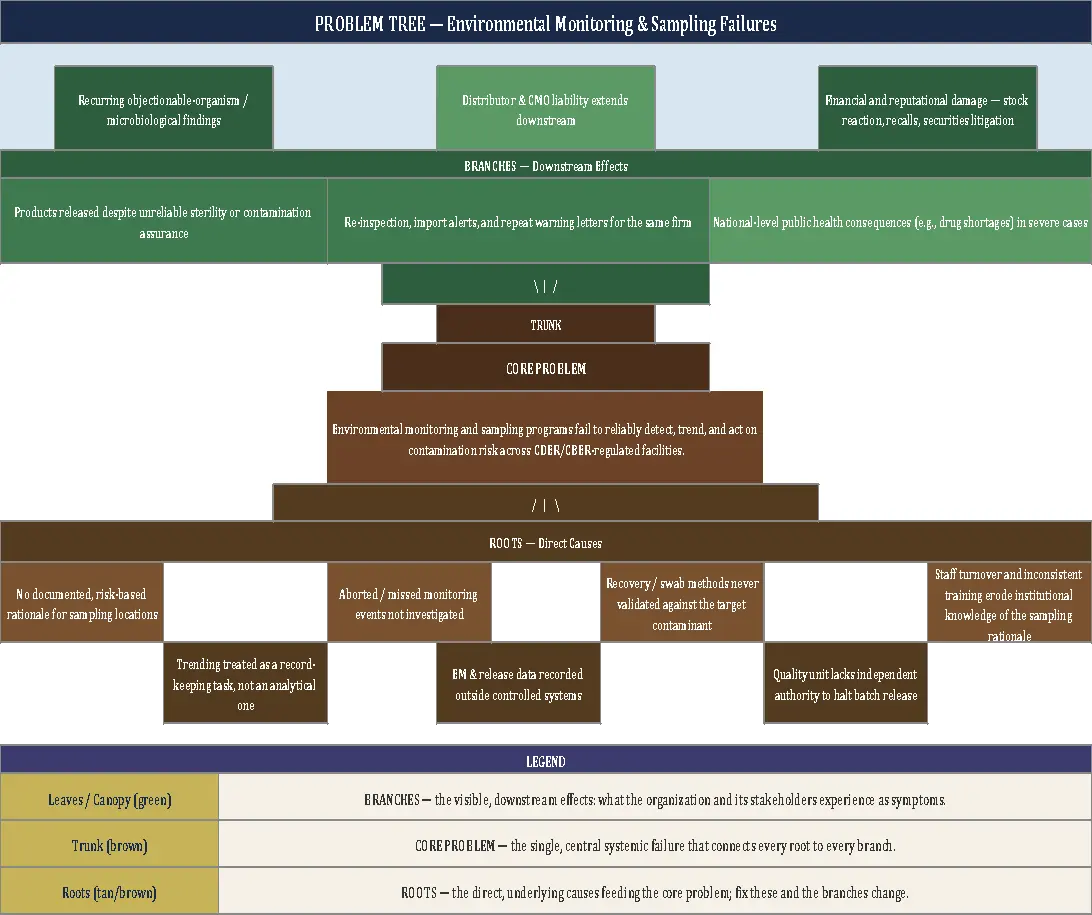
Fig 5: PROBLEM TREE — Environmental Monitoring & Sampling Failures
Step 4: Come Up With Solutions
A SCAMPER table is developed for various possible ideas consisting of 42 solutions, which are condensed to 7 ideas, one per SCAMPER technique, each tied to a specific real finding from the letters reviewed.
Below are the most practical ideas that came out of this review, grouped by type of change:
Idea Type | Practical Suggestion |
|---|---|
Replace (Substitute) | Stop testing the same spot every time out of habit; test the highest-risk spots instead and change them based on real risk. |
Combine | Make trend review a required, signed-off step of every batch release not a separate task nobody remembers to do. |
Adapt (Copy from elsewhere) | Borrow the 'near miss' reporting habit used in hospitals: when a test fails to run properly, treat it as a reportable event, not routine. |
Improve (Modify / Magnify/Minify) | Give every team member visibility into trend data on a shared screen, not just during a yearly audit. |
Reuse (Put to Another Use) | Use the same secure record-keeping system already used elsewhere in the company, so results can't be edited after the fact. |
Remove (Eliminate) | Get rid of paper records for the highest-risk areas; require typing results in directly at the time of testing. |
Flip it around (Reverse) | Treat an unusually perfect record zero problems for years as a reason to look closer, not a reason to relax. |
Table 3: List of most practical ideas condensed from 42 ideas SCAMPER
A strong CAPA and compliance framework is the backbone of preventing these failures long-term. See the broader regulatory strategies global pharma manufacturers are adopting.
Read: Regulatory Compliance in Pharma Manufacturing: Key Challenges & CAPA
Step 5: Test It Before Rolling It Out Everywhere
Before making these changes company-wide, we recommend testing them at one factory first, and gathering honest feedback as presented below.
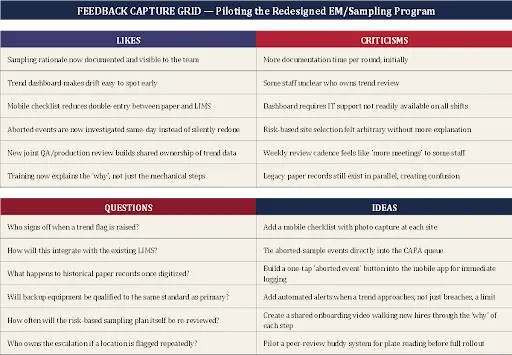
Fig 6: FEEDBACK CAPTURE GRID — Piloting the Redesigned EM/Sampling Program
Frequently Asked Questions
1. What exactly is an FDA warning letter?
It is an official notice from the U.S. Food and Drug Administration telling a company that inspectors found serious problems at a factory that need to be fixed. It is a formal warning, one step before the FDA takes stronger action, such as blocking products from entering the US.
2. Why does checking for microorganisms (environmental monitoring) matter so much?
Because it is often the earliest possible sign that something has gone wrong before it reaches the finished product. Skipping or rushing this step means problems are caught later sometimes only after the product has already reached a patient.
3. Does a warning letter always hurt a company's stock price?
Not always. In this review, the drop ranged from almost nothing (Glenmark, -0.56%) to very serious (Viatris, -15% once the full cost became known). The size of the reaction usually depends on how serious the problem is and whether the company was honest about it right away.
4. What happens to a company that isn't publicly traded?
It won't see a stock price move, but the consequences can still be serious product recalls, lawsuits from customers, and damage to its reputation in the news, as seen with Intas Pharmaceuticals, Kilitch Healthcare, and Aspen Biopharma Labs in this report.
5. What is the single most useful fix companies can make right now?
Treat any failed or skipped test as something that must be investigated immediately not something to simply redo and move on from. Several of the most serious cases in this report trace back to exactly this habit.
References
Full credit is given below to every original source used in this report. Click any reference number in the text to jump here or click the source link below to visit the original article.
5. U.S. FDA — U.S. Food and Drug Administration — Warning Letter to Kilitch Healthcare India Limited (MARCS-CMS 672956), March 28, 2024.
6. U.S. FDA — U.S. Food and Drug Administration — Warning Letter to Cipla Limited (MARCS-CMS 660904), November 17, 2023.
9. Outlook Business — “Cipla's shares tumble as Indore unit gets warning letter from USFDA.”
14. Upstox — “Natco Pharma drops 2% after USFDA issues warning letter for Kothur facility.”
19. FiercePharma — “Amneal gets warning letter related to recalls of its antibacterial products.”
21. BioSpace — “Intas Pharmaceuticals hit with another FDA warning letter, put on import alert.”
22. AARP — “FDA recalls dozens of eye drops,” October 2023.
25. MedShadow Foundation — FDA Recalls and Warnings roundup (includes Wizcure Pharmaa).
28. Pharmaceutical Online — “Trends in FDA FY2025 Warning Letters” (includes Kenil Healthcare).
Reporting on the science, business and regulation shaping the pharmaceutical industry.
More in Pharma Manufacturing
All articles →
Compliance In Pharma Manufacturing 2025: Key Regulations And Best Practices You Need to Know

Improving Pharmaceutical Manufacturing Flexibility: Agile Manufacturing and Rapid Scale-Up

Discussion