Pharma Manufacturing Trends 2026: From Smart Factories To AI-Driven Production
Pharma manufacturing trends in 2026 reveal smart factories, real-time AI quality checks, and predictive maintenance reshaping drug production


Introduction
Imagine a medicine factory that fixes itself before a machine breaks down. Imagine a factory that knows a batch of pills is going wrong while it is still being made, not after. This is not science fiction anymore. In 2026, pharmaceutical manufacturing is going through one of its biggest changes in a hundred years.
Factories are moving away from old, manual, rigid ways of working. They are becoming smart, connected, and driven by data. People in the industry often call this shift "Pharma 4.0." The industry is currently in the midst of its most significant evolution in a century, shifting from manual, rigid systems to digital integration.
Why does this matter to you, even if you don't work in a lab? Because these changes decide how fast new medicines reach patients, how safe those medicines are, and how much they cost. In this blog, we will look at the biggest trends shaping pharma manufacturing in 2026, explained in plain, simple language. No heavy jargon, just the facts you need to understand where this industry is headed.
Here Are The Pharma Manufacturing Trends In 2026 That You Must Look For!
1) Smart Factories Are Becoming The New Normal
The biggest shift in 2026 is the rise of the "smart factory." These are manufacturing plants that use sensors, robots, and automation to run more efficiently. Drug manufacturers are investing heavily in upgrading existing facilities into smart factories that use Internet of Things (IoT) sensors, robotics, and advanced automation to meet Industry 4.0 standards. In simple terms, machines on the factory floor can now "talk" to each other and to computer systems, sharing information in real time instead of waiting for a person to check and record it manually.
2) AI Is Watching Over Quality In Real Time
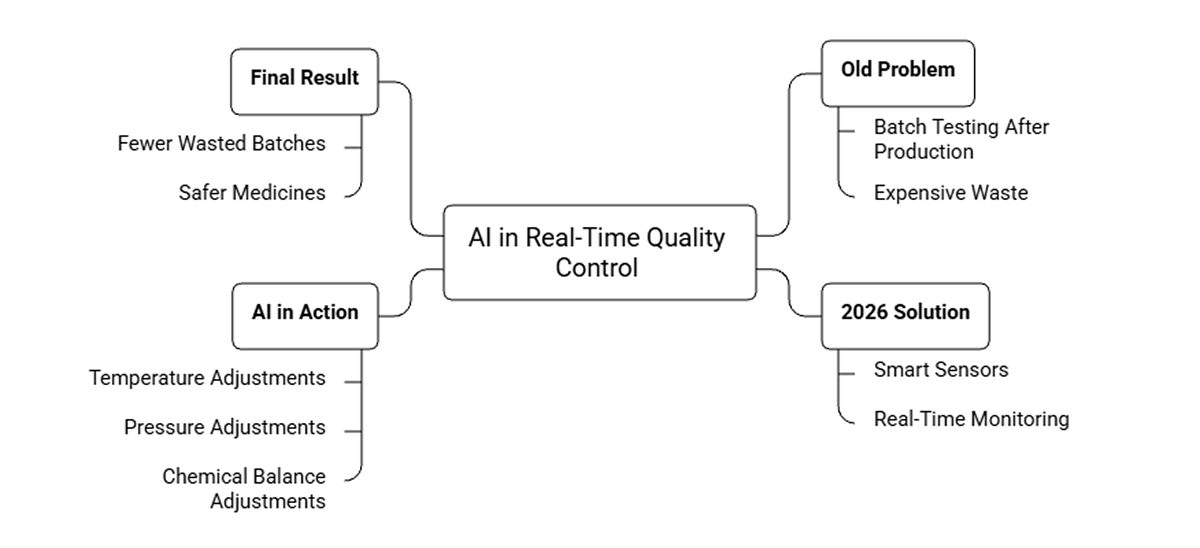
One of the most useful jobs AI is doing in pharma factories today is quality control. In the past, a batch of medicine might be tested only after it was fully made. If something went wrong, the whole batch could be thrown away. That is expensive and wasteful.
In 2026, the industry has moved toward real-time quality control using smart sensors that constantly monitor the production line, and if a batch shows even a slight deviation in temperature, pressure, or chemical balance, AI-driven systems can adjust the process mid-run to prevent the loss of expensive materials. This means fewer wasted batches and safer medicines reaching the market.
3) Predictive Maintenance Saves Time & Money
Machines break down. That has always been true. But now, AI can often predict when a machine is likely to fail, before it actually does. AI-driven manufacturing helps with predictive maintenance, which can reduce unplanned downtime by nearly 20% and helps prevent costly batch failures. Instead of waiting for a breakdown and stopping production for hours or days, factories can plan repairs ahead of time. This keeps production lines running smoothly and helps manufacturers avoid sudden losses.
4) Digital Twins Give Factories A Virtual Copy
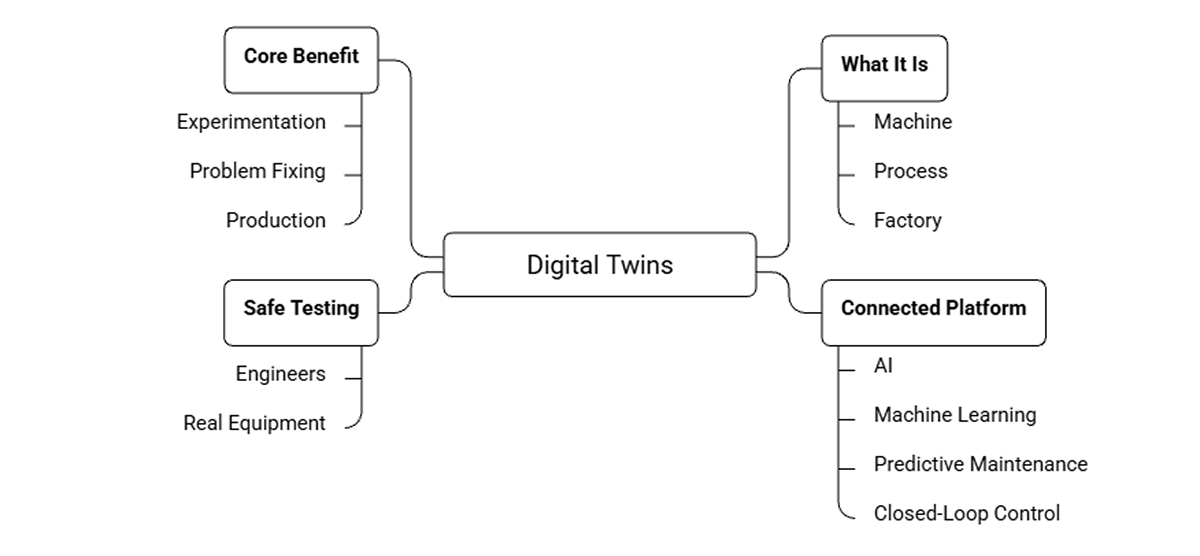
A digital twin is basically a computer model that copies a real factory, machine, or process. Engineers can test changes on the digital twin first, without touching the real equipment. By 2026, more pharmaceutical manufacturing plants are deploying connected digital platforms that include digital twins of processes, equipment, and facilities, along with AI and machine learning analytics, predictive maintenance, and closed-loop process control. This lets companies experiment safely and fix problems on a screen before they ever happen on the factory floor.
Digital twins aren't just cutting downtime, they're helping manufacturers hit "right first time" production and speeding up regulatory inspections too. Here's the full picture.
→ Read: How Digital Twins Are Shaping the Pharma Manufacturing Future
5) Generative AI Is Speeding Up Drug Design
AI is not just helping on the factory floor. It is also changing how new medicines are designed in the first place. In 2026, generative AI is being used to design more complex drug molecules faster than before, while real-world evidence gathered from digital health technologies is helping streamline clinical trials and prove a product's value in real-world settings. This means the gap between discovering a drug and manufacturing it at scale is getting smaller.
6) Personalized Medicine Is Becoming More Common
For a long time, most medicines were made the same way for everyone, in large batches. That is starting to change. Manufacturing for personalised and precision medicine is moving from being experimental to becoming more routine in 2026. This is important for treatments that need to be tailored to a specific patient's body or condition, such as certain cancer therapies. Smart, flexible manufacturing systems make it easier to produce smaller, customized batches without losing efficiency.
7) Connected Systems Break Down Old Information Silos
In many factories, different departments used to keep their own separate records, which made it hard to see the full picture. That is changing fast. Connected systems eliminate manual data reconciliation, provide real-time visibility across production, accelerate exception handling, and establish the digital foundation needed for AI and advanced analytics. When every part of a factory shares the same live data, mistakes get caught faster and approvals for releasing a batch of medicine can happen more quickly.
8) Flexible, Low-Code Systems Help Factories Adapt Faster
Pharma companies often need to change what they produce or how they produce it, whether because of new regulations or new products. Configurable, low-code and no-code platforms are helping manufacturers adapt quickly to new products, processes, and regulatory requirements without needing extensive revalidation, which speeds up technology transfer and supports standardization across multiple factory sites. In simple words, factories can now be reprogrammed more like software, instead of being rebuilt like hardware every time something needs to change.
9) Blockchain Is Helping Track Every Single Dose
Fake medicines are a real danger to patients everywhere. To fight this, factories are using new tracking tools. Pharmaceutical manufacturing units often use blockchain-enabled serialization, which allows every dose to be tracked from the factory floor all the way to the patient's hands using an immutable digital fingerprint. This makes it much harder for counterfeit medicines to slip into the supply chain unnoticed.
Blockchain is just one piece of the traceability puzzle. See how serialization, IoT, and AI together are building pharma's tamper-proof supply chain.
→ Read: Serialization in Pharma: The Hidden Power Protecting Every Pill
10) Sustainability Is Now Part Of The Manufacturing Plan
Being efficient is not just about speed and cost anymore. It is also about the environment. Sustainability has become one of the most important trends in pharma manufacturing, with companies adopting sustainable energy use, minimising waste, and using eco-friendly packaging to become more environmentally responsible. Many of the same AI tools that improve quality and reduce downtime also help cut down on wasted energy and raw materials, so sustainability and efficiency often go hand in hand.
11) The Industry Still Faces Real Challenges
It would not be honest to say everything is perfect. Adopting all this new technology is not easy or cheap. Challenges remain, including a high initial investment in technology and equipment, even though the benefits of AI and continuous manufacturing are significant. Many companies are still figuring out how to move AI projects from small trial runs to full-scale use across their entire operations. Training workers on these new systems, and meeting strict regulatory requirements, also takes time and careful planning.
In Conclusion
Pharma manufacturing in 2026 is not the same industry it was even a few years ago. Smart factories, real-time quality checks, predictive maintenance, digital twins, and generative AI are working together to make medicines faster, safer, and more reliable to produce.
Personalized medicine is becoming more realistic, blockchain is helping stop counterfeit drugs, and sustainability is now a real priority, not just a talking point.
At the same time, this transformation is not automatic or effortless. It requires real investment, careful planning, and a workforce that is trained to use these new tools well.
Companies that manage to combine smart technology with strong human oversight are the ones most likely to lead the industry forward. For patients, all of this ultimately means one simple thing: better access to medicines that are made with greater precision, safety, and care than ever before.
FAQs
1. What Is A Smart Factory In Pharmaceutical Manufacturing?
A smart factory is a pharmaceutical manufacturing facility that uses technologies like AI, IoT sensors, automation, and connected machines to monitor production in real time. This helps improve efficiency, reduce errors, and ensure consistent product quality.
2. How Is AI Changing Pharmaceutical Manufacturing In 2026?
AI is helping manufacturers monitor quality during production, predict equipment failures before they happen, speed up drug design, and optimize manufacturing processes. These improvements reduce waste, lower costs, and help medicines reach patients faster.
3. Why Is Sustainability Becoming Important In Pharma Manufacturing?
Sustainability helps pharmaceutical companies reduce energy use, minimize waste, and use resources more efficiently. Along with supporting environmental goals, these practices can also lower operating costs and make manufacturing more efficient
Reporting on the science, business and regulation shaping the pharmaceutical industry.
More in Pharma Manufacturing
All articles →
Compliance In Pharma Manufacturing 2025: Key Regulations And Best Practices You Need to Know

Improving Pharmaceutical Manufacturing Flexibility: Agile Manufacturing and Rapid Scale-Up

Discussion