Top 10 Pharmaceutical Contract Manufacturing 2026: CDMOs & Trends
Pharmaceutical contract manufacturing in 2026 evolves as CDMOs become strategic partners driving scale, compliance, and innovation.

Introduction
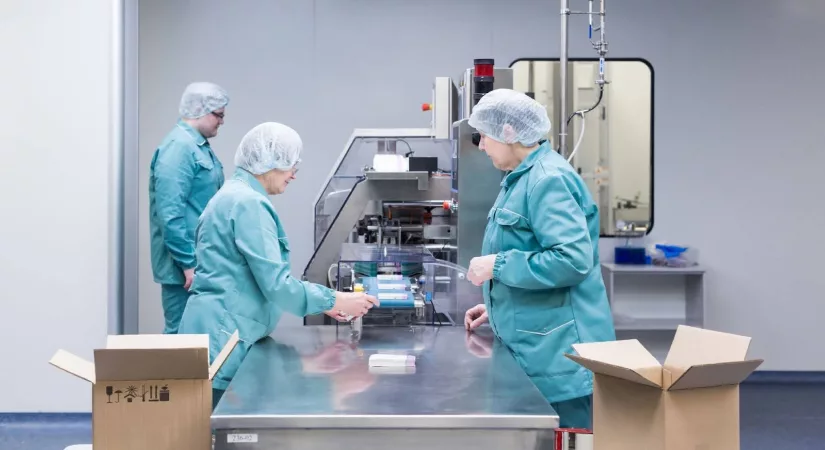
The pharmaceutical contract manufacturing market is no longer a support function. In 2026, it sits at the strategic core of how drugs are developed, scaled, approved, and delivered globally.
From blockbuster biologics to niche orphan drugs, from mRNA vaccines to complex sterile injectables, pharmaceutical companies are increasingly outsourcing manufacturing to partners who can offer speed, compliance, flexibility, and technological depth.
This shift has transformed contract manufacturing organizations (CMOs) and contract development and manufacturing organizations (CDMOs) into innovation partners rather than capacity vendors.
This article provides a comprehensive yet actionable overview of the top pharmaceutical contract manufacturing companies in 2026, supported by real-world case studies, market data, to help decision-makers, investors, and operational leaders navigate this evolving landscape.
What Does CDMO Stand For?
CDMO stands for Contract Development and Manufacturing Organization — a company that provides outsourced drug development and manufacturing services to pharma and biotech sponsors, covering everything from formulation and process development to commercial-scale production. It differs from a CMO (Contract Manufacturing Organization), which handles manufacturing only, without development support. Sponsors partner with CDMOs to access specialized expertise, regulatory-ready facilities, and manufacturing capacity without building their own.
Pharmaceutical Contract Manufacturing Market Snapshot (2026)
Before we dive into company profiles, let’s ground this discussion in data.
Market size and growth
The global pharmaceutical contract manufacturing market is projected to exceed USD 150 billion by 2026
CAGR estimated between 7–9%, driven by biologics, vaccines, and advanced therapies
Over 65% of late-stage pipelines now involve external manufacturing partners
1. Lonza: The Benchmark for Integrated CDMO Services

Lonza continues to define what “end-to-end” really means in pharmaceutical manufacturing. With capabilities spanning APIs, biologics, cell and gene therapy, viral vectors, and drug product manufacturing, Lonza has positioned itself as a strategic extension of sponsor R&D.
Case Insight:
During the COVID-19 vaccine surge, Lonza partnered with multiple biotech innovators to rapidly scale biologics manufacturing, demonstrating how modular facilities and digital manufacturing systems can compress timelines without compromising GMP compliance.
Why it matters in 2026:
Lonza’s strength lies not just in capacity, but in process science maturity, which allows sponsors to transition seamlessly from clinical to commercial scale.
2. Thermo Fisher Scientific (Patheon): Scale with Regulatory Confidence
Thermo Fisher’s Patheon network offers one of the broadest global manufacturing footprints in the industry, encompassing API manufacturing, oral solid dosage forms, sterile injectables, biologics, and clinical trial supplies.
Case Insight:
A mid-size oncology company leveraged Patheon’s North American and European facilities to execute parallel tech transfers, accelerating regulatory submissions across FDA and EMA pathways.
Key differentiator:
Robust quality systems and data integrity frameworks that withstand high-scrutiny inspections.
3. Catalent: Where Formulation Meets Manufacturing
Catalent occupies a unique space where drug delivery science meets large-scale manufacturing. Their expertise in modified-release formulations, biologics fill–finish, and drug-device combinations makes them particularly valuable for differentiated products.
Case Insight:
Catalent supported the scale-up of a biologic auto-injector program by aligning formulation stability with device compatibility, reducing late-stage failures.
4. Samsung Biologics: Biologics at Industrial Scale

Samsung Biologics has redefined what large-scale biologics manufacturing looks like. With some of the world’s largest single-use bioreactor capacities, they dominate the monoclonal antibody and recombinant protein segment.
Case Insight:
Multiple top-20 pharma companies rely on Samsung Biologics for commercial biologics supply, leveraging predictable scale and consistent batch performance.
Strategic edge:
Capacity planning that anticipates demand rather than reacts to it.
5. WuXi AppTec: Speed Through Integration

WuXi AppTec’s “open platform” model integrates discovery, development, and manufacturing, significantly shortening development timelines.
Case Insight:
Biotech startups often move from lead candidate to IND using WuXi’s integrated services, avoiding multiple vendor handoffs that introduce risk.
Why sponsors choose WuXi:
Speed, cost efficiency, and API-to-drug-product continuity.
6. Recipharm: The European Manufacturing Backbone

Recipharm offers robust oral solid dose, inhalation, and sterile manufacturing capabilities, with a predominantly European footprint.
Case Insight:
European generic and specialty pharma companies rely on Recipharm to ensure regional supply security amid regulatory and geopolitical shifts.
7. Siegfried: Precision Chemistry with Flexibility

Siegfried combines custom API synthesis with finished dosage manufacturing, appealing to sponsors with complex chemistries and niche products.
Case Insight:
A CNS drug program benefited from Siegfried’s ability to optimize a challenging synthesis route while maintaining compliance with EMA and FDA regulations.
8. AGC Biologics: Rising Star in Biologics CDMO Space
AGC Biologics has steadily expanded its global biologics manufacturing network, focusing on both mammalian and microbial expression systems.
Case Insight:
Early-stage biologics companies partner with AGC for clinical manufacturing with a clear path to commercial scale.
9. Jubilant HollisterStier: Specialists in Sterile Injectables

When sterility is non-negotiable, Jubilant HollisterStier stands out. Their expertise spans vaccines, biologics, and complex injectables.
Case Insight:
During vaccine scale-up efforts, their aseptic fill-finish capabilities supported rapid deployment under stringent regulatory oversight.
Sterile injectables demand precision at the equipment level too, get the full breakdown of the machine manufacturers powering aseptic fill-finish at scale
→ Read: Injectables At Scale: The 10 Best Liquid Filling Machine Manufacturers You Should Know
10. Pfizer CentreOne: Pharma-Grade Manufacturing Services

Pfizer CentreOne brings internal pharma manufacturing rigor to the CDMO space, offering APIs and sterile injectables with a strong regulatory pedigree.
Case Insight:
Sponsors benefit from Pfizer’s internal best practices in validation, technology transfer, and supply chain management.
Emerging Themes in Pharmaceutical Contract Manufacturing
1. Data-Driven Manufacturing
Digital twins, real-time analytics, and advanced MES systems are no longer futuristic. Regulatory agencies increasingly expect data integrity, trend visibility, and real-time quality assurance.
2. Modality Expansion
The rise of cell and gene therapies, viral vectors, and nucleic acid vaccines is reshaping capacity needs. CDMOs with platform agility are outpacing those stuck in legacy models.
3. Sustainability and ESG
Environmental expectations are now tied to regulatory scrutiny and investor criteria. Water usage, energy optimisation, and chemical waste management are part of a modern CMO’s scorecard.
4. Regionalisation
Post-pandemic strategies favour distributed manufacturing. Sponsors want redundancy, not just capacity. That means CDMOs with multi-regional footprints are increasingly competitive.
Nucleic acid vaccines and mRNA are reshaping what CDMOs need to deliver, see which companies are actually leading the mRNA therapeutics race in 2026
→ Read: Top mRNA Therapeutics Companies in 2026: Global Leaders Shaping RNA Medicine
Conclusion: Partnering for the Next Decade of Pharma Innovation
The pharmaceutical contract manufacturing market in 2026 is a dynamic intersection of science, regulation, and strategy. It is no longer sufficient to select partners based solely on capacity or cost. Today’s leading CMOs and CDMOs offer scientific depth, regulatory credibility, digital integration, and supply chain resilience.
For pharma sponsors navigating complex therapeutic modalities and competitive timelines, choosing the right manufacturing partner is not a procurement exercise. It is a strategic decision that shapes innovation outcomes, market access, and long-term competitiveness.
FAQs
1. What is a pharmaceutical contract manufacturing organization (CMO/CDMO)?
A CMO/CDMO is a partner that provides outsourced manufacturing services, from early development and process optimisation to commercial production and regulatory support. They allow sponsors to leverage external infrastructure, expertise, and compliance systems without owning their own facilities.
2. How do I choose the right contract manufacturing partner?
Selection depends on capability fit (small molecule vs biologics), regulatory footprint (FDA, EMA, PMDA readiness), scale requirements, modality complexity, geographic reach, and cultural alignment. Scientific depth and quality systems should outweigh cost alone.
3. Why are CDMOs important for biotech companies?
Biotech companies often focus on innovation and clinical development but lack the capital intensity and regulatory experience required for large-scale manufacturing. CDMOs bridge that gap, enabling faster scale-up and market access.
4. How has the COVID-19 pandemic influenced contract manufacturing?
The pandemic accelerated outsourcing, especially for vaccines, biologics, and complex injectables. It also highlighted supply chain vulnerabilities, prompting sponsors to diversify partners and invest in regional capacity.
5. What trends are shaping the future of pharmaceutical manufacturing services?
Key trends include digital transformation (utilizing AI and analytics), platform-agnostic capacity (encompassing multi-modality support), sustainability mandates, regional capacity expansion, and deeper scientific partnerships that extend into process design and regulatory strategy.
Reporting on the science, business and regulation shaping the pharmaceutical industry.
More in Pharma Manufacturing
All articles →
Compliance In Pharma Manufacturing 2025: Key Regulations And Best Practices You Need to Know

Improving Pharmaceutical Manufacturing Flexibility: Agile Manufacturing and Rapid Scale-Up

Discussion