7 Challenges And Opportunities In Industrial Pharmaceutical Manufacturing In 2026
Key challenges reshaping pharmaceutical manufacturing in 2026 and the strategic opportunities emerging from them.

20260213185438.webp&w=1920&q=75&dpl=dpl_DBpSA5K4vHC4UUGhboeG7FmE5z5L)
Industrial pharmaceutical manufacturing in 2026 is no longer defined only by capacity or compliance. It is shaped by how well manufacturers manage complexity. From unstable supply chains to advanced therapies and sustainability pressures, manufacturing leaders are expected to deliver quality, speed, and cost control simultaneously.
What makes this moment unique is that every challenge facing pharmaceutical manufacturing today also carries an opportunity. Companies that recognise this shift are redesigning plants, retraining teams, and rethinking how medicines are made at scale.
This article examines seven core challenges in industrial pharmaceutical manufacturing and the seven opportunities that emerge directly from them.
1: Increasing Supply Chain Fragility
Pharmaceutical manufacturing depends on a long and interconnected supply chain. APIs, intermediates, excipients, filters, and packaging materials are often sourced from different regions, each with its own regulatory and geopolitical risks. In 2026, supply disruptions remain a daily operational concern rather than an occasional event.
Long qualification timelines for alternate suppliers, limited availability of speciality raw materials, and temperature-sensitive logistics for biologics increase the risk of production delays and drug shortages.
Opportunity: Regional Manufacturing and Smarter Supply Planning
In response, manufacturers are shifting toward regionalised production and smarter supply chain planning. Establishing regional API and formulation sites reduces dependence on a single geography and shortens lead times. Digital planning tools now allow companies to forecast demand more accurately and identify supply risks earlier. These changes improve resilience while maintaining regulatory control.
2: Stricter Regulatory Expectations and Data Integrity
20260213185127.svg)
Regulators are placing greater emphasis on data integrity, lifecycle process control, and real-time quality monitoring. Manual records, fragmented IT systems, and poorly integrated equipment increase the risk of inspection findings. In 2026, regulatory non-compliance can lead to production halts, warning letters, or loss of market access.
Maintaining compliant electronic batch records and audit trails across manufacturing and quality systems is especially challenging for legacy facilities.
Opportunity: Stronger Process Understanding Through Quality-by-Design
Many manufacturers are addressing this by embedding Quality-by-Design principles into development and scale-up. When critical process parameters and quality attributes are well understood, variability is easier to control. Continuous process verification and real-time monitoring allow quality teams to detect issues early, reducing deviations and improving inspection outcomes.
3: Integrating Automation Into Existing Plants
Automation is essential for improving consistency and reducing human error, yet many pharmaceutical plants were designed for manual batch processing. Integrating robotics, process analytical technology, and digital control systems into existing facilities can disrupt operations and complicate validation. Differences in data formats and communication protocols between old and new equipment add to the challenge.
Opportunity: Predictive and Data-Driven Manufacturing
When automation is implemented in phases, it enables a shift from reactive to predictive manufacturing. Equipment performance data helps anticipate failures before they occur. Digital twins allow engineers to test process changes virtually, reducing risk during scale-up. Over time, these capabilities improve yield, uptime, and batch consistency.
4: Workforce Skill Gaps
Pharmaceutical manufacturing now requires operators and engineers who understand both process science and digital systems. However, many plants face shortages of skilled professionals in areas such as biologics manufacturing, sterile processing, and automation. Traditional training programs often struggle to keep pace with new technologies.
Opportunity: Reskilling and Cross-Functional Collaboration
Leading manufacturers are investing in structured reskilling programs focused on digital tools, data interpretation, and problem-solving. Cross-functional teams that bring together quality, engineering, and operations are becoming more common. This collaboration improves decision-making and speeds up issue resolution on the shop floor.
5: Sustainability and Environmental Pressure
Pharmaceutical manufacturing is energy-intensive and resource-heavy. Regulators and customers are demanding reductions in emissions, water use, and solvent waste. Retrofitting older plants to meet sustainability targets can be costly and technically complex. Failure to meet environmental expectations can also affect corporate reputation and partner selection.
Opportunity: Sustainable and Efficient Manufacturing Models
Sustainability initiatives are increasingly aligned with operational efficiency. Solvent recovery, continuous processing, and energy-efficient HVAC systems reduce both environmental impact and operating costs. Manufacturers that integrate sustainability into core operations rather than treating it as a compliance exercise gain long-term advantages.
6: Manufacturing Advanced and Personalised Therapies
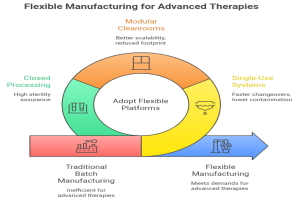
Cell and gene therapies, antibody-drug conjugates, and targeted biologics require small batch sizes, high sterility assurance, and rapid release timelines. Traditional large-scale batch plants are not well-suited to these requirements. The high cost and complexity of producing such therapies create operational and financial pressure.
Opportunity: Flexible and Modular Manufacturing Platforms
To meet these demands, manufacturers are adopting single-use systems, modular cleanrooms, and closed processing technologies. These platforms support faster changeovers, lower contamination risk, and better scalability. Flexible manufacturing is becoming a key differentiator, especially for CDMOs serving biotech clients.
7: Margin Pressure and Cost Control
Price controls, generic competition, and payer scrutiny continue to tighten margins. At the same time, manufacturing costs are rising due to higher quality requirements, energy prices, and labor costs. Maintaining profitability without compromising quality is a major challenge in 2026.
Opportunity: Process Intensification and Smarter Cost Management
Manufacturers are responding by improving process efficiency rather than cutting corners. Higher yields, continuous manufacturing, and inline quality testing reduce waste and shorten production cycles. When combined with early market access planning and real-world evidence generation, these improvements support both cost control and commercial success.
Conclusion
Industrial pharmaceutical manufacturing in 2026 is defined by balance. Companies must manage risk while enabling innovation, control costs while meeting sustainability goals, and maintain compliance while increasing speed and flexibility.
The seven challenges outlined here are significant, but each one creates a clear opportunity for manufacturers willing to invest in technology, people, and process understanding. Those who adapt will not only meet today’s demands but also shape the future of pharmaceutical manufacturing.
FAQs
1. What are the biggest manufacturing challenges in the pharmaceutical industry in 2026?
Supply chain risk, regulatory pressure, automation integration, workforce shortages, sustainability demands, advanced therapies, and cost control.
2. How is pharmaceutical manufacturing changing in 2026?
Manufacturing is becoming more digital, flexible, data-driven, and focused on sustainability and advanced therapies.
3. Why is Quality-by-Design important in pharma manufacturing?
It improves process control, reduces deviations, and helps meet evolving regulatory expectations.
4. How are pharma companies addressing sustainability in manufacturing?
Through energy-efficient systems, solvent recovery, continuous processing, and reduced waste generation.
5. What role does automation play in modern pharma plants?
Automation improves consistency, reduces human error, enables predictive maintenance, and supports regulatory compliance.
Reporting on the science, business and regulation shaping the pharmaceutical industry.
More in Pharma Manufacturing
All articles →
Compliance In Pharma Manufacturing 2025: Key Regulations And Best Practices You Need to Know

Improving Pharmaceutical Manufacturing Flexibility: Agile Manufacturing and Rapid Scale-Up

Discussion