Everything You Need to Know About Softgel Capsules
Softgel capsules solve solubility problems tablets can't, explore the market, manufacturing process, and QC risks.

In 1834, French pharmacist Joseph Gerard Auguste Mothes sealed gelatin around a dose of copaiba balsam because his patients refused to swallow the foul-tasting oil any other way. Nearly two centuries later, that same principle, wrapping a difficult liquid in a soft, swallowable shell, sits at the center of one of the fastest-growing dosage form categories in pharmaceuticals and nutraceuticals.
Today, softgel capsules are no longer a niche packaging choice. They are a strategic answer to one of drug development's oldest problems: how do you get a poorly soluble molecule into the bloodstream reliably? This guide walks through the science, the market, the manufacturing floor, and the regulatory fine print that every leader steering a softgel program needs to know.
What Exactly Is a Softgel Capsule?
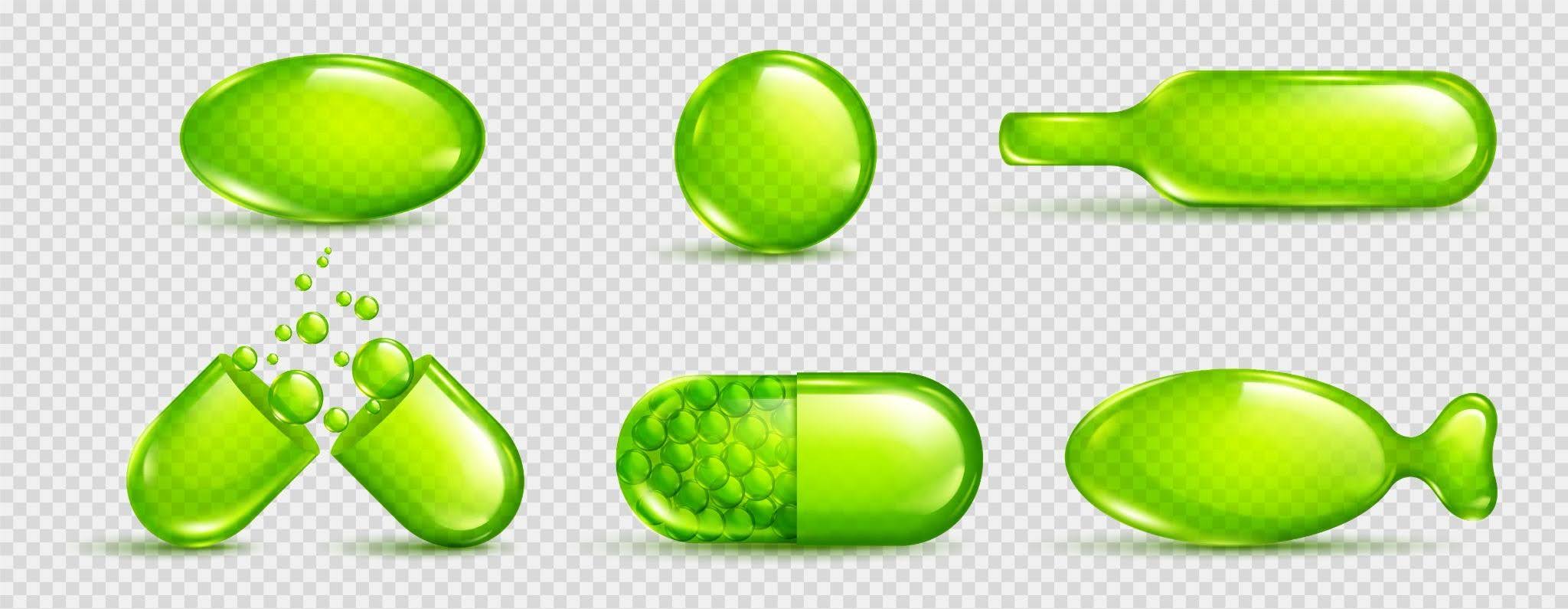
A soft gelatin capsule (softgel) is a one-piece, hermetically sealed shell, typically made of gelatin, water, and a plasticizer like glycerin, that encases a liquid, suspension, or semi-solid fill. Unlike hard capsules, which snap together as two dry halves around a powder, softgels are formed and sealed around the fill in a single continuous step.
That single-step seal is what gives softgels their signature advantage: a truly watertight, airtight barrier around the active ingredient. Softgels differ from hard capsules in that two softgel ribbons are sealed together around the fill in one go, creating a watertight seal, while hard capsules use a separate cap and body filled with dry powder.
Why Leaders Are Betting on Softgels?
The honest answer starts with a solubility crisis that has quietly reshaped drug development pipelines. More than 40% of new chemical entities emerging from modern drug discovery have poor biopharmaceutical properties, such as low aqueous solubility or permeability, which creates significant challenges for oral absorption and dosage form development.
This is precisely where softgels earn their keep. Development of the softgel dosage form has grown in importance for oral delivery of poorly water-soluble compounds, particularly BCS Class II and Class IV molecules. The liquid fill is often already dissolved or solubilized before it ever reaches the shell, which sidesteps the dissolution bottleneck that plagues tablets.
Key clinical and operational advantages include:
- Bioavailability enhancement: The liquid or semi-solid fill improves dosage unit homogeneity compared with other solid forms, and it supports delivery of very low drug doses, enhanced bioavailability, and better absorption of poorly soluble drugs, while reducing plasma variability.
- Operator safety: The dosage form minimizes the potential generation of dust during manufacturing, improving the safety of production personnel handling potent APIs.
- Precision dosing: liquid fills allow accurate delivery of low and ultra-low API doses that would be difficult to compress uniformly into a tablet.
- Taste and odor masking: the sealed shell hides unpleasant flavors, a major driver of patient adherence for pediatric and geriatric populations.
The Softgel Calpsule Market
Softgels have moved from a specialty format to a genuine growth category. Depending on methodology, market analysts size the global softgel capsule market between roughly $7.9 billion and $8.9 billion in 2025, with consistent projections of 6% to 9% annual growth through the early 2030s.
By shell source, gelatin retained 82.34% of the softgel capsules market share in 2024, while non-animal shells are projected to grow at a 7.24% CAGR to 2030. By application, pharmaceuticals led with 60.74% revenue share in 2024, while nutraceuticals are forecast to expand at a 7.93% CAGR through 2030. North America dominated the softgel capsules market with a 35.58% share in 2025.
The strategic subplot worth watching: prescription drug approvals are increasingly leaning on the format. In October 2025, Bayer received FDA approval for Lynkuet (elinzanetant) 60mg capsules, a dual neurokinin-targeted therapy for moderate to severe menopausal hot flashes, illustrating how pharmaceutical companies continue to commercialize capsule-based therapies for differentiated, patient-friendly treatment.
Inside the Manufacturing Process
Softgel production has stayed remarkably consistent in principle since its 19th-century origins, even as the equipment has modernized dramatically. Soft capsules are commercially manufactured using rotary-die technology, a technique tracing back to the 19th-century innovations of pharmacist Robert P. Scherer, involving parallel operations that are typically highly standardized: gel mass preparation, fill mass preparation, encapsulation, drying, inspection, and bulk packaging.
The core steps, in sequence:
- Gel mass preparation — gelatin, plasticizer, and water are blended and melted into a molten ribbon-forming mass.
- Fill preparation — the API is dissolved, suspended, or emulsified into an oil or lipid-based vehicle; powders are typically milled to a fine particle size to maintain suspension uniformity.
- Encapsulation — two continuous gelatin ribbons are fed over rotary dies, where the fill is injected and the capsule is simultaneously formed and sealed.
- Drying — capsules are dried to reduce moisture content to approximately 10%, in conditioned rooms or chambers, on trays or in rotating perforated tumblers, until a target endpoint is reached.
- Inspection and packaging — capsules are screened for weight, seam integrity, and defects before bulk or blister packaging.
Rotary-die encapsulation is one dosage form process.
Here's how it fits into pharma manufacturing as a whole.
→ Read: Pharmaceutical Manufacturing: Complete Process Explained
Environmental control is not a side detail here, it is often the deciding factor in yield and quality. Temperature and relative humidity are critical process parameters that directly affect capsule formation, stability, and quality, and HVAC systems in softgel plants often account for 40 to 50 percent of total energy usage because of the stringent conditions required.
One formulation scientist's advice captures the practical stakes on the plant floor: powders should always be milled to the correct size before use, because large particles can lead to leaking softgels and inconsistencies in the final product.
Gelatin vs. Non-Gelatin Shells
Shell material selection has become a genuine strategic decision, not just a formulation footnote, as vegan, halal, and kosher demand grows.
Porcine gelatin is set to maintain its position as the largest source segment, constituting roughly 55% of softgel capsule market revenue in 2025, driven by superior gel strength and thermoreversibility that facilitate efficient encapsulation and stability, although regional religious restrictions limit acceptance in certain markets.
Quality Control: Where Softgels Get Tricky
This is the section most product leaders underestimate. Softgels do not "dissolve" in the way tablets do, and testing them incorrectly can generate false failures or, worse, miss real ones.
Because the drug is already dissolved in the oil fill of a softgel product, drug dissolution is not a physical process that occurs during rupture testing, it is the capsule shell itself that must dissolve for the drug to be released. Regulators account for this directly. For softgel capsules containing lipophilic drugs, the FDA's Division of Bioequivalence typically requires a quantitative rupture in-vitro drug release test to measure how much drug is released after the capsule shell ruptures.
The single biggest long-term quality risk is gelatin cross-linking. Cross-linking can be triggered by reactive agents present in the capsule fill or packaging that react with gelatin molecules, forming a pellicle, a thin, water-insoluble skin, on the internal or external surface of the shell that prevents the fill from being released during dissolution.
Regulators have built a specific safety net for this. USP General Chapter <711> permits a two-tier assessment of hard and soft gelatin capsules when evidence of cross-linking is present, allowing the addition of various enzymes based on the pH of the dissolution medium to resolve potential cross-linking issues. Studies have shown that drugs from cross-linked capsules remain available in vivo to the patient, which justifies the use of enzymes in the in vitro dissolution test.
Gelatin cross-linking is one QC challenge.
Here's how quality control works across every dosage form.
→ Read: Ensuring Safety in Pharmaceutical Quality Control
Challenges That Still Keep Formulators Up at Night
Softgels are not a universal fix. Softgel capsules play a minor role in the overall mass market of pharmaceutical dosage forms, representing well under 5% of all solid dosage forms, though for certain high molecular weight or poorly soluble APIs they remain the preferred or only viable format.
Common friction points include:
- Fill-shell compatibility: reactive fill ingredients can trigger the cross-linking problem described above.
- Thermal sensitivity: gelatin's sol-gel transition means the entire process is temperature-dependent, complicating scale-up.
- Supply chain exposure: disease outbreaks affecting livestock have historically increased porcine gelatin costs and pushed manufacturers toward supply diversification.
- Tariff and trade policy risk: In early 2025, new tariff measures on gelatin and preformed softgel imports into the United States introduced additional cost considerations for manufacturers.
Conclusion
Softgel capsules sit at an unusual intersection: a nearly 200-year-old technology now being asked to solve some of the most modern problems in drug delivery, from low-solubility NCEs to clean-label consumer demand. The formulation science is mature, but the execution details, humidity control, shell chemistry, dissolution methodology, are where programs succeed or quietly stall.
For pharma leaders, the strategic question is rarely "should we consider a softgel." It is whether the organization has built the quality, regulatory, and supply chain muscle to execute one well.
Frequently Asked Questions
1. Are softgel capsules vegetarian or vegan?
Traditional softgels use animal-derived gelatin, but vegetarian softgel capsules made from hydroxypropyl starch or carrageenan are increasingly available, driven by consumer preference for plant-based and clean-label formulations.
2. Why do softgels improve bioavailability compared to tablets?
Because the API is pre-dissolved or suspended in a lipid vehicle, the rate-limiting dissolution step that tablets must undergo is largely bypassed, which is especially valuable for BCS Class II and IV compounds.
3. What causes a softgel to fail dissolution testing years after manufacture?
Gelatin cross-linking is the leading cause, driven by trace reactive compounds in the fill or packaging, or by prolonged exposure to heat and humidity during storage.
4. How are softgels manufactured at commercial scale?
Softgel capsules are produced through encapsulation, where liquid formulations are filled between two gelatin ribbons and sealed using rotary die encapsulation machines, followed by drying and inspection.
5. Which therapeutic and consumer categories rely most on softgels?
Omega-3s, vitamin D, vitamin E, and multivitamins dominate nutraceutical use, while pharmaceutical applications increasingly target poorly soluble small molecules and hormone therapies requiring rapid, reliable absorption.
Reporting on the science, business and regulation shaping the pharmaceutical industry.
More in Pharma Manufacturing
All articles →
Compliance In Pharma Manufacturing 2025: Key Regulations And Best Practices You Need to Know

Improving Pharmaceutical Manufacturing Flexibility: Agile Manufacturing and Rapid Scale-Up

Discussion