Regulatory Scrutiny of Pharma Promotion: What Regulators Expect
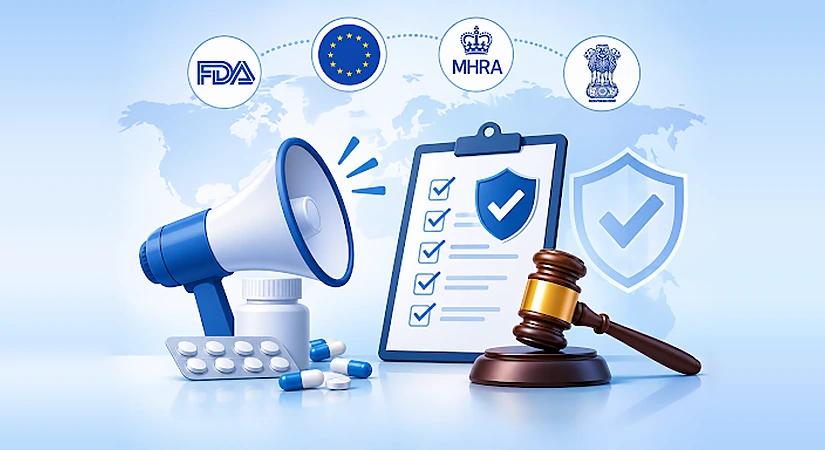
Regulators now judge how pharma promotion feels, not just what it says. Here is what the FDA, MHRA and India expect, plus a compliance checklist.

Introduction
Drug promotion is under a brighter spotlight than it has been in years. From television ads in the United States to LinkedIn posts in the United Kingdom, regulators now check not only what pharma companies say, but also how the message feels to the person reading or watching it. This guide explains where scrutiny is rising, which rules apply, which mistakes trigger action and a simple checklist for pharma promotion compliance.
Why Scrutiny Is Increasing
Medicines are not ordinary products. Doctors and patients rely on promotional material to understand benefits, risks, and limits of use. When a message stretches a benefit or hides a risk, people can make poor treatment choices. That is the core reason regulators step in. Clear, honest promotion also helps doctors choose the right treatment for each patient.
Three trends add pressure. First, direct-to-consumer (DTC) advertising now runs across TV, websites, and social platforms. Second, telehealth firms and online pharmacies market medicines directly to patients, blurring the line between information and promotion. Third, governments want more transparency in how companies influence prescribers. The result is closer monitoring and tougher expectations on tone and design, not just wording.
United States: FDA and OPDP
In the US, the FDA Office of Prescription Drug Promotion (OPDP) reviews prescription drug advertising and promotional labelling. The legal basis is the Federal Food, Drug, and Cosmetic Act and the rules in 21 CFR 202.1. Promotion must be truthful, not misleading, backed by evidence, and consistent with the approved label. It must also show fair balance, which means benefits and risks get comparable weight.
Enforcement has stepped up sharply. On 9 September 2025, the White House, HHS, and FDA announced a crackdown on DTC advertising, and more than 60 warning and untitled letters were issued simultaneously. One law firm count puts the September 2025 total above 100 letters, with about 80% of the untitled letters aimed at TV ads. The pace continued: by 22 June 2026, the FDA had issued 17 untitled letters, covering TV, social media, webpages, a patient brochure, and an email to healthcare providers. For comparison, OPDP issued only five letters in all of 2024.
Two ideas sit at the centre of these letters. The first is net impression, which is the overall takeaway an ordinary consumer gets from an ad, not just the accuracy of single words. The second is risk presentation. Recent letters repeat the same themes: omitting important risk information, downplaying safety concerns, making broad efficacy claims, and failing to state limits on use. Visuals matter too. A letter on a schizophrenia drug ad made the point that eye-catching imagery can pull attention away from risk information
The FDA is also active outside classic pharma ads. In the week of 15 June 2026, it sent 25 warning letters to telehealth companies over claims about compounded GLP-1 products.
An untitled letter is not a fine, but it should be taken seriously. These letters reflect current FDA expectations and often precede more formal action if the concern is not resolved. The usual response is to stop using the material, review related pieces for the same problem, and reply in writing by the date specified in the letter. Letters are also posted on the FDA website, so both reputation and compliance are at stake.
Net impression and risk presentation are already driving FDA letters, and a proposed rule could go further for TV ads. See what the proposal would change and how pharma teams can prepare now.
→ Read: FDA’s Proposed DTC Rule Could End TV Drug Ads
European Union and United Kingdom
EU law, built on Directive 2001/83/EC, bans advertising of prescription-only medicines to the public. Promotion to health professionals must match the approved Summary of Product Characteristics (SmPC) and be accurate and balanced. Each member state enforces these rules, often with help from industry self-regulation.
The UK follows the same core principle. UK and EU law both prohibit advertising prescription-only medicines to the public and the promotion of a medicine before it has marketing authorisation. The MHRA handles complaints under Part 14 of the Human Medicines Regulations 2012, and its Blue Guide explains how the rules apply.
Day-to-day control of prescription medicine promotion is largely governed by the ABPI Code of Practice, which the Prescription Medicines Code of Practice Authority (PMCPA) administers. The code reflects UK law and goes beyond it.
Social media is a major focus. The PMCPA issued its first social media guidance in early 2023, updated it in October 2024, and has since published a revised version. Several large companies faced LinkedIn-related complaints that were completed in 2024, which shows how easily a short post can become a code issue.
India: UCPMP 2024
On 12 March 2024, India’s Department of Pharmaceuticals issued the Uniform Code for Pharmaceutical Marketing Practices (UCPMP) 2024, replacing the 2014 code. The earlier code was voluntary. The new one applies to both pharmaceutical and medical device companies, and companies must submit annual self-declarations of compliance.
Other key points include:
Pharmaceutical associations must set up an Ethics Committee for Pharmaceutical Marketing Practices (ECPMP) to handle complaints.
The chief executive of each company is responsible for ensuring compliance.
Promotion must stay within the terms of the marketing approval.
Updated rules cover brand reminders and continuing medical education (CME) events.
Common Violations at a Glance
Across regions, the same errors recur. This table summarises them.
Violation | What it looks like | Safer approach |
|---|---|---|
Missing or weak risk information | Benefits in large text, risks in fast voiceover or tiny print | Give risks equal clarity and prominence |
Overstated efficacy | “Works for everyone” style claims | Match claims to approved indications and data |
Misleading visuals | Happy imagery that distracts from warnings | Test whether visuals support or hide the message |
Off-label or pre-approval promotion | Talking about unapproved uses or unlicensed products | Keep all claims inside the approved label |
Public promotion of prescription drugs (EU/UK) | Product-specific posts aimed at patients | Share only factual, balanced disease information |
Weak oversight of partners | Influencers or telehealth partners making claims | Control and review partner content |
Digital and Social Media Risks
Digital channels are where many problems start. A social platform is only a channel, so the same laws apply as for any other media. Companies must watch for promotion of prescription-only medicines to the public, pre-licence or off-label promotion, and misleading or unbalanced information.
Disease awareness campaigns need care too. A post that names a condition but steers readers toward one brand can be read as product promotion.
Employee activity is a common gap. In one 2026 UK case report, a company said it had reminded staff not to “like” social posts that mention products. Even a small action can be treated as promotion if it is linked to the company.
Third parties add risk as well. Influencers, telehealth platforms, and affiliates can create claims that regulators trace back to the manufacturer. Contracts should state what partners may say, and review processes should cover their content.
A short social post can turn into a code issue in seconds. See how pharma brands win attention in the first moments of the scroll without breaking fair balance rules.
→ Read: The 5-Second Challenge | Winning Attention in the Scroll Economy
Compliance Checklist
Use this list before any piece goes live:
Is every claim supported by data and consistent with the approved label or SmPC?
Do risks and limitations get the same visibility as benefits?
Have you checked the net impression for a lay reader, including visuals, tone, and music?
Is the audience correct, with no prescription-only promotion to the public in the EU or UK?
Has a medical, legal, and regulatory review signed off, with records kept?
Are submissions to the regulator made on time, such as FDA Form 2253 at first use in the US?
Are employees and partners trained on social media rules?
Is there a process to pull or correct material fast if a complaint arrives?
For India, is the annual UCPMP self-declaration up to date?
Final Thoughts
Regulators are watching how messages land, not just what they say. The safest plan is simple: keep claims tied to approved data, give risks real space, and review every channel the same way. Companies that build strong review systems now will find it far easier to adapt as rules change.
Treat compliance as part of content planning, not a last-minute check. Involve regulatory and medical teams at the brief stage, keep a clear approval trail, and review live content on a schedule. That habit protects patients and builds trust.
FAQs
What is OPDP?
The FDA reviews prescription drug ads and promotional materials for misleading content.
What is an untitled letter?
It is an FDA notice that points out violations and asks a company to stop them. It carries no fine but can lead to stronger action.
What does net impression mean?
It is the overall message a consumer takes from an ad, including visuals, tone, and wording.
Can prescription drugs be advertised to the public in the EU or UK?
No. Both prohibit it, though factual, balanced information may be shared.
Does India have a pharma marketing code?
Yes. UCPMP 2024 sets rules for promotion and requires annual self-declarations from companies.
Reporting on the science, business and regulation shaping the pharmaceutical industry.
More in Pharma Marketing
All articles →
The Importance of Personalization in Pharmaceutical Marketing Campaigns

The Power of Storytelling in Pharma Marketing: Engaging Customers with Your Brand

Discussion