How Gen-AI enhances Digital Twins ?
How Generative AI elevates pharma digital twins with prediction, automation, and smarter, compliant biomanufacturing.
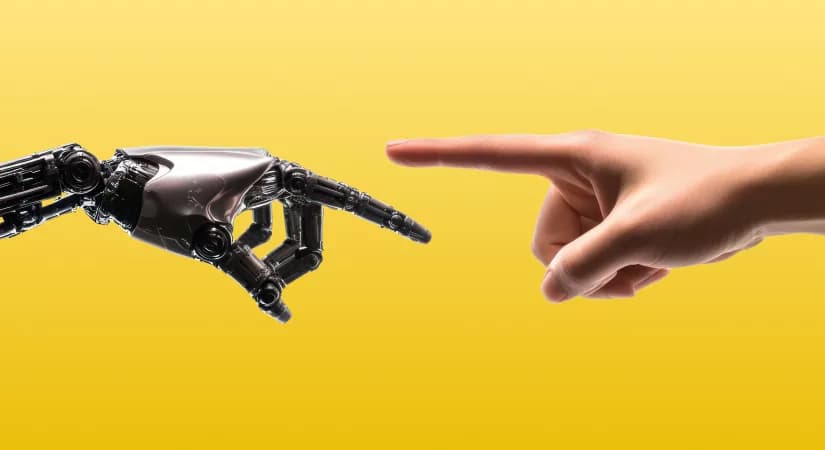
Imagine entering a modern biomanufacturing facility, where every hum of the fermenter, every blink of a sensor, and every shift in the cleanroom air is instantly reflected by a dynamic, intelligent digital twin.
Welcome to the era of Enhancing Digital Twins through Generative AI, where virtual replicas don’t just mirror reality, but they predict it, optimize it, and sometimes even outrun it.
The pharmaceutical industry, with its complex processes and intense regulatory expectations, has always needed technology that is equal parts accurate, anticipatory, and compliant. Digital twins delivered the accuracy. Generative AI delivers the anticipation. And when they come together—it’s like giving your facility a second brain.
Let’s dive into how this powerful duo is reshaping the pharmaceutical industry, one simulation, one molecule, and one prediction at a time.
Generative AI: The Creative Scientist Your Plant Didn’t Know It Needed
Generative AI (GenAI) doesn’t just analyze data; it creates it.
It learns from your historical runs, sensor values, SOPs, batch deviations, operator notes—yes, even that slightly irritated “temperature spike again” line in the shift log—and uses it to generate new possibilities.
In pharma, this means Generative AI becomes a powerful co-pilot that does far more than simply analyzing data. It can build high fidelity synthetic datasets to accelerate learning, predict new process scenarios before they occur, and create intelligent optimization pathways that improve consistency and efficiency.
Generative AI also automates documentation, reducing hours of manual work into minutes, while identifying subtle patterns that often remain unnoticed by human experts. Most importantly, it can recommend instant corrective actions, allowing teams to operate proactively with greater accuracy and confidence.
Now combine this intelligence with your digital twin—and you’ve just taken your entire operation from “responsive” to proactively brilliant.
How Generative AI Enhances Digital Twins in Pharma?
1. Richer, More Realistic Simulations
Traditional digital twins operate like cookbooks where you follow a recipe and get a predictable dish. Generative AI, however, transforms that simple cookbook into a full-fledged culinary school because it teaches your twin to experiment, adapt and explore possibilities beyond fixed rules.
In the bioprocessing industry, GenAI can simulate nutrient uptake patterns, fluctuations in critical quality attributes and critical process parameters, bioreactor stress responses, the impact of changing environmental variables and even the natural unpredictability of cell cultures. Instead of rigid, rule-based models, you gain simulations enriched with real-world complexity, which is exactly what biologics manufacturing needs to achieve consistency, precision and higher process intelligence.
2. Synthetic Data: The Secret Ingredient to Faster Development
One of pharma’s biggest constraints? Not enough high-quality data.
But GenAI can whip up high-fidelity synthetic datasets that mimic real runs, without making you wait for up to six long weeks for the next fermentation cycle.
Your digital twin learns faster, smarter, and deeper, enabling rapid process optimization, more predictive experimentation, risk-free scale-up simulations, and better training for operators and engineers.
It’s like giving your process a time machine to learn from “future data” without running a single batch.
3. Intelligent Anomaly Detection and Real-Time Correction
This is where the magic truly begins.
Say your fill-finish line shows tiny fluctuations in fill volumes due to viscosity changes. Normally, you'd spot it late or after a deviation is logged.
A GenAI-powered digital twin takes this even further. It identifies micro-anomalies the moment they appear, diagnoses the most probable root cause, runs a series of simulated adjustments to test potential outcomes, and then recommends the most effective correction.
It’s as if your equipment whispers, “Don’t worry, I’ve got this.”
4. Tech Transfer that Moves at the Speed of Intelligence
Anyone who’s been part of a tech transfer knows it can feel like juggling SOPs, stress, and spreadsheets.
Generative AI changes that narrative.
Since Generative AI can understand unstructured text such as batch records, deviation reports, and operator experiences, it helps digital twins standardize process knowledge, reduce transfer timelines, minimize human interpretation errors, and maintain consistency across multiple manufacturing sites.
Suddenly, tech transfer becomes less like a marathon and more like a smooth relay.
5. Automated Documentation That Gives QA a Breather
Documentation is the backbone of pharma, but it’s also the most time-consuming.
With Generative AI, digital twins can automatically produce validation summaries, deviation reports, change-control documents, and predictive risk assessments. This transforms documentation from a manual, time-intensive task into a streamlined and intelligent process that supports accuracy, traceability, and regulatory readiness.
Better yet, everything is traceable, transparent, and aligned with regulatory expectations. Quality teams get fewer headaches; leadership gets cleaner audit trails.
Business Impact: What’s in it for you as a Pharma Leader?
- 20–30 percent reduction in downtime
- You gain a significant reduction in equipment and process downtime because predictive maintenance allows you to address issues before they escalate. Instead of reacting to failures, you operate in a proactive mode where your systems alert you to wear, drift, or anomalies. This ensures higher equipment availability, smoother production cycles, and better utilization of your manufacturing assets.
- Improved batch success rates
- You see a clear improvement in batch consistency because tighter control of critical process parameters and critical quality attributes leads to fewer deviations and fewer surprises during manufacturing. With AI continuously monitoring your process behavior, you catch variations early and maintain process integrity, delivering more right-first-time batches.
- Faster development cycles
- You accelerate development timelines because synthetic data and AI-driven simulations help you learn faster than real-world cycles alone. Your teams can test scenarios, experiment virtually, and optimize processes long before going to the production floor. This shortens experimentation phases, speeds up decision-making, and helps you move molecules and products through the pipeline with greater efficiency.
- Stronger compliance posture
- You strengthen your compliance because AI-generated documentation, validation summaries, and deviation insights are consistent, traceable, and audit-ready. Instead of scrambling during inspections, you have clean documentation that reflects real-time process understanding. This gives you greater confidence in meeting regulatory expectations and reduces the stress on your QA teams.
- Enhanced decision-making
- You make stronger, faster, and more confident decisions because you gain real-time visibility across the entire product lifecycle. From R&D to commercial manufacturing, AI equips you with insights that help you respond to risks, allocate resources better, and optimize operations. You lead with clarity, backed by data that is accurate, actionable, and always up to date.
But Let’s Be Real: Challenges Exist
Data Integrity
Imagine your AI system generating predictions, insights, and recommendations at lightning speed. It feels powerful, almost magical. But in pharma, magic is never enough. Every output must stand up to the uncompromising scrutiny of GAMP 5 and global regulatory expectations. Data integrity becomes the backbone of trust.
If the AI model suggests an optimization or flags a deviation risk, you need complete confidence that the data behind it is accurate, traceable, and validated. Without this, even the most sophisticated AI system becomes unusable. The story here is simple: your AI is only as strong as the discipline of its data.
Cybersecurity
Picture your manufacturing facility as a fortress. Digital twins, cloud-connected systems, and AI-driven platforms open new doors to innovation, but they also open windows that cyber threats can exploit. A single vulnerability can turn into a cascade of risk. This is why a zero-trust architecture is no longer optional. You must assume nothing and verify everything.
Every device, every user, every piece of data must prove its identity before it gains access. In a world where cyber threats evolve as quickly as technology itself, your security strategy becomes the silent guardian of your operations.
Cross-Functional Adoption
Think of AI adoption as launching a new orchestra. You cannot rely on one section alone; you need the entire ensemble playing in harmony. MSAT brings process understanding, Quality ensures compliance, IT handles infrastructure, Engineering keeps systems running, and Operations ensures real-world feasibility.
When these teams collaborate, AI-driven digital twins flourish. When they work in silos, progress slows, frustrations rise, and the true potential of GenAI never materializes. Success here is less about technology and more about teamwork, communication, and shared ownership of the vision.
Regulatory Evolution
The regulatory landscape is shifting like a river carving a new path. Agencies such as the FDA, EMA, and MHRA are actively shaping guidelines for AI-enabled systems, but the ink is still drying. For leaders, this means staying alert, adaptive, and engaged. New frameworks, draft guidances, and industry discussions can redefine what compliance looks like.
Keeping up is not just a checkbox; it is a strategic advantage. Those who understand and anticipate regulatory movement will innovate faster and more confidently, while others will struggle to catch up.
Summing it Up!
Enhancing Digital Twins through Generative AI isn’t just an upgrade—it’s a transformation.
Digital twins show “what is.”
Generative AI shows “what could be.”
Together, they help pharma move from reactive operations to intelligent, predictive, and self-optimizing ecosystems.
The result?
Safer drugs, faster timelines, cleaner data, and smarter decisions—delivered through technologies that think, learn, and evolve.
FAQs
1. What is the role of Generative AI in digital twins for pharma?
Generative AI creates synthetic data, predicts scenarios, identifies anomalies, and suggests optimizations, making digital twins more intelligent and predictive.
2. How do AI-enhanced digital twins improve manufacturing efficiency?
They detect anomalies early, reduce downtime, optimize parameters automatically, and streamline documentation—resulting in smoother, faster production.
3. Is synthetic data reliable for pharma processes?
Yes. Synthetic data generated by GenAI mirrors real batch behavior and is validated through model training, making it safe for simulations and process optimization.
4. Are AI-powered digital twins compliant with regulations?
Yes—when implemented with proper validation, audit trails, traceability, and adherence to GAMP 5 and AI regulatory frameworks.
5. What are the biggest challenges in adopting Generative AI in pharma?
Data integrity, cybersecurity, talent gaps, cross-functional alignment, and navigating evolving regulatory guidelines.
Reporting on the science, business and regulation shaping the pharmaceutical industry.

Discussion