by Team Pharma Now
4 minutes
Rasayan Labs Emerges as a Unified AI Operating System for Generic Drug Development, Moving Beyond the Limits of Traditional Tools
Discover how Rasayan Labs is unifying AI-powered generic drug development with a single platform that accelerates API R&D, formulation, regulatory workflows, and more.
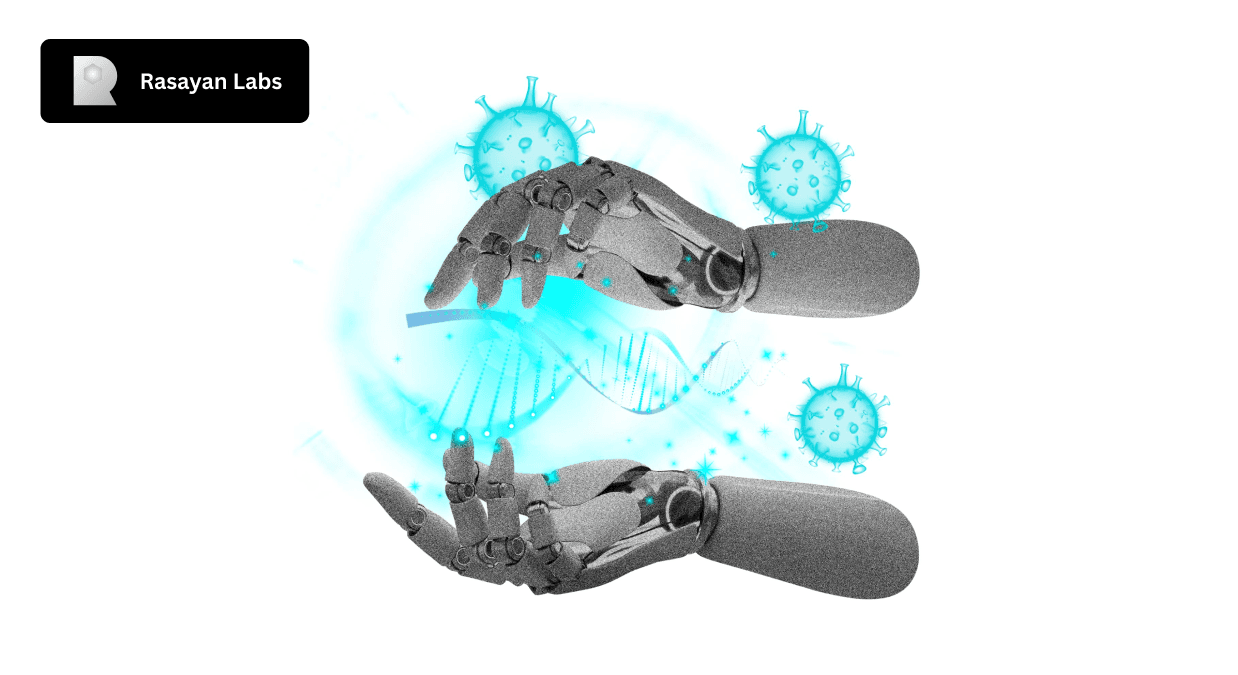
Moving a single API from initial route selection to commercial-scale, regulatory-ready synthesis often takes years. Rasayan Labs (rasayan.ai), operating out of the Bay Area and Nagpur, believes artificial intelligence can meaningfully shrink that timeline. The company has built a unified small molecule chemistry platform designed to consolidate the fragmented set of tools API manufacturers and generics developers currently rely on, and the approach is gaining real traction across the industry.
Available for free - request access today
One Environment for the Entire Process R&D Workflow
Most chemistry teams face the same underlying friction: constant movement between disconnected systems, one for retrosynthesis, a separate one for impurity prediction, another for formulation, another still for patent research, none of them integrated with one another. Rasayan's approach consolidates the entire small molecule workflow into a single connected platform.
Its compound intelligence search draws on a library of 1.3 trillion virtual molecules, enabling researchers to evaluate more than 1,400 ADMET properties per compound, spanning hERG cardiotoxicity, drug-induced liver injury (DILI), over 1,100 pKa endpoints, and complete pharmacokinetic profiles. AMES mutagenicity results are paired with structural alerts, SAR-based reasoning, and modification suggestions to resolve flags, with output pre-formatted for regulatory filing, reducing much of the manual impurity and genotoxicity documentation regulatory teams would otherwise compile by hand.
A retrosynthesis engine maps every viable synthetic route from a target API down to purchasable starting materials, complete with live vendor pricing and projected synthesis cost, drawing on 44+ connected suppliers and a catalog of 34 million priced precursors. Each reaction step carries impurity predictions across seven categories, sourced from literature or generated by AI, updating dynamically as a chemist revises any part of the route. Users can draw on internal compound libraries, incorporate literature or AI-suggested precursors, construct a custom route breakdown, or direct Rasayan's agent to analyze and dissect a specific bond.
Rasayan Draw addresses the structure side of the platform, allowing chemists to move between chemical names, CAS numbers, hand-drawn sketches, and scanned printed structures, converting any of them into editable SMILES and complete 2D or 3D structures, within an interface built across standard file formats to feel familiar from first use. As a chemist works, the tool performs calculations that would otherwise require separate software: LogP, LogS, and TPSA on the fly, AMES toxicity and hERG inhibition flags, and stereochemical checks that identify R/S configuration errors before they appear in a research meeting. A built-in spectra function adds proton, carbon, and 2D NMR prediction (HSQC, COSY, HMBC, NOESY) alongside mass spectrometry output across various solvents and ionization modes, with human verification still required to confirm accuracy. The same module maintains aromaticity across file format conversions and supports macromolecule drawing for peptide-focused chemists, and can run either as a standalone application or embedded within Rasayan's broader engine. This module is likewise available free by request.
Underlying these tools is a shared knowledge layer, built from 105+ purpose-built AI models, 1.3 billion catalogued reactions, and 118 million indexed patents. Teams can input lab notebooks, patent filings across 140 languages, published literature, or hand-drawn structures, and Rasayan's OCSR (Optical Chemical Structure Recognition) system extracts any chemical structures present and integrates them into the platform's broader intelligence base. The company describes this as a self-improving R&D system that adapts to a team's accumulated data, translating in practice to faster route identification, more consistent impurity documentation, and considerably less manual literature and patent research per project.
Formulation Development Now Resides Within the Same Platform
Rasayan Formulations extends the platform beyond synthesis into the development phase, with the aim of resolving formulation decisions before laboratory work begins. It forecasts drug-excipient compatibility, evaluates stability, and anticipates likely degradation pathways in advance, while polymorph screening identifies crystal-form risks that could later affect manufacturability or shelf life. Built-in regulatory intelligence keeps formulation decisions aligned with submission requirements from the earliest stages, rather than requiring revision later in development.
Addressing Bottlenecks Outside the Laboratory
Rasayan's underlying premise is that delays in drug development are not confined to bench work. A considerable share of pharmaceutical R&D time is devoted to procurement, vendor coordination, and, in particular, responding to RFPs (Requests for Proposals). To address this, Rasayan has built RFP automation directly into the platform, and the company reports that this has reduced RFP turnaround from 22 days to two. For business development and partnership teams at pharmaceutical companies, where a faster response can determine whether a deal is won or lost, this capability has become a genuine commercial differentiator rather than a minor addition.
Rasayan Runs Its Own Discovery Work on the Same System
One of the stronger indicators of the platform's capability is that Rasayan uses it internally to
operate an active discovery pipeline. Though the product is designed primarily around the route planning, impurity management, and regulatory output that API and generics teams require day to day, its underlying models extend equally well to novel compound work. The company currently has 19 novel compounds in synthesis through its internal pipeline, with active programs targeting cardiovascular disease (PCSK9) and inflammation (COX-2/mPGES).
This is a meaningful signal for API and generics customers evaluating the platform: its impurity, ADMET, and retrosynthesis models were not designed around a single narrow application, and are versatile enough to have already produced results in original drug discovery. It also indicates that the platform's value is not demonstrated through benchmark rankings alone, but is substantiated by the company's own research output.
Early Market Signals
Rasayan reports more than 2,400 researchers using its AI engine on a monthly basis, across pharmaceutical companies, biotechnology firms, and academic institutions.
The company's models also placed 9th globally in the OpenADMET PXR Blind Challenge, earning Tier 1 recognition as part of a 28-way statistical tie with the leading model. Competing against a field of more than 350 teams, Rasayan's performance on one of the field's most rigorous blind benchmarks for PXR induction prediction now feeds directly into its ADMET module.
The API and generics sector has long relied on specialized point solutions, each excellent at one task, none built to talk to the others. Rasayan's wager is that this fragmentation itself is the inefficiency worth solving, not any single step in the pipeline. With US patent granted, independent benchmark validation in hand, and adoption already underway across pharma, biotech, and academic labs, that wager looks increasingly well-placed.
For more information or to book a demo, visit rasayan.ai