Every Company Announced Fill-Finish Capacity: Still Scarce?
Everyone announced more fill-finish capacity, so why is it still one of biopharma's tightest bottlenecks? Here's the gap between announcement and reality.

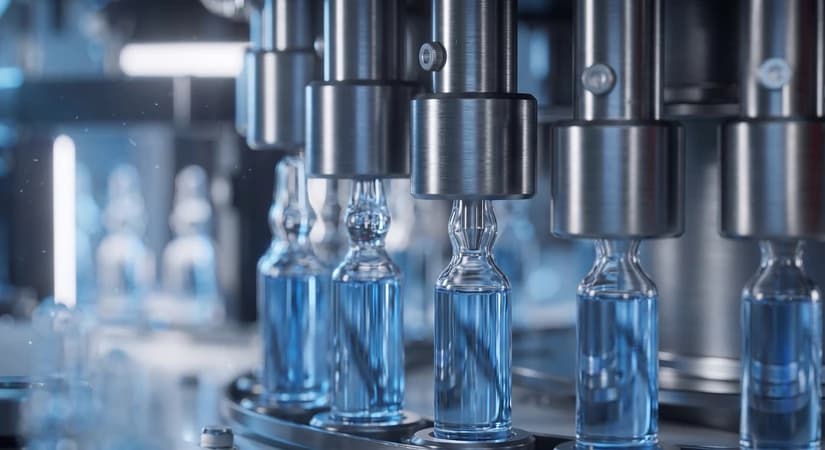
Introduction
Scroll through pharma manufacturing news from the past two years and you'll find an impressive list of announcements: new syringe filling centers, doubled aseptic lines, isolator installations, multi-billion-dollar acquisitions of contract manufacturers.
On paper, it looks like the industry solved its fill-finish problem. In practice, sterile fill-finish capacity remains one of the tightest constraints in all of biopharma manufacturing, and it's likely to stay that way for years, regardless of how many press releases say otherwise.
This gap between announcement and actual relief is worth understanding closely, because it's shaping everything from GLP-1 supply to biosimilar launches to how sponsors choose contract manufacturing partners. Fill-finish isn't a problem you solve by building more buildings. It's a problem defined by validation timelines, specialized labor, and regulatory complexity that don't move at the speed of a press release.
It helps to remember why this category became such a flashpoint in the first place. The FDA's Center for Drug Evaluation and Research approved fifty-five novel drugs in a single recent year, and a meaningful share of them required sterile injectable formulations to reach patients.
Add in the surge of biologics, biosimilars, cell and gene therapies, and GLP-1 receptor agonists all competing for the same narrow band of qualified aseptic capacity, and you get a supply-demand mismatch that was building for years before anyone outside the industry noticed. The GLP-1 shortages that dominated headlines were really just the most visible symptom of a much broader capacity problem that had been quietly tightening across the entire injectable drug category.
Why Fill-Finish Is Uniquely Hard To Scale?

Most manufacturing bottlenecks eventually respond to capital. You build a bigger plant, hire more people, and the constraint eases. Sterile fill-finish doesn't follow that pattern nearly as cleanly, because the constraint isn't really about physical square footage. It's about everything required to make that square footage usable at pharmaceutical-grade sterility standards. That list is long:
Qualified cleanroom infrastructure, built and certified to exacting contamination-control specifications that take far longer to validate than a standard manufacturing facility.
Trained aseptic operators, a genuinely scarce skill set, since working inside a sterile environment without introducing contamination requires specialized training that can't be rushed just because demand spiked.
Validated equipment, meaning every filling line, isolator, and inspection system has to go through its own qualification process before it can be used for commercial product, a process that routinely takes months, not weeks.
Environmental monitoring systems, which have to run continuously and demonstrate a sustained track record before a facility earns regulatory confidence.
Contamination control strategy and media fill performance requirements that demand repeated successful test runs before a line is trusted with real product.
Visual inspection capability and batch release systems, the final quality checkpoints that, again, need their own validation and staffing before a facility can actually ship a product.
Put simply, sterile fill-finish is highly specialized, highly regulated, and operationally difficult to expand quickly, almost by design. A company can announce a new facility in a press release the same week it breaks ground.
It cannot announce its way through eighteen to twenty-four months of validation, staffing, and regulatory inspection. That mismatch between announcement speed and actual capacity-online speed is the real story here.
The Bottleneck Is Also Getting More Crowded, Not Less
One detail that often gets lost in the fill-finish conversation is that the category of products competing for this capacity keeps expanding. It's not just insulin, vaccines, and traditional biologics anymore.
Antibody-drug conjugates, cell and gene therapies, mRNA-based products, and increasingly complex biosimilars are all pulling from the same limited pool of qualified aseptic suites, operators, and validated equipment.
Each of these modalities also tends to bring its own handling requirements, whether that's cold-chain logistics for cell therapies or specialized containment for cytotoxic conjugates, which means new capacity often has to be built for a specific modality rather than functioning as flexible, general-purpose square footage.
This matters because it changes how sponsors should read a capacity announcement. A new filling line built primarily for monoclonal antibody biologics doesn't necessarily help a company trying to secure GLP-1 peptide fill-finish slots, and a line optimized for standard vials may not suit a company that needs prefilled syringes or cartridge formats instead.
The headline capacity number in an industry report can mask a lot of format-specific and modality-specific scarcity underneath it, which is exactly why sponsors increasingly need to look past the top-line figure and ask a CDMO very specific questions about format compatibility before assuming a slot will actually fit their product.
GLP-1 peptide demand is one of the biggest forces crowding fill-finish capacity, see where Novo, Lilly, and CDMOs stand today.
→ Read: GLP-1 Manufacturing Capacity: Where Novo, Lilly, and CDMOs Stand Today
What Actually Got Announced?
To be fair to the industry, the investment has been real and substantial. A recent industry report projects the fill-finish manufacturing market will expand by nearly $10 billion between 2026 and 2031, and the sterile injectables CDMO segment specifically is projected to grow from roughly $41.6 billion in 2026 to $87.3 billion by 2033. Behind those numbers sits a long list of concrete moves:
1) Novo Holdings acquired Catalent for roughly $13 billion in early 2024, and Novo Nordisk subsequently took direct control of three of Catalent's fill-finish sites, one of the clearest examples of a manufacturer choosing to own sterile capacity outright rather than compete for it through a shared CDMO network.
2) Grand River Aseptic Manufacturing added a new 150,000-square-foot syringe and cartridge filling center, bringing the company to five facilities and more than 450,000 square feet of total production space, specifically to support growing demand for prefilled injectable formats.
3) Sharp announced a project to double its aseptic fill-finish capacity at its Lee, Massachusetts site, one of several CDMOs racing to expand U.S.-based sterile capability.
4) CordenPharma is installing two new isolator filling lines at its Caponago, Italy facility, reflecting the same capacity push happening on the European side of the market.
5) Piramal Pharma Solutions is expanding sterile fill-finish service lines across multiple sites in Italy, North Carolina, and Massachusetts, part of a broader pattern of CDMOs spreading capacity across several regions rather than concentrating it in one location.
6) A growing number of mid-to-large pharmaceutical companies are insourcing, expanding their own internal biologics drug substance and sterile fill-finish capabilities rather than relying entirely on external CDMOs, explicitly to increase supply chain resilience and regulatory control.
That's a genuinely large wave of investment, and it will matter over time. But announcing a filling line and operating a fully validated, commercially trusted filling line are two very different milestones, separated by a timeline that doesn't shrink just because demand is urgent.
It's worth noting too that most of these announcements arrived in a fairly tight window, roughly 2024 through early 2026, which means a large share of this new capacity is still working through validation right now rather than shipping commercial products. The relief these projects promise is real, but it's still mostly ahead of the industry rather than behind it.
Not every CDMO expanding fill-finish capacity is equally equipped, here's a look at the top players shaping U.S. contract manufacturing.
→ Read: Top 20 Contract Manufacturing Organizations In US Pharma
Why The Announcements Haven't Actually Closed The Gap?
A few structural realitzes explain why capacity remains tight even after all this investment.

First, demand itself hasn't slowed down enough to give the new capacity room to catch up. GLP-1 receptor agonist programs alone have created significant, sustained pressure on CDMOs specializing in peptide APIs and injectable fill-finish, with GLP-1 sales forecast to reach $168 billion across sixty-eight markets by 2033.
Metabolic and endocrine programs already account for a substantial share of global CDMO revenue, and that share is still climbing, not leveling off. Every new filling line that comes online is being absorbed almost immediately by a demand curve that keeps moving faster than the supply response.
Second, the supply chain feeding these facilities has its own bottlenecks. A delayed filter or a long-lead-time resin can stall an entire batch, regardless of how much filling capacity a facility has on paper. This is pushing CDMOs to ask sponsors for earlier material commitments or to supply specialty components directly, a workaround that helps individual projects but doesn't solve the underlying scarcity of upstream inputs feeding the whole industry.
Third, sponsor priorities have shifted in a way that reveals just how real the constraint still is. Industry benchmarking shows that on-time delivery and capacity availability have surpassed cost as the top decision driver for sponsors choosing a CDMO, for four consecutive years running.
That's not the kind of shift you'd expect to see if capacity pressure were actually easing. Sponsors are prioritizing whether a partner can reliably deliver on schedule over whether they offer the best price, which only makes sense in a market where reliable, on-time capacity is still genuinely scarce.
Fourth, some of this capacity is regionally lopsided in ways that create new risk rather than eliminating old risk. Heavy U.S. capacity expansion, partly driven by reshoring and tariff pressure discussed elsewhere in pharma manufacturing right now, is raising real questions about what happens to the European sterile fill-finish market as a result.
Industry voices are already asking aloud whether the region will see overcapacity, facility shutdowns, or a wave of consolidation once all the announced U.S. investment actually comes fully online. In other words, today's shortage in one region could become tomorrow's oversupply somewhere else, which is its own kind of planning risk for any company building a multi-year manufacturing strategy.
What Does This Means For Companies Planning Manufacturing Strategy?
For a biotech or pharma company evaluating fill-finish partners or planning a launch, a few practical lessons follow from all of this:
Treat CDMO relationships as strategic partnerships, not transactional bookings. Securing a manufacturing slot months or years in advance, and demonstrating a credible path from clinical to commercial scale, increasingly affects fundraising and valuation outcomes for smaller companies, not just operational timelines.
Evaluate a CDMO's full lifecycle capability, not just its available capacity today. The right question isn't which CDMO can fill a single batch right now. It's which partner can support a product from early clinical batches through commercial supply without forcing a disruptive technology transfer at the most critical stage of growth.
Don't assume announced capacity equals available capacity. A press release about a new filling line tells you a company is investing. It doesn't tell you when that line will be validated, staffed, and trusted with commercial products, and the gap between those two milestones is often measured in years, not months.
Watch regional dynamics closely, not just national ones. With U.S. capacity accelerating and Europe's trajectory less certain, companies with global launch plans need visibility into both regions rather than assuming domestic capacity solves an international supply strategy.
Build in redundancy wherever the budget allows. The companies that weathered the GLP-1 shortage era best tended to be the ones with capacity spread across multiple sites and multiple partners, rather than depending on a single facility or a single relationship.The Bottom Line
Fill-finish capacity has absorbed an extraordinary amount of investment over the past two years, and that investment is genuinely reshaping the manufacturing landscape. But the underlying nature of sterile injectable production, the validation timelines, the specialized labor, the regulatory scrutiny, means this bottleneck was never going to close on the same timeline as the press releases announcing its solution.
Capacity is expanding. It is not expanding fast enough to catch up with demand that's expanding just as quickly, if not faster, right alongside it. The companies that navigate this well over the next few years won't be the ones that took the most reassuring announcement at face value.
They'll be the ones that understood the difference between a groundbreaking ceremony and a validated, commercially trusted filling line, and planned their launch timelines, partner relationships, and regional strategy around that distinction from the start.
Fill-finish isn't a problem the industry announced its way out of. It's a problem the industry is still building its way through, one validated line at a time, and the companies that plan around that reality now will be the ones who aren't caught off guard by the next demand spike nobody saw coming.
FAQs
1) Why Is Sterile Fill-Finish Capacity Still Scarce?
Sterile fill-finish is difficult to scale because new facilities require extensive validation, specialized equipment, trained operators, and regulatory approval. Building a facility is only the first step, and bringing a new filling line to commercial readiness can take many months or even years.
2) Do New Fill-Finish Facilities Immediately Increase Available Capacity?
No. A newly announced facility or filling line does not mean capacity is immediately available. Equipment must be qualified, cleanrooms validated, staff trained, and successful media fills and other regulatory requirements completed before commercial production can begin.
3) Why Is Demand For Fill-Finish Capacity Increasing?
Demand is rising as more injectable biologics, biosimilars, GLP-1 medicines, vaccines, and advanced therapies reach the market. These products often require specialized aseptic manufacturing, creating greater competition for a limited pool of qualified facilities and skilled workers.
4) Why Doesn't All Fill-Finish Capacity Work For Every Drug?
Fill-finish capacity can be highly specific to a product's formulation, container, and manufacturing requirements. A line designed for vials may not be suitable for prefilled syringes or cartridges, while certain therapies may require specialized containment or handling capabilities.
5) What Should Companies Look For When Choosing A Fill-Finish CDMO?
Companies should look beyond advertised capacity and evaluate a CDMO's validated capabilities, equipment, regulatory track record, staffing, scalability, and regional footprint. It is also important to confirm when capacity will actually be operational rather than relying solely on announced expansion plans.
Reporting on the science, business and regulation shaping the pharmaceutical industry.
More in Bio Pharma
All articles →Why Oral GLP-1 Manufacturing Capacity Decides The Leader
Pharmaceutical Regulatory Affairs: Challenges, Innovations, and Global Harmonization

Discussion