Pharma Patent Cliff 2028: Who Is Exposed and How They Respond
Pharma Patent Cliff 2028: Keytruda and Eliquis lead $99 billion of exposed sales. See who is at risk, how fast sales fall, and how drugmakers respond.

Introduction
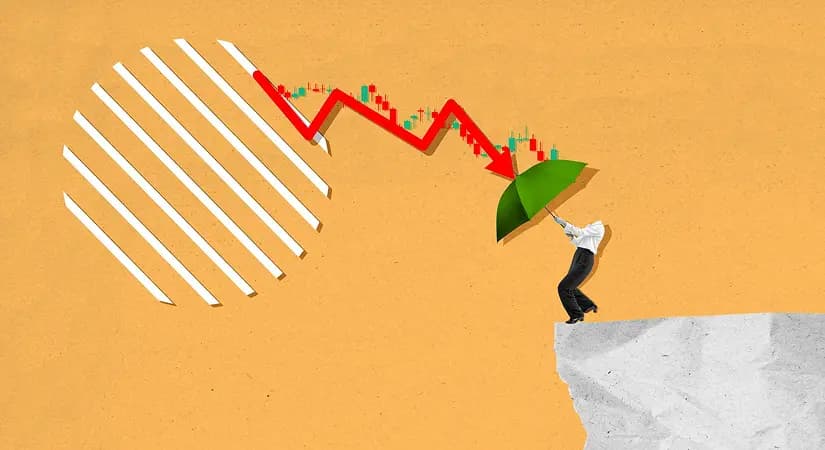
Every few years, several blockbuster drugs lose patent protection at nearly the same time. Revenue built over decades can shrink within months. 2028 is the next big test. Merck’s Keytruda and the Eliquis partnership between Bristol Myers Squibb and Pfizer both face a loss of exclusivity (LOE) around that date.
This guide explains who is at risk, how significant the risk is, and how drugmakers are responding.
What Is the 2028 Patent Cliff?
A patent cliff is a period when many high-revenue drugs lose patent or regulatory protection close together. After that, generics of small-molecule drugs and biosimilars of biologics can enter the market. Prices fall, and the original brand loses share.
The word “cliff” can mislead. Sources say the problem will arrive in waves, not as one drop. Patent expiry, market geography, competitor timing and lifecycle strategy all change how fast sales fall. So 2028 matters, but it is one wave in a longer series.
How Big Is the Risk?
Data reported show that more than $500 billion in worldwide prescription sales are potentially at risk from generic competition between 2026 and 2032. About $99 billion of that falls in 2028 alone, or 6.5% of the global prescription market. The largest single year is 2031, at $158 billion.
These figures show revenue exposed, not revenue lost. Not every dollar disappears. The speed of erosion depends on when competitors actually launch and how well the brand defends its position.
Want the drug-by-drug view? See the blockbusters losing exclusivity in the coming years, and what biosimilars mean for each.
Read: The Patent Countdown: Drugs To Lose Its Exclusivity In Coming Years!
Who Is Most Exposed?
Merck (Keytruda). Keytruda and its subcutaneous version, Keytruda Qlex, earned $31.68 billion in 2025, up 7% from $29.48 billion in 2024, according to Merck’s annual filing. That is 48.7% of Merck’s $65.01 billion in total sales. Merck’s management has said it expects Keytruda to reach peak sales of about $35 billion by 2028, before it loses exclusivity. Merck is the most exposed large drugmaker in the near term.
Bristol Myers Squibb and Pfizer (Eliquis). In a 2021 statement, the two companies said the earliest US generic launch of Eliquis (apixaban) is April 1, 2028, subject to additional appeals and challenges. The FDA approved the first generic applications in December 2019, but those products cannot launch until the court-set date. BMS also depends on Opdivo, which is expected to generate about $10.05 billion in 2025.
Johnson & Johnson. J&J’s risk rises in 2027 and 2028 as Imbruvica and Darzalex approach patent end.
AbbVie, Sanofi and AstraZeneca. AbbVie’s larger exposure comes in the early 2030s, when Rinvoq and Skyrizi lose protection. Sanofi’s Praluent and Dupixent may face competition in 2029 and 2030. AstraZeneca has a cluster of products, including Imfinzi, Tagrisso, Calquence, Farxiga and Saphnelo, facing expiry early next decade.
Exposure at a Glance
Company | Key drug(s) | Exposure point |
|---|---|---|
Merck | Keytruda | Exclusivity expected to end in 2028 |
BMS and Pfizer | Eliquis | Earliest US generics April 1, 2028 |
J&J | Imbruvica, Darzalex | Risk rises 2027–2028 |
Sanofi | Praluent, Dupixent | Possible competition 2029–2030 |
AbbVie | Rinvoq, Skyrizi | Early 2030s |
How Companies Are Responding
Drugmakers are not waiting for the cliff. Most use a mix of five moves.
1. Improved versions of the drug. The FDA approved Keytruda Qlex in September 2025. It combines pembrolizumab with an enzyme, berahyaluronidase alfa, that lets the drug be given under the skin. Merck’s reported Qlex sales were small in 2025, at $35 million in the fourth quarter. Whether it will slow biosimilar uptake is still untested.
2. Buying growth. A tally of announced deals since the start of 2024 shows Merck at $30.9 billion across six deals, Lilly at $27.2 billion across nine deals, AbbVie at $22.3 billion, J&J at $20.4 billion, Sanofi at $16.1 billion, and AstraZeneca at $6.8 billion. Among Merck’s recent deals were its purchases of Verona Pharma and Cidara Therapeutics, each worth about $10 billion, as reported by Fierce Pharma.
3. Building a larger pipeline. Merck says its current pipeline could generate more than $70 billion in annual sales by the mid-2030s. That is a non-risk-adjusted figure, so it is a company target, not a forecast. Newer products are already contributing. In 2025, Winrevair earned $1.4 billion, and Capvaxive earned $759 million.
4. Absorbing earlier losses. Merck has already experienced one major decline. Gardasil sales fell 39% to $5.2 billion in 2025, yet total company sales still grew 1%.
5. Watching pricing policy. Milliman reports that the orphan drug exclusion expansion delays Keytruda and Opdivo to later Medicare negotiation years, so neither is on the 2028 list. Older reports that Keytruda would face price setting in 2028 are outdated.
Buying growth is the fastest lever drugmakers have. See the year’s biggest deals and what each buyer is trying to fill.
Read: Top Pharma Mergers in 2026: Key Deals Explored
What Humira, Stelara and Entresto Teach Us
Three recent cases show how fast sales can fall:
Humira: down 32% in 2023 (constant currency, per AbbVie)
Stelara: down 41.3% in 2025, to $6.08 billion
Entresto: down 46% in the first half of 2026 versus the first half of 2025
AbbVie shows recovery is possible. In 2025, Skyrizi and Rinvoq earned $25.87 billion combined, compared with $4.54 billion for Humira. Total revenue reached $61.16 billion, above its 2022 level of $58.05 billion. The key was having successors ready before the cliff.
Applying those three first-year rates to Keytruda’s 2025 sales gives a loss of roughly $10.1 billion to $14.6 billion. This is an illustration, not a forecast. Keytruda is infused in clinics, while Humira and Stelara are self-injected, so switching behaviour may differ.
Why a Patent Date Is Not a Launch Date
An expiry date is not the day competitors launch. Court rulings, settlements, regulatory rules and manufacturing readiness all move the real date. In the US, a biosimilar must show it is highly similar to the reference product, with no clinically meaningful differences in safety, purity or potency.
Eliquis shows the gap. The FDA approved generic versions years ago, and generic apixaban is already sold in Canada and some other markets. Yet US generics must wait until the court-set date of April 1, 2028 at the earliest. The reverse can also happen: appeals or settlements can delay a launch beyond expectations.
Patent Cliff Readiness Checklist
Measure how much revenue depends on each drug with a named LOE date
Confirm the real entry date through court rulings, settlements and company statements
Count products launched in the last three years that can replace lost sales
Check lifecycle moves, such as new formulations or new indications
Review policy risk, such as Medicare price negotiation
Track biosimilar and generic filings and approvals
Compare cash and debt to see how much a company can spend on deals
Key Takeaway
The 2028 patent cliff is real but uneven. Merck leans heavily on one drug, while many other large companies face smaller, staggered losses. The companies in the strongest position will be those with successor products already on the market before competitors arrive.
FAQs
When does Keytruda lose US exclusivity?
Merck’s management expects Keytruda to lose exclusivity in 2028.
When can generic Eliquis launch in the US?
BMS and Pfizer say the earliest date is April 1, 2028, subject to further appeals.
How much revenue is at risk in 2028?
Source estimates worldwide sales of about $99 billion, or 6.5% of the prescription market.
How fast do sales fall after patent loss?
Recent first-year drops ranged from 32% (Humira) to 46% (Entresto), though the periods differ.
How do companies defend their revenue?
They launch new formulations, buy new products, build pipelines and plan for pricing rules.
Reporting on the science, business and regulation shaping the pharmaceutical industry.
More in Bio Pharma
All articles →Why Oral GLP-1 Manufacturing Capacity Decides The Leader
Every Company Announced Fill-Finish Capacity: Still Scarce?
Discussion