The Next-Gen Pharma HR Playbook for Employee Retention Beyond Compensation
Employee Retention Beyond Compensation is now pharma HR's core challenge. Discover the 9-pillar formula for growth, leadership, and purpose.

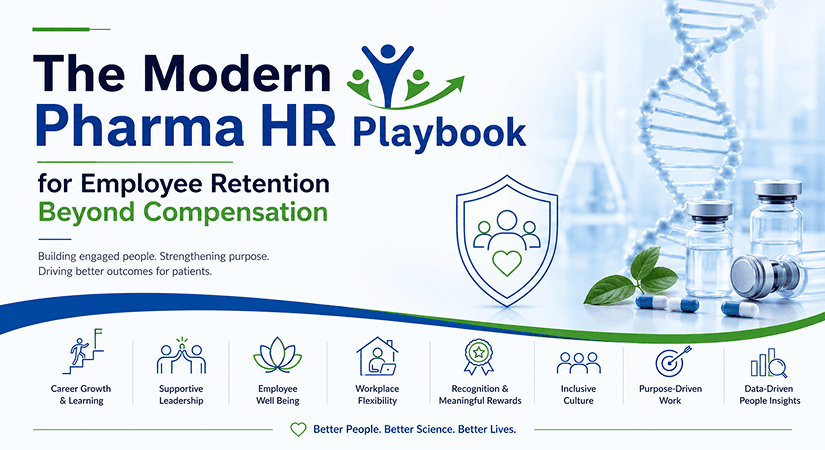
The pharmaceutical industry has always relied on highly skilled professionals to drive research, manufacture quality medicines, maintain regulatory compliance, and bring innovative therapies to patients. However, attracting talented employees is only one part of the challenge. Retaining them has become equally important as organizations face increasing competition for specialized talent, evolving employee expectations, and rapid technological change.
For many years, competitive salaries were considered the most effective way to retain employees. While fair compensation remains important, it is no longer enough to ensure long-term commitment. Today's pharmaceutical professionals are looking for meaningful careers, continuous learning opportunities, supportive leadership, flexible work arrangements, and a workplace where they feel valued.
As a result, HR leaders are redefining their retention strategies. Instead of focusing primarily on pay, they are creating comprehensive employee experiences that encourage engagement, loyalty, and professional growth. This shift has given rise to a new retention formula, one that recognizes employees as long-term partners in organizational success rather than simply members of the workforce.
Why Retention Has Become A Strategic Priority In Pharma?
Employee turnover has a greater impact on pharmaceutical companies than many other industries. Replacing experienced professionals is often expensive and time-consuming, particularly in specialized functions such as research and development, quality assurance, regulatory affairs, manufacturing, clinical operations, and pharmacovigilance.
When skilled employees leave, organizations lose valuable technical knowledge, project continuity, and regulatory expertise. Recruitment costs increase, onboarding takes time, and productivity may decline while new employees adapt to their roles.
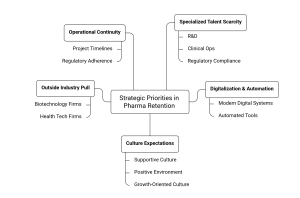
Several factors have made retention a strategic business priority, including:
- Growing demand for specialized pharmaceutical talent.
- Increasing adoption of digital technologies and automation.
- Greater employee expectations regarding workplace culture.
- Rising competition from biotechnology and healthcare companies.
- The need to maintain operational continuity and regulatory compliance.
These challenges have encouraged HR leaders to develop retention strategies that address both professional and personal employee needs.
Compensation was never the whole story. Here's a closer look at the specific strategies pharma companies are using to keep skilled talent from walking.
The practical playbook behind the retention numbers.
→ Read: Boosting Employee Retention in Pharma Companies
Moving Beyond Compensation
Salary remains an important part of every employment relationship. Employees expect fair and competitive pay that reflects their skills, experience, and responsibilities. However, research and workplace trends consistently show that compensation alone rarely determines whether employees remain with an organization for the long term.
Pharmaceutical professionals increasingly evaluate employers based on career opportunities, leadership quality, organizational culture, flexibility, learning opportunities, and overall job satisfaction. Employees are more likely to stay when they believe they can grow professionally while contributing to meaningful work that improves patient lives.
The modern retention formula therefore combines competitive compensation with a broader employee value proposition that supports long-term engagement.
Key Elements Of The New Retention Formula
As workforce expectations continue to evolve, HR leaders are focusing on several areas that have a direct influence on employee satisfaction and retention.
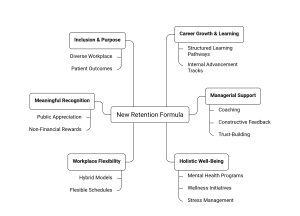
1) Career Growth And Continuous Learning
One of the strongest reasons employees leave an organization is the lack of career advancement opportunities. Pharmaceutical professionals want to develop new skills, expand their expertise, and prepare for future leadership roles.
HR teams are responding by creating structured learning pathways that include technical training, leadership development, mentoring, certification programs, and cross-functional assignments. Digital learning platforms and personalized development plans also make continuous learning more accessible.
When employees see a clear path for professional growth, they are more likely to remain committed to the organization.
2) Leadership And Managerial Support
Employees often stay with organizations because of supportive leaders rather than attractive compensation packages. Managers play a significant role in shaping the employee experience through communication, recognition, coaching, and decision-making.
Effective HR strategies therefore focus on developing leaders who can build trust, provide constructive feedback, encourage collaboration, and support employee development.
Organizations that invest in leadership training often experience stronger employee engagement, improved team performance, and lower turnover rates.
3) Employee Well-Being
The pharmaceutical industry is known for its demanding timelines, complex regulatory requirements, and high-performance expectations. Long working hours and continuous pressure can contribute to stress and burnout if employee well-being is not actively supported.
Modern HR functions recognize that healthy employees are more engaged, productive, and committed to their work. Many pharmaceutical companies now invest in initiatives such as:
- Mental health support programs.
- Employee assistance services.
- Flexible work arrangements where appropriate.
- Wellness campaigns and fitness initiatives.
- Financial well-being resources.
Supporting well-being demonstrates that the organization values employees beyond their daily responsibilities.
4) Workplace Flexibility
The way people work has changed significantly in recent years. Although manufacturing laboratories and production facilities require on-site presence, many corporate, commercial, regulatory, and administrative functions can benefit from greater flexibility.
Hybrid work models, flexible schedules, and digital collaboration tools allow employees to balance professional responsibilities with personal commitments while maintaining productivity.
HR leaders must develop policies that provide flexibility without compromising operational efficiency or regulatory requirements. Fair implementation across different functions is essential to maintaining employee trust.
5) Recognition And Meaningful Rewards
Recognition has become an important part of employee retention. People want their contributions to be acknowledged, whether through formal reward programs or simple appreciation from managers.
Recognition does not always involve financial incentives. Public appreciation, career advancement opportunities, additional responsibilities, professional development, and peer recognition can all strengthen employee motivation.
Organizations that celebrate achievements consistently create stronger workplace cultures and improve employee morale.
6) Building An Inclusive Organizational Culture
An inclusive workplace encourages employees to contribute their ideas, collaborate openly, and feel respected regardless of their background or role.
HR leaders promote inclusion by supporting fair recruitment, equal career opportunities, transparent performance evaluations, and leadership accountability. Diversity also strengthens innovation by bringing together individuals with different perspectives and experiences.
A positive organizational culture encourages employees to remain engaged because they feel connected to both their colleagues and the company's mission.
7) Creating Purpose-Driven Work
Pharmaceutical professionals are motivated by more than financial rewards. Many choose careers in healthcare because they want to improve patient outcomes and contribute to society.
HR leaders reinforce this sense of purpose by helping employees understand how their individual roles contribute to the development, production, and delivery of life-saving medicines.
When employees recognize the broader impact of their work, they develop stronger emotional connections with the organization and are more likely to remain committed over time.
8) Improving The Employee Experience Through Technology
Technology is transforming Human Resources as much as it is transforming pharmaceutical manufacturing and research. Digital HR platforms simplify recruitment, onboarding, learning management, performance reviews, and employee communication.
Self-service portals, mobile applications, and AI-supported HR tools reduce administrative burdens while providing employees with faster access to information and services.
An efficient digital employee experience improves satisfaction and allows HR professionals to focus more on strategic initiatives rather than routine administrative tasks.
9) Using Data To Predict Retention Risks
Modern HR decisions are increasingly supported by workforce analytics. Instead of reacting after employees resign, organizations now use data to identify potential retention risks before they become significant problems.
Metrics such as employee engagement, turnover trends, absenteeism, internal mobility, training participation, and performance data help HR teams develop targeted retention strategies.
By understanding why employees stay or leave, pharmaceutical companies can make informed decisions that strengthen workforce stability and improve long-term business performance.
Retention is one battle. HR in pharma is fighting on nine others at the same time.
The 10 challenges reshaping pharma HR right now.
→ Read: 10 Key HR Challenges in the Pharmaceutical Industry and How Leaders Are Solving Them
Wrapping It Up!
Retaining skilled professionals has become one of the pharmaceutical industry's greatest strategic priorities. While competitive salaries remain essential, they are no longer enough to build a loyal and engaged workforce. Employees increasingly value career growth, supportive leadership, workplace flexibility, recognition, well-being, inclusion, and opportunities to contribute to meaningful work.
The new retention formula reflects this broader understanding of employee expectations. By combining fair compensation with strong organizational culture, continuous learning, effective leadership, and data-driven HR practices, pharmaceutical companies can create workplaces where employees choose to build long-term careers.
As competition for specialized talent continues to increase, organizations that invest in a comprehensive employee experience will be better positioned to retain skilled professionals, strengthen innovation, maintain operational excellence, and deliver better outcomes for patients worldwide. In today's pharmaceutical industry, successful retention is no longer driven by salary alone, it is built through trust, growth, purpose, and a genuine commitment to people.
FAQs
1. Why Is Employee Retention Becoming More Important Than Ever In The Pharmaceutical Industry?
Employee retention has become a strategic priority because pharmaceutical companies rely on highly skilled professionals whose knowledge and experience are critical to innovation, quality, and regulatory compliance. High turnover can lead to increased recruitment costs, knowledge loss, project delays, and reduced productivity. Retaining experienced employees also helps maintain operational continuity and strengthens long-term business performance. Organizations with stable and engaged workforces are better positioned to remain competitive in a rapidly evolving industry.
2. Why Is Compensation Alone No Longer Enough To Retain Pharma Employees?
While competitive salaries remain essential, today's pharmaceutical professionals also seek career growth, supportive leadership, workplace flexibility, recognition, and meaningful work. Employees are more likely to stay with organizations that invest in their development and well-being while fostering a positive workplace culture. A strong employee experience creates higher engagement and long-term loyalty. This balanced approach helps organizations attract and retain top talent in a competitive market.
3. What Are The Key Elements Of A Modern Pharma Employee Retention Strategy?
A successful retention strategy combines fair compensation with continuous learning, leadership development, employee well-being, workplace flexibility, recognition, inclusion, purpose-driven work, and data-driven HR practices. These initiatives create an environment where employees feel valued, motivated, and supported throughout their careers. Modern HR teams also use workforce analytics to identify retention risks and improve employee satisfaction. Together, these strategies help build a resilient workforce that supports sustainable business growth.
Reporting on the science, business and regulation shaping the pharmaceutical industry.
More in HR in Pharma
All articles →
Crisis Management: HR's Role in Business Continuity in the Pharmaceutical Industry

Top HR Strategies for Successful Pharma Mergers: People, Culture, and Integration 2025

Discussion