10 Challenges HR In A Pharma Company Faces And How Leaders Are Solving Them?
Ten major HR challenges in the pharmaceutical industry and the strategies leaders use to attract talent, retain employees, and build agile teams.

20260113103311.webp&w=1920&q=75&dpl=dpl_6ysJ9LfPjjK65PGFB6RKfCshR8pW)
The pharmaceutical industry is evolving at a remarkable pace. With rapid advancements in R&D, new digital tools, tighter regulatory environments, and increasing competition for talent, the role of Human Resources (HR) has become more demanding than ever.
Unlike other industries, pharma HR teams must balance scientific expertise, global operations, and strict compliance while building a workforce capable of driving innovation.
From attracting niche talent to supporting employee well-being, HR professionals face unique complexities that require strategic thinking and modern solutions.
We have listed ten major challenges HR teams in pharma face today and the effective ways leaders are solving them to strengthen their organizations in the long run!
HR challenges in pharma require long-term and strategic solutions.
1) Attracting Specialized Scientific Talent
One of the biggest challenges in the pharmaceutical sector is attracting highly specialized talent such as clinical researchers, regulatory affairs experts, biostatisticians, medical writers, formulation scientists, and data science professionals.
These experts are in high demand globally, and competition from biotech startups, CROs, research institutions, and even tech companies makes hiring extremely competitive.
Many scientific roles require years of academic training, advanced degrees, and niche skills, making the talent pool limited. To overcome this challenge, pharma leaders are investing in stronger employer branding, digital recruitment tools, and academic partnerships.
Companies are offering research grants, sponsoring university programs, and building early talent pipelines through internships and fellowships.
Some firms are also expanding global hiring strategies to tap into talent from multiple regions, while others are offering flexible work models to attract scientists who prefer hybrid or remote research environments. Talent acquisition in pharma remains difficult due to global skill shortages.
2) Retaining High-Value Employees
Retention is critical in pharma because losing a trained scientist or regulatory expert can delay projects and impact product pipelines. Employees often face heavy workloads, long development cycles, and pressure to deliver results, which increase the risk of burnout and turnover.
Additionally, talented professionals receive constant offers from competing firms. To address this, HR leaders are focusing on career development, mentorship, and transparent growth pathways.
Many companies are creating internal mobility programs, allowing employees to explore new roles within the organization. Competitive compensation, recognition programs, and personalized learning opportunities also help improve retention.
Moreover, organizations are encouraging managers to conduct frequent check-ins to understand employee challenges, improve engagement, and ensure that top performers feel valued and supported.
3) Managing Skills Gaps In A Digitally Transforming Industry
As AI, machine learning, digital twins, robotic automation, and data-driven workflows become essential to modern drug development, pharma companies are experiencing significant skill gaps.
Traditional scientific roles now require digital literacy, and not all employees are prepared for this shift. HR teams must ensure that their workforce can work with new digital tools and advanced systems.
Leaders are responding by launching internal digital academies, partnering with online learning platforms, and designing large-scale upskilling programs focused on data analytics, digital lab management, AI-supported research tools, and cloud technologies.
Some companies offer reskilling programs for employees who want to transition into emerging digital roles. This approach not only strengthens capabilities but also boosts employee confidence and adaptability, ensuring the organization remains competitive in a technology-driven industry.

4) Ensuring Compliance With Strict Global Regulations
The pharmaceutical sector must comply with a wide range of regulatory requirements governing drug safety, clinical trials, manufacturing, data privacy, employee safety, and documentation. These regulations differ across regions, adding complexity for global organizations.
HR must ensure every employee receives proper training and certifications, adheres to company policies, and maintains regulatory compliance at all times.
Leaders are addressing this challenge by implementing digital compliance systems that automate training reminders, track certifications, and maintain audit-ready records. Many companies run continuous training programs that keep employees updated on evolving regulations.
Using centralized HR platforms has made it easier to standardize compliance processes across global sites, minimizing risk and ensuring consistency. By embedding compliance into daily processes, companies avoid costly penalties and maintain trust with regulators. Regulatory compliance influences HR training and documentation practices.
5) Managing Workforce Diversity Across Global Teams
Pharma companies often operate across multiple countries, resulting in a culturally diverse workforce. While diversity brings innovation, it also presents challenges related to communication styles, expectations, and workplace norms.
HR teams must ensure fairness in compensation, opportunities, and policies while supporting local cultural differences. Leaders are building global Diversity, Equity, and Inclusion (DEI) strategies that promote equal opportunities and foster an inclusive environment.
Many companies conduct cultural awareness programs, employ regional HR teams, and create global employee resource groups. They also use collaboration tools that bridge geographic gaps and streamline communication. By embracing diversity, pharma companies enhance creativity, improve cross-functional collaboration, and build stronger global teams.
6) Supporting Employee Mental Health & Reducing Burnout
The pharmaceutical industry is high-pressure, especially for roles in R&D, regulatory submission, manufacturing, and pharmacovigilance, where deadlines, compliance demands, and long project cycles create stress.
Burnout can lead to reduced productivity, errors, and higher turnover. HR leaders are now prioritizing mental health through wellness programs, access to counseling, stress management sessions, and flexible working options.
Some companies offer mental health days, quiet rooms, and resilience workshops. Leaders are also working to improve workload distribution and promote realistic deadlines to reduce prolonged stress.
Encouraging open communication about mental health has helped reduce stigma and created a supportive workplace culture. When employees feel supported, they perform better and stay committed to the organization’s mission.
7) Modernizing HR With Digital Transformation
Traditional HR systems in many pharma companies rely heavily on manual processes, outdated databases, and fragmented tools. These inefficiencies slow down recruitment, onboarding, performance management, and workforce planning.
To modernize HR, leaders are adopting digital platforms that integrate all HR functions, recruitment, learning, compliance, benefits, payroll, and analytics into one centralized system.
AI-powered hiring tools help speed up candidate screening, while digital onboarding systems improve the new employee experience. Learning management systems (LMS) help track training and skills development. Real-time analytics support better decision-making and workforce forecasting.
This digital transformation boosts productivity, enhances employee experience, and enables HR teams to spend more time on strategic initiatives rather than administrative tasks. Digital transformation in pharma is reshaping HR systems and workflows.
8) Navigating Workforce Planning For Complex Project Cycles
Drug development involves long timelines, unpredictable outcomes, and sudden changes due to scientific results, market needs, or regulatory updates. HR teams must anticipate staffing needs across different phases, from discovery and preclinical studies to clinical trials and post-marketing surveillance.
This unpredictability makes workforce planning difficult. Leaders are addressing this with predictive analytics tools that use historical data and project timelines to forecast talent needs.
Many companies are also developing flexible teams with cross-functional expertise, allowing employees to shift between projects based on demand. This approach reduces hiring delays, optimizes resource allocation, and enhances organizational agility.
With better planning, pharma companies stay prepared for sudden shifts and avoid project slowdowns caused by talent shortages.
9) Aligning Employees With Organizational Purpose
Employees in the pharmaceutical industry often choose this field to contribute to patient well-being. However, the daily routine filled with documentation, experiments, or regulatory tasks, can sometimes feel disconnected from the larger mission.
This disconnect reduces motivation and engagement. Leaders are solving this challenge by strengthening communication around purpose and impact.
Many companies share patient stories, celebrate scientific milestones, and organize events where employees hear directly from patients who benefitted from the company’s therapies.
Highlighting contributions to public health helps employees feel proud of their work and remain aligned with the company’s mission. When people see the real-world impact of their efforts, they stay motivated, engaged, and committed to excellence.
10) Creating Agile, Collaborative, And Innovation-Friendly Work Environments
Pharma companies traditionally follow rigid hierarchies, structured workflows, and lengthy decision-making processes. While necessary for compliance, these structures sometimes slow innovation.
Modern drug development requires fast collaboration between R&D, manufacturing, regulatory, QA, and commercial teams. To become more agile, leaders are adopting new cultural practices, flattening hierarchies, encouraging open communication, and forming cross-functional project groups.
Some companies have created innovation hubs, digital labs, and co-working spaces where teams collaborate to solve problems rapidly. Agile methodologies, shorter decision cycles, and transparent workflows are helping reduce bottlenecks and promote faster execution.
This shift empowers employees, improves productivity, and fosters a culture of continuous improvement.
In Conclusion
The pharmaceutical industry is undergoing major transformation, and HR plays a central role in shaping the future workforce. From hiring specialized scientific talent to managing global teams, driving digital capabilities, ensuring compliance, and supporting employee well-being, HR teams face a wide range of challenges that directly impact organizational performance. However, the industry is also demonstrating remarkable resilience and innovation.
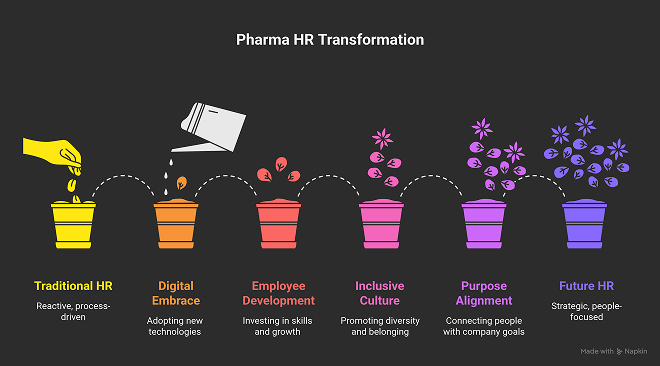
By embracing digital tools, strengthening employee development, promoting inclusive cultures, and aligning people with purpose, pharma leaders are turning challenges into opportunities for growth.
As the industry continues to evolve, companies that invest in strong HR strategies will not only attract top talent but also create workplaces where people feel valued, supported, and inspired to drive life-changing advancements.
120260113111202.png)
FAQs
FAQ 1:What Are The Main Challenges HR Teams Face In The Pharmaceutical Industry?
HR teams in pharma deal with unique challenges such as attracting specialized scientific talent, retaining high-value employees, managing digital skill gaps, ensuring regulatory compliance, supporting mental health, fostering diversity, modernizing HR systems, planning workforce for complex projects, aligning employees with purpose, and creating agile, collaborative work environments.
FAQ 2: How Are Pharma Companies Addressing Talent Shortages And Retention Issues?
Companies are investing in employer branding, digital recruitment tools, academic partnerships, internships, and flexible work options to attract talent. To retain employees, they focus on career development, mentorship, competitive compensation, internal mobility, recognition programs, and frequent engagement check-ins to reduce burnout and keep top performers motivated.
FAQ 3: What Role Does Digital Transformation Play In Pharma HR Today?
Digital tools help HR teams streamline recruitment, onboarding, learning, compliance, and workforce planning. AI-driven hiring, learning management systems, predictive analytics, and centralized platforms allow faster decision-making, upskilling, and better employee experiences while freeing HR to focus on strategic initiatives rather than administrative tasks.
Reporting on the science, business and regulation shaping the pharmaceutical industry.
More in HR in Pharma
All articles →
Crisis Management: HR's Role in Business Continuity in the Pharmaceutical Industry

Top HR Strategies for Successful Pharma Mergers: People, Culture, and Integration 2025

Discussion