Psychobiotics And Mental Health: Can Bacteria Influence Human Emotions?
Psychobiotics are live bacteria strains with proven effects on mood, anxiety, and cognition. Here's the gut-brain science pharma needs to know.

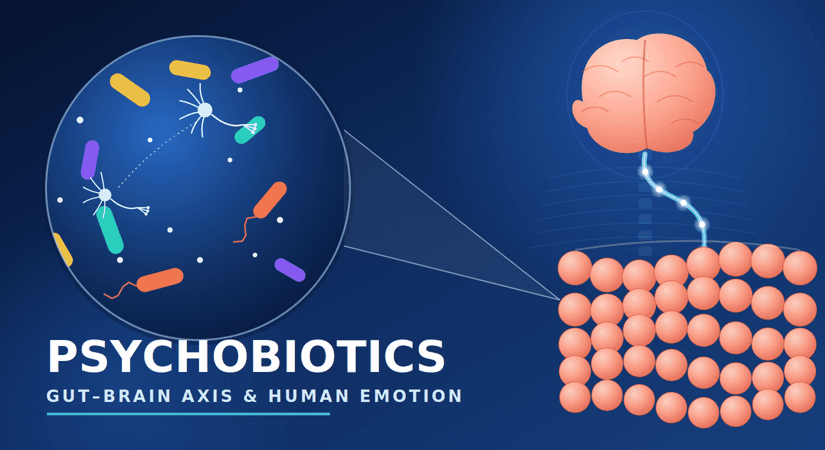
The idea that bacteria living in your digestive system could influence how you feel, think, and process emotions sounds, at first, like science fiction. But it is rapidly becoming one of the most robustly researched frontiers in neuroscience and psychiatry.
The field of psychobiotics, a term used to describe live microorganisms that, when consumed in adequate amounts, produce measurable mental health benefits, has moved from fringe curiosity to legitimate clinical science within the past decade. And the findings emerging from peer-reviewed trials are difficult to dismiss.
Consider some foundational numbers that frame why this matters:
- The gut contains over 500 million neurons, more than the spinal cord, earning it the name "the second brain"
- Approximately 95% of the body's serotonin, the neurotransmitter most associated with mood regulation, is produced in the gut, not the brain
- The human gut microbiome comprises over 100 trillion microorganisms, outnumbering human cells considerably
- Depression and anxiety affect over 970 million people globally, per WHO 2024 data, making new treatment pathways an urgent scientific and public health priority
These numbers set the stage for a genuinely important question: if the gut produces most of the brain's primary mood chemical, and if the bacterial populations living there can be deliberately manipulated through diet or supplementation, can we meaningfully treat mental illness by treating the microbiome? The emerging answer, grounded in peer-reviewed clinical science, is a cautious but increasingly confident yes.
What Are Psychobiotics And How Do They Work?
The term psychobiotic was first coined in 2013 by neuroscientist Ted Dinan and gastroenterologist John Cryan at University College Cork. It refers specifically to probiotics and later, prebiotics, that produce measurable effects on brain function and mental health via the gut-brain axis.
The most studied psychobiotic genera are Lactobacillus, Bifidobacterium, and Streptococcus, with individual strains demonstrating notably different effects depending on the target condition and the biological pathway through which they primarily operate.
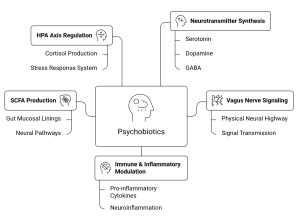
The biological mechanisms by which gut bacteria influence the brain are multiple and interconnected:
1) Neurotransmitter Synthesis — Specific bacterial strains directly produce or stimulate the production of serotonin, GABA (the brain's primary inhibitory neurotransmitter), dopamine, and acetylcholine. Disruptions in gut microbial balance have been shown to reduce all four, contributing to depression, anxiety, and cognitive dysfunction.
2) Vagus Nerve Signaling — The vagus nerve is the primary communication highway between the gut and the brain. Psychobiotics activate this nerve, transmitting signals from enteric neurons to the central nervous system, directly influencing mood and behavioral regulation.
3) Immune & Inflammatory Modulation — Gut dysbiosis promotes pro-inflammatory cytokines such as IL-1β, TNF-α, and IL-6, which contribute to neuroinflammation, now recognized as a central mechanism in Major Depressive Disorder (MDD). Psychobiotics counteract this by promoting anti-inflammatory mediators like IL-10.
4) Short-Chain Fatty Acid (SCFA) Production — Beneficial gut bacteria produce SCFAs, which regulate intestinal nerve activity, repair the mucosal lining, and have anti-inflammatory properties that protect both gut and brain function.
5) HPA Axis Regulation — Gut microbiota modulate the hypothalamic-pituitary-adrenal (HPA) axis, the body's central stress response system. Dysbiosis disrupts cortisol regulation; psychobiotic intervention has been shown to restore it.
What The Clinical Evidence Actually Shows?
The most important question in any emerging therapeutic field is not whether the underlying science is interesting, it is whether the intervention actually works in humans under controlled conditions. And here, the evidence for psychobiotics has become increasingly compelling over the past two years, while still carrying important caveats about generalizability and design variability.
A landmark 2025 systematic review and meta-analysis published in Nutrition Reviews, encompassing 23 randomized controlled trials involving 1,401 clinically diagnosed patients, produced statistically significant and clinically meaningful results across both primary mood disorders.
Probiotics demonstrated a substantial reduction in depression symptoms (SMD: −0.96) and a moderate, statistically significant reduction in anxiety symptoms (SMD: −0.59). Importantly, just eight weeks of consistent daily probiotic use was sufficient to produce significant clinical improvements in both conditions — a notably short intervention window compared to most pharmacological treatments.
A separate 2024 systematic review of 51 psychobiotic clinical trials spanning 3,353 patients found high effectiveness for depression symptoms specifically, with Lactobacillus and Bifidobacteria strains used over 4–24 week periods as the most consistently effective interventions.
The most studied individual strains and combinations include:
- Lactobacillus rhamnosus HN001, demonstrated improvements in self-reported happiness and perceived stress in healthy adult populations
- Lactobacillus helveticus R0052 + Bifidobacterium longum R0175, a two-strain combination shown to reduce anxiety and depression symptoms in borderline clinically anxious adults after 30 days
- Bifidobacterium longum NCC3001, shown to reduce depression scores in patients with irritable bowel syndrome, a condition with extremely high psychiatric comorbidity
- L. rhamnosus, L. plantarum, and B. longum subsp. longum, among the most studied and replicated across multiple independent clinical trials
- Bifidobacterium breve Bif11, 21-day supplementation shown to prevent LPS-induced depressive behavior in preclinical models
Mechanistically, researchers have noted that many of these effects occur without large-scale shifts in overall microbial diversity, a finding that surprised many early investigators.
Instead, improvements involve functional or immunological modulation, enrichment of neuroactive metabolite pathways like GABA and SCFAs, and targeted taxa-level changes rather than broad microbiome restructuring.
The evidence around psychobiotics is growing, but probiotics are only one part of a much larger microbiome revolution.
Here's how live microorganisms are being developed into regulated therapeutic products.
→ Live Biotherapeutic Products: The Future of Microbiome-Based Medicine
The Conditions Showing The Most Promise
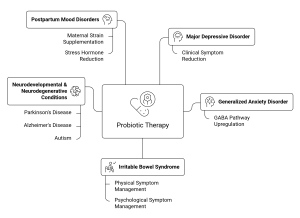
While depression and generalized anxiety disorder have received the most research attention, the scope of psychobiotic investigation is expanding rapidly. The conditions where clinical and preclinical evidence is currently most developed include:
1) Major Depressive Disorder (MDD) — A 2023 meta-analysis covering 13 clinical trials confirmed that probiotics generally improved depressive symptoms, though synbiotics and prebiotics alone showed more limited effects.
2) Generalized Anxiety Disorder (GAD) — Characterized by excessive worry, restlessness, and physiological arousal, GAD has shown response to psychobiotic intervention particularly through HPA axis modulation and GABA upregulation.
3) Irritable Bowel Syndrome With psychiatric comorbidity — Given that IBS and depression co-occur at rates far above the general population, gut-targeted interventions are increasingly studied as dual-purpose treatments addressing both the physical and psychological dimensions simultaneously.
4) Neurodevelopmental And Neurodegenerative Conditions — Emerging research is investigating psychobiotic applications in autism spectrum disorder, ADHD, Parkinson's disease (where reduced SCFA-producing bacteria have been consistently observed), and early-stage Alzheimer's, though these areas remain more preliminary.
5) Postpartum Mood Disorders — L. rhamnosus HN001 has been studied specifically in maternal populations, with preclinical data showing reduced postpartum anxiety-related behaviors and altered stress hormone profiles.
What The Field Still Cannot Fully Explain?
Scientific credibility requires honestly acknowledging what the evidence does not yet support. Psychobiotic research, despite its genuine promise, faces several unresolved challenges that the field must address before widespread clinical adoption:
- Strain specificity is not yet fully mapped. Different strains within the same genus can produce entirely different effects, and the clinical database is still building the depth of evidence needed to prescribe specific strains confidently for specific conditions.
- Dose standardization is inconsistent across studies. Current research indicates a minimum effective dose of around 1 billion CFU daily, with optimal results from doses exceeding 10 billion CFU, but these thresholds are not universally agreed upon across the research community.
- Population variability is significant. What works in one demographic, typically older female patients in most clinical trials to date,may not generalize equally to younger men, children, or those with fundamentally different baseline microbiome compositions shaped by geography and diet.
- Long-term durability of psychobiotic effects after supplementation stops remain poorly characterized by most current trials, raising important questions about whether ongoing use is required for maintained benefit.
- Comparability across studies is limited by differences in measurement tools, intervention durations ranging from four to twenty-four weeks, and wide variation in the clinical populations enrolled.
These are not reasons to dismiss the field or slow its progress. They are the standard scientific uncertainties that accompany any promising therapeutic approach at this stage of development, and most are actively addressable through the better-designed, larger-scale trials now underway around the world.
Personalized psychobiotics depend on understanding how each person's microbiome behaves differently.
Here's why microbiome modifiers are becoming a major focus of next-generation healthcare research.
→ Senolytics and Microbiome Modifiers: Two Quiet Levers Reshaping the Biology of Ageing
Conclusion: A Genuine Frontier, Not A Wellness Trend
Psychobiotics represent something genuinely rare in modern medicine — a therapeutic avenue that is simultaneously novel in its mechanisms, deeply grounded in biological science, and practically accessible.
Unlike most psychiatric pharmaceuticals, which target single neurotransmitter systems and often carry significant side effect profiles, psychobiotics operate through multiple parallel pathways simultaneously: neurotransmitter synthesis, vagal signaling, immune regulation, and metabolic modulation. That breadth of mechanism is both their scientific fascination and their therapeutic promise.
The current evidence does not support replacing prescribed psychiatric medication with probiotics. What it does support and what the 2025 clinical literature increasingly confirms, is their genuine value as adjunctive therapies alongside standard care, capable of producing measurable, statistically significant improvements in mood and anxiety in clinically diagnosed populations.
As personalized microbiome profiling becomes more accessible and precision psychobiotic formulations grow more refined, the gap between promising science and clinical routine will continue to narrow. The gut has been quietly influencing human emotions all along. Science is only now finally, beginning to listen carefully enough.
FAQs
1. Can Psychobiotics Really Improve Mental Health?
Research suggests that certain psychobiotic strains may help reduce symptoms of anxiety, depression, and stress by influencing the gut-brain axis. While they are not a standalone treatment, growing clinical evidence supports their role as a complementary approach to mental health care. Several clinical trials have reported measurable improvements in mood-related symptoms after consistent psychobiotic supplementation. However, individual results can vary depending on factors such as gut microbiome composition, lifestyle, and overall health.
2. Which Psychobiotic Strains Are Most Commonly Studied?
Some of the most researched psychobiotic strains include Lactobacillus rhamnosus, Lactobacillus helveticus, and Bifidobacterium longum. These strains have been investigated for their potential effects on mood regulation, stress response, and emotional well-being. Researchers have also explored specific strain combinations that may offer enhanced benefits for anxiety and depression management. Ongoing studies continue to identify new strains and understand their unique mechanisms of action within the gut-brain axis.
3. Are Psychobiotics A Substitute For Mental Health Medications?
No, psychobiotics should not be considered a replacement for prescribed psychiatric medications or professional treatment. Current research supports their use as a potential adjunct therapy that may complement conventional mental health interventions under medical guidance. Mental health conditions are complex and often require personalized treatment plans that may include medication, therapy, or lifestyle changes. Anyone considering psychobiotics for mental health support should consult a qualified healthcare professional before making changes to their treatment regimen.
Reporting on the science, business and regulation shaping the pharmaceutical industry.
More from the Knowledge Hub
All articles →
Pharmaceutical Regulatory Affairs: Challenges, Innovations, and Global Harmonization

Cold Chain Logistics in Pharma: Building Resilient Supply Chains

Discussion