Quality As A Competitive Moat: Preparing For FDA’s QMM Era
Learn how pharma companies can leverage FDA's QMM framework to turn quality into a powerful competitive moat.


In the pharmaceutical industry, quality is no longer just a compliance requirement, it has become a strategic differentiator. The FDA’s Quality Management Maturity (QMM) framework emphasizes that companies must demonstrate not only adherence to regulatory standards but also the maturity, proactivity, and resilience of their quality systems. Organizations that embrace QMM early can transform quality into a competitive moat, gaining operational reliability, faster approvals, fewer recalls, and stronger trust with regulators and customers.
Preparing for QMM requires embedding quality into every process, leveraging data, building a skilled workforce, and continuously improving systems to ensure consistency and excellence across the enterprise. Companies that understand and adopt these principles today will be better positioned to outperform competitors in the increasingly demanding regulatory environment.
To Help Companies Understand How To Leverage Quality As A Strategic Advantage Under QMM, Here Are 11 Key Areas To Focus On:
1. Shifting From Compliance To Strategic Quality Management
Traditionally, pharmaceutical companies have focused on compliance, meeting regulatory requirements and passing inspections. While compliance remains critical, QMM encourages a proactive approach where quality is embedded into every operational decision. Organizations that anticipate risks, optimize processes, and prevent deviations turn quality from a reactive obligation into a strategic asset that drives operational efficiency and market differentiation.
Strategic quality management involves aligning operational goals with quality objectives, ensuring that every department, from production to R&D, understands how quality impacts business performance. Companies that make this shift can respond faster to challenges, reduce product defects, and consistently deliver high-value outcomes to patients and regulators.
2. Embedding A Culture Of Continuous Improvement
A key principle of QMM is fostering continuous improvement throughout the organization. Rather than merely correcting errors, companies are encouraged to identify inefficiencies, refine workflows, and use insights to enhance operations. Continuous improvement includes reviewing processes regularly, benchmarking performance against industry best practices, and actively seeking feedback from employees.
When continuous improvement becomes a core value, quality becomes resilient and scalable, supporting long-term competitiveness and reducing the likelihood of process failures. Moreover, a culture of improvement encourages innovation, motivating teams to experiment with better methods and adopt new technologies that enhance overall efficiency.
3. Strengthening Risk Management
Risk management is central to QMM. Predictive analytics, real-time monitoring, and AI-driven modeling help companies anticipate potential failures before they impact production. By identifying risks in processes, materials, or equipment early, organizations can implement preventive measures, reduce downtime, minimize recalls, and maintain consistent product quality across their operations.
Effective risk management also extends to supplier relationships and the supply chain, ensuring that potential upstream issues do not compromise product quality. Companies that integrate risk management into their daily operations can make faster decisions, respond to unexpected events more effectively, and protect both patients and the organization’s reputation.
4. Leveraging Data For Actionable Insights
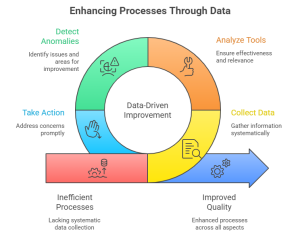
Data collection alone is insufficient; it must be transformed into actionable insights. QMM emphasizes the use of analytics, dashboards, and reporting tools to monitor trends, detect anomalies, and evaluate quality maturity. This enables informed decision-making, facilitates continuous improvement, and ensures transparency and traceability during regulatory inspections.
For example, analyzing batch production data can reveal patterns that lead to deviations, allowing teams to take corrective actions before problems occur. By leveraging data effectively, companies can optimize resource allocation, predict potential failures, and make decisions that enhance both quality and efficiency across the organization.
5. Optimizing Supplier And Supply Chain Quality
Quality in pharma depends heavily on the supply chain. QMM requires organizations to evaluate and collaborate with suppliers to ensure they meet similar standards of quality maturity. Regular audits, supplier performance tracking, and clear expectations prevent upstream failures, maintain product consistency, and reduce operational risks, ultimately strengthening the overall quality ecosystem.
Companies that work closely with suppliers can implement corrective measures more quickly, ensure raw materials meet stringent standards, and create a transparent network where quality is consistently monitored. A strong supply chain not only supports compliance but also reduces the risk of disruptions that can delay product delivery or compromise patient safety.
6. Enhancing Workforce Competence
A mature quality system relies on skilled and knowledgeable employees. QMM emphasizes training staff not only in GMP compliance but also in principles of continuous improvement, risk mitigation, and data-driven decision-making. A well-trained workforce is empowered to take ownership of quality at every stage, from production to documentation and reporting, resulting in more reliable processes and consistent outcomes.
Beyond training, fostering a sense of accountability and pride in quality ensures that employees remain engaged and proactive. When workers understand the importance of their actions, they are more likely to identify potential issues early, report them accurately, and contribute to a culture of excellence.

7. Integrating Technology For Quality Excellence
Technology plays a pivotal role in achieving QMM. Automated systems, electronic batch records, AI-powered process monitoring, and predictive analytics reduce human error, improve consistency, and provide real-time visibility into operations. Digital integration allows companies to detect deviations early, optimize workflows, and maintain continuous improvement, supporting both compliance and operational efficiency.
For example, automated quality monitoring systems can track critical process parameters, flagging anomalies immediately. This ensures that problems are addressed before they escalate, saving time, resources, and potentially preventing defective batches from reaching the market.
8. Demonstrating Transparency And Accountability
Transparency is a core expectation of QMM. Companies must clearly document how quality decisions are made, how risks are addressed, and how processes are controlled. Traceable records, audit-ready documentation, and open communication ensure accountability across all levels of the organization.
Transparency not only satisfies regulatory requirements but also builds trust with customers, partners, and the FDA. Organizations that operate openly and can explain their quality decisions are better equipped to handle inspections, audits, and regulatory inquiries, strengthening their credibility in a competitive market.
9. Minimizing Recalls And Operational Disruptions
A mature quality system reduces the likelihood of recalls, production interruptions, and product defects. Proactive monitoring, robust risk management, and preventive quality measures ensure that products meet standards consistently.
Reducing recalls saves costs, protects reputation, and ensures timely product availability, reinforcing quality as a strategic advantage. Companies that maintain high reliability in production are also better able to respond to market demands and maintain customer confidence, which is increasingly important in a global pharmaceutical landscape where patient safety is paramount.
10. Aligning Quality With Business Strategy
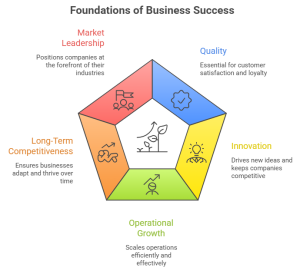
QMM encourages organizations to align quality initiatives with overall business objectives. When quality goals are integrated into strategic planning, every department contributes to operational efficiency, regulatory excellence, and customer satisfaction.
Quality becomes more than a compliance metric—it becomes a central driver of growth, innovation, and long-term competitiveness. By connecting quality outcomes to business performance, companies can demonstrate that investments in robust quality systems not only satisfy regulators but also improve operational profitability and market differentiation.
11. Preparing For The Future Regulatory Landscape
Finally, adopting mature quality practices positions companies to navigate evolving regulatory expectations. Organizations that proactively embrace QMM will be better equipped to implement new standards, integrate emerging technologies, and maintain compliance as regulatory landscapes shift.
Forward-thinking companies see QMM not as a burden but as an opportunity to innovate, streamline operations, and strengthen market leadership. Those that adopt these practices early can anticipate challenges, maintain a competitive edge, and ensure long-term sustainability in a dynamic industry.
In Conclusion
Quality has evolved into a strategic differentiator in the pharmaceutical industry. The FDA’s QMM framework challenges organizations to move beyond compliance and embed quality into every facet of operations. By embracing continuous improvement, proactive risk management, data-driven decision-making, workforce competence, technological integration, and supply chain excellence, companies can transform quality into a sustainable competitive moat. Those that prepare for the QMM era will achieve operational resilience, regulatory trust, and market advantage, ensuring that their products consistently meet the highest standards while driving long-term growth and differentiation.
FAQs
1. What Is FDA’s Quality Management Maturity (QMM) Framework?
The FDA’s QMM framework evaluates how mature, resilient, and proactive a company’s quality systems are beyond basic compliance. It focuses on operational robustness, data-driven processes, continuous improvement, and a strong quality culture. Companies with higher QMM maturity demonstrate consistent performance, fewer deviations, better supply reliability, and greater trust with regulators and customers.
2. Why Is Quality Becoming A Competitive Moat In The QMM Era?
Quality is now a strategic advantage because companies with stronger, more mature systems achieve fewer recalls, better operational stability, faster regulatory responses, and higher product reliability. QMM rewards organizations that treat quality as a business driver rather than a checkbox activity. This leads to cost savings, stronger reputation, improved supply chain performance, and long-term competitive differentiation.
3. How Can Pharmaceutical Companies Prepare For The FDA’s QMM Expectations?
Companies can prepare by strengthening risk management, investing in data analytics, building a culture of continuous improvement, enhancing workforce competence, improving supplier oversight, and integrating advanced technologies such as automation and predictive monitoring. Aligning quality with business strategy and maintaining transparency in decision-making ensures readiness for QMM evaluation and positions companies for long-term success.
Reporting on the science, business and regulation shaping the pharmaceutical industry.
More in Leadership
All articles →
Essential Leadership Skills for Success in the Pharmaceutical Industry

Pharmaceutical Regulatory Affairs: Roles, Skills, and Roadmap

Discussion