How To Prepare For A Remote Audit: A Step-by-Step Guide
Remote audit prep: 6-step checklist for coordination, documents, digital tools, team training, equipment and compliance verification.

20260521124126.webp&w=1920&q=75&dpl=dpl_6ysJ9LfPjjK65PGFB6RKfCshR8pW)
Tech innovations are driving the rapid evolution of everything humans do, and auditing is no exception. Since 2020, remote or virtual audits have become commonplace, born out of necessity during a time when on-site audits were simply impossible.
The transition from in-person to remote was extraordinarily fast, and many auditees as well as auditors are still getting familiar with the new procedures. If your company is preparing for a remote audit, this guide covers everything you need to know.
Why Coordination Comes First?
Before doing anything else, it is important to coordinate with the auditing body that will carry out the remote audit. This gives your auditor the opportunity to explain exactly what they need from you, and it gives your team the time to prepare accordingly and resolve any doubts before audit day arrives.
Typically, a few days or a week before the audit, your auditor will host a pre-audit plan meeting where they will share a detailed audit plan. This plan covers what is required from you beforehand, the order in which things will happen, the timing and duration of each audit day, who will attend from both sides, and which digital tools will be used.
That said, it is worth checking on these details even before the pre-audit meeting if possible, so your company has more time to get everything in order.
Steps To Prepare For A Remote Audit
A well-structured internal audit follows six key preparation steps, from getting your documents ready to confirming your team's schedules. Here is a clear breakdown of each step and what it involves.
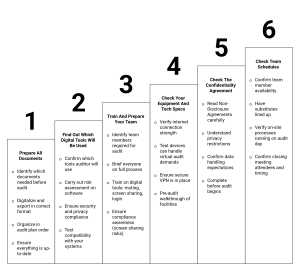
Step 1 — Prepare All Documents
Start by finding out which documents need to be sent digitally ahead of time, in what format, and by when. Then identify which documents will be needed on audit day itself, and in what order they will be reviewed.
Once you know this, locate all the necessary documents, make sure everything is up to date, digitalized, and exported in the correct format, and organize them in the order outlined by the audit plan. Being well-organized here saves significant time and stress on the day.
Step 2 — Find Out Which Digital Tools Will Be Used
Remote audits often make use of several separate digital tools for file sharing, video conferencing, and screen sharing, or your auditor may use a single all-in-one platform.
Confirm exactly which tools will be used and then carry out a risk assessment on your end to make sure the chosen software meets all of your company's security and privacy requirements. This step is easy to overlook but important for staying compliant throughout the audit.
Step 3 — Train And Prepare Your Team
First, find out which members of your team need to be present during the audit. Brief everyone involved in the full process, especially if remote auditing is new to them.
Walk them through what will happen step by step so that everyone arrives prepared and confident. For virtual operations audits, make sure the employees who will be filmed live on camera are specifically notified and trained for that experience.
Second, train your team thoroughly in the digital tools that will be used. Even things that seem trivial, muting and unmuting microphones, enabling screen sharing, logging in to the correct account, should be confirmed in advance.
Also keep in mind that remote audit environments come with unique compliance risks, particularly around screen sharing on personal computers, granting access to document folders, and filming live operations. Train everyone on how to stay compliant so that no sensitive information is accidentally viewed or accessed.
Step 4 — Check Your Equipment And Tech Specs
This step is often overlooked but is critically important. Double-check that your internet connection and devices can handle the demands of a virtual audit, and make sure a secure VPN is in place. For operations audits, verify that the equipment and facilities that will be filmed are ready to be shown on camera.
If you are unsure what the scope of the audit involves, ask your auditor well in advance so you know both what they need to see and in what order. It is also highly valuable to carry out a pre-audit walkthrough of your facility to define clearly which processes, activities, employees, and sites can be audited remotely. Key things to confirm include:
- Which areas and processes are in scope for the remote audit
- Which areas are off-limits and why — and that your team is informed
- Whether noise levels from machinery can be managed on audit days
- Whether any live filming restrictions apply (for example, cameras may be prohibited in cleanrooms during active GMP operations)
If filming live operations is not possible for any reason, you can ask to pre-record a video instead — but this must always be agreed upon with the auditor beforehand.
Step 5 — Check The Confidentiality Agreement
Read over all Non-Disclosure Agreements carefully before the audit begins. This step may seem straightforward, but it is an important one that should not be skipped or left to the last minute.
Step 6 — Check Team Schedules
Once you know which team members are required for the opening meeting and audit day, confirm that they are actually available and clear their schedules if needed. It is also smart to have substitutes lined up in case someone unexpectedly cannot attend.
If an operations audit is involved, verify which on-site processes will be running on audit day and who will be present. Also ask your auditor in advance who is required to attend the virtual closing meeting and when it will be held, if that information is not already in the audit plan.
Remote audit team training goes beyond digital tools, employees must understand compliance risks in virtual environments.
Learn how hybrid work in pharma addresses compliance challenges and remote-ready practices for QA teams.
→ Read: Hybrid Work in Pharma: What Can Truly Go Remote
What To Expect During A Remote Audit?
Once you have worked through your preparation checklist, you are ready to go. A typical remote audit, whether it takes one day or several, follows three distinct phases.
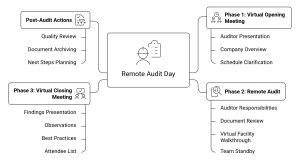
a) The Virtual Opening Meeting
Every audit begins with an opening meeting. The auditor will usually present a brief slideshow covering all the key details: who the auditors are, the scope of the audit, any necessary links and login information, the planned schedule including break times, and when the closing meeting will be held.
In some cases, your auditor may ask your company to present a short overview of the organization as well, so it is worth keeping an up-to-date company presentation ready for this purpose.
b) The Remote Audit
In most cases, two auditors share responsibilities and follow the audit plan that was shared with your company in advance. Each auditor typically covers related departments or processes separately, working through their own checklist and taking their own notes before moving on to the next item in the audit plan.
Having your documentation prepared in the correct order ahead of time makes this phase much smoother for everyone involved. For operations audits, one member of your team will be responsible for taking the auditors around your facility virtually, walking through the site with a smartphone or tablet, streaming live footage directly to the auditors.
A Few Important Things To Keep In Mind During This Phase:
- Keep machinery noise to a minimum on audit days where possible
- Follow the audit plan order so auditors can move through each area without delays
- Have the right team members on standby for each department or process being reviewed
- Ensure all documentation is accessible and ready to share at the right moment
The duration of the audit depends on the circumstances. If your company has been pre-approved — for example, in a supplier audit where all documentation was submitted and cleared in advance, the remote audit may be completed in a single day and is largely a formality.
For a first-time audit by a new auditing organization, especially one involving operations, the process may take anywhere from two to four days depending on the size of the facility and the scope of the audit.
c) The Virtual Closing Meeting
The closing meeting is where auditors share the notes and findings from the audit. The auditor typically prepares and presents a short report, which generally covers:
- Findings and any nonconformities identified
- Observations made throughout the audit
- Potential areas for improvement
- Best practices noted during the process
All attendees from the opening meeting, as well as the employees who were present or audited during the process, are usually required to attend the closing meeting. As a result, it tends to be busier and more crowded than the opening meeting.
However, the auditor ultimately decides who needs to be present, and it is equally possible that they choose to hold the closing meeting with top management only. After the audit, you will receive a full and more detailed audit report digitally.
Your quality and management team should review all findings carefully and archive all documents and records in the audit folder in accordance with FDA CFR 21 Part 820.22 — Quality Audit. This report forms the basis for your next steps, whether that means addressing findings, implementing improvements, or both.
Remote audits scrutinize documentation rigor and compliance thoroughness just like on-site inspections.
Understand how to prepare audit-ready documentation and investigation practices that withstand regulatory scrutiny.
→ Read: Audit-Ready Microbial OOS Investigations in Pharma
Wrapping It Up!
Remote audits are now a permanent part of the regulatory landscape, and being well-prepared for them is just as important as being prepared for a traditional on-site audit. The key to a smooth virtual audit lies in early coordination, thorough preparation, and making sure your entire team knows what to expect and how to behave throughout the process.
From organizing your documents and verifying your technology to training your staff and checking your confidentiality agreements, every step matters. The more structured and proactive your preparation is, the less stressful the audit will be and the better your outcomes are likely to be.
Treat every remote audit as an opportunity to demonstrate your organization's commitment to quality, compliance, and continuous improvement.
FAQs
1) What Should We Do First When Preparing For A Remote Audit?
The first step is to coordinate with the audit team and understand their requirements clearly. They will usually share details about the audit scope, tools, and schedule in advance. This helps your company prepare in an organized way and avoid last-minute confusion. Early communication also gives you time to clarify any doubts before the audit begins. It also ensures that all stakeholders are aligned on expectations from the very start.
2) How Should Documents And The Team Be Prepared?
All required documents should be collected, updated, and converted into proper digital formats before the audit. These files should be arranged in a clear and logical order so they are easy to access during the review. At the same time, team members should be informed about their roles and trained to use the required digital tools. This ensures smooth communication and fewer delays during the audit process. Proper preparation also helps reduce stress on the actual audit day.
3) What Usually Happens During A Remote Audit?
A remote audit typically begins with an online opening meeting where the auditors explain the process and schedule. This is followed by the main audit phase, where documents and processes are reviewed through digital platforms or live video. At the end, a closing meeting is held to share findings, observations, and improvement points. Afterward, a detailed report is sent for further action and compliance follow-up. This structured flow helps ensure transparency and consistency throughout the audit.
Reporting on the science, business and regulation shaping the pharmaceutical industry.
More in Leadership
All articles →
Essential Leadership Skills for Success in the Pharmaceutical Industry

Pharmaceutical Regulatory Affairs: Roles, Skills, and Roadmap

Discussion