by Simantini Singh Deo
6 minutes
11 Differences Between Medical Marketing And Commercial Marketing Alignment
Explore 11 key differences between medical and commercial marketing alignment and how both drive pharma success.

In the pharmaceutical and healthcare industry, communication strategies often involve two closely connected but distinct functions: medical marketing and commercial marketing. Both play an important role in shaping how therapies are presented, understood, and adopted by healthcare professionals and patients. However, their goals, responsibilities, and approaches differ significantly.
Medical marketing focuses on scientific accuracy, clinical value, and evidence-based communication. Commercial marketing, on the other hand, concentrates on market growth, brand positioning, and product promotion. While both teams must work in alignment to ensure consistent messaging, their priorities and operational frameworks are quite different.
Understanding the differences between medical marketing and commercial marketing alignment helps pharmaceutical organizations create balanced strategies that support both scientific integrity and business growth.
The following points highlight the key differences between these two functions and explain how each contributes to the broader healthcare communication ecosystem!
1) Primary Objective
The first and most fundamental difference between medical marketing and commercial marketing lies in their primary objectives. Medical marketing focuses on delivering accurate scientific information about a product, its mechanism of action, clinical trial data, safety profile, and therapeutic value. The goal is to ensure healthcare professionals receive reliable and unbiased medical information that helps them make informed treatment decisions.
Commercial marketing, in contrast, aims to increase product adoption, build brand awareness, and drive revenue growth. While it still relies on scientific data, the messaging is shaped to highlight competitive advantages, market differentiation, and the overall value proposition of the therapy. Commercial teams focus on presenting the product in a way that clearly communicates its place in the market and its benefits compared to alternative treatment options.
2) Target Audience
Another important difference is the type of audience each function primarily engages with. Medical marketing typically communicates with healthcare professionals such as physicians, specialists, pharmacists, and researchers who require detailed clinical information about therapies and treatment outcomes. These audiences expect in-depth scientific explanations that help them understand how a treatment works and when it should be used.
Commercial marketing, however, often focuses on a broader set of stakeholders. This can include healthcare providers, hospital procurement teams, patients, caregivers, and sometimes the general public, depending on the regulatory environment and marketing strategy. The communication style is adjusted so that different audiences can easily understand the product’s benefits and value.
3) Nature Of Communication
The style and tone of communication also differ significantly between these two functions. Pharmaceutical marketing emphasizes scientific accuracy, balanced interpretation of clinical evidence, and educational value. The information presented must remain objective and aligned with regulatory standards, ensuring that healthcare professionals receive trustworthy insights about the therapy.
Commercial marketing, on the other hand, focuses more on persuasive messaging that highlights a product’s benefits and market position. While still grounded in approved data, the communication approach is designed to capture attention, differentiate the brand, and influence purchasing or prescribing behavior. The tone is often more engaging and marketing-driven while still remaining compliant with industry regulations.
4) Regulatory Sensitivity
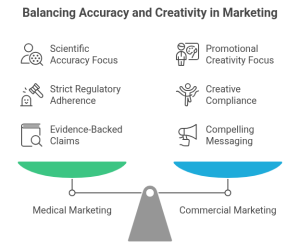
Regulatory oversight plays a major role in pharmaceutical communication, but the level of scrutiny differs between medical and commercial marketing activities. Medical marketing must adhere strictly to scientific accuracy and regulatory guidelines because it involves the interpretation and dissemination of clinical evidence. Any misrepresentation of data can lead to compliance risks and potentially impact patient care.
Commercial marketing is also regulated, but it often operates within promotional frameworks where messaging must remain compliant with approved labeling and promotional guidelines. Marketing teams must carefully balance creativity and promotion with regulatory compliance to ensure that messaging stays within permitted boundaries.
5) Content Development Approach
The way content is developed also highlights a difference between the two functions. Medical marketing materials are typically based on peer-reviewed research, clinical trial results, scientific publications, and real-world evidence. These materials often undergo extensive medical and regulatory review to ensure accuracy and credibility before they are shared with healthcare professionals.
Commercial marketing content, while still grounded in scientific evidence, focuses more on positioning the product within the competitive landscape. Messaging may include value propositions, brand storytelling, patient benefit narratives, and campaign-driven communication designed to attract attention and strengthen brand recall. The goal is to make the product stand out in a crowded marketplace.
6) Role In Product Lifecycle
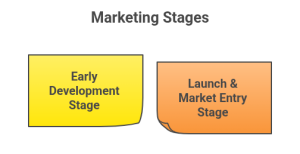
Medical marketing and commercial marketing contribute differently across the product lifecycle. Medical marketing often becomes deeply involved during early development stages by helping interpret clinical data, preparing educational materials, and supporting scientific engagement with key opinion leaders. Their role helps build a strong scientific foundation for the therapy.
Commercial marketing typically becomes more prominent as the product approaches launch and enters the market. At this stage, the focus shifts toward market access, brand awareness campaigns, and strategies that help accelerate product adoption among healthcare providers and healthcare systems. Both functions play essential roles at different stages of the product’s journey.
7) Interaction With Healthcare Professionals
The nature of interactions with healthcare professionals also varies between the two functions. Medical marketing often supports scientific engagement through medical affairs teams, educational initiatives, and discussions centered around clinical evidence and treatment guidelines. These interactions help physicians gain deeper insight into the therapeutic benefits and limitations of a treatment.
Commercial marketing interactions are more focused on promoting the value of the product, highlighting its benefits, and explaining how it fits into treatment pathways. These conversations are designed to encourage product adoption while remaining compliant with regulatory standards. Both approaches complement each other and support informed decision-making.
8) Measurement Of Success
The metrics used to evaluate success differ significantly between medical and commercial marketing. Medical marketing effectiveness is often measured through indicators such as scientific engagement, educational impact, feedback from healthcare professionals, and the credibility of the information delivered. The focus remains on knowledge transfer and trust building.
Commercial marketing success is usually measured through market performance indicators such as product sales, market share growth, brand awareness, and campaign performance metrics. These measurements help determine how effectively the marketing strategy is driving business outcomes and expanding the product’s presence in the market.
9) Content Channels And Platforms
Medical marketing and commercial marketing also differ in the platforms they commonly use to deliver information. Medical marketing frequently relies on scientific conferences, clinical publications, educational webinars, medical symposia, and continuing medical education programs. These platforms provide opportunities to share detailed research findings and scientific insights.
Commercial marketing typically uses a wider range of promotional channels, including digital campaigns, brand websites, social media outreach, advertising, and sales representative interactions. These platforms are designed to reach larger audiences and reinforce brand messaging across multiple touchpoints in the healthcare ecosystem.

10) Risk Management Approach
Risk management plays an essential role in both functions, but the focus differs slightly. Medical marketing prioritizes scientific accuracy and patient safety. Any misinterpretation of clinical data can affect treatment decisions, which makes strict review processes necessary to ensure that all information shared is reliable and balanced.
Commercial marketing manages risks related to promotional compliance, brand reputation, and competitive positioning. Marketing teams must ensure that claims remain consistent with approved product labeling while still presenting the therapy in a compelling way that resonates with healthcare stakeholders.
11) Strategic Alignment
Although medical marketing and commercial marketing operate differently, they must remain strategically aligned. Collaboration between the two functions ensures that messaging is both scientifically credible and commercially effective. Medical teams provide the scientific foundation, while commercial teams translate that information into accessible and engaging communication.
This alignment helps maintain trust with healthcare professionals while also supporting business goals. When both teams work together effectively, companies can deliver clear, consistent, and responsible messaging across all communication channels.
In Conclusion
Medical marketing and commercial marketing serve distinct but complementary roles within the pharmaceutical industry. While medical marketing focuses on scientific accuracy, clinical education, and evidence-based communication, commercial marketing concentrates on brand positioning, market growth, and product promotion.
Understanding the differences between these two functions allows organizations to create strategies that balance credibility with commercial success. When both teams collaborate effectively, pharmaceutical companies can ensure that their communication remains both scientifically responsible and commercially impactful while ultimately supporting better healthcare outcomes.
FAQs
1) What Is The Main Difference Between Medical Marketing And Commercial Marketing In The Pharmaceutical Industry?
Medical marketing focuses on communicating accurate scientific and clinical information about therapies to healthcare professionals. Commercial marketing, on the other hand, concentrates on promoting the product, building brand awareness, and supporting market growth while staying within regulatory guidelines.
2) Why Is Alignment Between Medical Marketing And Commercial Marketing Important?
Alignment ensures that all communication about a therapy remains scientifically accurate while also supporting business objectives. When both teams collaborate effectively, pharmaceutical companies can deliver consistent messaging that builds trust with healthcare professionals and strengthens market positioning.
3) Do Medical Marketing And Commercial Marketing Work With The Same Audiences?
Not always. Medical marketing mainly interacts with healthcare professionals such as physicians, researchers, and specialists who require detailed clinical information. Commercial marketing may engage a broader audience that can include healthcare providers, patients, caregivers, and other stakeholders depending on the marketing strategy.