Why Scientific Communication Is Becoming a Strategic Skill in Pharma
Scientific communication is no longer a soft skill. Here's why it now shapes trust, decisions, and credibility in pharma.

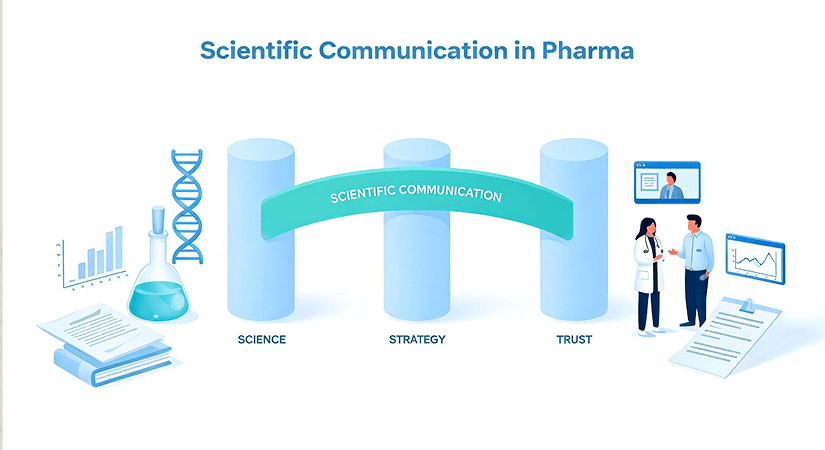
Scientific communication no longer remains, presenting science in simple terms to a larger audience in the pharma world. It has become a strategic skill that helps organisations translate complex evidence into decisions, build trust with stakeholders, and strengthen their position in a competitive market. In an industry where science, regulation, and business must work together, the ability to communicate clearly and credibly is now essential.
Pharmaceutical companies operate in a highly complex environment where decisions are influenced by clinical data, regulatory expectations, medical education needs, and market positioning. In this setting, scientific communication plays a much larger role than simply sharing information. It connects research with real-world understanding, supports cross-functional alignment, and helps organisations communicate value without compromising scientific integrity.
Today, communication is no longer a “soft skill.” It is a capability that directly affects credibility, collaboration, and business outcomes. As pharma becomes more data-driven and digitally connected, scientific communication is becoming a strategic advantage.
Why scientific communication matters more now
The volume and complexity of scientific information in pharma have grown rapidly. Teams are expected to interpret clinical findings, explain evidence to varied stakeholders, and ensure that the message remains accurate across different formats and audiences. Without strong scientific communication, even the best data can fail to create impact.
This is especially important in pharma because communication affects more than understanding. It influences regulatory confidence, internal decision-making, medical education, and external reputation. When scientific information is communicated well, it can support faster alignment across teams and improve the quality of strategic decisions.
From data to decisions
One of the biggest reasons scientific communications has become strategic is that pharma organisations no longer need just more data. They need a better interpretation of that data. A clinical result or research insight has limited value if it is not translated into a clear message that answers a business or scientific question.
That is where scientific communicators adds value. They help convert technical evidence into narratives that can be understood by leadership teams, healthcare professionals, regulators, and other stakeholders. This makes communication part of the decision-making process rather than an afterthought.
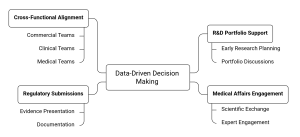
In practical terms, this means scientific communication now supports:
- R&D planning and portfolio discussions.
- Medical affairs engagement and scientific exchange.
- Regulatory submissions and evidence presentation.
- Internal alignment across commercial, clinical, and medical teams.
When communication is strategically designed, it improves the chances that scientific work will lead to action.
Scientific communication doesn't stop at clarity, it's becoming medical affairs' biggest commercial asset.
Here's how that shift is reshaping pharma marketing.
→ Read: How Medical Affairs Is Becoming A Strategic Marketing Ally In Pharma
Building trust in a credibility-driven industry
Trust is one of the most important assets in pharma. Patients, clinicians, regulators, investors, and internal teams all depend on the reliability of the information being shared. Scientific communication helps protect and build that trust by ensuring that messages are precise, transparent, and evidence-based.
Poor communication can create confusion, weaken confidence, and even damage reputation. On the other hand, communication that is clear and consistent can strengthen the perception of a company as scientifically credible and professionally responsible. This is why the role of scientific communication has expanded from content creation to reputation building.
In an industry where accuracy matters, the communicator is not just a writer. They are a custodian of scientific clarity.
The role of digital transformation and AI
Digital transformation has changed how scientific information is created and consumed. Pharma teams now work across webinars, podcasts, digital congresses, social media, slide decks, and interactive content formats. Each of these channels requires the same core science, but the message must be adapted for different audiences and attention spans.
AI is also changing the workflow. It can help with research support, structure creation, and idea generation, but it cannot replace scientific judgment. In pharma, the quality of communication depends on human oversight, compliance awareness, and a deep understanding of context. That is why the most effective teams will not be those that use AI blindly, but those that use it strategically.
This shift makes scientific communication even more important. As technology increases the speed of content production, the need for accuracy, clarity, and credibility becomes even greater.
AI can't replace scientific judgment, but it's already reshaping how that judgment gets delivered.
Here are 5 real examples of AI strengthening medical affairs communication today.
→ Read: 5 Examples of AI in Medical Affairs Intelligence
Skills that define strategic communicators
Strategic scientific communication requires more than writing ability. It combines scientific understanding, audience awareness, and the ability to connect information with purpose.
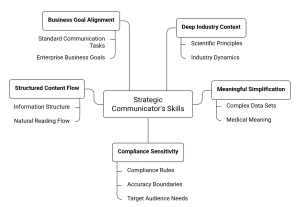
The most effective communicators in pharma usually have these strengths:
- Strong understanding of science and industry context.
- Ability to simplify complex information without losing meaning.
- Sensitivity to compliance, accuracy, and audience needs.
- Skill in structuring content for clarity and flow.
- Awareness of how communication supports wider business goals.
These skills are especially valuable in roles connected to medical affairs, expert engagement, content development, publications, and stakeholder communication. As pharma organisations become more integrated, this kind of communication skill will only grow in importance.
What this means for pharma organisations
For pharma companies, investing in scientific communication is not just about improving content quality. It is about improving how science is used inside and outside the organisation. Strong communication supports better collaboration between departments, stronger stakeholder relationships, and more effective dissemination of evidence.
It also helps companies stay relevant in a landscape where audiences expect precision, speed, and transparency. Whether the format is a webinar, an expert interview, a scientific article, or a conference presentation, communication can shape how science is received and remembered.
Companies that treat scientific communication as a strategic function are better positioned to turn expertise into influence. They do not just publish science; they make science useful.
Conclusion
Scientific communication is becoming a strategic skill in pharma because it sits at the intersection of science, business, and trust. In a complex and highly regulated industry, the ability to communicate clearly is essential for decision-making, reputation, and cross-functional alignment. As digital channels expand and scientific content becomes more specialised, organisations need communicators who can translate complexity into clarity.
For pharma teams, this means scientific communication should be seen as a core capability rather than a supporting task. The companies that recognise this shift will be better equipped to lead with credibility, connect with stakeholders, and make their scientific work have a real-world impact.
Reporting on the science, business and regulation shaping the pharmaceutical industry.
More in Pharma Marketing
All articles →
The Importance of Personalization in Pharmaceutical Marketing Campaigns

The Power of Storytelling in Pharma Marketing: Engaging Customers with Your Brand

Discussion