Value-Based Marketing & Outcome-Oriented Messaging In The Pharma Industry
Discover how pharma companies are using value-based marketing and outcome-oriented messaging to build trust and drive growth.


The pharmaceutical industry is undergoing a major shift in how it communicates value. For decades, messaging revolved around product features, clinical data, and brand-driven campaigns. But today, healthcare systems, providers, and patients are demanding more.
They want real-world proof, improved outcomes, stronger support, and clear demonstrations of how a therapy improves life, not just how it works on paper. As a result, pharma companies are moving toward value-based marketing and outcome-oriented communication models that go beyond traditional product promotion.
These approaches don’t just highlight what a medicine does, they show why it matters. In a world where budgets are tight, expectations are rising, and patients are more informed, outcome-focused messaging helps companies create trust, strengthen relationships, and build long-term relevance.
This article explores how pharma organizations are embracing value-based marketing and what steps they are taking to deliver meaningful, outcome-driven communication!
The Importance Of Value-Based Marketing & Outcome-Oriented Messaging In Pharma
Value-based marketing has become essential as the healthcare ecosystem grows more complex and results-driven. Pharma companies can no longer rely solely on scientific claims or product attributes; they must show the true impact of their therapies in real life.
Outcome-oriented messaging plays a crucial role by highlighting improvements that matter most such as better quality of life, reduced disease complications, enhanced patient functioning, and measurable long-term benefits. This approach helps bridge the gap between clinical expectations and real-world experiences.
Healthcare providers want treatments that prove their worth beyond trials. Payers want clear evidence of cost-effectiveness. Patients want transparency, genuine support, and outcomes that meaningfully improve their daily lives.
By focusing on value and outcomes, pharma companies position themselves as partners in patient well-being rather than just manufacturers of medicine. This is why value-based communication is now one of the strongest pathways to trust, adoption, and sustainable growth in today’s healthcare landscape.
Setting The Foundation For An Outcome-Driven Communication Strategy
As value-based marketing becomes the new standard across the industry, pharma companies are turning to structured, outcome-focused strategies that help them communicate real-world impact clearly and responsibly. The sections below break down the major pillars shaping this new approach and explain how organizations are building messaging models centered around results, relevance, and long-term value.
1) Moving From Product-Centric To Patient-Centric Communication
Traditional pharma marketing focuses heavily on drug features like mechanism of action, dosage, and clinical trial data. While these are important, they no longer meet the expectations of modern healthcare stakeholders.
A patient-centric approach shifts the conversation from “what the drug does” to “how it changes the patient’s life.” This includes discussing improvements in daily routines, symptom relief, emotional well-being, long-term disease control, and overall quality of life.
When messaging connects with real patient needs, it creates deeper trust and credibility. Companies are now investing in patient research, behavioral insights, and journey mapping to understand what truly matters to individuals.
This helps them craft messages that feel relevant, empathetic, and grounded in real experiences. By communicating outcomes that resonate emotionally as well as clinically, companies strengthen their value proposition and build stronger patient engagement.
2) Using Real-World Evidence To Strengthen Credibility
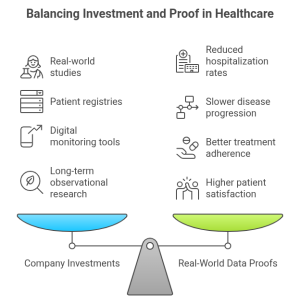
Real-world evidence has become a powerful tool in value-based communication. While clinical trials provide controlled insights, real-world data shows how a therapy performs in everyday life across diverse populations.
Payers and providers rely on real-world outcomes to evaluate long-term effectiveness, adherence, and overall impact on disease burden. Companies are expanding their investments in real-world studies, patient registries, digital monitoring tools, and long-term observational research.
This data helps them demonstrate meaningful improvements in hospitalization rates, disease progression, treatment adherence, and overall patient satisfaction. When real-world results are integrated into marketing messages, they elevate credibility and offer healthcare stakeholders the kind of proof they trust most. They also help differentiate a therapy in crowded markets where many products may appear similar on the surface.
3) Aligning Marketing Messages With Value-Based Care Models
Healthcare systems worldwide are shifting from volume-based care to value-based care. This means providers and insurers are increasingly rewarded for delivering better outcomes, not just more treatments.
Pharma companies must therefore align their marketing messages with these evolving care models. This includes demonstrating how their therapies support provider performance metrics, reduce complications, improve long-term patient management, and contribute to overall system efficiency.
Outcome-oriented messaging helps companies show that their products fit well within value-based frameworks. When companies speak the same language as healthcare systems focusing on results, efficiency, and long-term benefits, they build stronger relationships with decision-makers and reinforce their position as strategic partners in care delivery.
4) Highlighting Economic Value Through Health Outcomes
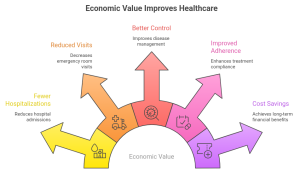
In an environment where budgets are tight, economic value is becoming just as important as clinical value. Outcome-oriented marketing helps companies demonstrate how their therapies reduce the total cost of care.
This can include fewer hospitalizations, reduced emergency visits, better disease control, improved treatment adherence, and long-term savings. Companies are increasingly using health economics and outcomes research to support these messages.
By showing how a therapy can reduce financial strain on healthcare systems, employers, and even patients, companies make a compelling case for adoption. When economic benefits are communicated clearly and responsibly, they help build trust and support strong decision-making among payers and policy leaders.
5) Integrating Digital Tools Into Value Delivery
Digital health solutions play an important role in value-based marketing. From mobile apps and wearable devices to remote monitoring tools and patient support programs, digital platforms extend the value of a therapy beyond the pill itself.
These tools help improve adherence, track progress, provide education, and support lifestyle changes. When integrated with treatment plans, they create a holistic patient experience. Companies are now including digital outcomes such as improved symptom tracking, better engagement, and higher adherence rates, in their value messaging.
Digital tools also generate real-world data that helps strengthen long-term communication strategies. By showing how digital solutions enhance the impact of a therapy, companies reinforce their commitment to improving patient outcomes, not just selling products.
6) Building Trust Through Transparent, Ethical Communication
Outcome-oriented marketing requires high levels of transparency and responsibility. Patients and providers expect communication that is clear, accurate, and evidence-based. Companies need to ensure that all outcome claims are supported by strong data and communicated honestly.
Ethical communication builds long-term trust, especially in a landscape where misinformation is common and regulatory expectations are rising. Many pharma organizations are investing in internal training and new approval frameworks to ensure messaging is both compliant and credible. By maintaining integrity in their communication, companies strengthen their reputation and reinforce their position as reliable partners in patient care.
7) Strengthening Engagement Through Personalization
Personalization is becoming essential in outcome-based marketing. Patients, caregivers, and providers each have unique expectations and information needs. With advanced analytics and digital platforms, companies can now tailor messages to specific groups or even individual patients.
Personalized communication may highlight outcomes that matter most to a specific disease stage, age group, lifestyle, or treatment history. For example, early-stage patients may care most about symptom control, while long-term patients may value functional independence or emotional well-being.
When messaging reflects these differences, it becomes more meaningful and relatable. Personalization also supports better patient engagement, allowing companies to deliver consistent value throughout the entire treatment journey.
8) Collaborating With Stakeholders To Define Shared Outcomes
Value-based marketing works best when outcomes are defined collaboratively. Pharma companies are increasingly working with clinicians, payers, researchers, and patient advocacy groups to identify which outcomes matter most.
This collaborative approach improves message relevance and ensures that communication aligns with real stakeholder priorities. Shared outcomes also support value-based access agreements and long-term partnerships. When companies show that they understand and support stakeholder goals, they strengthen relationships and build a strong foundation for outcome-driven decision-making.
Conclusion: The Future Belongs To Outcome-Focused Communication
Value-based marketing and outcome-oriented messaging are reshaping how pharma companies communicate and deliver value. Instead of relying solely on product features or clinical performance, companies are now highlighting real-world improvements, long-term benefits, patient-centered outcomes, and economic value.
This shift not only meets the expectations of modern healthcare stakeholders but also builds deeper trust and stronger relationships. Companies that embrace outcome-focused communication, supported by credible data, digital tools, personalization, and stakeholder collaboration will be better positioned for long-term success in a rapidly evolving healthcare landscape.
By focusing on what truly matters to patients and healthcare systems, they can build a meaningful, sustainable, and future-ready approach to marketing and engagement.
FAQs
1) What Is “Value-Based Marketing And Outcome-Oriented Messaging” In The Pharma Industry?
Value-based marketing and outcome-oriented messaging focus on showing the real-world impact of a therapy rather than only highlighting features or clinical data. This approach communicates how a treatment improves patient lives, long-term outcomes, and overall healthcare value. It helps pharma companies build trust and position themselves as partners in better patient care.
2) Why Are Pharma Companies Shifting Toward Outcome-Focused Communication?
Pharma companies are embracing outcome-focused communication because healthcare providers, payers, and patients now expect more than traditional promotional claims. They want real-world evidence, transparency, economic value, and proof of meaningful improvements. By focusing on outcomes, companies strengthen credibility, improve relationships, and stay relevant in a results-driven healthcare environment.
3) How Can Pharma Organizations Build Effective Value-Based And Outcome-Oriented Messaging?
Pharma organizations can build effective outcome-focused messaging by emphasizing patient-centric benefits, integrating real-world evidence, aligning with value-based care models, demonstrating economic impact, using digital tools, maintaining ethical transparency, personalizing communication, and collaborating with key stakeholders. These steps help companies communicate value clearly and support deeper trust across the healthcare ecosystem.
Reporting on the science, business and regulation shaping the pharmaceutical industry.
More in Pharma Marketing
All articles →
The Importance of Personalization in Pharmaceutical Marketing Campaigns

The Power of Storytelling in Pharma Marketing: Engaging Customers with Your Brand

Discussion