Gap-To-Green: A 5-Step CCS Gap-Assessment Playbook
Discover the 5-step Gap-to-Green Playbook for achieving Annex 1 compliance and strong contamination control in pharma facilities.


Maintaining aseptic integrity and controlling contamination is an ongoing process. With new requirements under EU GMP Annex 1 (2022) and the growing focus on holistic Contamination Control Strategies (CCS), companies are re-evaluating how well their systems meet modern “green” compliance standards — where risks are managed proactively, data is integrated, and decisions are based on science.
The “Gap-to-Green” approach provides a structured way to identify gaps in CCS, assess risks, and apply corrective actions to achieve a sustainable, compliant state. This article introduces a practical 5-step CCS Gap-Assessment Playbook to help manufacturers strengthen contamination control across all operations.
Understanding The Importance Of A CCS Gap Assessment
A CCS Gap Assessment acts as a reality check for pharmaceutical facilities, evaluating whether their contamination control systems are robust, compliant, and effective. As Annex 1 makes clear, CCS is not merely a document—it’s an integrated, dynamic framework that combines facility design, process control, monitoring, personnel practices, and data-driven decision-making.
However, many facilities, particularly brownfield or legacy sites, struggle with integrating existing controls into a cohesive CCS. Common challenges include fragmented documentation, outdated monitoring programs, insufficient data trending, or a lack of cross-functional ownership.
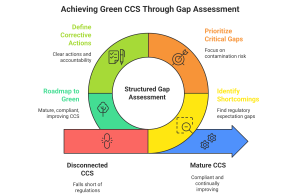
A structured gap assessment bridges this disconnect by:
- Identifying where the current CCS falls short of regulatory expectations.
- Prioritizing critical gaps that pose the highest contamination risk.
- Defining clear corrective actions and accountability.
- Providing a roadmap to achieve “green” — a mature, compliant, and continually improving CCS
Step 1: Define The Scope And Objectives
Every successful CCS gap assessment begins with clear definition and focus. Before diving into audits and checklists, organizations must first determine the scope — what will be assessed, which areas or processes are critical, and what the end goal is.
This step involves outlining:
- Assessment Boundaries: Decide whether the review will cover the entire facility, a specific manufacturing line, or targeted areas like utilities, HVAC, or cleanrooms.
- Objectives: Define whether the aim is regulatory compliance, system optimization, or readiness for an inspection.
- Stakeholders: Identify cross-functional team members from QA, microbiology, operations, engineering, and validation who will contribute their expertise.
- Assessment Tools: Establish what documents, standards, and data sources will be used — for instance, Annex 1, ISO 14644, ICH Q9 (Quality Risk Management), and internal SOPs.
By defining these parameters, the assessment becomes structured and focused, minimizing ambiguity and ensuring that critical contamination control elements receive due attention.
Step 2: Map The Current CCS Framework
Once the scope is set, the next step is to map the existing contamination control ecosystem. This involves gathering all relevant data, documents, and operational insights that describe how contamination control is currently managed within the facility. Mapping helps visualize how each component such as facility design, air handling, gowning, cleaning, and monitoring interacts to prevent contamination. A comprehensive CCS map should include:
- Facility & Equipment Design: Evaluate airflows, room classifications, material/personnel flows, and segregation strategies.
- Utilities & Environmental Controls: Review the monitoring and maintenance of critical utilities like water, steam, and compressed air.
- Personnel practices: Assess training programs, gowning procedures, and behavioral controls.
- Cleaning & Disinfection: Examine the frequency, agents used, and validation of cleaning cycles.
- Environmental Monitoring (EM): Analyze sampling plans, alert/action limits, and data trending.
- Data & Deviation Management: Review how data integrity is ensured and how deviations or excursions are analyzed and closed.
By documenting the current state, organizations gain a transparent view of what’s working effectively and where hidden weaknesses may lie. This serves as the baseline for the gap analysis that follows.
Step 3: Identify And Evaluate Gaps
This is the most critical step of the playbook — identifying where the facility’s CCS diverges from regulatory expectations or best practices. Each aspect of the CCS should be assessed against defined benchmarks such as Annex 1 requirements, internal quality standards, or ISO norms. The evaluation should be risk-based, focusing on the severity and likelihood of contamination impact. Gaps can be classified under three main categories:
- Compliance Gaps: Deviations from regulatory or pharmacopoeial standards (e.g., inadequate EM frequency, missing validation).
- Operational Gaps: Weaknesses in implementation or routine practices (e.g., inconsistent gowning, insufficient disinfection rotation).
- Systemic Gaps: Broader deficiencies that affect the overall control strategy (e.g., poor data integration, lack of documented rationale for CCS elements).
Each identified gap should be supported by objective evidence, such as audit findings, data trends, or deviation records. For example, a gap might reveal that the environmental monitoring program does not fully cover critical Grade A/B zones or that sampling frequency is not scientifically justified.
Similarly, it may be found that utility monitoring lacks proper trending, or that personnel training records are incomplete. Documenting gaps in a risk-ranked matrix helps prioritize which issues require immediate action versus those that can be addressed through gradual improvement.
Step 4: Develop & Implement Corrective Action Plans
After gaps are identified and ranked, the next step is to translate findings into actionable improvements. This involves developing a structured Corrective and Preventive Action (CAPA) plan that defines what needs to be done, who is responsible, and by when.
An effective CAPA plan should include:
- Root Cause Identification: Understanding why the gap exists (e.g., design limitation, procedural weakness, lack of training).
- Corrective Action: Steps to immediately address the issue (e.g., updating SOPs, retraining personnel, recalibrating instruments).
- Preventive Action: Long-term solutions to prevent recurrence (e.g., revising qualification protocols, introducing automation, implementing risk-based monitoring).
- Ownership & Accountability: Assign responsibilities to relevant departments with clear timelines and follow-up mechanisms.
- Verification: Evaluate the effectiveness of the implemented actions through internal audits, trending, or performance reviews.
For instance, if microbial excursions in a Grade B zone are traced to improper disinfection rotation, corrective actions might include retraining cleaning staff, revising SOPs to include sporicidal agents, and implementing periodic effectiveness checks. This stage transforms the gap assessment from a static report into a living improvement process that strengthens the CCS framework and embeds continuous quality improvement.
Step 5: Validate, Review, And Sustain “Green”
The final step often overlooked is to validate the improvements and ensure they deliver the intended results over time. Closing a CAPA does not necessarily mean the problem is resolved unless its effectiveness is demonstrated through objective evidence. Validation includes confirming that process or system changes do not adversely affect product quality and that they align with the overall CCS objectives. After successful validation, organizations should establish mechanisms for ongoing review and sustainability.
This can be achieved through:
- Periodic CCS Reviews: Conducting formal reviews (annually or biannually) to evaluate system performance, trend data, and new risks.
- Continuous Monitoring: Using digital dashboards and real-time monitoring tools to track environmental, utility, and process parameters.
- Internal Audits: Scheduling targeted audits to assess adherence to CCS controls and identify emerging vulnerabilities.
- Change Control Integration: Ensuring that any facility, equipment, or procedural change undergoes contamination risk evaluation before approval.
Achieving “green” status means the organization operates in a state of control where contamination risks are minimized, data is integrated, and all systems function synergistically under the CCS umbrella. However, staying green requires sustained vigilance, regular updates to risk assessments, and continuous learning from deviations and innovations.
Best Practices For Effective CCS Gap Assessment
To make the 5-step playbook truly successful, organizations should adhere to several best practices that enhance efficiency, consistency, and regulatory readiness.
1. Cross-Functional Collaboration: Engage teams from QA, operations, microbiology, validation, and engineering from the start. Their combined expertise ensures a holistic understanding of contamination risks and realistic corrective measures.
2. Data-Driven Decision Making: Leverage historical data, environmental monitoring results, deviations, utility trends, and audit findings to support gap identification and prioritization. This approach minimizes subjectivity and focuses efforts where they matter most.
3. Use of Digital Tools — Employ digital mapping, audit management, and risk assessment platforms to centralize data and generate visual dashboards. Digitalization not only streamlines assessments but also supports continuous improvement.
4. Risk-Based Prioritization — Not all gaps pose equal risk. Focus first on those that directly impact product sterility or patient safety. Use tools like FMEA (Failure Mode and Effects Analysis) or Hazard Analysis and Critical Control Points (HACCP) to quantify and rank risks.
5. Continuous Learning Culture — Promote a culture where deviations and non-conformances are seen as opportunities to learn rather than failures. Encourage open communication, regular training, and sharing of lessons learned across teams.
Final Words: The Path From Gap To Green
A CCS gap assessment goes beyond compliance — it’s a path to operational excellence. By identifying weaknesses, applying science-based improvements, and validating results, organizations can move from reactive to proactive control. The Gap-to-Green Playbook provides a clear 5-step roadmap to strengthen contamination control, ensuring compliance, efficiency, and product quality while keeping systems resilient and future-ready.
FAQs
1. What Is The “Gap-To-Green” CCS Gap-Assessment Playbook?
The “Gap-to-Green” Playbook is a 5-step framework that helps pharmaceutical manufacturers identify weaknesses in their Contamination Control Strategy (CCS), apply corrective actions, and achieve a compliant and sustainable “green” state where contamination risks are proactively managed.
2. Why Is A CCS Gap Assessment Important?
A CCS gap assessment ensures that contamination control systems are effective, compliant, and continuously improving. It helps organizations detect gaps, prioritize high-risk areas, and implement science-based solutions to maintain aseptic integrity and regulatory readiness.
3. How Does The Gap-To-Green Approach Benefit Pharmaceutical Companies?
By following the Gap-to-Green approach, companies can move from reactive problem-solving to proactive assurance, improve product quality and safety, enhance operational efficiency, and build a resilient, future-ready contamination control framework.
Reporting on the science, business and regulation shaping the pharmaceutical industry.
More in Microbiology & CCS
All articles →
Active Air Sampling vs Settle Plates vs Contact Plates

Setting EM Alert & Action Levels (Grades A–D): A Practical Guide for Pharma Professionals

Discussion